




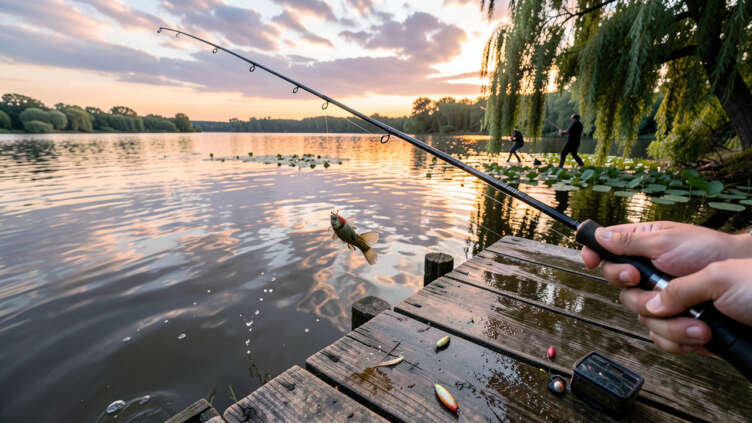
Dock Fishing For Bass: Skipping, Walking, And Pitching Tips
Dock fishing for bass requires mastering three core techniques—skipping, walking, and pitching—to present baits in the difficult, shaded spaces where bass typically hold. Skipping slides a lure under the dock without spooking fish, walking baits produce a walk-the-dog action that triggers aggressive strikes, and pitching delivers pinpoint accuracy for fast, quiet bait drops. Applying these methods effectively relies on recognizing docks as prime bass habitats because they offer shade, structure, and concentrated baitfish.
Getting bass to bite around docks can be tough, but it’s a fantastic way to catch fish, especially when they hide in the shade. Mastering techniques like skipping, walking, and pitching can make a huge difference in your success. Learning these skills helps you present your bait effectively in tight spots where other anglers can’t reach.
This guide will show you the best ways to improve your skills for Dock Fishing for Bass: Skipping, Walking, and Pitching Tips, helping you catch more bass from these productive underwater structures.
Key Takeaways
- Understand why docks are prime bass habitats.
- Master the art of skipping lures under docks for stealthy presentations.
- Learn the walking bait technique to trigger aggressive strikes.
- Perfect the pitching method for accuracy and quick bait drops.
- Discover the best baits and tackle for dock fishing success.
- Know when and where to target docks for maximum bass catches.

Why Docks Are Bass Havens
Docks are like underwater apartment complexes for bass. They offer shade from the sun, a cooler place to hang out, and a solid structure for baitfish to hide around. This makes them a natural ambush point for bass.
When you can get your lure right up to or under the dock, you’re fishing in a spot where bass feel safe and are likely to be feeding.
To catch bass around docks, focus on getting your lure as close to the structure as possible—the shaded area beneath a dock is where bass feel secure and are most likely to strike.
The shade provided by docks is a major draw. On sunny days, bass will retreat to these cool, dark areas to escape the heat and light. This is especially true for larger, more mature bass that are often more cautious.
Fishing these shaded areas requires a different approach than open water. You need to be stealthy and precise to get your bait in front of them without spooking them.
Mastering the Skip Cast for Dock Fishing
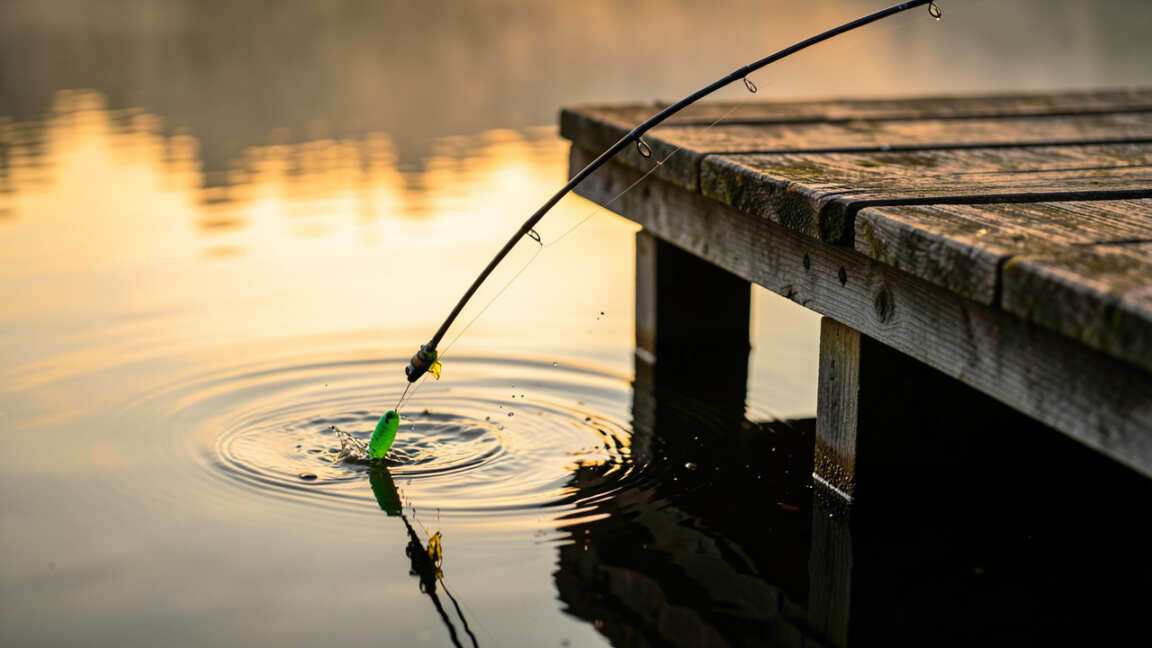
Skipping a lure under a dock is a game-changer for effective Dock Fishing for Bass: Skipping, Walking, and Pitching Tips. This technique allows you to get your bait much farther back under the dock than a standard cast. It’s all about using the water’s surface as a trampoline for your lure.
A good skip cast lands the lure softly and allows it to slide deep into the shadows.
The key to a successful skip is in the rod tip and the lure’s action. You want to cast with your rod tip down, almost parallel to the water. The lure should hit the water at a low angle, and then bounce or skip across the surface.
Practice is essential to get the feel for the right amount of force and the perfect angle. Experiment with different lures; lighter, flatter baits often skip better.
Choosing the Right Lure for Skipping
Not all lures are ideal for skipping. You need something with a relatively flat profile that can glide across the water. Soft plastic baits like Texas-rigged worms, craws, or fluke-style baits are excellent choices.
Jigs can also be skipped effectively, especially lighter ones. The weight of the lure plays a role; too light and it won’t have enough momentum, too heavy and it will sink too quickly.
Spinnerbaits and buzzbaits can also be skipped, though they require a bit more practice. The blades and skirts can catch air, making them a little less predictable. However, when they land softly and start moving, they can trigger explosive bites.
For an effective skip cast, keep your rod tip low and parallel to the water; the lure must strike the water at a shallow angle to slide smoothly under the dock.
The goal is to mimic a baitfish skipping on the surface or falling into the water.
Executing the Skip Cast: Step-by-Step
First, select a lure that skips well, like a Texas-rigged worm. Load your reel with a line that has some strength but isn’t too thick. Open your bail and get ready to cast.
You want your rod tip low, pointing towards the water. Swing the rod back smoothly.
Next, as you swing forward, aim for a spot on the water a few feet in front of the dock. Release the line with your finger just as the lure is about to hit the water. You want a low, glancing blow.
The lure should then skip once or twice, sliding under the dock.
Then, as the lure disappears under the dock, keep your line slack but ready. Many strikes happen the moment the lure lands or begins to move. Be prepared to set the hook quickly.
This is a crucial part of effective Dock Fishing for Bass: Skipping, Walking, and Pitching Tips.
The Walking Bait Technique for Active Bass
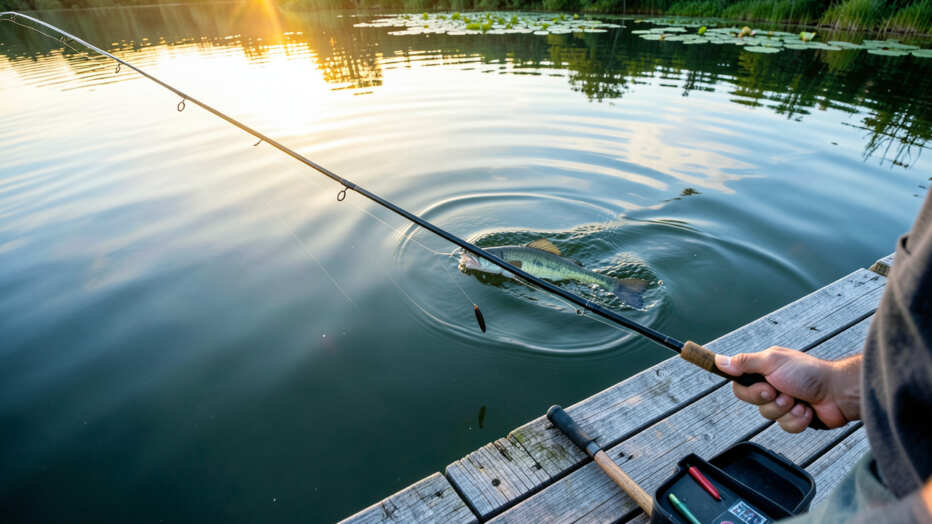
Walking baits are topwater lures that create a side-to-side, zig-zagging action when retrieved. This erratic movement is designed to imitate a struggling baitfish, which can trigger aggressive strikes from bass. They are particularly effective when bass are actively feeding near the surface or in clearer water.
When fishing around docks, a walking bait can be a deadly tool. You can cast it past the dock and work it back, or cast it right up to the edge and twitch it. The key is the cadence of your retrieve.
Too fast, and the lure might just pull through the water without its signature wobble. Too slow, and it might not activate its walking action.
Achieving the “Walk-the-Dog” Action
The “walk-the-dog” action is created by a series of short, sharp twitches of the rod tip. While reeling in, give your rod a quick snap or twitch. This causes the lure to dart to one side.
A walking bait’s erratic zig-zag action mimics a wounded baitfish—that’s exactly what triggers an aggressive strike from a bass guarding its territory near a dock.
Then, pause briefly while reeling, and give it another twitch. The lure will dart to the other side, creating that classic zig-zag pattern.
The distance the lure travels with each twitch depends on the lure’s design and the angler’s technique. Some lures are designed to walk more dramatically than others. Experiment with different amounts of slack in your line and varying twitch sizes.
The goal is to make the lure look like a wounded baitfish trying to escape, a prime target for a hungry bass.
When to Use Walking Baits Around Docks
Walking baits are best used when bass are showing activity, such as chasing baitfish or breaking the surface. Early mornings and late evenings are prime times, as is overcast weather. If you see baitfish being pushed to the surface or hear them “plopping” near a dock, it’s a good indication that bass are feeding up high and a walking bait could be very effective.
The sound and commotion of a walking bait can also draw bass out from the shadows of the dock. They can cover water quickly, allowing you to probe different sections of a dock or a series of docks. This is where the effectiveness of Dock Fishing for Bass: Skipping, Walking, and Pitching Tips truly shines.
Perfecting the Pitching Technique
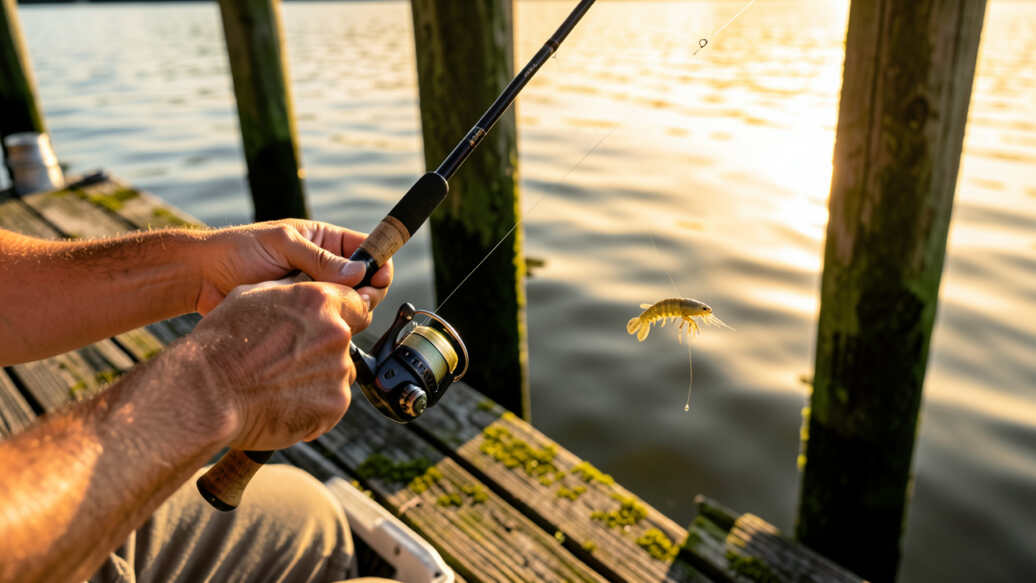
Pitching is a finesse casting method that allows for extreme accuracy and quiet bait delivery. It’s ideal for placing a bait precisely into tight spots, like under the overhang of a dock or next to a piling. This technique involves a short, controlled pendulum motion rather than a full overhead cast.
Pitching is crucial for Dock Fishing for Bass: Skipping, Walking, and Pitching Tips because it minimizes splash and allows you to present your bait naturally. Bass are often spooky around docks, and a loud splash can scare them away. Pitching helps you avoid this, making your bait more appealing.
How to Pitch Accurately
To pitch, you’ll typically want to have about 1 to 2 feet of line from your rod tip to the lure. Hold the lure against the rod blank with your thumb or finger. Swing the rod forward in a smooth, controlled motion, releasing the lure as you come forward.
The weight of the lure will do most of the work, creating a pendulum effect.
The goal is to get the lure to land softly and precisely right where you want it. Practice is key. Start by pitching at targets on land, like a bucket or a circle drawn on the ground.
When pitching to docks, choose soft plastics with a streamlined profile like creature baits or crawfish imitators rigged Texas-style—they slide into tight spaces and work effectively along the bottom.
Once you’re consistently hitting your targets, move to the water. You’ll find this technique invaluable for getting to those hard-to-reach bass.
Best Baits for Pitching Around Docks
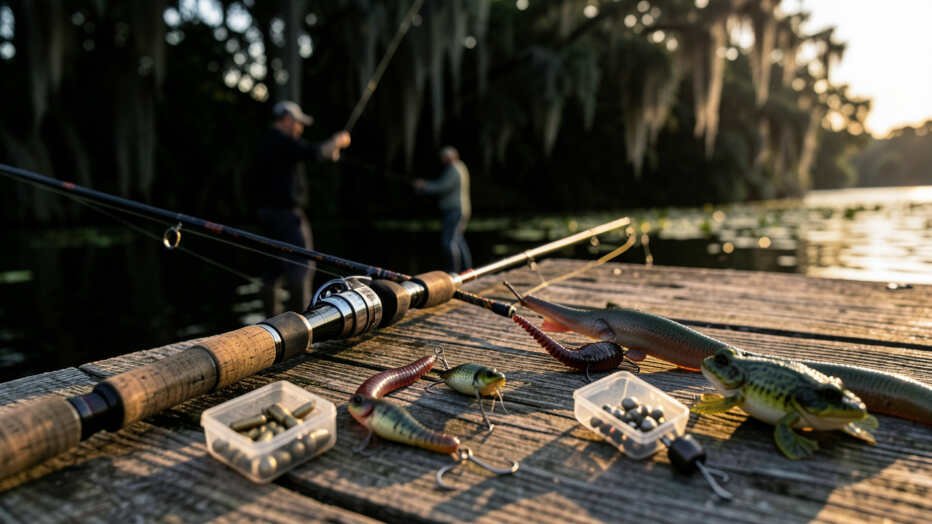
When pitching, you want baits that are compact and have a good weight to them. Jigs, especially football jigs or flipping jigs, are excellent. They have a streamlined profile that pitches well and can be worked along the bottom.
Soft plastics like creature baits, tube baits, or crawfish imitators rigged Texas-style are also top choices.
The weight of your bait is important for pitching. A 1/4 to 1/2 ounce jig or a Texas-rigged bait with a 1/8 to 1/4 ounce tungsten weight is usually ideal. This weight allows the bait to cut through the air and sink quickly once it hits the water, mimicking falling prey.
This accuracy is a hallmark of successful Dock Fishing for Bass: Skipping, Walking, and Pitching Tips.
Choosing the Right Tackle for Dock Fishing
The right gear can make a big difference when you’re fishing around docks. You need equipment that allows for accuracy, stealth, and the power to pull bass out from under heavy cover.
Rod and Reel Considerations
For skipping and pitching, a medium-heavy to heavy power rod with a fast action is usually recommended. A rod length of 7 feet to 7 feet 6 inches is ideal for casting and pitching. The fast action allows for quick hooksets and good control.
For reels, a baitcasting reel is generally preferred for its precision and power, especially with heavier lures.
Avoid using heavy, bulky lures when fishing around docks; stick baits like Senkos rigged wacky- or Texas-style offer a subtle, natural presentation that won’t spook wary bass.
Line choice is also important. Braided line is a popular choice for dock fishing because it has no stretch, allowing for strong hooksets and the ability to pull big bass out of cover. However, braided line can sometimes be more visible.
If you’re fishing in clear water or with finicky bass, consider using a fluorocarbon leader tied to your braid. Alternatively, a strong monofilament or fluorocarbon line in the 10-20 pound test range can also work well.
Essential Lures for Dock Bass
Beyond the skipping and pitching baits mentioned earlier, other lures excel around docks. Topwater frogs are fantastic for fishing over lily pads or matted vegetation that might be adjacent to docks. Senkos or other stick baits, rigged wacky-style or Texas-style, are incredibly versatile and can be fished in many ways, including subtle drops right next to pilings.
Spinnerbaits and chatterbaits can be effective for covering more water along the edges of docks or around pilings. When bass are holding tight to structure, a football jig or a swing jig can be bounced along the bottom right next to the dock. The variety of lures available ensures you can adapt to different conditions and bass moods when practicing Dock Fishing for Bass: Skipping, Walking, and Pitching Tips.
When and Where to Target Docks
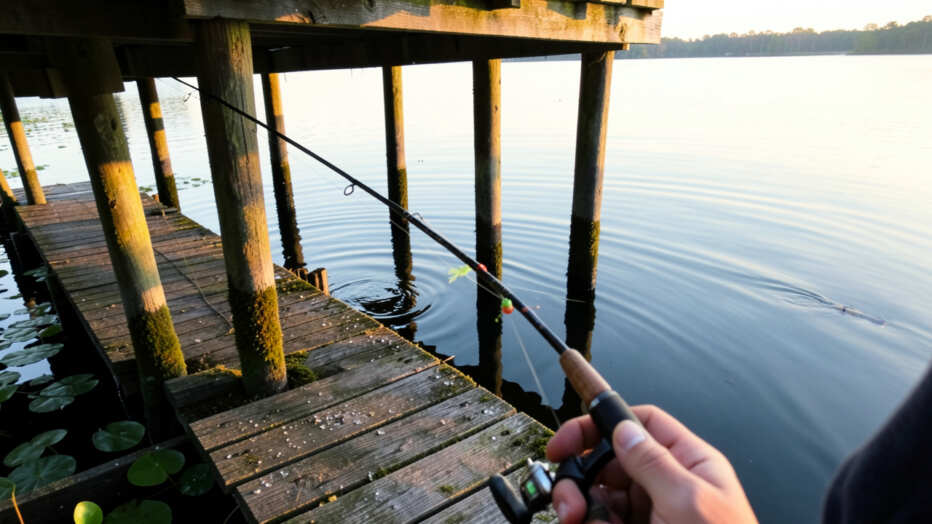
Understanding the best times and specific locations around docks can significantly boost your success. Bass behavior changes with seasons, weather, and time of day.
Seasonal Patterns for Dock Bass
In the spring, as water temperatures rise, bass move shallower to spawn. Docks can be excellent pre-spawn and spawning locations, especially those with sandy or gravelly bottoms nearby. In the summer, docks provide crucial shade and cooler water.
Bass will often suspend under them or hold in the deeper, shaded areas.
As fall approaches and water temperatures cool, bass become more active feeders again. They will patrol the areas around docks, looking for baitfish. In the winter, bass may move to deeper water, but they will still use docks as structure, especially if the pilings extend into deeper areas or if the dock provides a current break.
Even in winter, don’t ignore docks—bass will hold around deeper pilings or current breaks, making them a reliable target when other shallow structure is empty.
Identifying Productive Dock Features
Not all docks are created equal. Look for docks that have some sort of structure beneath them, like pilings, crossbeams, or even submerged brush. Docks that extend into deeper water are often more productive.
The presence of baitfish around a dock is a huge indicator of bass activity.
Pay attention to the type of dock. Older, more weathered docks often have more nooks and crannies where baitfish and bass can hide. Floating docks can also be productive, as they create a different kind of shadow and structure.
Consider the surrounding environment too; a dock near a weed line or a drop-off can be a hotspot. Mastering these details is part of advanced Dock Fishing for Bass: Skipping, Walking, and Pitching Tips.
Frequently Asked Questions
Question: What is the best time of day for dock fishing for bass?
Answer: Early morning and late evening are generally the best times, especially during warmer months when bass seek shade. Overcast days can also be very productive throughout the day.
Question: How do I choose the right line for dock fishing?
Answer: Braided line is excellent for its strength and no-stretch for hooksets, but a fluorocarbon leader is recommended for stealth. If using straight monofilament or fluorocarbon, opt for 10-20 pound test.
Question: Can I use a spinning reel for dock fishing?
Answer: While baitcasting reels offer more control for pitching and skipping, a quality spinning reel can also work, especially for lighter lures or if you’re just starting. Focus on a smooth drag and good line capacity.
Question: What is the most important tip for effective Dock Fishing for Bass: Skipping, Walking, and Pitching Tips?
Answer: Accuracy and stealth are paramount. Being able to place your lure precisely under the dock without spooking the fish is key to triggering bites.
Question: How deep should I cast my lure when skipping?
Answer: When skipping, aim to get your lure as far back under the dock as possible. The lure should ideally slide into the deepest, darkest part of the shade.
Question: What kind of structure under a dock is best for bass?
Answer: Bass prefer docks with visible structures like pilings, crossbeams, or submerged brush. These provide cover and attract baitfish, making them ideal bass hangouts.
Final Thoughts
By practicing skipping, walking, and pitching techniques, you can unlock the full potential of dock fishing. These methods allow you to present lures accurately and stealthily where bass love to hide. With the right gear and a focus on structure, you’ll be catching more bass from these overlooked spots.