


Skipping Lures Under Docks: Bass Fishing Skill Explained
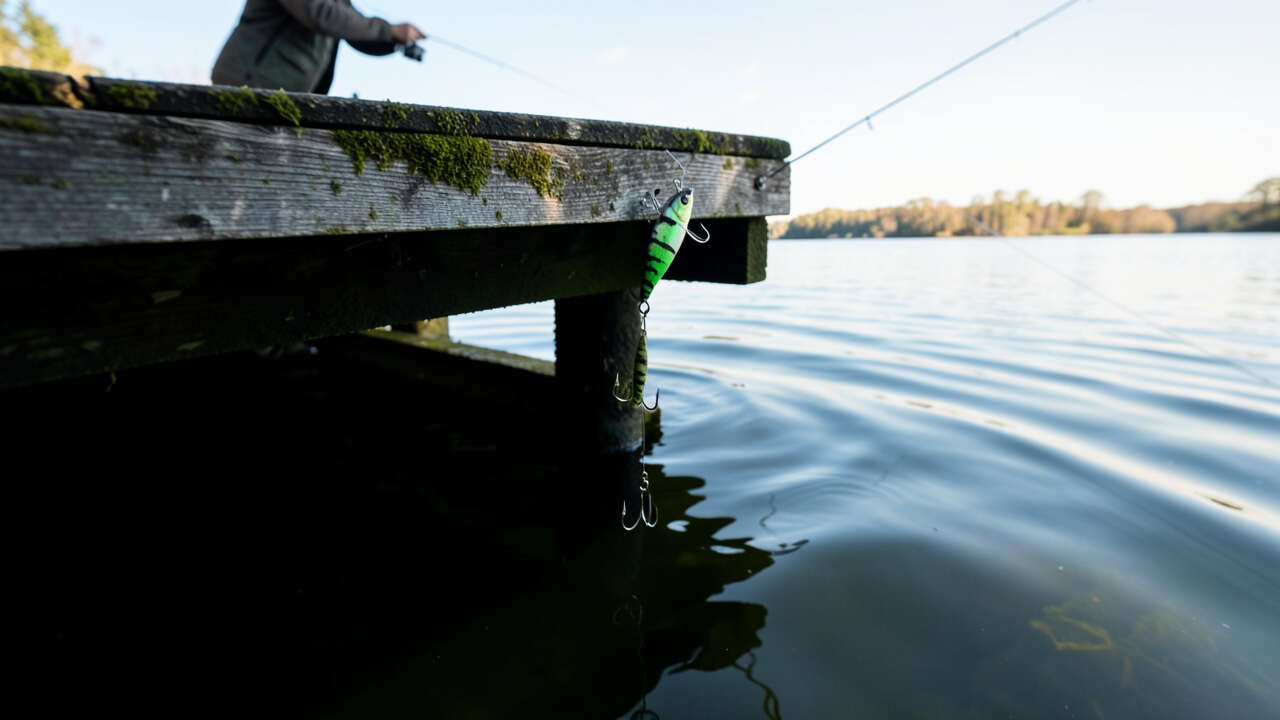
Skipping lures under docks is a bass fishing technique that allows anglers to present baits directly into the shaded, high-percentage areas where bass hide without spooking them with a loud splash. Mastering this skill significantly increases catch rates by opening access to fish that standard casts cannot reach effectively. Success depends on using a moderate-fast action rod, a high-speed reel, braided line, and perfecting a low, sidearm skipping cast that keeps the lure skimming the surface under the dock.
Bass love hiding in cool, shady spots, and docks are prime real estate. Getting your lure to them without spooking them is key to catching more fish. This is where learning how to skip lures under docks becomes a superpower for any angler.
It opens up a whole new world of fishing opportunities, letting you reach those hidden giants. Mastering Skipping Lures Under Docks: Bass Fishing Skill Explained can seriously boost your catch rate and make you a more effective angler on the water, showing you the best way to present your bait where the big ones wait.
Key Takeaways
- Learn the right gear to use for effective skipping.
- Understand the physics behind a successful lure skip.
- Discover the best casting techniques for accuracy.
- Know which lures work best for skipping under docks.
- Practice tips to improve your skipping ability.
- Recognize when and where skipping is most effective.
Why Skipping Lures Under Docks is a Game Changer
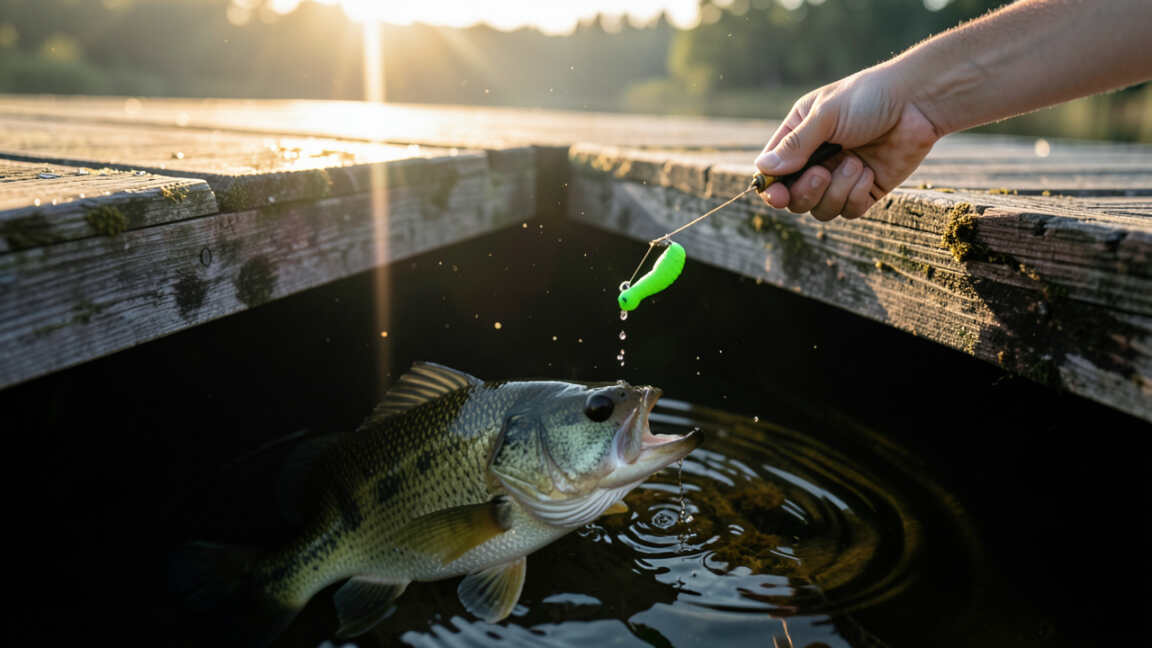
Many anglers overlook the potential of the shaded areas directly beneath boat docks. Bass feel safe and protected there, often ambushing prey. A standard cast might land your lure too far away or spook the fish with a loud splash.
Use skipping to slide your bait silently into the deep shade under docks where bass hide from the sun.
That’s where the magic of skipping comes in. It allows you to place your bait quietly and precisely into that tight, hidden space. This technique is more than just a trick; it’s a strategic advantage that can lead to some of your biggest catches.
Mastering Skipping Lures Under Docks: Bass Fishing Skill Explained helps you tap into a hidden bass buffet.
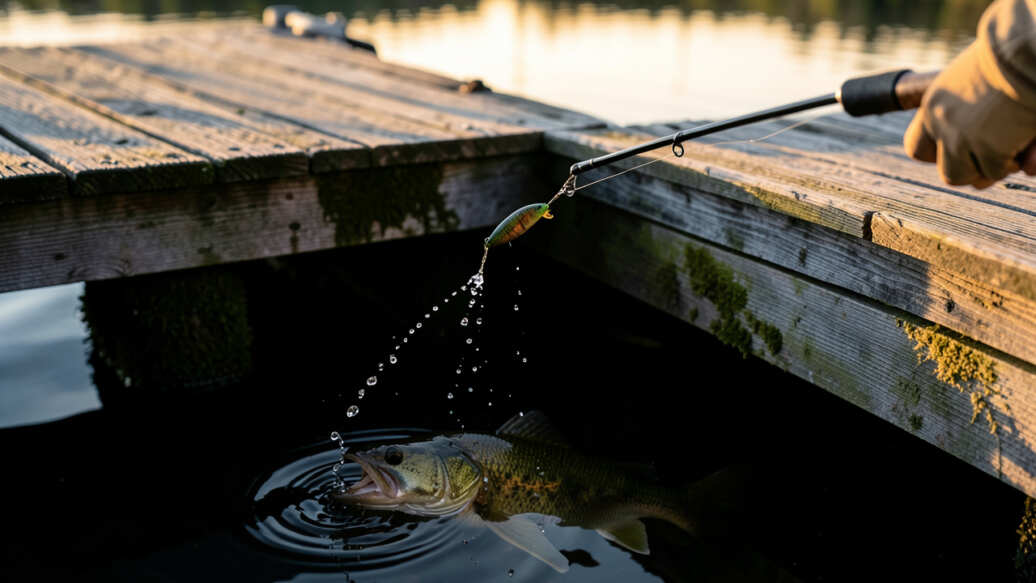
The Science Behind a Perfect Skip
Skipping a lure isn’t just about throwing it hard. It’s about using physics to your advantage. Think of it like skipping a stone across water.
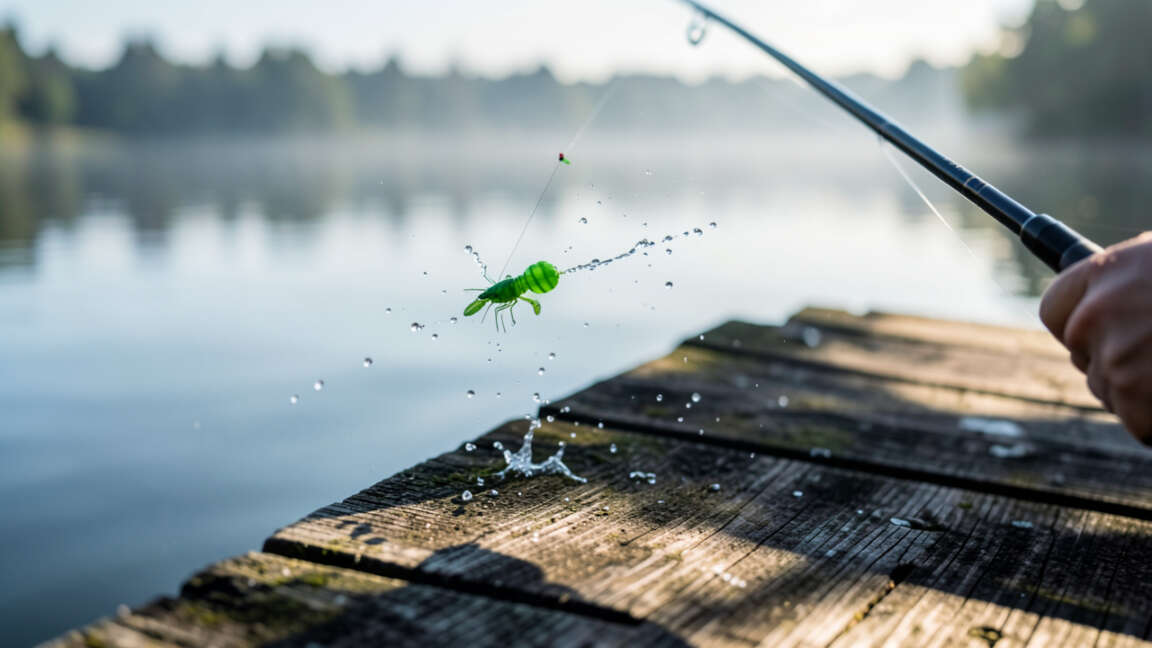
A low-angle, fast cast causes the lure to bounce across the water’s surface, using the same physics as skipping a flat stone.
The angle of your cast, the speed, and the lure’s design all play a role. When you cast with a low angle and a smooth, fast motion, the lure hits the water’s surface and bounces, or “skips,” instead of sinking. Each skip covers distance while keeping the lure low and moving.
This low trajectory is crucial for getting under those low-hanging dock structures. Understanding this basic principle is the first step in effective Skipping Lures Under Docks: Bass Fishing Skill Explained.
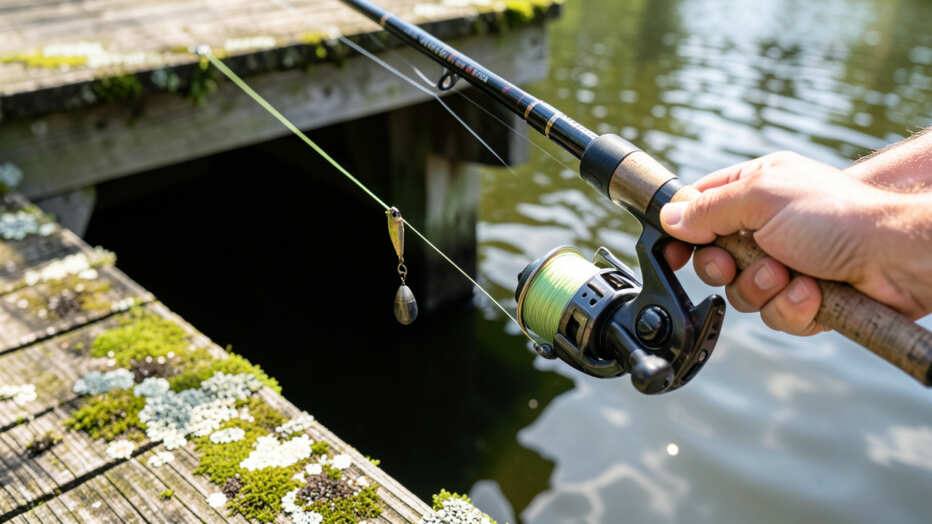
Choosing the Right Gear for Skipping Success
The gear you use makes a big difference when you’re trying to skip lures. The right combination helps you cast accurately and control the lure’s flight.
Rods for Skipping
A medium-power, fast-action spinning rod is often best. These rods have enough backbone to cast lighter lures effectively. They also offer good control for making those precise, low-angle casts.
A length of 6’6″ to 7′ is usually ideal. Longer rods can be harder to manage for the delicate skipping motion required. Shorter rods might not provide enough casting power.
Reels and Line
A spinning reel is generally preferred over a baitcaster for beginners trying to master skipping. Spinning reels are more forgiving and less prone to backlashes. Spool it with monofilament or fluorocarbon line.
An 8‑ to 12‑pound test line provides the right balance of control and distance without creating drag that kills the skip.
Monofilament floats and can help with lure control. Fluorocarbon sinks and offers better sensitivity. A line with 8-12 pound test is a good starting point.
Too heavy a line can create drag and hinder skipping distance.
Lure Selection
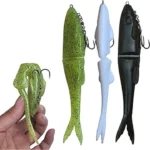
Not all lures are built for skipping. You need lures that are relatively flat or have a streamlined profile. This allows them to glide across the water’s surface.
- Soft plastic creature baits or jigs: These are excellent choices. Their compact nature and weight help them skip well.
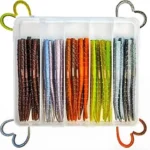
- Texas-rigged worms: A classic for a reason. They are streamlined and can be skipped with ease.
- Bladed jigs or swim jigs: These can also be skipped, especially with practice. Their profile cuts through the water.
Lures with a lot of drag or bulky profiles, like bulky spinnerbaits, are generally not suitable for skipping. They tend to dig into the water.
Mastering the Skipping Cast Technique
The actual cast is where the skill of Skipping Lures Under Docks: Bass Fishing Skill Explained truly shines. It requires a specific motion and timing.
The Setup
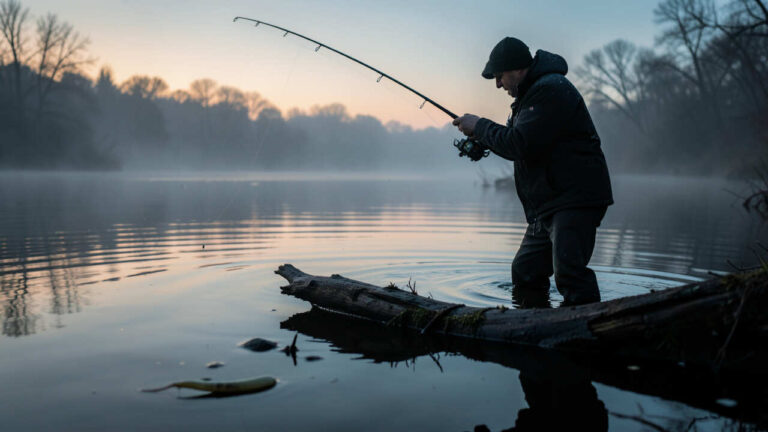
Hold your rod at a low angle, almost parallel to the water. Your target is the water’s surface just in front of the dock. You want the lure to hit the water and then bounce, not the dock itself.
The Motion
First, wind your line so the lure is about 6-12 inches from the rod tip. This short leader helps with control.
Second, make a smooth, pendulum-like swing with your arm. Don’t just flick your wrist. Use your arm and shoulder for power and control.
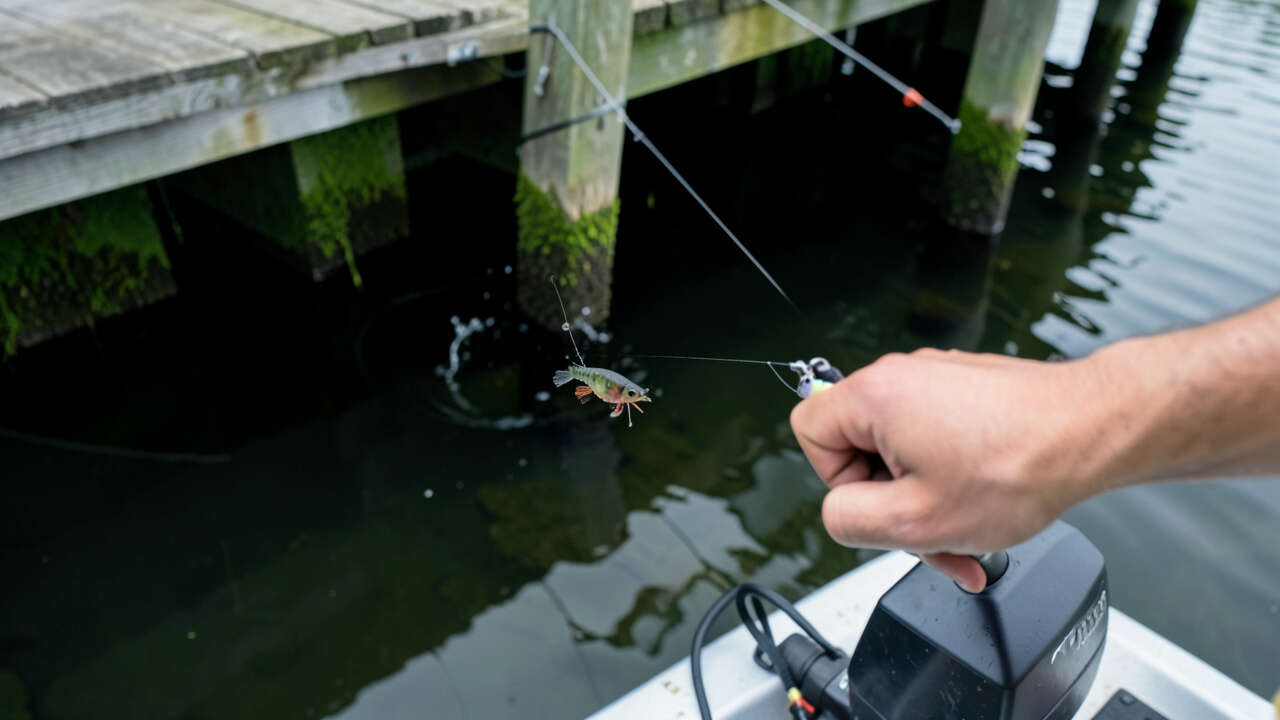
Keep the leader between rod tip and lure very short—about 6 to 12 inches—for maximum control during the pendulum swing.
Next, release the line at a low angle, just as the lure is about to reach the water. The key is to release it at the right moment.
Then, aim for the lure to hit the water at a shallow angle. This shallow angle is what causes the skip.
Finally, follow through with your cast. This helps maintain momentum and keeps the lure on course.
Practice is essential. You’ll likely miss a few at first, but keep at it. Focus on a consistent, controlled motion.
When and Where to Skip Lures
Knowing when and where to apply this technique is as important as knowing how to do it.
Ideal Conditions for Skipping
Calm water is your best friend when learning to skip. Wind can make it very difficult to control the lure’s trajectory. Overcast days can also be good, as bass might be more willing to move out from under cover to investigate a lure.
Avoid skipping in windy conditions; calm water is essential for controlling the lure’s trajectory and achieving consistent skips.
Sunny days often mean bass are tucked deep under docks, making skipping essential.
Targeting Specific Dock Types
Different docks offer different opportunities.
- Boat docks: These are classic spots. Look for the darker, deeper water underneath.
- Floating docks: These can be productive, especially in shallower water.
- Docks with brush or vegetation: These are magnets for bass. The skipping technique allows you to get right into these complex areas.
Always pay attention to the water depth and clarity. In very clear water, a stealthier approach is often needed, and skipping helps. In murkier water, the sound of the skip might even attract fish.
Common Mistakes and How to Fix Them
Even experienced anglers can fall into bad habits. Recognizing and correcting these mistakes will improve your Skipping Lures Under Docks: Bass Fishing Skill Explained.
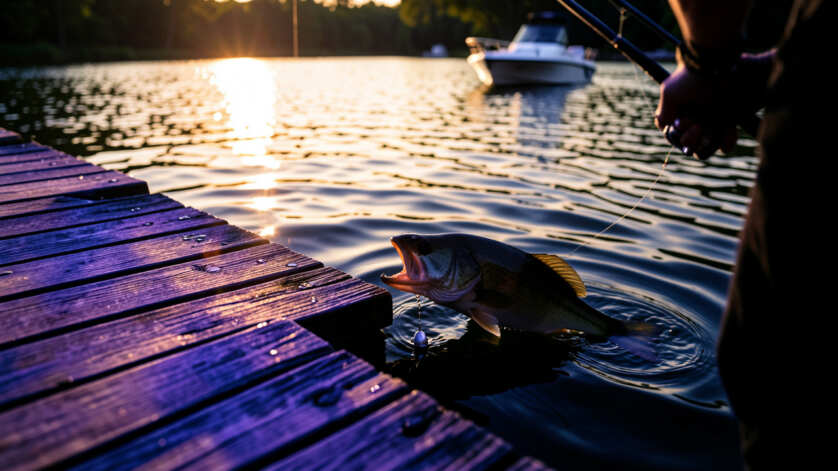
If your lure sinks immediately, lower your casting angle and increase your arm speed; a flatter trajectory keeps the lure skipping.
The table above highlights common issues anglers face when learning Skipping Lures Under Docks: Bass Fishing Skill Explained. Addressing these will speed up your learning curve.
Advanced Skipping Techniques and Tips
Once you’ve got the basics down, you can refine your skills.
Varying Your Skip Distance
Sometimes you need to skip a lure just a few feet under the dock. Other times, you might need to send it 20 feet back. Adjust your casting power and release point.
A softer cast with an earlier release will result in shorter skips. A more powerful cast with a later release will send the lure further.
Skipping with Different Lures
While some lures are better than others, with practice, you can learn to skip a variety of baits. Try experimenting with different soft plastics and even some smaller crankbaits. The key is always the low angle and smooth release.
With practice, you can learn to skip almost any bait, not just purpose‑built skipping lures, expanding your presentation options.
Reading the Water Under Docks
Bass aren’t always in the same spot. Look for shadows, submerged brush, or changes in the bottom. These are indicators of where bass might be holding.
Your skipping ability allows you to precisely target these micro-locations.
When Skipping Might Not Be Best
While powerful, skipping isn’t always the answer. If the water is very choppy, it can be nearly impossible to control. If the dock is extremely shallow with no cover, a direct cast might be better.
Also, if you are fishing for other species that don’t prefer tight cover, other techniques might be more suitable.
Frequently Asked Questions
Question: What is the main benefit of skipping lures under docks?
Answer: The main benefit is reaching bass that are hiding in the protected, shaded areas under docks, where they are often safe from other fishing methods and can be ambushed.
Question: Can I skip any lure under a dock?
Answer: No, you need lures that are streamlined and relatively flat. Jigs, Texas-rigged worms, and some creature baits are ideal for Skipping Lures Under Docks: Bass Fishing Skill Explained.
Question: What is the best type of rod for skipping lures?
Answer: A medium-power, fast-action spinning rod, typically between 6’6″ and 7′ long, is generally recommended for its control and casting ability.
Question: How do I prevent my lure from sinking immediately when skipping?
Answer: Ensure you are casting at a low, shallow angle, releasing the line smoothly, and using enough casting speed. The lure needs to hit the water at an angle that allows it to bounce.
Question: Is it harder to skip lures in windy conditions?
Answer: Yes, wind significantly affects the lure’s trajectory and can make it very difficult to control where your lure lands, making calm conditions ideal for learning and effective skipping.
Question: How important is practice for mastering Skipping Lures Under Docks: Bass Fishing Skill Explained?
Answer: Practice is extremely important. It takes time to develop the feel for the cast, the timing of the release, and the accuracy needed to consistently skip lures effectively under docks.
Final Thoughts
Learning to skip lures under docks is a skill that pays off big time. It opens up prime bass territory and helps you catch fish others miss. Keep practicing that smooth cast and low angle, and you’ll soon be dropping baits right where the giants are waiting.


2 Comments