

Winter Bass Tactics: Slow Presentations For Cold-Water Bass
Cold-water bass become metabolically sluggish and conserve energy, making slow lure presentations essential for triggering strikes. Effective winter tactics rely on subtle movements and natural-color baits such as jigs, soft plastics, lipless crankbaits, and small swimbaits matched to the local forage. Positioning is critical: target deeper structures or areas where bass hold in stable water temperatures, then fish each lure at a snail’s pace to imitate dying or slow-moving prey. Mastering these patience-driven techniques directly improves catch rates when cold temperatures otherwise shut down aggressive feeding behavior.
When the water chills, bass get sluggish and harder to find. Understanding how to adapt your fishing approach is key to staying successful on the water. This guide focuses on essential Winter Bass Tactics: Slow Presentations for Cold-Water Bass.
You’ll learn why slow retrieves work wonders and what baits and techniques put more fish in your boat when the temperature drops, helping you catch more bass even in the coldest months.
Key Takeaways
- Cold water makes bass lethargic, requiring slower lure presentations.
- Matching the hatch with natural colors and subtle movements is crucial.
- Specific lure types like jigs, soft plastics, and lipless crankbaits excel in cold water.
- Understanding bass positioning in winter helps anglers target the right depths.
- Patience and observation are vital for successful cold-water bass fishing.
Why Bass Slow Down in Winter
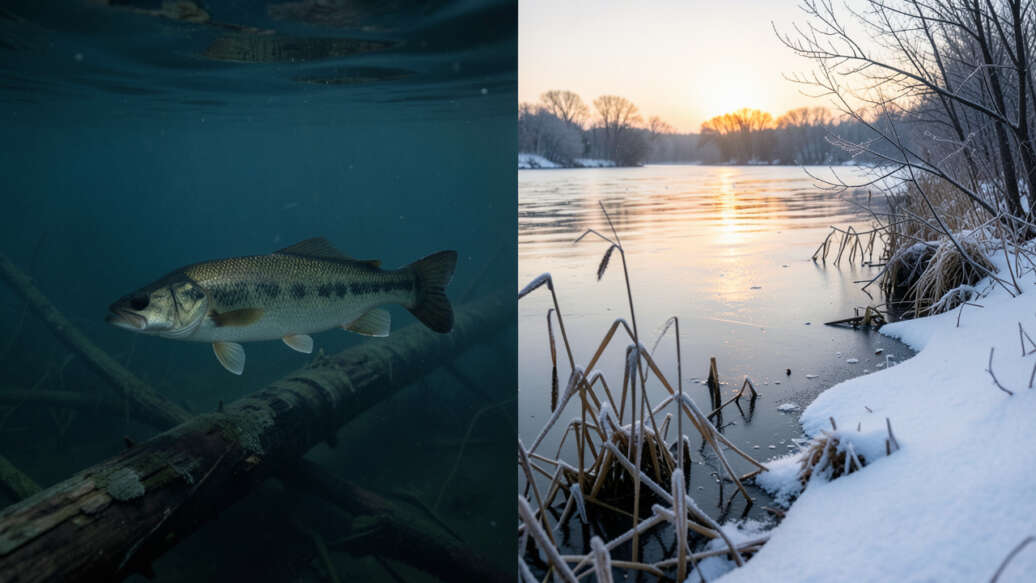
As water temperatures drop, the metabolism of bass significantly slows. This means they don’t need to feed as often or as aggressively. Their energy conservation is a survival instinct.
Focus on ambush points near cover where bass can conserve energy; they'll be positioned to strike with minimal effort.
They seek out areas where they can ambush prey with minimal effort. This change in behavior directly impacts how we should approach fishing for them. Simply put, fast-moving lures that work in warmer months will often be ignored by cold-water bass.
This is where mastering Winter Bass Tactics: Slow Presentations for Cold-Water Bass becomes your greatest asset. It’s not about changing your entire fishing philosophy, but rather fine-tuning your approach to match the bass’s winter mood. You’ll learn to think like a cold-water bass, anticipating their reduced activity and adjusting your lure speed and action accordingly.
Choosing the Right Lures for Cold Water
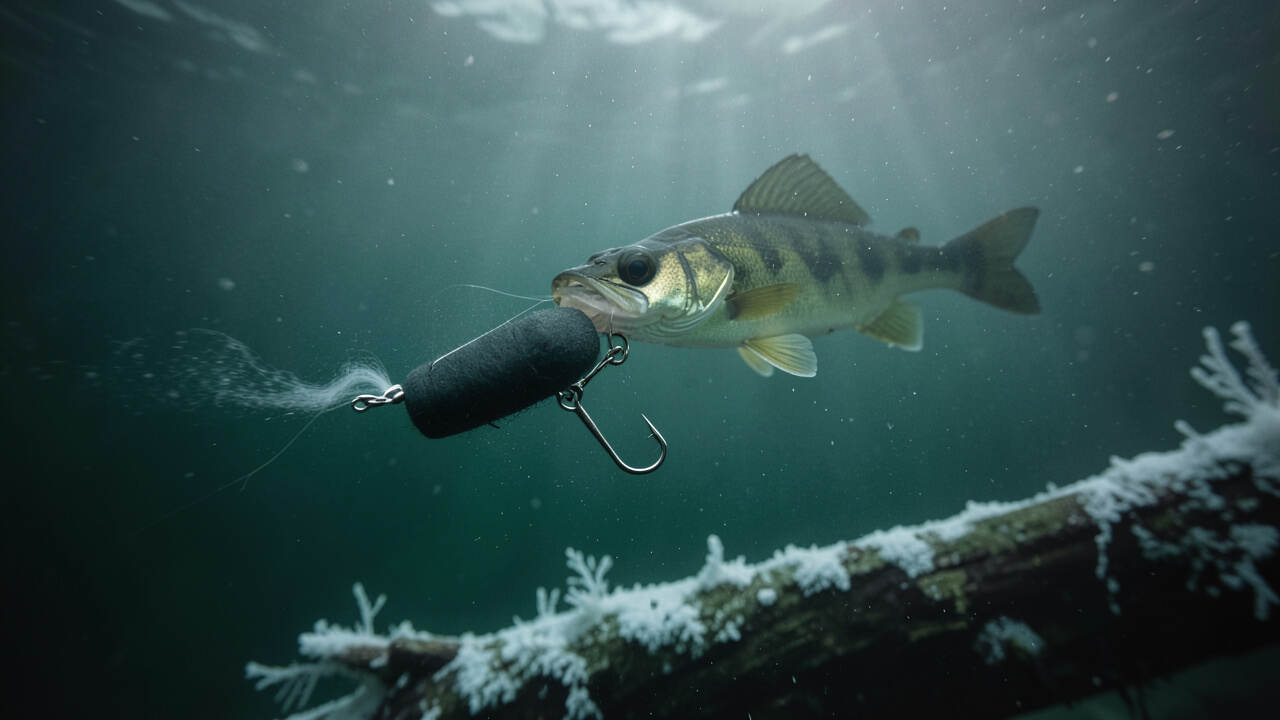
Selecting the correct lure is the first step in effective cold-water bass fishing. The goal is to imitate the slow, deliberate movements of baitfish or crawfish that bass are likely to encounter and consume in winter. Think about what the bass are seeing and what they can easily catch.
Subtle action and natural colors often outperform flashy, erratic lures.
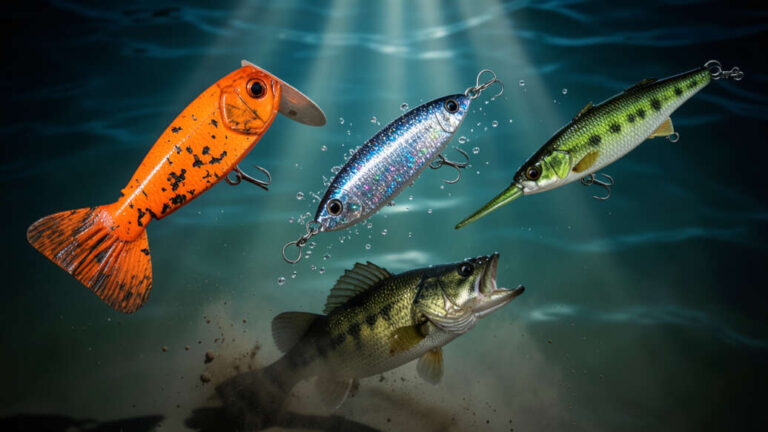
Several lure types consistently perform well when employing Winter Bass Tactics: Slow Presentations for Cold-Water Bass. These are lures that can be worked at a snail’s pace, mimicking dying bait or slow-moving prey. The key is to present them in a way that a bass can easily strike without expending much energy.
Jigs: The Cold-Water Workhorse
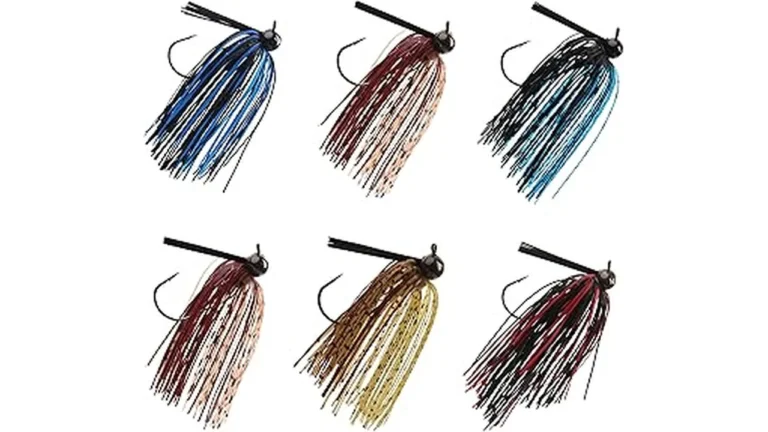
Jigs are perhaps the most versatile lure for cold-water bass. Their ability to be fished slowly and bounced along the bottom makes them ideal. A football jig, for example, can be dragged or hopped along the bottom, mimicking a crawfish.
A finesse jig with a subtle trailer can imitate a small baitfish.
The key to jig fishing in winter is to keep it on the bottom and move it as little as possible. Long pauses between hops or drags are critical. Bass in cold water often strike jigs on the fall or when the lure is sitting still.
This is a prime example of effective Winter Bass Tactics: Slow Presentations for Cold-Water Bass.
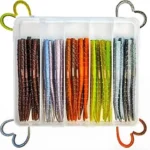
A soft plastic worm dragged with minimal rod movement mimics a slow, easy meal that lethargic bass find hard to resist.
Soft Plastics: Subtle and Effective
Soft plastics offer a wide range of options for slow presentations. Senkos, finesse worms, and creature baits can all be deadly. The trick is to rig them in a way that allows for a slow, natural fall or a minimal-action retrieve.
A weightless Texas rig or a Neko rig can make a soft plastic bait fall very slowly. This is perfect for targeting bass suspended in the water column or holding near structure. Dragging a soft plastic worm along the bottom with just a few twitches of the rod tip can also entice bites from lethargic bass.
The subtle action is often enough to trigger a strike.
Lipless Crankbaits: Slow Roll Strategy
While often associated with faster retrieves, lipless crankbaits can be incredibly effective in winter when fished slowly. The key is to cast them out, let them sink to the desired depth, and then retrieve them with a very slow, steady roll. Occasional pauses can also be beneficial, allowing the bait to flutter down.
This slow roll mimics a wounded baitfish. Many strikes will occur when the bait is stationary or just beginning to move again. This technique is a fantastic part of Winter Bass Tactics: Slow Presentations for Cold-Water Bass, especially when bass are holding in deeper water or around vegetation.
Swimbaits: Small and Subtle
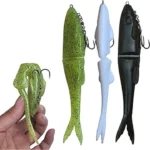
Smaller swimbaits, particularly those with a subtle paddle tail action, can be very effective. Rigging them on a jig head and retrieving them with a slow, steady cadence can imitate small baitfish. The key here is the subtle tail kick that the bait provides even at slow speeds.
Avoid swimbaits with large, aggressive tails that create too much action. You want something that moves just enough to attract attention. This approach is a direct application of Winter Bass Tactics: Slow Presentations for Cold-Water Bass, focusing on natural bait imitation.
Understanding Bass Behavior in Cold Water
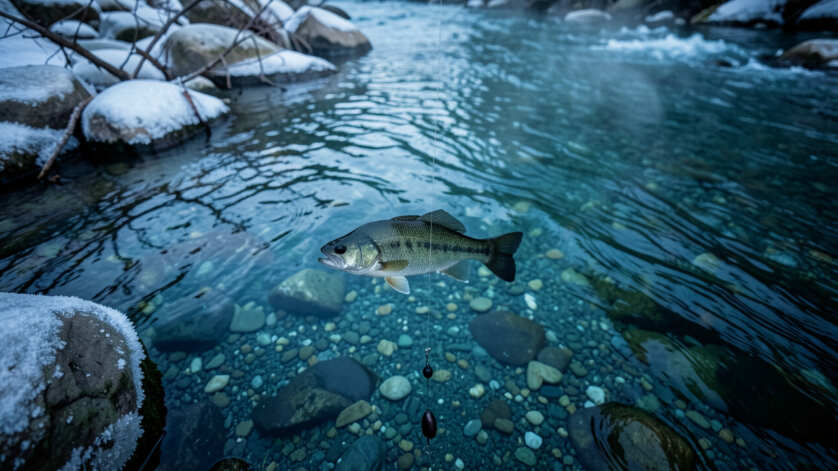
In winter, bass congregate in specific areas where they can conserve energy and find food. They are typically found in deeper water, but can also be found in shallower, sun-warmed areas on sunny days. Understanding these patterns is as important as the lure you choose.
Knowing where bass hold in winter is just as critical as the lure you throw; without location, presentation means little.
Bass will often hold tight to cover. This could be submerged trees, rock piles, ledges, or docks. They position themselves to ambush any available food source with minimal movement.
Your goal is to get your slow-moving bait right in front of their noses.
Where to Find Bass in Winter
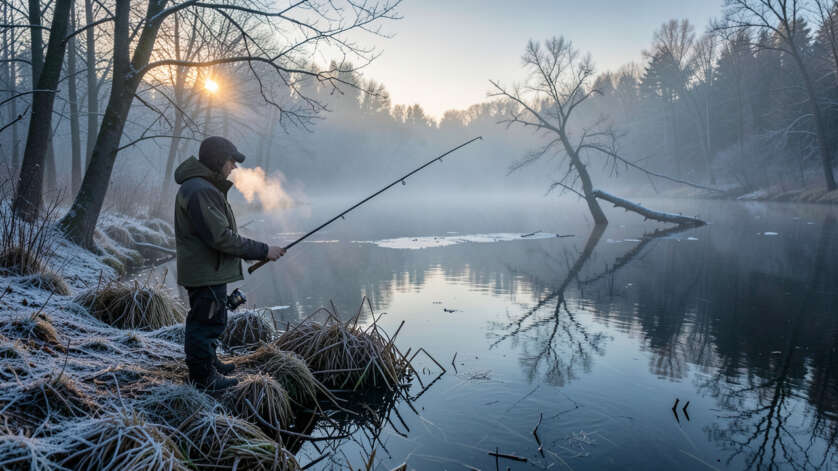
Locating winter bass is often about finding the warmest, most comfortable water they can access. This typically means deeper areas of the lake or reservoir. Think about drop-offs, creek channels, and the deepest parts of main lake points.
Target deeper drop-offs and creek channels in winter, but don't ignore sun-warmed shallows that can attract feeding bass.
However, don’t discount shallower areas on sunny days. Bass will move up to feed in these areas if the sun warms the water just a few degrees. This is where observing the water temperature and weather patterns becomes crucial for successful Winter Bass Tactics: Slow Presentations for Cold-Water Bass.
Techniques for Slow Presentations
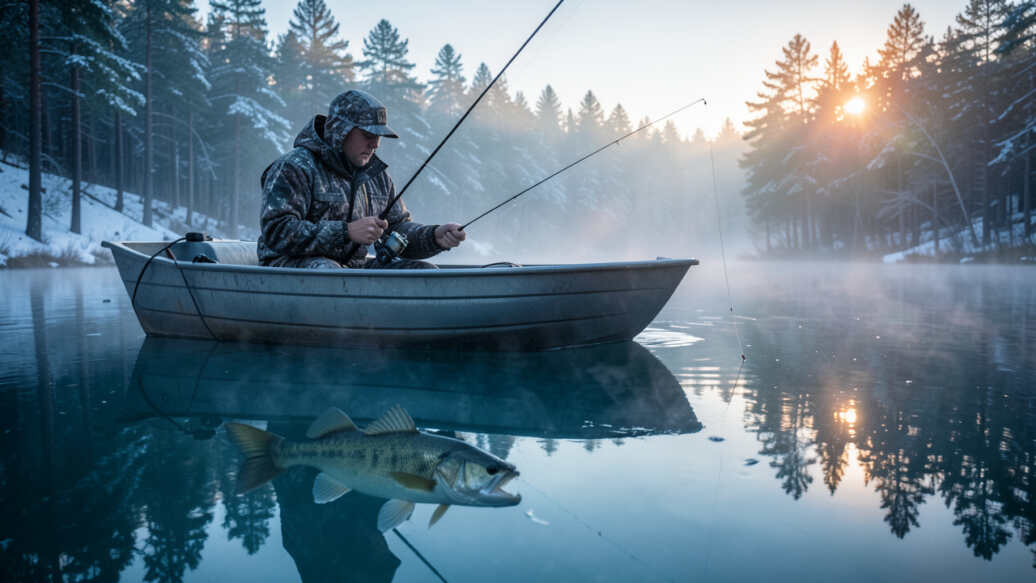
Executing slow presentations requires patience and a delicate touch. It’s not just about using slow-moving baits; it’s about how you work them. The goal is to keep the lure in the strike zone for as long as possible.
Mastering these techniques is the essence of effective Winter Bass Tactics: Slow Presentations for Cold-Water Bass. It’s about making the bass work for it as little as possible, making their decision to strike an easy one.
The Drag and Hop
This is a classic technique for jigs and soft plastics. Cast your lure to the target area. Let it sink to the bottom.
Then, slowly drag the lure a short distance with your rod tip. Pause for several seconds, then give it a slight hop or twitch. Let it settle again.
Repeat this process.
The key is the pause. Bass in cold water will often strike when the lure is sitting still. A long pause gives them time to investigate and decide to bite.
This method directly applies Winter Bass Tactics: Slow Presentations for Cold-Water Bass by maximizing bottom contact time.
Avoid rushing your retrieve; the key is to keep your lure in the strike zone as long as possible to entice a reluctant bite.
The Dead Stick
Dead sticking is exactly what it sounds like: letting the lure sit. Cast your bait to the desired location. Let it sink to the bottom or the target depth.
Then, do nothing. Let it sit there for 10, 20, or even 30 seconds. Then, give it a very gentle twitch or a slow retrieve, and repeat the pause.
This technique is incredibly effective when bass are extremely lethargic. They might not even chase a bait that moves. They want it to come to them.
This is a pure form of Winter Bass Tactics: Slow Presentations for Cold-Water Bass.
The Slow Roll
This technique is primarily used with lipless crankbaits or smaller swimbaits. Cast the lure out and allow it to sink. Begin a very slow, steady retrieve.
You should barely feel the lure working. The goal is to keep it just above the bottom or at the depth where you believe the bass are holding.
If you’re using a lipless crankbait, you might feel the rattles. For a swimbait, you should feel a very subtle tail kick. The slow roll keeps the lure in the strike zone for an extended period without spooking wary fish.
Rod, Reel, and Line Considerations
Your equipment can also play a role in successful cold-water bass fishing. While not as critical as lure choice and presentation, the right gear can make a difference.
For slow presentations, a sensitive rod is important. You need to feel subtle bites. A medium-light or medium-action rod with a fast tip is generally a good choice.
This allows for good casting distance and sensitivity to detect light takes.
A sensitive rod with a fast tip is essential for feeling subtle winter bites, and a spinning reel helps cast lighter finesse baits.
A spinning reel is often preferred for finesse techniques and light line. This helps in casting lighter lures and managing line. For heavier jigs or larger baits, a baitcasting reel might be more suitable.
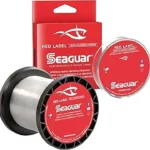
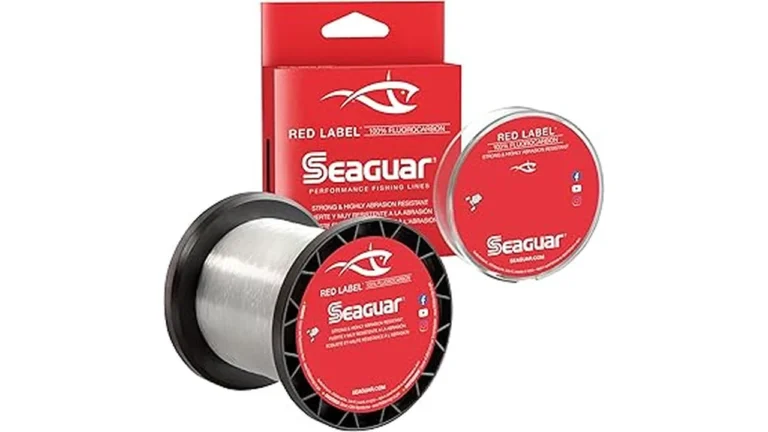
Line choice is also important. Fluorocarbon line is a popular choice for cold-water bass fishing. It sinks well, has low stretch, and is very abrasion-resistant.
Its low visibility can also be an advantage when bass are wary.
Reading the Water and Bass Mood
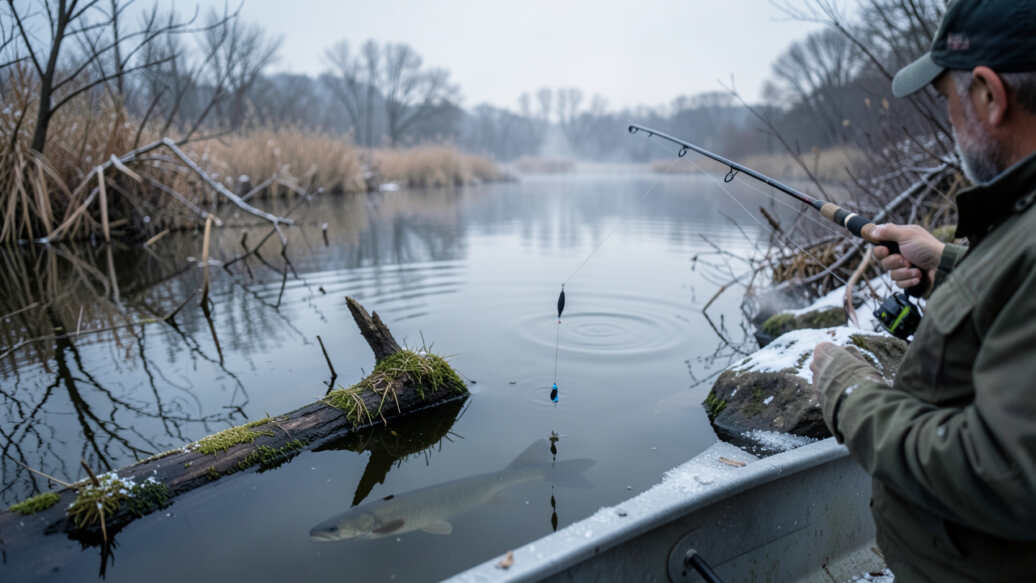
Paying attention to subtle cues can significantly improve your success. Observe the water temperature, clarity, and weather conditions. These factors dictate bass behavior.
Sunny days can warm shallow areas, drawing bass up. Overcast days might keep them deeper. Clear water often means bass will be more cautious and might prefer more natural colors and even slower presentations.
In clear winter water, bass become hyper-cautious, demanding natural colors and ultraslow presentations to trigger a strike.
Stained or muddy water can allow for slightly more aggressive presentations and brighter colors.
The key to Winter Bass Tactics: Slow Presentations for Cold-Water Bass is adapting to these conditions. If you’re not getting bites, try a different presentation speed or a slightly different lure. Sometimes a tiny adjustment can make all the difference.
Common Mistakes to Avoid
Even with the right knowledge, anglers can make mistakes. Being aware of these common pitfalls can help you avoid them and increase your catch rate.
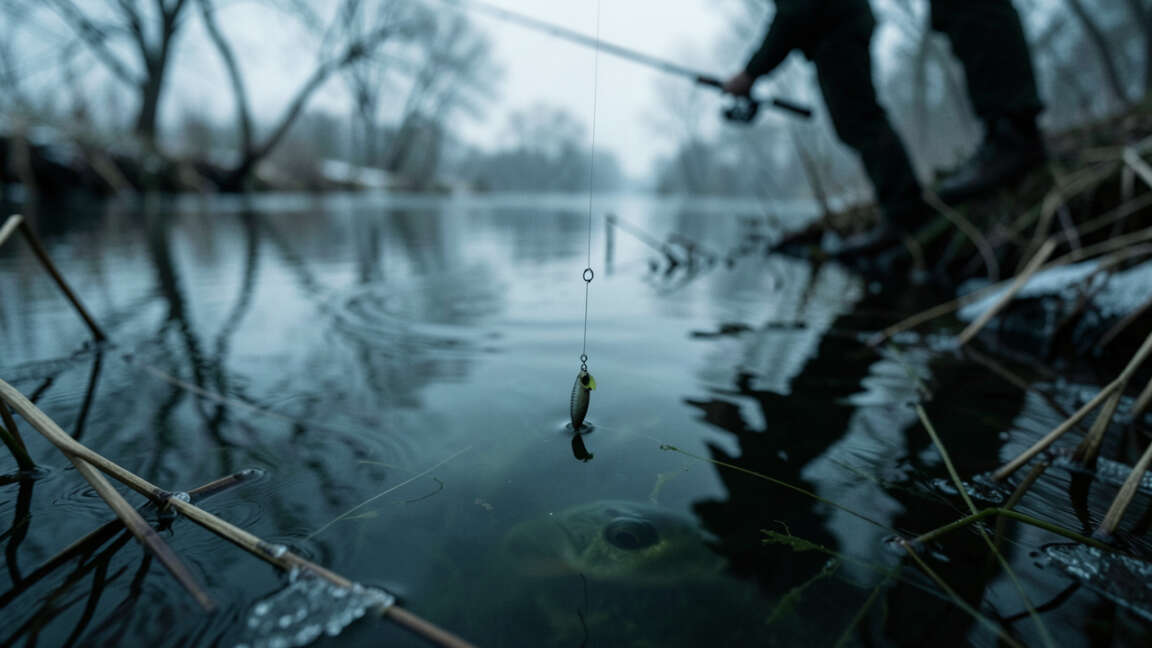
Don't retrieve too fast in winter; bass won't chase. Fish deep and stay patient for infrequent but quality bites.
- Retrieving too fast: This is the most common mistake. In winter, bass are not aggressive feeders. They cannot chase down fast lures.
- Not fishing deep enough: Bass often move to deeper, more stable water temperatures in winter.
- Giving up too soon: Winter bass fishing requires patience. Bites can be infrequent, but they can be quality fish.
- Ignoring subtle bites: Cold-water bass often bite very gently. You must be attuned to the slightest tap or weight increase.
- Using the wrong lure action: Overly active lures can spook lethargic bass. Subtle, natural movements are key.
Frequently Asked Questions
What is the best time of day for winter bass fishing?
Generally, the warmest part of the day is best. This is typically mid-morning to mid-afternoon, especially on sunny days. Bass will be more active and willing to feed when the water temperature is slightly higher.
Should I use brighter colors for winter bass?
Usually, natural colors like black, brown, green pumpkin, and white work best. However, in very stained or muddy water, chartreuse or a bright crawdad color might get more attention. It’s about matching what the bass are seeing in their environment.
How do I know if my presentation is too fast?
If you are casting to likely bass locations and not getting any bites, or if you are getting short strikes where the bass spit the lure out quickly, your presentation is likely too fast. Try slowing down even more.
What is the ideal water temperature for winter bass fishing with slow presentations?
While bass can be caught in the 30s and 40s, the 40s and low 50s are often prime for Winter Bass Tactics: Slow Presentations for Cold-Water Bass. As the water approaches 50°F, bass start to become more active and willing to move for a meal.
Are there any specific jig types best for winter bass?
Yes, football jigs and finesse jigs are excellent. A football jig is great for dragging along the bottom, while a finesse jig with a subtle trailer can imitate small baitfish or crawfish. The slow, deliberate action is key.
How important is line visibility in winter bass fishing?
Line visibility can be quite important, especially in clear water. Many anglers prefer fluorocarbon line because it sinks well and has low visibility. This helps present your lure more naturally to wary, cold-water bass.
Final Thoughts
Mastering Winter Bass Tactics: Slow Presentations for Cold-Water Bass is about patience and adaptation. By slowing down your retrieves, choosing the right lures, and understanding where bass hold in the cold, you can significantly increase your success. Focus on subtle bait movements and long pauses to entice those sluggish winter giants.


One Comment