






Spotted Bass Vs Largemouth: How To Tell Them Apart Quickly
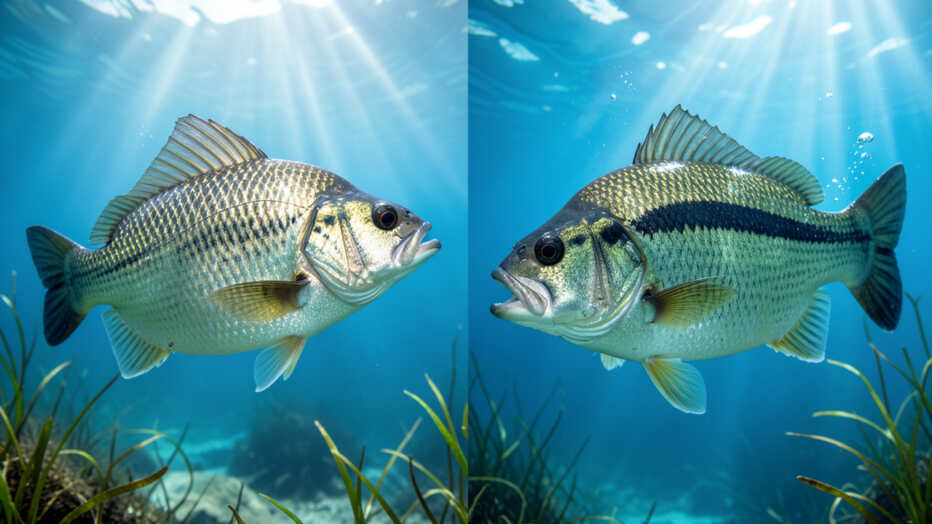
Spotted bass and largemouth bass can be told apart quickly by examining the mouth shape, as the jaw of a largemouth extends past the eye while a spotted bass’s jaw does not. Additional reliable field marks include the presence of small, distinct spots on the belly and a connected tongue patch on spotted bass, versus a smooth tongue on largemouth. Their lateral lines also differ; a spotted bass’s lateral line is more pronounced and often broken, whereas a largemouth’s is continuous. Understanding these quick visual and anatomical cues allows anglers to confirm species instantly, which is critical for accurate catch records and targeted fishing strategies.
When you’re out fishing, knowing exactly what’s on the end of your line can make all the difference. It’s not just about bragging rights; understanding the fish you catch helps you fish smarter. This guide will help you with Spotted Bass vs Largemouth: How to Tell Them Apart Quickly.
You’ll learn the simple ways to spot the differences so you can identify your catch in seconds and enjoy your time on the water even more.
Key Takeaways
- You’ll learn the easiest ways to tell a Spotted Bass from a Largemouth Bass.
- We’ll show you how to look at their mouths and bodies to see the key differences.
- You’ll understand why knowing the difference helps with fishing success.
- We’ll cover how their habits and habitats can give clues to their identity.
- You’ll get tips on how to identify them quickly on the water.
Quickly Spotting the Difference: Mouth Shape Matters
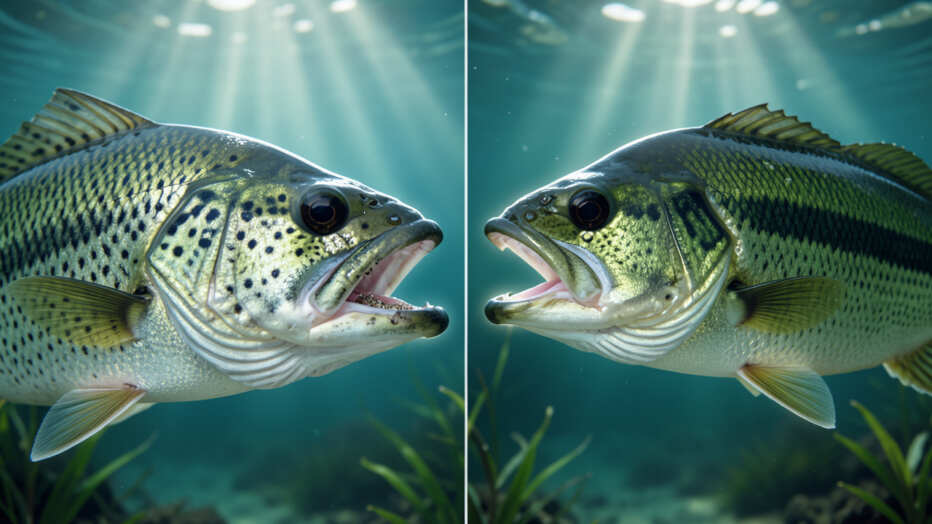
The easiest way to tell a Spotted Bass from a Largemouth Bass is by looking at their mouths. It’s the most obvious clue and something you can check in a flash. This is a key part of Spotted Bass vs Largemouth: How to Tell Them Apart Quickly.
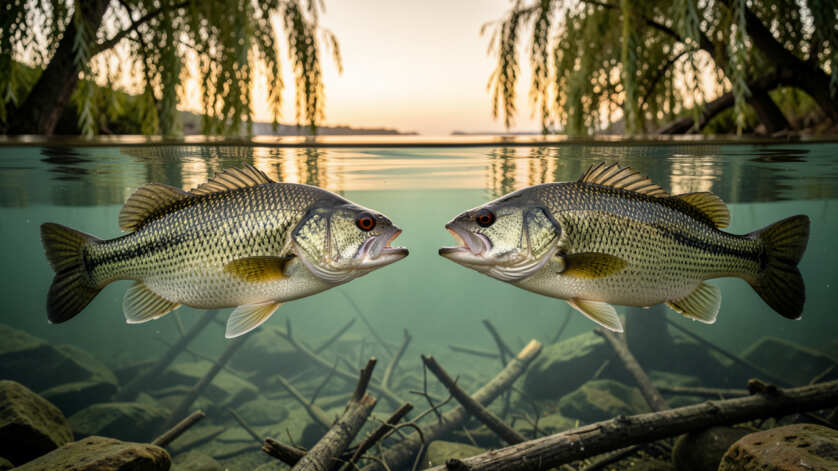
A Largemouth Bass has a mouth that extends well past the back of its eye when its mouth is closed. Think of it as a really wide smile. The upper jaw of a Largemouth is broad and seems to go on forever.
This large mouth helps them eat bigger prey. It’s a defining feature of this popular game fish.
Check where the upper jaw ends when the mouth is closed: if it reaches past the eye, it's a Largemouth; if it stops at or before the eye, it's a Spotted Bass.
A Spotted Bass, on the other hand, has a much smaller mouth. When you close its mouth, the upper jaw typically stops at or just behind the eye. It’s a much more delicate look compared to the Largemouth.
This smaller mouth means they usually eat smaller things, like insects and smaller fish.
The Jawline Test
To do the jawline test, simply imagine a line going straight up from the corner of the fish’s mouth. For a Largemouth, this line will go past the back of the eye. For a Spotted Bass, the line will hit the eye or stop just before the back of the eye.
This simple check is a great shortcut for Spotted Bass vs Largemouth: How to Tell Them Apart Quickly.
Body Markings: Stripes and Spots
Beyond the mouth, the markings on the fish’s body can also help you distinguish between the two. These patterns are like a fish’s fingerprint. Learning these details is crucial for Spotted Bass vs Largemouth: How to Tell Them Apart Quickly.
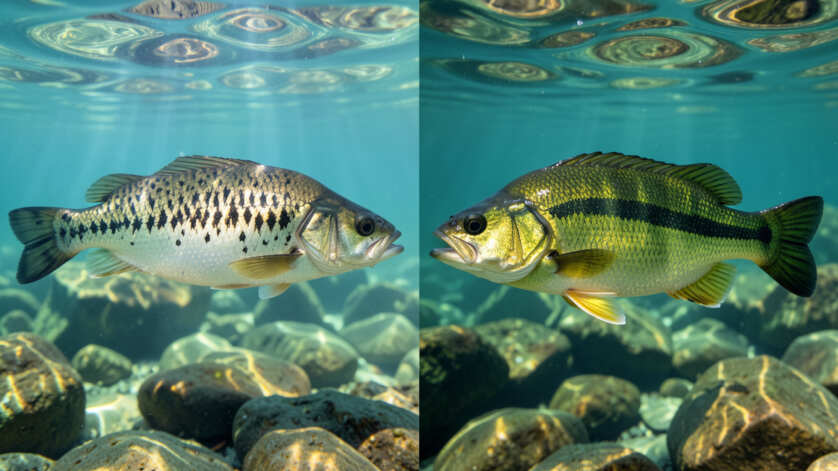
Largemouth Bass are named for their large mouths, but their body markings are also distinct. They usually have a dark, horizontal stripe running from their gill cover all the way to their tail. This stripe isn’t always a solid line.
It can be broken up and look like a row of dark blotches. The background color is typically green.
The Largemouth's lateral line tends to be more continuous, while the Spotted Bass shows a row of distinct, disconnected blotches along its side.
Spotted Bass get their name from the spots they have. They usually have a series of dark, disconnected blotches or spots along their sides. These spots often form broken lines.
They also have a distinct dark stripe running along their lateral line, but it’s usually more pronounced and broken than the Largemouth’s stripe. Their body color can be a bit more coppery or brassy than a Largemouth.
Lateral Line Clues
Pay close attention to the lateral line – the faint line running down the side of the fish. On a Spotted Bass, this line is often more jagged and appears to connect the spots. The Largemouth’s lateral line is usually more continuous, though it can be faint.
This visual cue aids in Spotted Bass vs Largemouth: How to Tell Them Apart Quickly.
Fin Differences: A Subtle but Useful Sign
While not as obvious as the mouth or body spots, the fins can offer another clue. This is a more subtle point, but it can be helpful when you’re trying to confirm your identification. It adds another layer to understanding Spotted Bass vs Largemouth: How to Tell Them Apart Quickly.
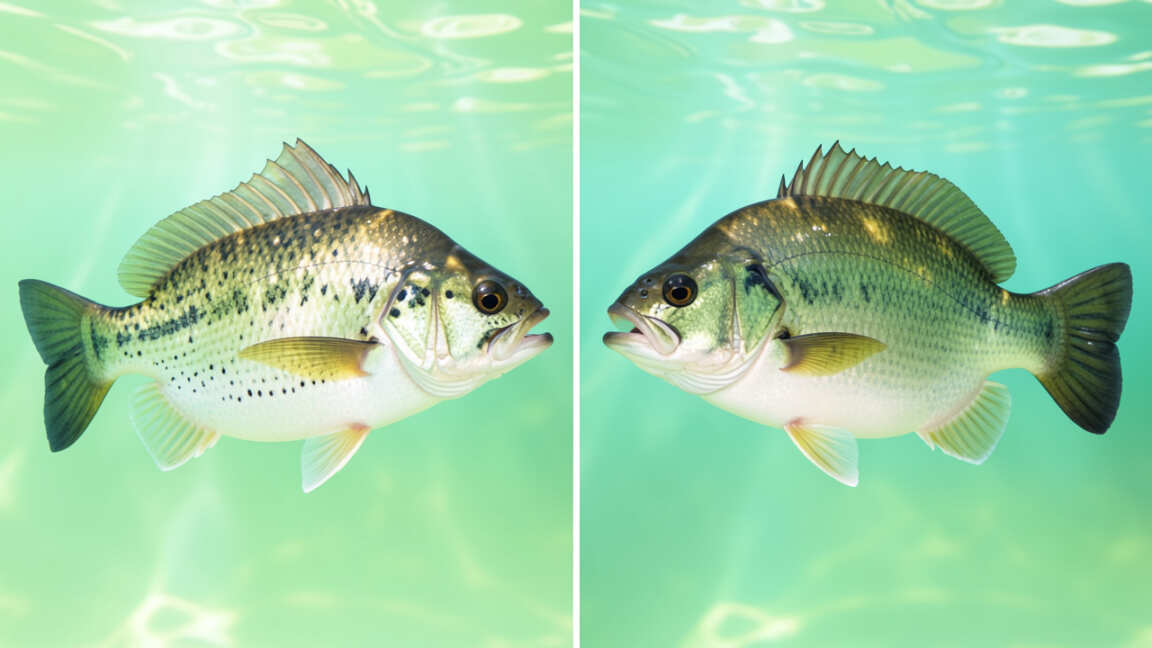
The dorsal fins of Largemouth Bass are quite distinct. They have a deep notch separating the spiny front part of the dorsal fin from the soft-rayed back part. This notch is so deep it often looks like two separate fins.
The spiny rays are usually stiff and pointed.
The dorsal fin of a Spotted Bass has a shallower notch and softer spiny rays compared to the deep, two‑fin look of a Largemouth.
Spotted Bass also have a notched dorsal fin, but the notch is much shallower. It looks more like a single fin with a slight dip in the middle. The spiny rays are often softer and less distinct than those of a Largemouth.
This difference in the dorsal fin can be a good confirmation point.
Tongue Patch: A Tiny Detail for Big Differences
One of the most reliable, though often overlooked, differences is a small patch of teeth on the tongue. Largemouth Bass usually have a prominent, oblong patch of sandpaper-like teeth on their tongue. Spotted Bass, however, typically lack this prominent patch or have a much smaller, less noticeable one.
Checking this small detail can be very helpful.
Habitat and Behavior: Where They Live and How They Act
Understanding where these fish prefer to hang out and how they behave can also help you identify them. While their habitats can overlap, there are general preferences that can give you a hint. This knowledge complements the physical clues for Spotted Bass vs Largemouth: How to Tell Them Apart Quickly.
Largemouth Bass are often found in warmer, shallower waters. They love areas with plenty of cover like lily pads, submerged logs, and vegetation. They are ambush predators and like to hide and wait for their prey.
You’ll often find them in lakes, ponds, and slow-moving rivers.
Use the environment as a clue: Largemouth favor warm, weedy shallows, while Spotted Bass are more often found in rocky, current‑swept areas.
Spotted Bass tend to prefer cooler, clearer water than Largemouth. They are often found in or near current, especially in rivers and larger reservoirs. They like rocky areas, gravel bottoms, and points that extend into the water.
While they also like cover, they are more often associated with structure and moving water.
Current Seekers vs. Cover Lovers
If you’re fishing in a fast-moving river or a clear, rocky section of a lake, you might be more likely to catch a Spotted Bass. If you’re in a shallow, weedy pond or a slow, murky creek, a Largemouth is a stronger possibility. Thinking about the environment helps refine your identification process.
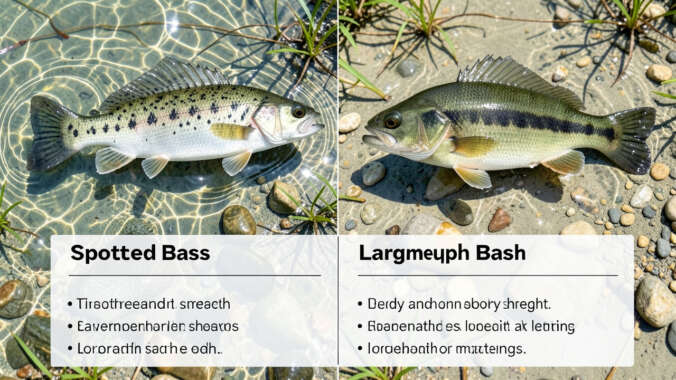
Comparison Table: Spotted Bass vs. Largemouth Bass
To make things even clearer, here’s a table summarizing the key differences. This is a quick reference for Spotted Bass vs Largemouth: How to Tell Them Apart Quickly.
Relying only on body markings can be misleading because both species can have broken stripes; always confirm with the mouth and dorsal fin notches.
Why Knowing the Difference Matters for Anglers
So, why bother learning to tell them apart? It’s more than just a trivia question. Understanding the difference between Spotted Bass vs Largemouth: How to Tell Them Apart Quickly can actually make you a better angler.
It affects your fishing strategy and helps you understand fish behavior.
Different bass species have different fight styles. Knowing if you’ve hooked a Largemouth or a Spotted Bass can prepare you for the fight. Largemouth are known for their explosive jumps and powerful runs.
Knowing whether you’re targeting a Largemouth or Spotted Bass lets you adjust your lure selection and retrieve speed to match each species’ feeding style.
Spotted Bass can also be feisty, often running and diving, and they can be surprisingly strong for their size.
It also helps with understanding feeding patterns. Since they eat different sized prey, knowing which fish you’re targeting can help you choose the right bait. A Largemouth might go for a larger crankbait or topwater lure, while a Spotted Bass might be more attracted to smaller finesse baits, jigs, or even live bait.
Conservation and Regulations
In some areas, fishing regulations might differ slightly for different bass species. Knowing the species you’ve caught ensures you are following all local fishing laws. This is important for conservation efforts and keeping fish populations healthy.
It’s a responsible part of angling.
Tips for Quick Identification on the Water
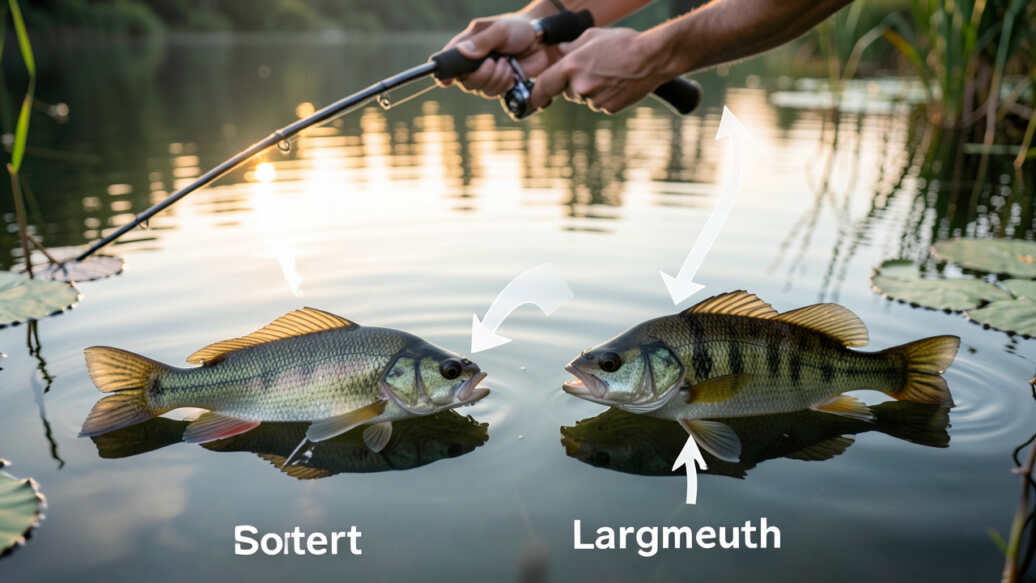
When you’ve just landed a fish, you want to identify it fast. Here are some tips to make that process quick and easy. Mastering these will help you with Spotted Bass vs Largemouth: How to Tell Them Apart Quickly.
First, always check the mouth. This is your go-to clue. Does the jawline go past the eye or stop at/before it?
This one detail will tell you a lot.
Second, glance at the body. Look for that distinct horizontal stripe of the Largemouth or the broken spots of the Spotted Bass. This visual confirmation is quick.
The habitat where you caught the fish—weedy flats versus rocky current—often provides the strongest initial hint before you even look at the mouth. Knowing the species you've caught ensures you are following all local fishing laws.
Next, consider the habitat. Where did you catch the fish? Was it in a weedy, shallow area or a rocky, current-swept spot?
This context can strongly suggest one species over the other.
Then, if you’re still unsure, look at the dorsal fin. A deep notch points to Largemouth; a shallow one suggests Spotted Bass.
Finally, don’t stress too much if you’re not 100% sure every time. These tips are designed to give you a very high chance of correct identification. The more you practice, the faster you’ll become at it.
Frequently Asked Questions
What is the single easiest way to tell Spotted Bass and Largemouth Bass apart quickly?
The easiest way is to look at the mouth. A Largemouth Bass’s upper jaw extends past its eye, while a Spotted Bass’s jaw usually stops at or just behind the eye.
Do Spotted Bass have spots, and do Largemouth Bass have stripes?
Yes, Spotted Bass typically have a row of distinct spots or blotches along their sides. Largemouth Bass usually have a dark, horizontal stripe that can be broken into blotches.
Are Spotted Bass and Largemouth Bass found in the same places?
Their habitats overlap, but Largemouth Bass prefer warmer, shallower, vegetated areas, while Spotted Bass often prefer cooler, clearer water with more current and rocky structure.
Is the dorsal fin a reliable indicator for Spotted Bass vs Largemouth: How to Tell Them Apart Quickly?
Yes, the dorsal fin notch is a good secondary indicator. Largemouth Bass have a deep notch, while Spotted Bass have a much shallower notch.
Can I confuse Spotted Bass with Smallmouth Bass?
Yes, it’s possible, but Smallmouth Bass have a distinctly different mouth shape (jaw stops well before the eye) and are typically bronze or brown with vertical bars rather than spots or stripes.
Does the size of the fish matter when identifying Spotted Bass vs Largemouth?
While sizes vary, the key identifying features like mouth shape and body markings remain consistent regardless of the fish’s size. A small Largemouth will still have a large mouth, and a large Spotted Bass will still have its characteristic spots.
Final Thoughts
Distinguishing between Spotted Bass and Largemouth Bass is simpler than it sounds. Focus on the mouth shape and body markings for a quick identification. Knowing these differences helps you fish more effectively and understand these great game fish better.