
Pitching For Bass: Accurate Short-Range Casts To Cover
Pitching for bass demands accurate short-range casts to deliver lures precisely into tight cover such as docks, overhanging trees, and weed beds. Mastering specific techniques like the pendulum cast and flipping, combined with selecting a rod of appropriate length and action, greatly improves placement accuracy. This skill enables anglers to effectively present baits to wary bass hiding in prime ambush locations, directly boosting success rates on the water.
Getting your lure exactly where you want it, especially in tight spots, is key to catching more bass. Many anglers struggle with accuracy when they need to cast short distances to cover like docks or fallen trees. Learning the right techniques for Pitching for Bass: Accurate Short-Range Casts to Cover can make a huge difference.
You’ll gain the confidence to present your bait perfectly, fooling even the wariest fish hiding in those prime spots.
Key Takeaways
- Mastering short-range casting is vital for targeting specific bass habitats.
- Understanding your equipment makes accurate pitching much easier.
- Specific techniques like the pendulum cast help control your lure’s placement.
- Practice is essential for developing consistent accuracy in your casts.
- Reading the water helps you identify the best spots for short-range pitches.
- Adjusting your pitch based on wind and cover conditions improves success.
Why Precise Short-Range Casting Matters for Bass
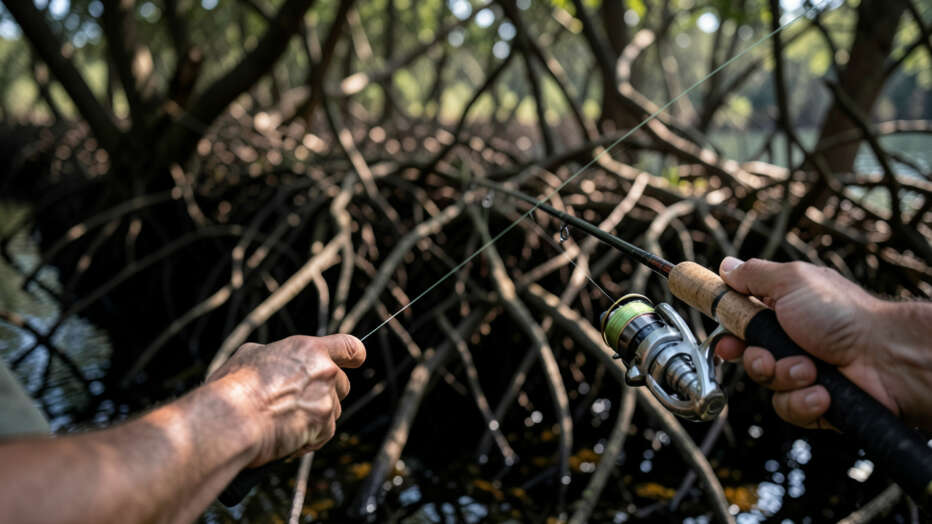
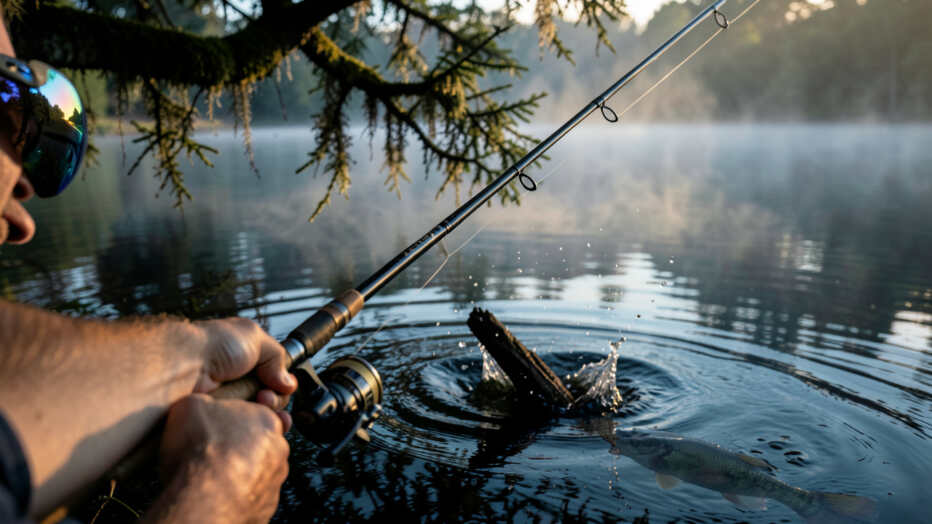
Bass are often found near cover. Think about docks, overhanging trees, or thick weed beds. These are prime ambush points for bass.
If you can’t get your lure right to that spot, you’re missing out on a lot of potential catches. Pitching for Bass: Accurate Short-Range Casts to Cover is all about precision. It’s not about distance; it’s about placing your bait where the fish are waiting.
This skill helps you fish effectively in tight areas where longer casts are impossible or will spook the fish.
Focus on lure placement rather than casting distance to reach bass hiding in tight cover like docks and overhanging trees.
When you can make accurate short casts, you can present your lure naturally. This means it lands softly and looks like real prey. Bass are easily spooked by loud splashes or poorly placed lures.
Being able to pitch accurately allows you to sneak up on them. This is especially true in clear water where fish can see everything. Improving your Pitching for Bass: Accurate Short-Range Casts to Cover means more opportunities and bigger bass.
It’s a fundamental skill for any serious bass angler.
Choosing the Right Gear for Accurate Pitching
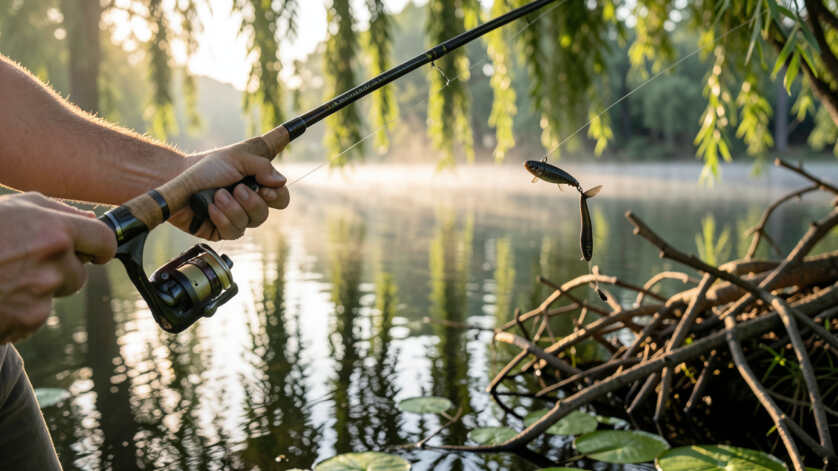
Your fishing gear plays a big role in how accurate your casts are. You don’t need fancy gear, but the right combination makes a difference. For Pitching for Bass: Accurate Short-Range Casts to Cover, think about your rod and reel.
A shorter, medium-action rod is often best. It gives you better control for short pitches. Reels that cast smoothly and don’t backlash easily are also important.
A reel with a good drag system helps manage fish once they bite.
The line you use also matters. Braided line is popular for pitching. It has no stretch, which means better hooksets.
It also cuts through weeds easily. However, some anglers prefer monofilament or fluorocarbon for its softer feel. If you’re new to pitching, a monofilament line might be more forgiving.
It’s less likely to create tangles during your cast. Experiment with different line types to see what feels best for you.
Rod Length and Action
Rod length is crucial for short-range casting. Longer rods are great for distance, but they can be unwieldy for precise pitches. A rod between 6 feet and 7 feet is often ideal for pitching.
Selecting a reel that casts smoothly and resists backlash is crucial for maintaining accuracy during short pitches.
Shorter rods give you more control over the lure’s trajectory. They also allow for a more compact casting motion. This is important when you have limited space behind you.
The rod’s action describes how much it bends when you cast. A medium or medium-heavy action rod is usually recommended for pitching. This action provides a good balance.
It has enough backbone to set the hook firmly. It also has enough flex to load up nicely for a controlled cast. A fast-action tip helps with accuracy and allows for quick hooksets.
Reel Selection and Maintenance
For pitching, a baitcasting reel is often preferred. They offer more control over your line. They also allow for precise adjustments during the cast.
Look for a reel with a smooth casting mechanism. Adjustable brakes or a magnetic cast control system can help prevent backlashes. This is especially useful when you are learning Pitching for Bass: Accurate Short-Range Casts to Cover.
Keeping your reel in good condition is vital. A clean and well-lubricated reel will cast more smoothly. This leads to better accuracy and fewer tangles.
Regularly clean your reel. Apply a light oil to the moving parts. Check the spool tension.
Adjust it so the lure drops slowly when you cast. This fine-tuning will significantly improve your pitching game.
Mastering the Pitching Technique
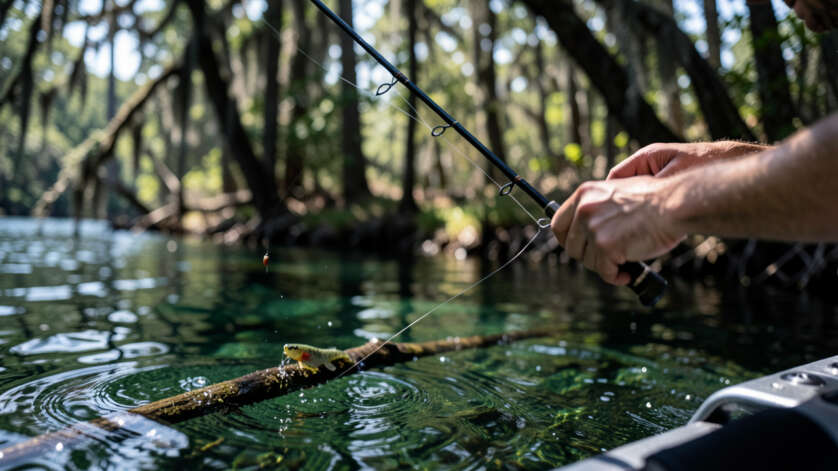
The actual casting motion for pitching is different from a standard overhead cast. It’s more of a controlled flick of the wrist and forearm. The goal is to make a quiet entry into the water.
This is key for Pitching for Bass: Accurate Short-Range Casts to Cover. You’ll want to keep the lure close to the water surface as it travels to your target.
There are a few common pitching techniques. Each works best in different situations. Understanding these methods will help you adapt to various fishing scenarios.
Practice is essential to get comfortable with each one. Don’t get discouraged if it takes time. Consistent practice will make these techniques feel natural.
The Pendulum Cast
The pendulum cast is a fantastic technique for very tight spaces. You don’t need much room behind you. Hold the lure with your free hand.
Swing it back and forth like a pendulum. As it swings forward, release the lure. This gentle swing allows for a very soft landing.
It’s perfect for placing your bait right next to a dock post or under a low-hanging branch.
To perform the pendulum cast, hold the lure near the rod tip. Let the weight of the lure do most of the work. Swing it back gently.
Then, swing it forward smoothly. Release the line just as the lure starts its forward arc. Keep your casting hand relaxed.
Mastering different pitching techniques allows you to adapt to any fishing scenario and consistently reach bass near cover.
This technique requires finesse rather than power. It’s a cornerstone of Pitching for Bass: Accurate Short-Range Casts to Cover.
The Flipping Technique
Flipping is similar to pitching but often involves even shorter distances. You hold the line between your hand and the reel. You then use your wrist to flick the lure out.
It’s a very controlled motion. It’s excellent for precise placement directly below your rod tip. This is great for casting into very tight, shallow cover where a bigger casting motion would be too much.
For flipping, keep the lure very close to the rod tip. Use a slight wrist snap to send it out. You can control the distance by adjusting the amount of line you have out.
More line means a slightly longer flip. Less line means an even shorter, more precise flip. This is a subtle but powerful way to target specific spots.
It’s a vital part of mastering Pitching for Bass: Accurate Short-Range Casts to Cover.
The Pitching Cast
The classic pitching cast involves a slight backswing. You’ll hold the line with your thumb on the spool of your baitcasting reel. You then swing the rod back slightly, loading the rod tip.
As you bring the rod forward, release your thumb to let the line out. You control the distance by how much thumb pressure you apply. Less pressure means the lure travels further.
This technique is about smooth, controlled power. It allows you to cast further than flipping but still maintain accuracy. The key is to keep the rod tip down and close to the water.
This minimizes air time and helps with accuracy. It also allows for a softer entry. This is the most common method for Pitching for Bass: Accurate Short-Range Casts to Cover when you have a little more space.
Reading the Water for Optimal Pitching Opportunities
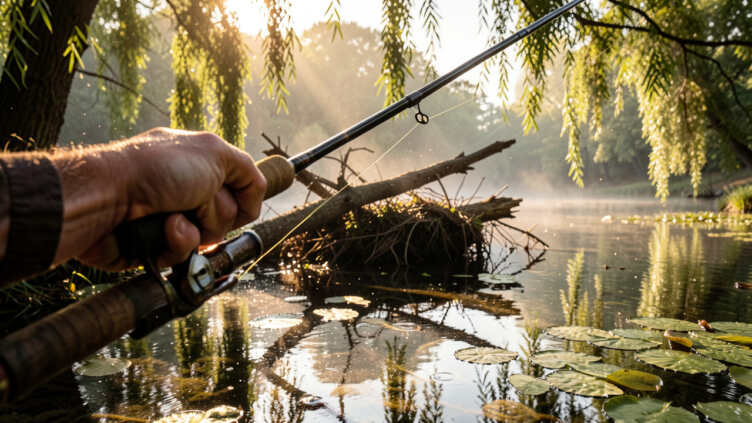
Knowing where to cast is just as important as how you cast. Bass love structure and cover. Identifying these spots is key to successful fishing.
Look for anything that breaks up the water’s surface or provides shade. These are the places where bass are likely to hold.
Pay attention to changes in the bottom. Underwater humps, drop-offs, and points can attract bass. Also, look for anything that might provide a food source.
Weeds, submerged logs, and rocks are all good places to investigate. Your accurate casting will allow you to reach these promising locations.
Identifying Bass Hangouts
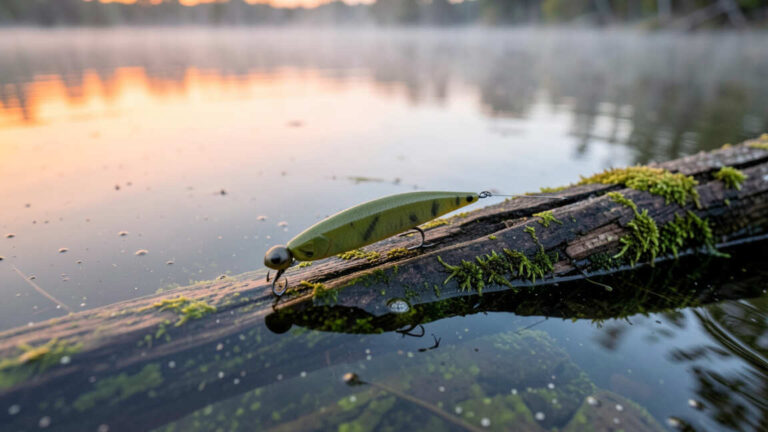
Common bass hangouts include lily pads, submerged vegetation, and fallen trees. Docks are also excellent places to pitch to. The shade they provide is a magnet for bass.
Look for docks with pilings and a dark underside. Bass will often hide right under the edge of the dock.
Identify underwater structures like drop-offs, weed edges, and submerged logs to pinpoint where bass are likely holding.
Overhanging trees offer both shade and cover. Cast your lure into the shadows created by the leaves. Pay attention to the water depth.
Bass might be shallower in cooler water and deeper in warmer water. Understanding these patterns helps you know where to aim your pitches.
Using Wind to Your Advantage
Wind can be your friend or your enemy when pitching. A slight breeze can help carry your lure a little further. It can also help mask the sound of your lure hitting the water.
However, strong winds can make accurate casting very difficult. If the wind is blowing towards your target, use it to help your cast.
If the wind is blowing against you, it will be harder to cast accurately. You might need to adjust your technique. Try a shorter backswing.
You may also need to use a heavier lure. This will help it cut through the wind. Learning to read the wind is part of mastering Pitching for Bass: Accurate Short-Range Casts to Cover.
Practicing Your Way to Pitching Perfection
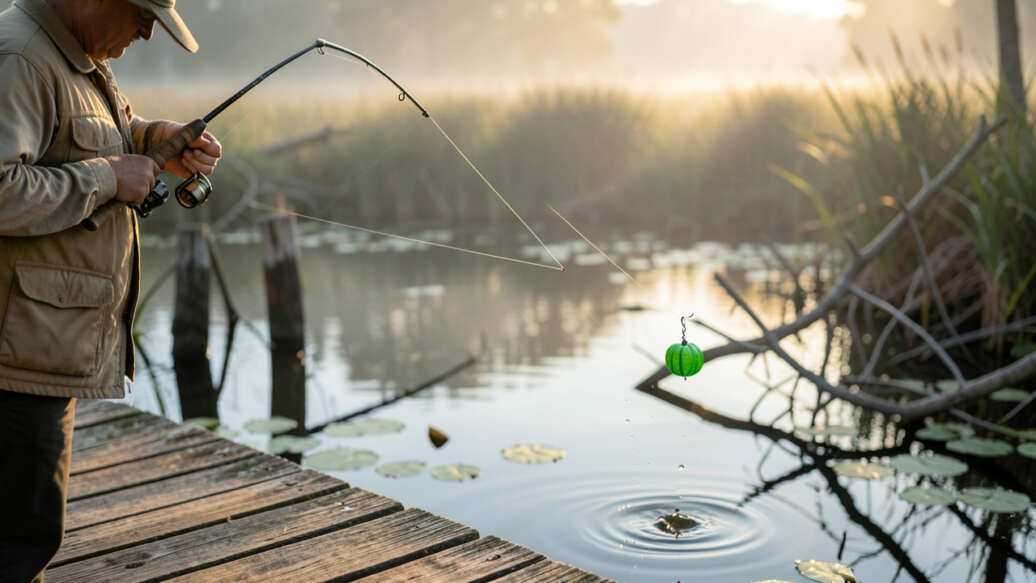
No one becomes a master angler overnight. Practice is the only way to improve your casting skills. Find a good spot where you can practice without distractions.
A local park pond or even your backyard can work. The key is repetition and focus.
Set up targets. Buckets, hula hoops, or even just a marked spot on the ground can serve as targets. Focus on hitting the same spot repeatedly.
This builds muscle memory. It helps you develop a consistent casting motion. Don’t worry about catching fish during practice.
Focus solely on your casting accuracy.
Drills for Accuracy
Try setting up a series of targets at different distances. Start close and gradually increase the distance. Work on hitting each target with different pitches.
Try to land your lure as softly as possible. This simulates a natural presentation. It’s crucial for Pitching for Bass: Accurate Short-Range Casts to Cover.
Avoid rushing your wrist and forearm movements—smooth, controlled motions with a low rod tip prevent spooking fish.
Another good drill is to practice casting into small openings. Imagine a small hole in the weeds or under a dock. Try to guide your lure precisely into that opening.
This helps you develop the fine control needed for difficult situations. The more you practice, the more confident you will become.
Consistency is Key
Consistency comes from repeating the same motion over and over. Focus on your form. Ensure your wrist and forearm movements are smooth and controlled.
Keep your rod tip down. This helps you guide the lure accurately. Aim for a soft landing every time.
This is the essence of successful Pitching for Bass: Accurate Short-Range Casts to Cover.
Don’t be afraid to experiment with your gear during practice. Adjust your reel’s brakes. Find the right tension for your spool.
These small adjustments can make a big difference in your casting performance. Consistent practice will build the confidence you need on the water.
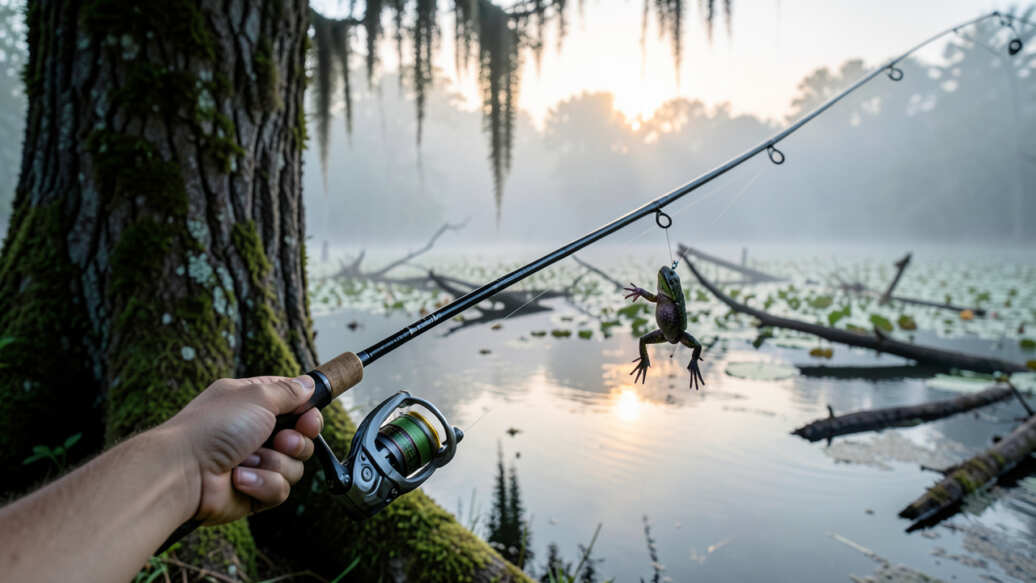
Lure Selection for Short-Range Pitches
The type of lure you use can affect your pitching success. Lighter lures can be harder to cast accurately over short distances. Heavier lures tend to fly straighter and are easier to control.
However, you also need to consider what the bass are biting.
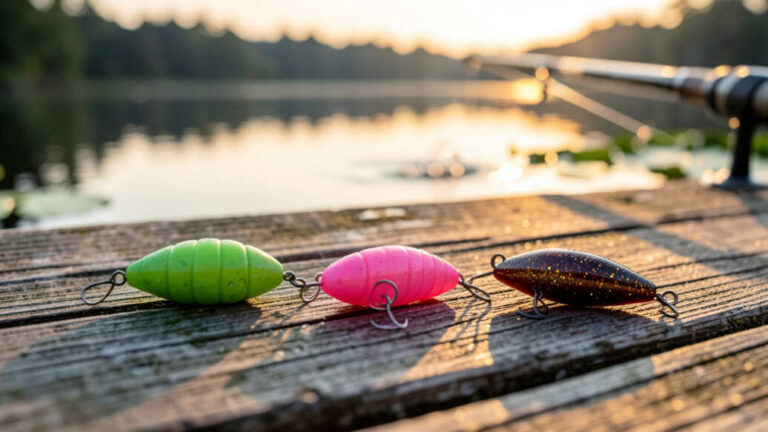
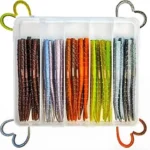
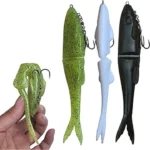
Soft plastic baits like Texas-rigged worms or creature baits are excellent for pitching. They have good weight and can be rigged weedless. Jigs are also very effective.
They have a good profile and can be pitched accurately. Buzzbaits and spinnerbaits can also be pitched, but they might require a slightly different approach due to their profile and action.
Properly rigging your bait, such as using a Texas rig with a heavy enough weight, ensures it sinks effectively and stays weedless.
Weight and Rigging
For pitching, a lure weight between 1/4 ounce and 3/4 ounce is often ideal. This weight provides enough mass for a controlled cast. It also allows the lure to sink effectively.
Rigging your baits correctly is also important. A Texas rig with a worm is a classic for a reason. It’s weedless and sinks well.
Ensure your hook is properly set. A poorly rigged bait can fly off during the cast. It can also hinder your hookset when a fish bites.
Take the time to rig your baits carefully. This attention to detail contributes to overall success in Pitching for Bass: Accurate Short-Range Casts to Cover.
Frequently Asked Questions
What is the best rod length for pitching to bass?
A rod length between 6 and 7 feet is generally ideal for pitching. Shorter rods offer more control for accurate, short casts, which is crucial for effective Pitching for Bass: Accurate Short-Range Casts to Cover.
How do I prevent backlashes when pitching?
Use your reel’s braking system and spool tension. Practice with a thumb on the spool to control the line. Start with lighter lure weights and gradually increase as you gain confidence.
Consistent practice is key to mastering Pitching for Bass: Accurate Short-Range Casts to Cover without tangles.
Is braided line good for pitching?
Yes, braided line is excellent for pitching. It has no stretch, which provides excellent feel and strong hooksets. It also cuts through weeds well, making it ideal for targeting bass in thick cover.
What kind of lures work best for short-range bass fishing?
Soft plastic baits like Texas-rigged worms, creature baits, and jigs are very effective. Their weight and rigging make them easy to pitch accurately. Lures weighing between 1/4 and 3/4 ounce are often best.
How can I practice pitching without going fishing?
You can practice in your backyard or a local park. Set up targets like buckets or hoops. Focus on consistent, soft landings.
Repetition is key to improving your accuracy for Pitching for Bass: Accurate Short-Range Casts to Cover.
Should I use a baitcaster or spinning reel for pitching?
Baitcasting reels are generally preferred for pitching. They offer greater control over line release and casting accuracy, which is vital for precise Pitching for Bass: Accurate Short-Range Casts to Cover.
Final Thoughts
Mastering Pitching for Bass: Accurate Short-Range Casts to Cover opens up new fishing opportunities. It lets you target bass hiding in the best spots. With the right gear, practice, and an understanding of the water, you’ll see your success rate climb.
Keep practicing those precise casts, and you’ll be fooling more bass in no time.