Small Stream Smallmouth: Wading Tactics For Hidden Gems
Small stream smallmouth wading tactics for hidden gems require stealthy approaches, tight‑quarter lure presentations, and precise water reading to consistently find and catch bass in overlooked, low‑pressure waters. Mastering quiet wading, natural‑colored soft plastics or small crankbaits, and targeting current breaks, undercuts, and woody cover increases catch rates while reducing spooking. Applying these methods helps anglers avoid crowds, connect with wild smallmouth in intimate settings, and practice ethical catch‑and‑release to preserve these fragile ecosystems.
Many anglers dream of catching big smallmouth bass, but often overlook the incredible fishing found in smaller, less-pressured waters. These hidden gems offer a unique and rewarding experience, letting you get closer to nature and the fish. If you’re looking to find and catch more smallmouth bass in these intimate settings, mastering Small Stream Smallmouth: Wading Tactics for Hidden Gems is your key.
This approach will show you how to effectively work these waters, leading to more bites and bigger fish without the crowds.
Key Takeaways
- Learn how to identify the best small stream habitats for smallmouth bass.
- Discover effective wading techniques to approach these waters stealthily.
- Understand the best lure choices and how to present them for small stream smallmouth.
- Master casting and retrieval methods suited for tight spaces and clear water.
- Learn how to read the water and predict where smallmouth will be hiding.
- Gain insights into conservation practices for small stream fishing.
Finding Your Hidden Smallmouth Havens
Small streams might not look like much at first glance. They can be shallow, rocky, and winding. But don’t let their size fool you.
These waters often hold surprisingly healthy populations of smallmouth bass. Anglers who know how to fish them can find fantastic sport. These are the places where fish don’t see many lures.
They are often less pressured than larger rivers or lakes. This makes them prime spots for successful fishing trips.
The first step in mastering Small Stream Smallmouth: Wading Tactics for Hidden Gems is locating these prime spots. Look for areas with good cover. This includes fallen logs, large rocks, and undercut banks.
A wading staff provides extra stability on slippery rocks, allowing you to move quietly and maintain balance without spooking fish.
Focus on deeper pools with a gentle current flowing into them, as these often hold smallmouth bass, and do not overlook small riffles that can also harbor fish.
Smallmouth bass love to hide in these places. They wait for food to drift by. Deeper pools, especially those with a bit of current flowing into them, are also great.
Even small riffles can hold fish. Pay attention to the structure of the stream. Anything that breaks up the current or offers shade is a good bet.
Mapping tools can help. Look for smaller tributaries feeding into larger rivers. These smaller streams are often overlooked.
Online maps can show you these smaller watercourses. Local knowledge is also invaluable. Talk to people who live in the area.
They might know about some secret spots. Always remember to check local regulations. Some small streams may have specific fishing rules.
Stealthy Wading for Maximum Impact
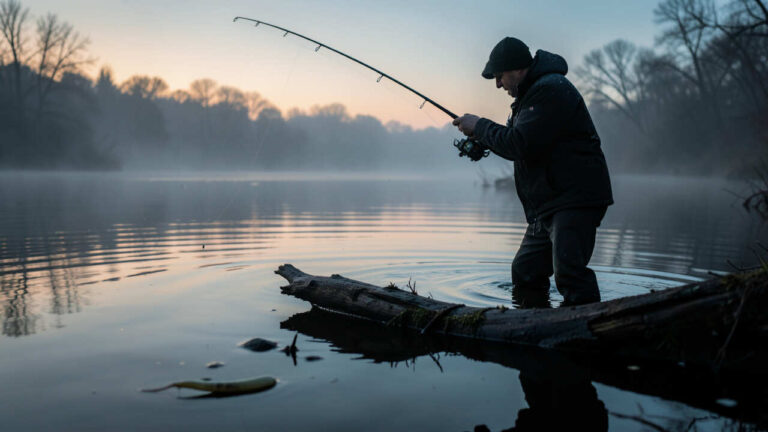
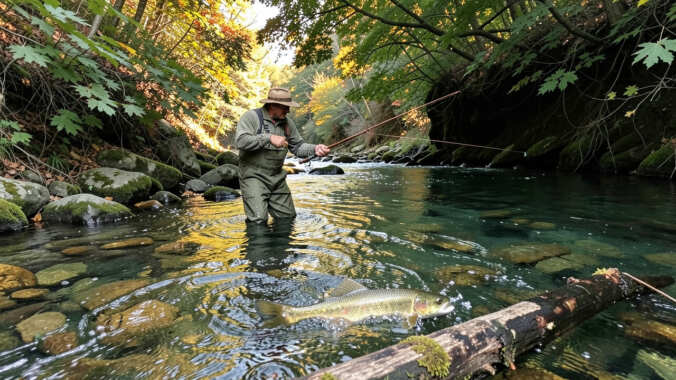
Wading is often the best way to fish small streams. It allows you to get into tight spots. It also lets you present lures more effectively.
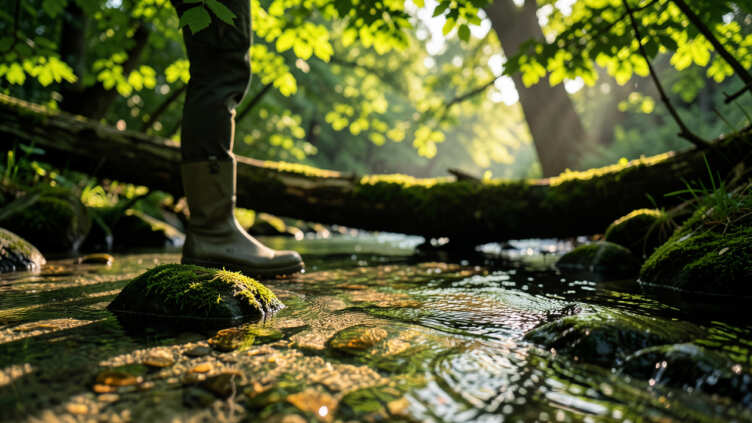
The key to successful wading is stealth. Smallmouth bass in these clear, shallow waters can spook easily. You need to move quietly and deliberately.
Avoid making big splashes or kicking up too much silt. Your goal is to become part of the environment, not an intruder.
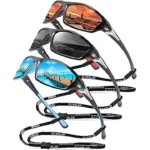
First, wear polarized sunglasses. These will help you see the bottom and any fish present. They also protect your eyes.
Second, wear appropriate wading gear. This includes wading boots with good grip. Neoprene or breathable waders are comfortable.
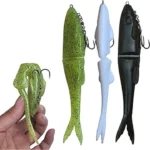
Soft plastic baits like grubs and crawfish imitations, rigged weedless, are top choices for imitating the natural forage that smallmouth bass feed on in these streams.
A wading staff can provide extra stability, especially on slippery rocks. It helps prevent falls and reduces your impact on the stream bed.
When you enter the water, do so slowly. Step carefully from rock to rock. Avoid walking directly in the main current if possible.
Move along the edges or in shallower areas. Try to cast upstream or across the current. This allows your lure to drift naturally.
It mimics baitfish being swept downstream. This is a crucial part of Small Stream Smallmouth: Wading Tactics for Hidden Gems.
Keep a low profile. Bend your knees and keep your body low. This makes you less visible to fish.
When moving between pools, try to stay out of the main fishing water. Walk along the banks or in the shallows. Always be aware of your surroundings.
Watch for slippery spots or deep holes.
Lure Selection and Presentation
Choosing the right lures is important for small stream fishing. You want lures that mimic the natural forage of smallmouth bass. Think about what smallmouth eat in these environments.
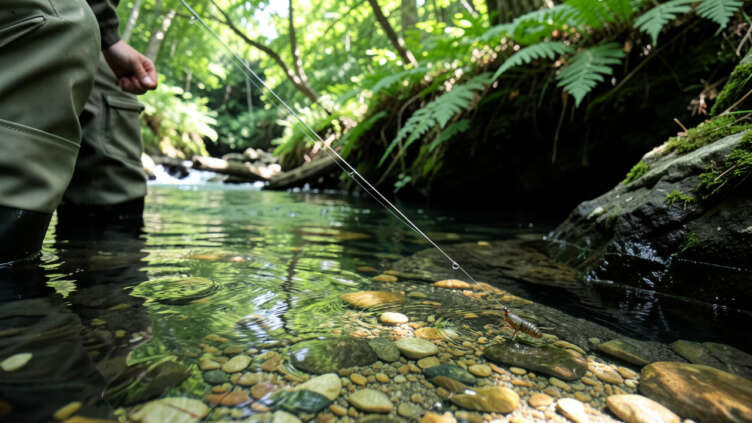
This includes minnows, crayfish, and insects. Lures that imitate these food sources will be most effective.
For small streams, smaller lures often work best. They match the size of the forage. Some excellent choices include:
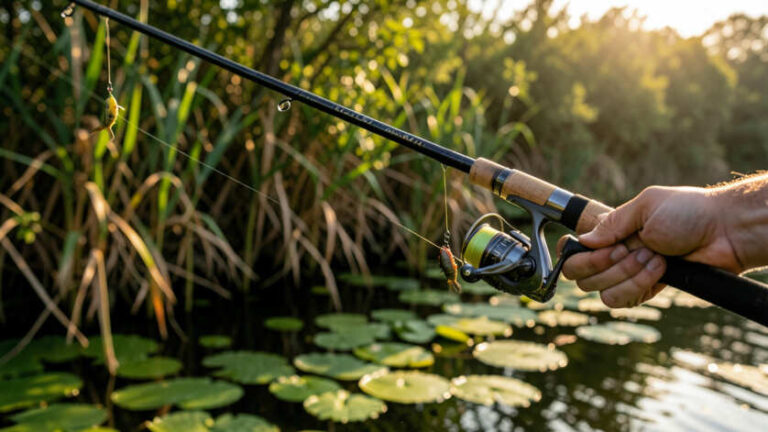
- Soft plastic baits: Grubs, crawfish imitations, and small jerkbaits are great. Rig them weedless to avoid snags.
- Spinnerbaits: Small spinnerbaits with single or double blades can attract attention. They work well in slightly stained water.
- Crankbaits: Small, shallow-diving crankbaits that imitate baitfish are effective.
- Jigs: Small finesse jigs, especially those tipped with soft plastics, can be deadly.
- Topwater lures: Poppers and small walking baits can provide exciting surface action. Use these when the water is calm and warm.
The way you present your lure is just as important as the lure itself. In clear, shallow water, a natural presentation is key. Cast your lure upstream or across the current.
Let it drift naturally with the flow. For soft plastics, try a slow retrieve. Bounce them along the bottom.
In slightly stained water, you can be more aggressive with your lure presentation and experiment with brighter colors to trigger strikes.
This mimics a crayfish or grub trying to escape.
When using spinnerbaits or crankbaits, vary your retrieve speed. Sometimes a steady retrieve works best. Other times, pausing or twitching the lure can trigger a strike.
Pay attention to how the fish are reacting. If they aren’t biting, try a different retrieve. This is where understanding Small Stream Smallmouth: Wading Tactics for Hidden Gems truly pays off.
For topwater lures, a twitch-and-pause retrieve is often effective. Let the lure sit for a moment after it lands. Then give it a gentle twitch.
This can entice a hesitant fish to strike. Don’t be afraid to experiment. What works one day might not work the next.
Observe the water and the conditions.
Reading the Water Like a Pro
Successfully fishing small streams means learning to read the water. Smallmouth bass are ambush predators. They use their environment to their advantage.
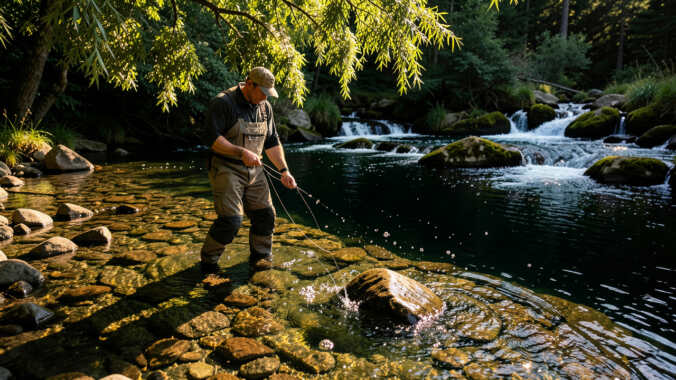
Understanding their habits will help you find them. Look for areas where the water slows down. This is often the case behind large rocks or fallen trees.
These are prime ambush points.
Undercut banks are another excellent place to target. The roots of trees and plants create hiding spots. Smallmouth will hold under these banks.
They wait for food to pass by. Cast your lure near the bank. Let it drift down into the pocket.
Be patient and give the fish time to strike.
Riffles and fast-moving water might seem less likely to hold bass. However, smallmouth bass are strong swimmers. They will hold in the seams of these currents.
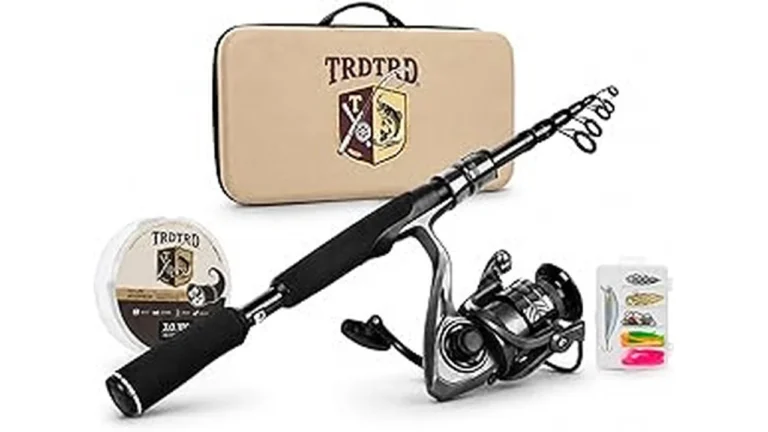
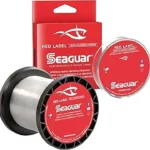
Avoid overly heavy gear; a 6- to 7-foot medium-action spinning rod paired with 6-10 pound fluorocarbon line is ideal for maintaining stealth and feel in clear, shallow water.
Look for calmer pockets within the faster water. These spots offer a place to rest but still provide access to passing food. A well-placed cast into these seams can yield great results.
Consider the time of day and the weather. Early mornings and late evenings are often best. Bass are more active during these cooler periods.
Overcast days can also be productive. The reduced sunlight makes them feel more secure. This is a fundamental aspect of Small Stream Smallmouth: Wading Tactics for Hidden Gems.
Pay attention to the water clarity. In very clear water, you need to be extra stealthy. In slightly stained water, you can be a bit more aggressive with your presentation.
The color of your lure can also be important. In clear water, natural colors like brown, green, and white work well. In stained water, brighter colors like chartreuse or orange can be more visible.
Gear Up for Small Stream Success
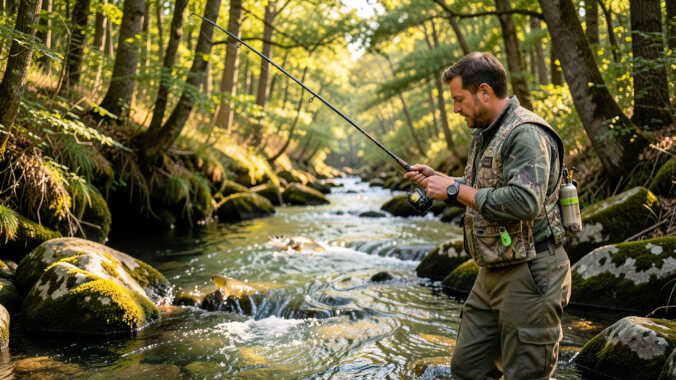
You don’t need a lot of fancy gear for small stream fishing. A versatile rod and reel setup will serve you well. A 6- to 7-foot medium-action spinning rod is a good choice.
It offers enough backbone for casting lures and fighting fish. It also has enough sensitivity for feeling subtle bites.
A matching spinning reel with a smooth drag system is essential. Spool it with 6- to 10-pound test monofilament or fluorocarbon line. Fluorocarbon line is less visible in clear water.
It also has less stretch, which can help with hooksets. However, monofilament is more forgiving and can help prevent breakoffs.
Your tackle box doesn’t need to be overflowing. A selection of the lures mentioned earlier will suffice. Include a variety of sizes and colors.
Barbless hooks reduce fish injury and make release quicker and easier, helping preserve the delicate ecosystem of these small streams for future anglers.
Don’t forget essential tools like a good pair of fishing pliers. These are crucial for safely removing hooks. A small net can be helpful for landing fish, especially if you’re wading alone.
Ensure your net has a rubberized mesh to protect the fish’s slime coat.
Wading gear is critical for comfort and safety. As mentioned, good wading boots are a must. They should have sturdy soles for grip on slippery rocks.
Waders are also important for keeping you dry and warm. Choose waders that fit well and allow for easy movement. A wading belt provides extra security if you fall into deeper water.
Finally, a small backpack or fishing vest is useful. It can carry your extra lures, tools, water, and snacks. Keeping your gear organized will make your fishing experience much more enjoyable.
Mastering Small Stream Smallmouth: Wading Tactics for Hidden Gems involves having the right, but simple, equipment.
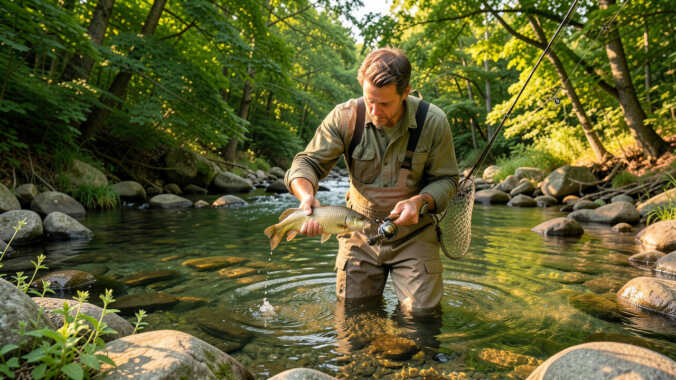
Conservation and Ethical Angling
Fishing small streams comes with a responsibility. These are often delicate ecosystems. Practicing conservation is vital.
It ensures these hidden gems remain productive for years to come. The goal is to leave the stream better than you found it.
Catch and Release is paramount. Handle fish gently and quickly. Wet your hands before touching the fish.
Avoid keeping them out of the water for too long. Use barbless hooks when possible. This makes hook removal easier and causes less damage to the fish.
If you must keep a fish, know the regulations and only keep what you will use.
When wading, be mindful of the streambed. Avoid stepping on fish eggs or disturbing spawning areas. Try to walk in deeper channels or on bedrock.
This minimizes your impact on the habitat. Do not leave any trash behind. Pack out everything you pack in, including fishing line, bait containers, and food wrappers.
Be aware of the local fish population. If you notice a lack of larger fish, it might indicate overfishing or other environmental issues. Report any concerns to local wildlife authorities.
Understanding and practicing ethical angling is a core component of Small Stream Smallmouth: Wading Tactics for Hidden Gems. It ensures the sustainability of these special fishing locations.
Educate yourself about the species you are targeting. Learn about their life cycles and spawning habits. This knowledge will help you fish more responsibly.
Small streams are a treasure. Treat them with respect, and they will reward you with incredible fishing experiences.
Frequently Asked Questions
What are the best times of year for small stream smallmouth fishing?
The best times are typically spring, from post-spawn through early summer, and again in the fall. Water temperatures between 60-75°F (15-24°C) are ideal for active smallmouth feeding.
How do I avoid snagging my lures in small streams?
Use weedless soft plastics, especially around heavy cover. When using hard baits, try to cast to the edges of cover and retrieve carefully. If you do snag, try to approach the snag from different angles to free your lure.
Are small streams good for catching large smallmouth bass?
Yes, smaller streams can hold surprisingly large smallmouth, especially if they are less pressured. Focus on deeper pools and areas with abundant cover, as these are prime locations for bigger fish.
What is the most important aspect of Small Stream Smallmouth: Wading Tactics for Hidden Gems?
Stealth and presentation are key. Smallmouth in these clear, shallow waters are easily spooked, so moving quietly and making your lure look natural is crucial for success.
Should I use baitcasting or spinning gear for small stream smallmouth?
Spinning gear is generally preferred for small streams. It allows for easier casting of lighter lures in tight spaces and is more forgiving for beginners. A 6-7 foot medium-action rod is versatile.
How important is wading gear for small stream fishing?
Wading gear is very important. It keeps you dry and comfortable, allowing you to fish longer. Good wading boots with excellent grip are essential for safety on slippery streambeds.
What are some common mistakes anglers make when fishing small streams?
Common mistakes include being too noisy, making overly aggressive presentations, not targeting enough cover, and ignoring the importance of reading the water. Learning Small Stream Smallmouth: Wading Tactics for Hidden Gems helps avoid these.
Final Thoughts
Fishing small streams for smallmouth bass offers a unique and rewarding experience. By focusing on stealthy wading, smart lure choices, and reading the water, you can uncover these hidden gems. Remember to practice conservation and enjoy the tranquility of these intimate fishing spots.