






How Bass See, Hear, And Feel: The Sensory Science Explained
Bass use a combination of excellent vision, sensitive hearing, and a specialized lateral line system to perceive their environment. Their eyes detect colors and movement well in clear water, while their hearing relies on vibrations and low-frequency sounds detected partly through the swim bladder. The lateral line, a sensory organ along the body, senses water pressure changes and movements, aiding in navigation and predator avoidance. Anglers can exploit these sensory strengths by selecting lure colors for visibility, using vibration-producing lures, and presenting baits in low-light conditions.
You might be curious about what goes on inside a bass’s world. Understanding how these fish experience their environment is more than just interesting trivia; it helps explain their behavior. Learning about How Bass See, Hear, and Feel: The Sensory Science Explained can change how you fish, help you find more fish, and even increase your success.
We’ll break down what makes a bass tick, from their sharp eyesight to their sensitive lateral lines.
Key Takeaways
- Bass have good vision, especially in clear water, and can see colors.
- Their hearing is sensitive to vibrations and low-frequency sounds.
- The lateral line is a crucial sensory organ for detecting movement and pressure changes.
- Bass use a combination of senses to find food and avoid danger.
- Understanding their senses helps anglers predict bass behavior.
Bass Vision: More Than Just Seeing Shapes
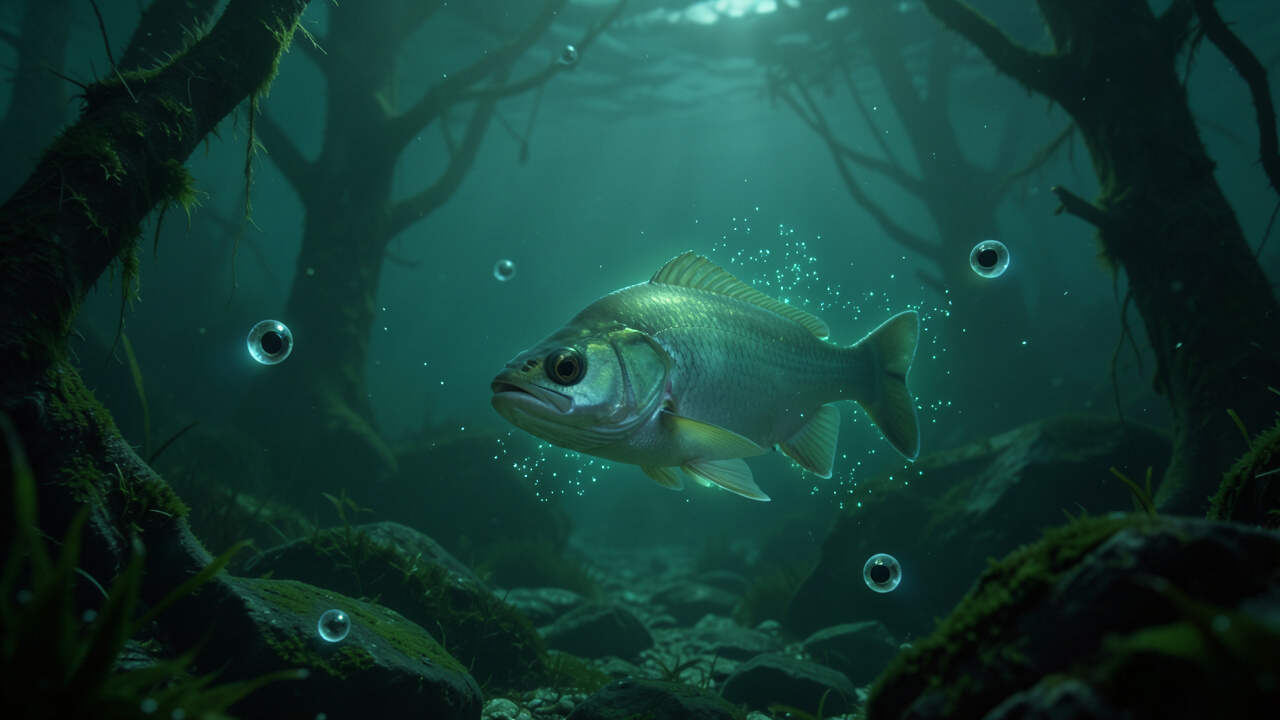
When you think about how bass perceive their world, vision is often the first sense that comes to mind. Bass have excellent eyesight, which is vital for hunting prey and navigating their surroundings. They can see in a wide range of light conditions, though their vision is best in clear water.
This is because murky water scatters light, making it harder for them to spot meals or threats.
Bass eyes are positioned on the sides of their heads. This gives them a wide field of view, allowing them to spot movement from many directions. They can see about 10 feet in front of them and have a wide peripheral view.
This setup is perfect for ambushing prey that swims by.
Color Perception in Bass
A common question is whether bass can see color. The answer is yes, they can. Bass have cone cells in their eyes that detect different wavelengths of light, which we perceive as color.
Their color vision is most effective in clear, shallow water during daylight hours.
In murky water, rely on lures that produce strong vibrations or pressure changes, as bass will use their lateral line more than vision to detect prey.
The specific colors bass see best depend on the water conditions. In clear water, they can often distinguish between greens, blues, and yellows. This is why lures in these colors can be so effective.
In deeper or stained water, their color perception changes. Red and orange light are absorbed more quickly by water, so these colors appear darker or black to bass in deeper or murkier conditions.
Low Light and Stained Water Vision
Bass also have rod cells in their eyes. These cells are more sensitive to light and help them see in low-light conditions. This includes dawn, dusk, and cloudy days.
Their ability to see in low light means they can still hunt effectively when many other fish might be hiding.
When water is stained or turbid, bass rely less on their sharpest vision. They still use their eyes, but other senses become more important. In these conditions, vibrations and changes in water pressure become key indicators of prey or danger.
This is where understanding How Bass See, Hear, and Feel: The Sensory Science Explained becomes truly practical for anglers.

Bass Hearing: Feeling the Vibrations
Bass don’t have external ears like humans do. Instead, they have an internal ear system. This system is highly tuned to detect vibrations and sound waves traveling through the water.
Water is a great conductor of sound, so sound travels much faster and further in water than in air.
Bass are particularly sensitive to low-frequency sounds and vibrations. This is how they can detect the movement of potential prey, like a struggling baitfish or the splash of an insect on the surface. They can also sense the vibrations of larger predators, helping them to avoid becoming a meal themselves.
The Swim Bladder’s Role
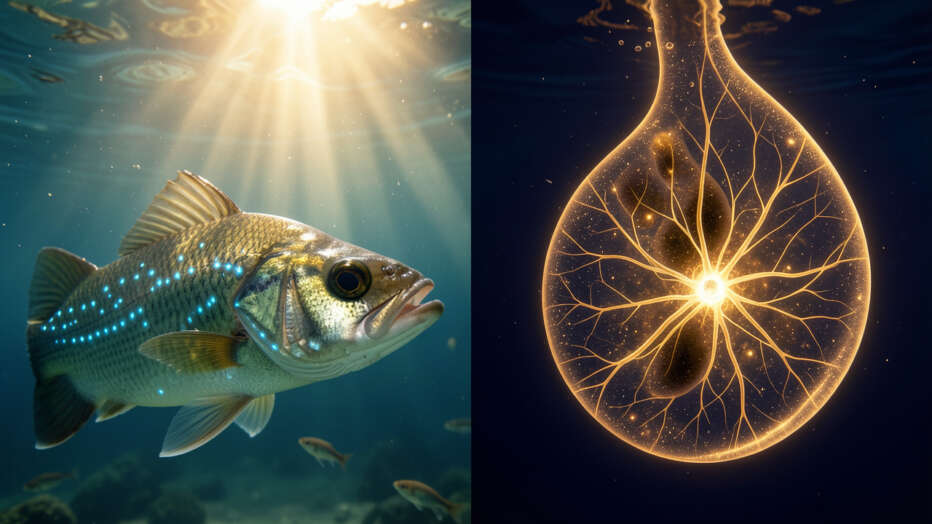
An interesting part of bass hearing is how their swim bladder helps. The swim bladder is a gas-filled sac inside the fish. It helps with buoyancy.
However, it also acts like an amplifier for sound. Vibrations that reach the fish can be transmitted to the swim bladder, which then sends stronger signals to the inner ear.
Bass are especially sensitive to low-frequency sounds, so mimicking the splash of an insect or the flutter of a wounded baitfish can trigger their hearing response.
This amplification makes bass much more aware of their surroundings. They can feel the subtle movements of small creatures in the water. This is a significant part of How Bass See, Hear, and Feel: The Sensory Science Explained.
It shows that what they “hear” is often more about feeling vibrations than distinct sounds.
Detecting Danger and Prey Through Sound
The ability to detect vibrations is crucial for survival. A bass can tell if a sound is coming from a potential meal or a threat. A quick, erratic vibration might indicate a wounded baitfish, which is an easy meal.
A steady, rhythmic vibration could be a larger fish approaching, signaling a need to hide.
Anglers can use this knowledge to their advantage. Lures that create vibrations, such as spinnerbaits or crankbaits with rattling components, can attract bass from a distance. The sound and feel of these lures mimic injured prey, making them irresistible.
The Lateral Line: Bass’s Sixth Sense
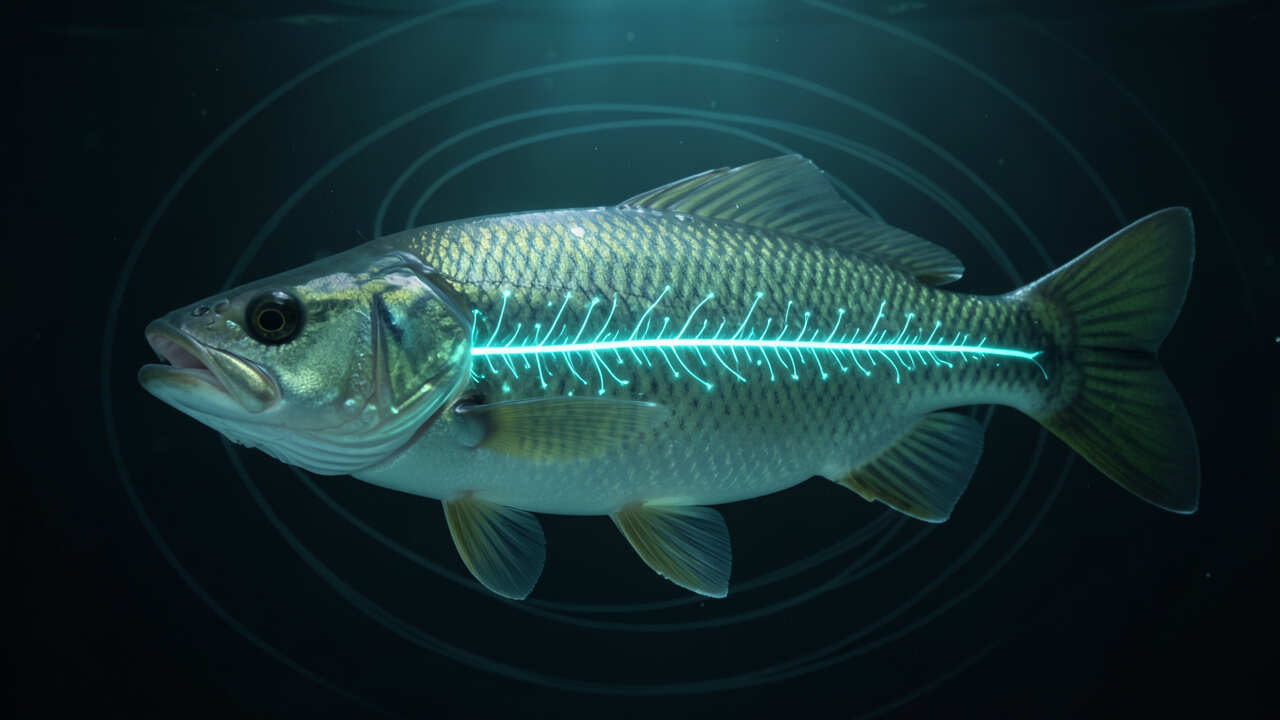
Perhaps the most unique and important sensory organ for a bass is its lateral line. This is a series of pores running along each side of the fish, from its gill cover to its tail. These pores are connected to a canal filled with a jelly-like substance and tiny sensory cells called neuromasts.
The lateral line system is incredibly sensitive. It detects changes in water pressure and currents. This allows bass to sense the movement of other fish, even in complete darkness or when visibility is zero.
It’s like having a built-in sonar system that maps out their immediate environment.
How the Lateral Line Works
When a fish swims, it creates pressure waves in the water. These waves travel outwards. The lateral line system picks up these waves.
The neuromasts within the pores are stimulated by the movement of the jelly. This stimulation sends signals to the bass’s brain, telling it about the size, shape, and speed of nearby objects.
The lateral line gives bass a sixth sense to feel the movement of prey even in complete darkness.
This sense is vital for hunting in low light or murky conditions. A bass can “feel” a school of baitfish without seeing them. It can also detect the subtle movements of a crayfish hiding under a rock.
Understanding How Bass See, Hear, and Feel: The Sensory Science Explained highlights the sophistication of this organ.
Beyond hunting, the lateral line also helps bass navigate. They can sense currents and avoid obstacles. It helps them maintain their position in a school of fish.
It’s a constant stream of information about their immediate surroundings. This helps them avoid collisions and find optimal feeding spots.
For anglers, understanding the lateral line is key. Lures that create subtle water disturbances can trigger a bass’s interest. Even if a bass doesn’t see a lure, it might feel its presence and investigate.
This is why soft plastics that wiggle or baits that have a gentle action can be very effective.
Touch and Taste: Completing the Sensory Picture
While vision, hearing, and the lateral line are the primary senses for bass, touch and taste also play important roles. These senses help them identify food and interact with their environment.
The Role of Touch
Bass have sensory receptors on their skin and in their mouths. These receptors allow them to feel the texture and temperature of objects. When they investigate something with their mouth, touch helps them determine if it’s edible.
This is especially important for small or camouflaged prey.
Soft plastic lures can trigger a bass's sense of touch and taste, making them hold on longer before rejecting the bait.
The barbels on some fish species are examples of specialized touch organs. While bass don’t have prominent barbels, their mouths are lined with sensitive nerves. This helps them manipulate food and explore their surroundings by feel.
Taste and Smell
Bass have a sense of taste and smell, though they are not as developed as in some other fish. They have nostrils, called nares, which are used for smelling. They can detect dissolved chemicals in the water.
This helps them locate food sources, especially those that are not moving.
When a bass bites a lure, taste and smell can help it decide whether to swallow. If a lure tastes or smells like natural prey, the bass is more likely to commit. This is why scent additives on lures can sometimes increase strikes.
How Bass Use Their Senses Together
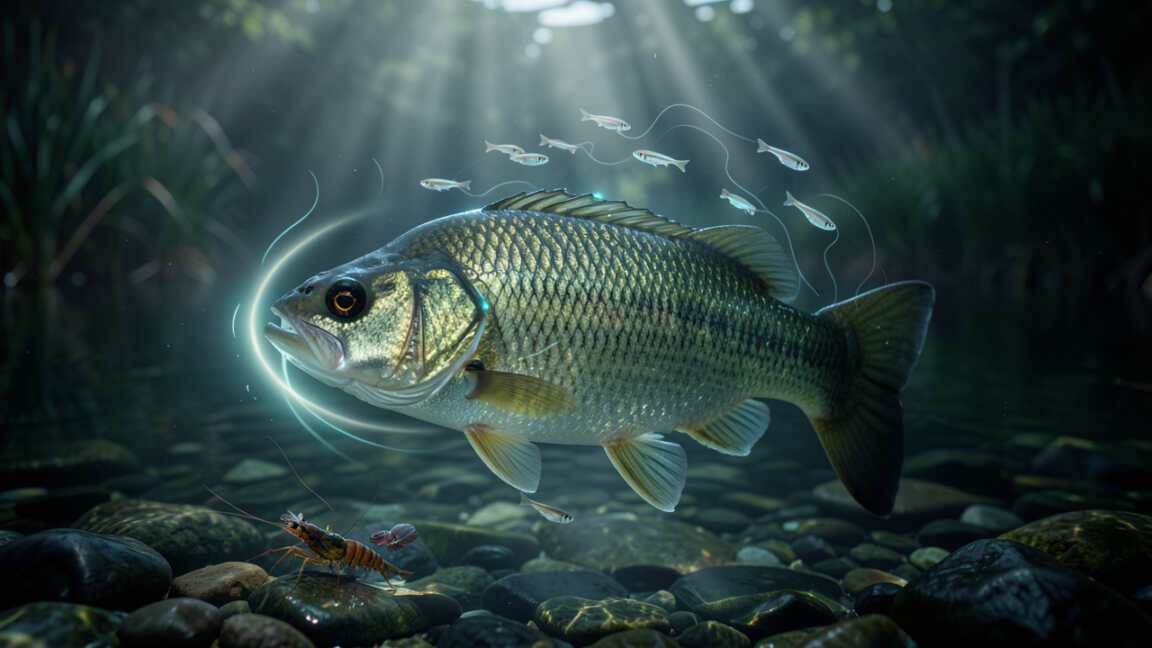
It’s important to remember that bass don’t use their senses in isolation. They integrate information from all their sensory systems to create a complete picture of their environment. This multi-sensory approach allows them to be highly effective predators.
For example, a bass might first detect movement with its lateral line. Then, it might use its vision to get a closer look. If the object looks like food, it will use its sense of taste and touch to confirm.
This coordinated use of senses is what makes understanding How Bass See, Hear, and Feel: The Sensory Science Explained so valuable for understanding their behavior.
Sensory Integration for Hunting
When hunting, a bass will often use its lateral line to pinpoint the location of prey. Its vision helps it track the prey’s movement and speed. Its hearing picks up any distress sounds the prey might make.
All this information comes together to guide the bass’s strike.
Avoid relying on a single sensory trigger; bass integrate all senses, so a lure must appeal to multiple senses for a consistent strike.
Even in complete darkness, a bass can hunt successfully. It relies on its lateral line and hearing to detect prey. This demonstrates the power of these other senses when vision is limited.
It’s a prime example of How Bass See, Hear, and Feel: The Sensory Science Explained.
Sensory Integration for Survival
The same integration of senses helps bass avoid predators. They can sense the vibrations of a larger fish approaching with their lateral line. Their vision allows them to see potential hiding spots.
Their hearing might pick up the sounds of danger. This layered defense system keeps them safe.
The ability to process multiple sensory inputs simultaneously is a hallmark of successful predators. It allows them to react quickly and effectively to a dynamic environment. This is why bass are so adaptable and found in so many different habitats.
Practical Applications for Anglers
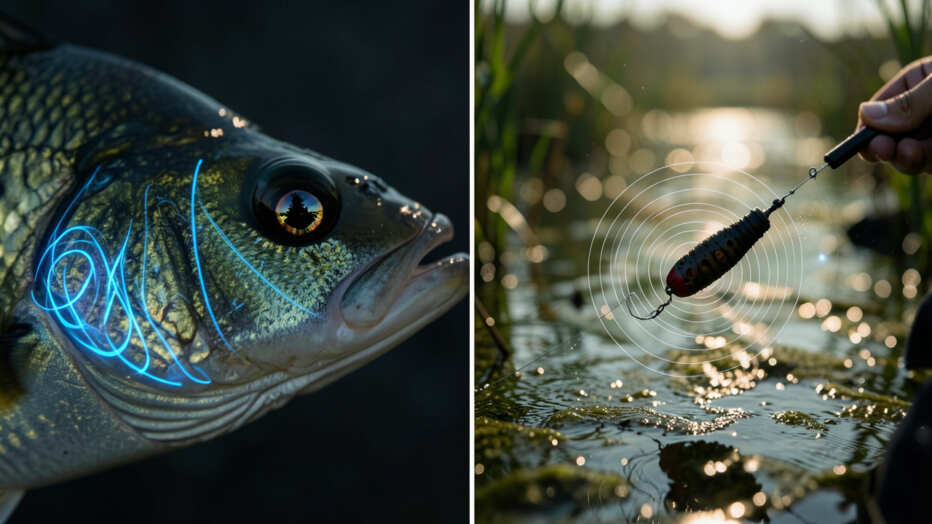
Knowing How Bass See, Hear, and Feel: The Sensory Science Explained directly impacts how you can fish for them. By understanding their sensory world, you can make better choices about lures, techniques, and timing.
Choosing the Right Lures
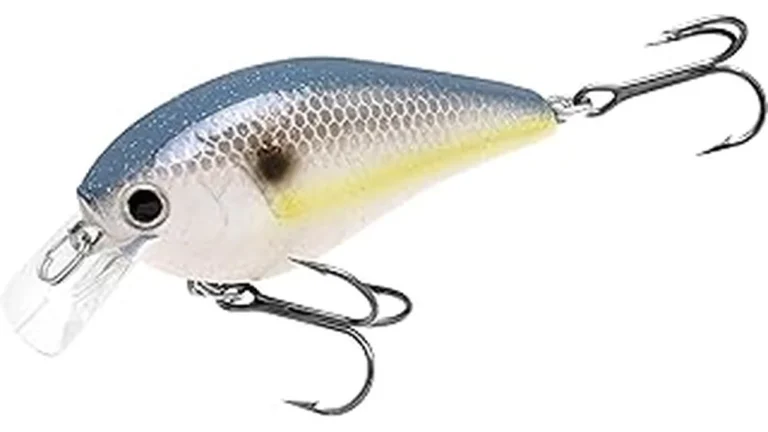
Your lure choice should consider what the bass is likely sensing at that moment. In clear water with good light, flashy lures that mimic the colors bass see well can work. In stained water, or during low-light periods, lures that create strong vibrations or sound are often more effective.
For example, a noisy crankbait might attract a bass from further away in murky water. A subtle, natural-colored soft plastic could be better for a cautious bass in clear water that relies on sight. Understanding their senses helps you match the lure to the conditions.
Adjusting Techniques
Your retrieve speed and action also matter. Fast retrieves might trigger a chase response based on vision. Slower, more deliberate retrieves can allow the bass to detect the lure with its lateral line and hearing.
Match your lure's profile to the water clarity: flashy colors for clear water and vibration-heavy lures for murky conditions.
Twitching baits can mimic a wounded baitfish, appealing to their predatory instincts.
When fishing in heavy cover, where bass often hide, they might rely more on their lateral line and touch. Lures that can be worked slowly and close to structure are ideal. This allows the bass to feel the lure’s presence before committing to a strike.
Understanding Bass Behavior
Bass behavior is heavily influenced by their sensory input. They feed when they can best use their senses to find prey. They avoid danger by being aware of their surroundings through their various sensory systems. The Fish senses Wikipedia article details the various fish sensory systems.
This understanding can help you predict where bass will be and when they will be most active.
For instance, bass might move to shallower water at dawn and dusk to take advantage of lower light conditions for hunting. They might stay in deeper, cooler water during the heat of the day. Their sensory capabilities dictate these movements.
Comparison of Bass Sensory Strengths
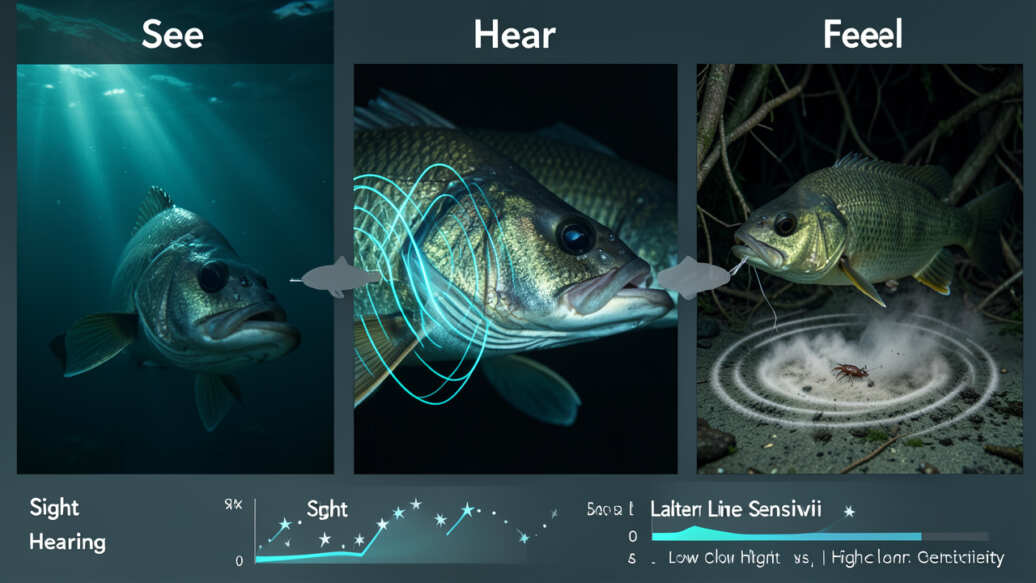
To better grasp the nuances of How Bass See, Hear, and Feel: The Sensory Science Explained, let’s compare the relative importance of each sense under different conditions.
Touch and taste are confirmation senses that ensure a bass only consumes what is truly edible.
As you can see, vision is powerful but conditional. Hearing and the lateral line are more consistent across various environments. Touch and taste are confirmation senses.
This table helps visualize the interplay of senses in How Bass See, Hear, and Feel: The Sensory Science Explained.
Frequently Asked Questions
Can bass see in the dark?
Bass have good low-light vision thanks to rod cells in their eyes, allowing them to see at dawn and dusk. They can also rely on their lateral line and hearing to detect prey in complete darkness.
How far can a bass hear?
Bass can detect vibrations and sounds from a considerable distance in water. Their internal ear and swim bladder help amplify these signals, making them sensitive to movements throughout their environment.
Is the lateral line system the same as hearing?
No, the lateral line system detects water pressure changes and currents, essentially feeling movement. Hearing detects sound waves and vibrations traveling through the water. Both are crucial for sensing their surroundings.
Why do bass sometimes spit out lures quickly?
This can happen when their senses are tricked. They might strike based on movement (lateral line, vision) but then use taste and touch to realize it’s not real food, leading them to spit it out.
How does water clarity affect a bass’s senses?
In clear water, vision is a primary sense. In murky or stained water, bass rely more heavily on their lateral line, hearing, and touch to find food and navigate.
Does lure color matter if bass can’t see well in murky water?
While color is less important in very murky water, vibration and sound become key. However, even in stained water, certain colors might still be visible or create contrast that attracts a bass’s attention.
Final Thoughts
Understanding How Bass See, Hear, and Feel: The Sensory Science Explained gives you a powerful edge. You’ve learned their vision, hearing, and lateral line are key. This knowledge helps you choose the right lures and techniques for any fishing condition, leading to more successful outings. The Largemouth bass Wikipedia article provides comprehensive coverage of bass sensory biology.
Now you can fish smarter. The U.S. Fish and Wildlife Service maintains an official bass species profile for further reading.