
Bass In Laydowns: Targeting Fallen Trees For Big Fish
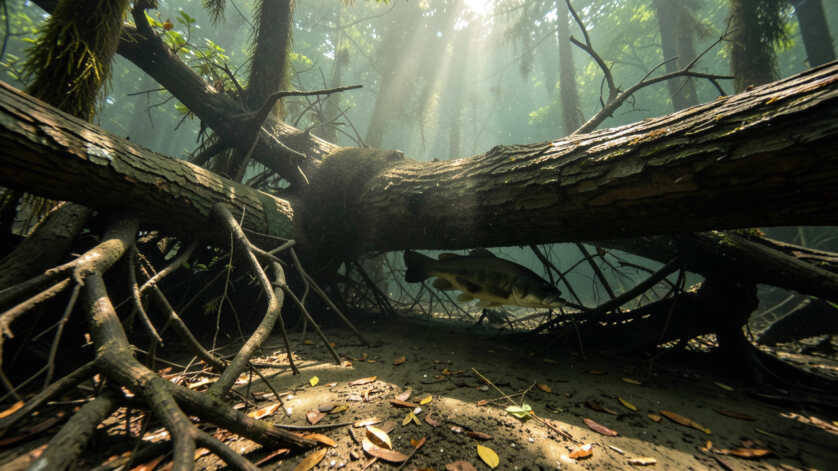
Laydowns, or fallen trees, are prime locations for targeting large bass because they provide shade and ambush cover. Successful anglers choose lures like jigs, soft plastics, or topwater baits and use precise casting techniques such as pitching and flipping to place baits in tight spaces. Understanding water depth, clarity, and proper boat positioning is essential for avoiding spooked fish and consistently catching trophy-sized bass from these structures.
Finding bigger bass often means looking for where they hide. Fallen trees, also known as laydowns, are perfect spots for bass to ambush prey and get out of the sun. Understanding how to fish these underwater structures can really boost your success.
It’s not just about knowing what a laydown is; it’s about knowing how to target them effectively. This guide will show you how to make the most of Bass in Laydowns: Targeting Fallen Trees for Big Fish, helping you catch more and bigger bass by using these natural fish magnets.
Key Takeaways
- Laydowns offer bass safety and ambush points.
- Different lure types work best for different laydown scenarios.
- Casting accuracy is crucial for success around fallen trees.
- Knowing the water depth and clarity affects your approach.
- Proper boat positioning helps you avoid spooking fish.
- Always practice safe boating and fishing techniques.
Why Fallen Trees Are Bass Havens
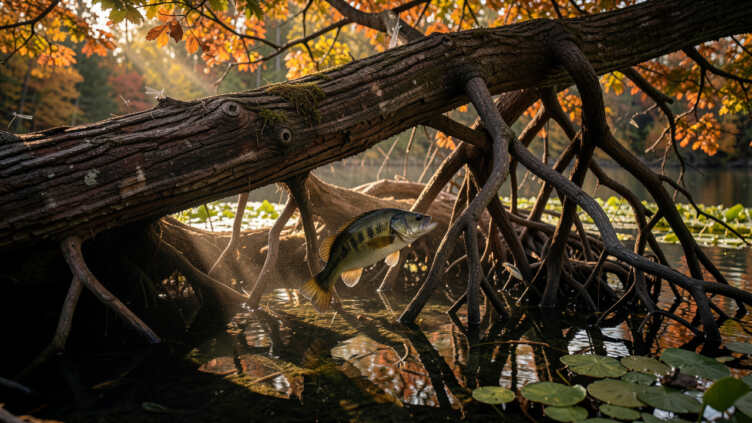
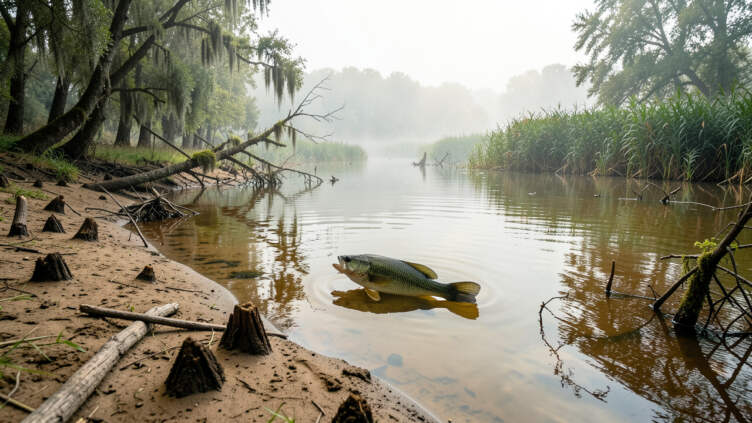
Fallen trees, or laydowns, are underwater gold mines for bass anglers. These submerged or partially submerged logs and branches create a complex habitat. They provide much-needed shade on sunny days.
Bass use these dark, protected areas to ambush unsuspecting baitfish. The structure also offers a safe haven from larger predators. For anglers looking for Bass in Laydowns: Targeting Fallen Trees for Big Fish, understanding this appeal is the first step.
Cast your lure into the shaded areas under laydowns where bass ambush baitfish. The darkness provides both cover and a feeding advantage.
Think of a laydown as a bass apartment building. Different parts of the tree offer different benefits. The main trunk might be a highway for larger fish.
Smaller branches can hold smaller bass or baitfish. The root ball end, often submerged, can be a prime ambush point. Recognizing these features helps you predict where the biggest fish might be lurking.
Choosing the Right Lures for Laydowns
When you’re targeting Bass in Laydowns: Targeting Fallen Trees for Big Fish, your lure choice is critical. You need lures that can navigate the tangled branches without getting snagged constantly. However, they also need to be enticing enough to draw a strike from a hidden bass.
Jigs: The All-Around Workhorse
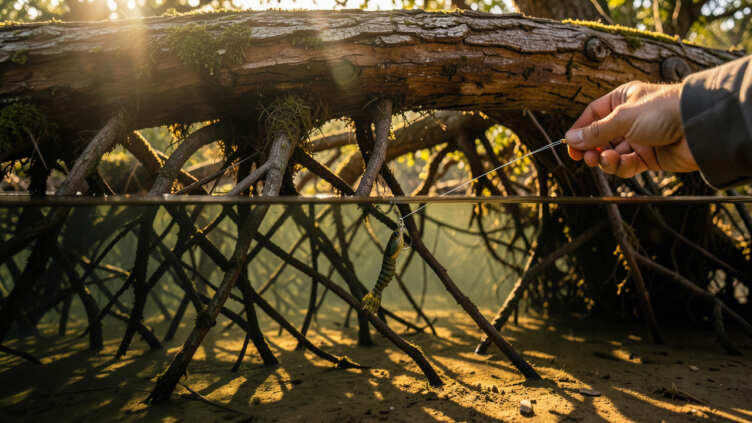
Jigs are a top choice for laydown fishing. Their compact profile and ability to be fished slowly make them ideal. A football jig or a flipping jig with a weed guard can often be worked through branches.
Adding a trailer, like a crawfish imitation, gives it more action. Bass often mistake a jig for a tasty crawdad or slow-moving baitfish.
First, select a jig with a strong hook and a good weed guard. This guard helps prevent snags. Next, choose a trailer that matches the jig color and adds bulk.
Then, cast your jig near the laydown and let it sink. Work it slowly, hopping or dragging it along the bottom. If you feel a snag, try a sharp, quick pop to free it.
This can sometimes trigger a bite.
Soft Plastics: Versatile and Subtle
Soft plastics are incredibly versatile. Stick baits, creature baits, and hollow-body frogs can all be effective. A Texas-rigged worm or creature bait can be pitched into tight spots.
Jigs with effective weed guards allow you to work through tangled branches without constant snagging, making them a top choice for laydown fishing.
A weedless-style frog is perfect for working over the top of submerged branches or lily pads near laydowns.
First, rig your soft plastic weedless. This is essential to avoid getting hung up. Next, cast to likely hiding spots within the laydown.
Then, use a slow retrieve or a twitch-and-pause technique. The subtle action of soft plastics can fool even wary bass. A well-placed soft plastic can be the key to Bass in Laydowns: Targeting Fallen Trees for Big Fish.
Topwater Lures: Explosive Strikes
For shallow laydowns, especially in low light conditions or warmer months, topwater lures can be dynamite. Poppers, walk-the-dog baits, and buzzbaits can trigger aggressive strikes. The visual aspect of a bass exploding on a topwater bait is exhilarating.
First, choose a topwater lure that suits the conditions. A popper works well in calmer water. A prop bait or buzzbait can cover more water.
Next, cast your lure near the laydown structure. Then, work it with a cadence that mimics injured prey. A pause can often be the trigger for a strike.
Watching a bass hit a topwater bait near a laydown is a thrilling part of Bass in Laydowns: Targeting Fallen Trees for Big Fish.
Casting Techniques for Precision
Fishing around laydowns requires accuracy. You need to get your lure into the tight spots without spooking the fish. This is where your casting skills truly matter for Bass in Laydowns: Targeting Fallen Trees for Big Fish.
Pitching and Flipping
Pitching and flipping are two essential techniques. Pitching involves a short, underhand cast. You’ll typically use a baitcasting reel for this.
Flipping is similar but often involves dropping the lure straight down next to the boat or directly into openings.
First, rig your baitcasting rod with a lure suitable for pitching or flipping, like a jig or Texas-rigged worm. Next, find a comfortable stance in your boat. Then, pull out some line and hold the lure with your thumb against the rod.
Precision casting is not just about distance; it’s about placing the lure in the exact opening where a bass is hiding.
Use your wrist and arm to swing the lure underhand into the target area. Practice this motion until it becomes second nature. Precision is key for Bass in Laydowns: Targeting Fallen Trees for Big Fish.
Side-Arm Casting
For laydowns that are a bit further out or have overhanging branches, a side-arm cast can be effective. This cast allows you to get the lure under obstructions. It’s also useful when you need to make a longer cast without a high arc.
First, hold your rod at about a 45-degree angle. Next, swing the rod back smoothly. Then, bring it forward in a low, sweeping motion, releasing the line as the rod tip passes the target.
This technique takes practice but is invaluable for reaching those hard-to-get spots around fallen trees.
Understanding Water Conditions
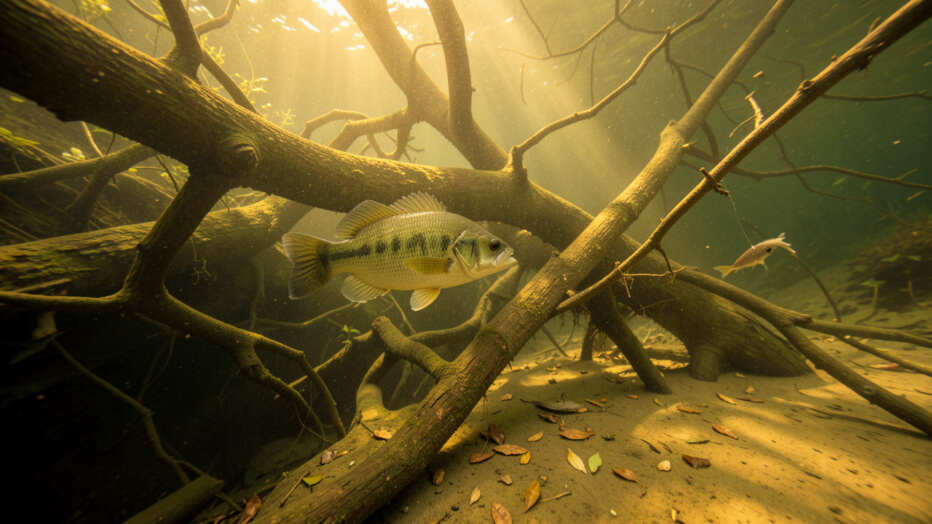
The clarity of the water and its depth play a big role in how you should approach laydowns. These factors influence bass behavior and lure visibility.
Clear Water Strategies
In clear water, bass can see your lure from a distance. This means they might be more cautious. You’ll often need to use more natural colors and a slower retrieve.
Lighter lines can also be beneficial. For Bass in Laydowns: Targeting Fallen Trees for Big Fish in clear water, stealth is paramount.
First, choose lures with natural colors like green pumpkin, watermelon, or shad. Next, downsize your lure and line if necessary. Then, make longer, more accurate casts to avoid spooking fish.
A subtle presentation is often more effective than a fast, aggressive one.
Stained or Murky Water Tactics
Stained or murky water offers bass more security. They can get closer to the structure without being easily seen. This means you can often get away with brighter colors and a more aggressive retrieve.
In clear water, use natural-colored lures and a slower retrieve to avoid spooking cautious bass near laydowns.
Loud lures that create vibration are also very effective.
First, opt for lures with chartreuse, black, or bright blue colors. Next, consider lures that create noise or vibration, like rattling crankbaits or spinnerbaits. Then, work your lure with more speed and action.
The bass will rely more on sound and vibration to find your bait in low visibility. This makes Bass in Laydowns: Targeting Fallen Trees for Big Fish a different game.
Depth Matters
Laydowns can exist at various depths. Shallow laydowns are great for topwater and reaction baits. Deeper laydowns might require bottom-contact lures like jigs and Texas-rigged plastics.
Bass will move to deeper water if the sun is too bright or the water gets too warm.
First, assess the depth of the laydown. Next, choose lures that can effectively reach the bottom or the strike zone. Then, adjust your retrieve speed based on the water temperature and depth.
Deeper, cooler water often holds bigger bass year-round.
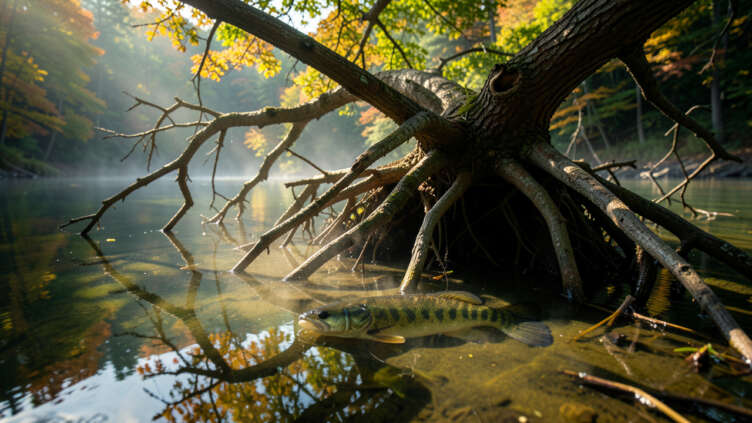
Reading the Laydown Structure
Not all laydowns are created equal. Learning to read them will help you identify the most productive areas. This is a key skill for success in Bass in Laydowns: Targeting Fallen Trees for Big Fish.
The Trunk and Main Branches
The main trunk of a fallen tree offers a large, solid structure. Bass will often position themselves along this trunk, especially where it meets the bottom. Larger branches provide more cover and ambush points.
Look for areas where the branches create pockets or overhangs.
First, target the main trunk where it enters the water. Next, work your lure along the larger branches. Then, look for any gaps or holes in the canopy of branches.
These are prime spots for bass to hide and strike.
The Root Ball and Deeper End
The root ball end of a laydown is often submerged and can be a fantastic holding spot. It provides deep cover and can be a consistent ambush point. If the laydown extends into deeper water, bass may hold there, especially during hot weather or bright sun.
Don’t overlook the submerged root ball end of a laydown; it’s often a prime holding area for larger bass.
First, focus on the area where the roots meet the bottom. Next, cast your lure into the deeper water just past the root system. Then, use a slow, probing retrieve to cover these deeper zones.
This is a crucial area for Bass in Laydowns: Targeting Fallen Trees for Big Fish.
The Leafy Canopy
The leafy parts of a laydown can offer excellent shallow cover. If the branches are just below the surface, they create a shaded zone. This is a great place for bass to feed on baitfish.
Weedless baits are ideal for working through these areas.
First, identify laydowns with dense foliage near the surface. Next, use a weedless lure like a Texas-rigged worm or a hollow-body frog. Then, work the lure slowly through the leaves, pausing often.
This can trigger aggressive strikes from bass using the cover.
Boat Positioning and Stealth
How you position your boat is as important as your lure. A poorly positioned boat can spook the fish before you even cast. Stealth is vital when fishing around structure, especially when targeting Bass in Laydowns: Targeting Fallen Trees for Big Fish.
Approaching the Laydown
First, approach the laydown slowly and quietly. Next, keep your boat a good distance away, especially in clear water. Then, use your trolling motor to maintain a stealthy approach.
Avoid making loud noises or sudden movements that could alert the fish.
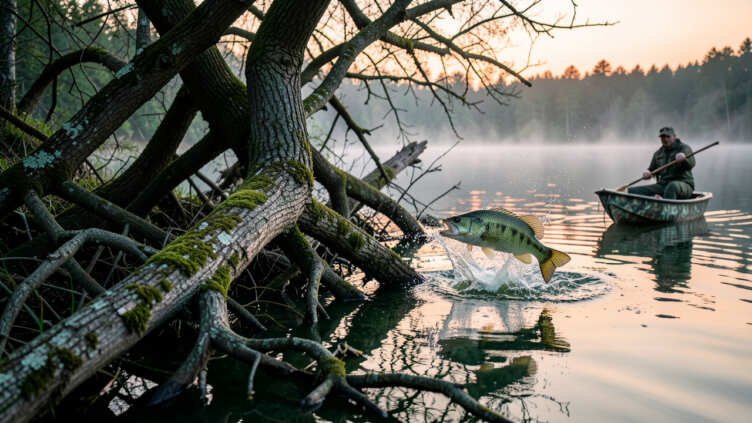
Approach laydowns slowly and quietly, keeping your boat at a distance to avoid spooking fish before you cast.
Casting Angles
Try to cast parallel to the laydown rather than directly at it. This allows you to work more of the structure. Casting from different angles can also help you find fish that might be oriented in a specific direction.
For Bass in Laydowns: Targeting Fallen Trees for Big Fish, variety in your approach is beneficial.
Working Around the Structure
If you’re fishing with a partner, decide who will fish which side of the laydown. Coordinate your casts to avoid tangles and cover the most ground. Work from the outside in, or from the shallow end to the deep end, depending on the structure.
Common Mistakes to Avoid
Even experienced anglers can make mistakes when fishing laydowns. Being aware of these common errors can help you improve your success rate. Targeting Bass in Laydowns: Targeting Fallen Trees for Big Fish requires attention to detail.
Getting Hung Up Too Much
Constantly getting snagged can be frustrating. It slows down your fishing and can spook fish. Using the right lures with weed guards and practicing your casting and retrieving techniques can minimize snags.
Minimizing snags is not just about frustration; it’s critical to avoid spooking fish and maintain a natural presentation.
- Use weedless lures: Jigs with good guards, Texas-rigged plastics, and weedless frogs are essential.
- Vary your retrieve: Sometimes a quick pop can free a snag. Other times, a gentle tug is best.
- Understand your line angle: Try to pull lures free at an angle that reduces resistance.
Spooking the Fish
Bass are easily spooked, especially in shallow, clear water. Loud noises, sudden movements, or casting directly onto the structure can send them running. Stealthy boat positioning and accurate, quiet casts are crucial.
- Approach slowly: Use your trolling motor and avoid dropping anchors near prime spots.
- Cast with precision: Aim for the pockets and edges of the laydown, not directly on top of it.
- Be mindful of shadows: Your boat’s shadow can alert fish to your presence.
Fishing Too Fast or Too Slow
The right retrieve speed is key. In some cases, a slow, deliberate presentation is needed. In others, a faster, more aggressive retrieve can trigger reaction strikes.
Pay attention to water temperature, clarity, and bass behavior.
- Match retrieve to conditions: Colder water or clear water often calls for slower retrieves.
- Experiment with speed: If one speed isn’t working, try a different one.
- Pause and retrieve: Sometimes a short pause in your retrieve can be the trigger.
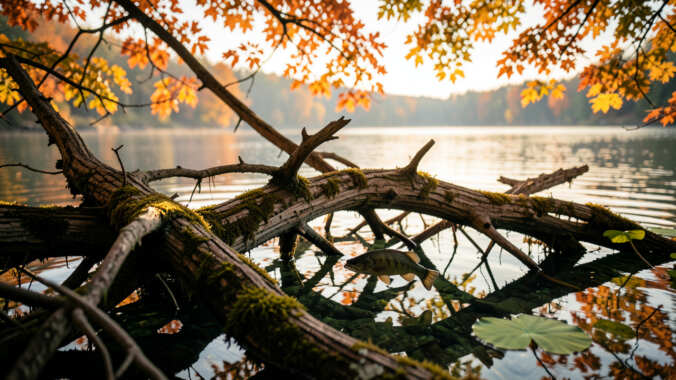
Seasonal Considerations for Laydown Bass
Bass behavior around laydowns changes throughout the year. Understanding these seasonal shifts can greatly improve your success with Bass in Laydowns: Targeting Fallen Trees for Big Fish.
Spring
In spring, as water temperatures rise, bass move shallower to spawn. Laydowns become excellent pre-spawn and post-spawn staging areas. They offer warmth, cover, and ambush points.
Jigs, spinnerbaits, and shallow crankbaits are effective.
Summer
During the heat of summer, bass seek shade and cooler water. Laydowns provide both. They become prime targets for topwater lures in the early morning and late evening.
During summer, focus on shaded laydowns in deeper water where bass seek cooler temperatures and ambush points.
Deeper laydowns are also excellent during the hottest parts of the day.
Fall
As water temperatures cool in the fall, bass become more aggressive feeders, preparing for winter. They will actively hunt baitfish around laydowns. Spinnerbaits, crankbaits, and jigs can all be very effective.
Look for baitfish activity near the structure.
Winter
In colder winter months, bass slow down. They will still use laydowns for protection from current and predators. However, their metabolism is lower.
Slower presentations with jigs and grubs are often best. Focus on deeper laydowns.
Frequently Asked Questions
What is the best lure for bass in laydowns?
The best lure often depends on the conditions, but jigs, Texas-rigged soft plastics, and weedless frogs are consistently effective for Bass in Laydowns: Targeting Fallen Trees for Big Fish due to their ability to navigate cover.
How do I avoid getting hung up on laydowns?
Use lures with good weed guards, rig your soft plastics weedless, and practice precise casting. Sometimes, a sharp pop or a change in your line angle can free a snag.
Should I fish a laydown from the front or the back?
It’s best to approach a laydown from the side or the deeper end. Casting parallel to the structure and working your lure through it is generally more effective than casting directly onto it and spooking the fish.
When is the best time of day to fish laydowns?
Early morning and late evening are often best, especially in warmer months, when bass are more active and may move to shallower parts of laydowns. However, deeper laydowns can produce throughout the day, particularly in summer.
How does water clarity affect fishing laydowns?
In clear water, bass can see further, so stealth and natural presentations are key. In stained or murky water, bass rely more on sound and vibration, so lures that create noise or vibration are more effective for Bass in Laydowns: Targeting Fallen Trees for Big Fish.
What size bass can I expect to catch in laydowns?
Laydowns provide cover and food sources that attract larger bass. It’s common to catch good-sized bass, including your personal best, when effectively targeting these structures.
Final Thoughts
Mastering Bass in Laydowns: Targeting Fallen Trees for Big Fish opens up a whole new world of angling opportunity. By understanding how these structures benefit bass and applying the right techniques, you can significantly improve your catch rates. Remember to be stealthy, precise, and adaptable to conditions.
Happy fishing!


2 Comments