




Buzzbait Bass Tactics: Surface Commotion That Triggers Bites
Buzzbait bass tactics leverage a surface lure's distinct noise and commotion to trigger aggressive strikes from bass hunting near the top. Choosing the right blade type—such as Colorado for dark water or Indiana for clarity—and matching color to forage or light conditions maximizes attraction in different environments. Effective retrieves vary speed and add subtle twitches, while timing casts around cover during low-light periods or warmer months increases the chances of explosive bites.
When bass are looking for an easy meal, they often turn to the surface. Creating a commotion on top of the water can really get their attention and make them strike. Learning the right ways to use buzzbaits is a fantastic skill for any angler wanting to catch more fish, especially during warmer months.
Understanding these Buzzbait Bass Tactics: Surface Commotion That Triggers Bites can help you have more successful fishing trips and bring home bigger catches. We’ll cover how to choose the right bait, when and where to use them, and some simple tricks to get those aggressive strikes.
Key Takeaways
- Buzzbaits excel at drawing aggressive strikes from bass due to their noisy surface action.
- Choosing the right buzzbait size, color, and blade type is crucial for different water conditions.
- Understanding where bass hold and when they feed near the surface helps optimize buzzbait effectiveness.
- Varying retrieve speeds and adding subtle twitches can trigger hesitant bites.
- Proper rod and reel setup is important for casting accuracy and fighting fish on buzzbaits.
- Seasonal patterns and water temperatures significantly influence buzzbait success.
Why Buzzbaits Work So Well for Bass
Bass are aggressive predators. They often hunt by sight and sound. A buzzbait creates both.
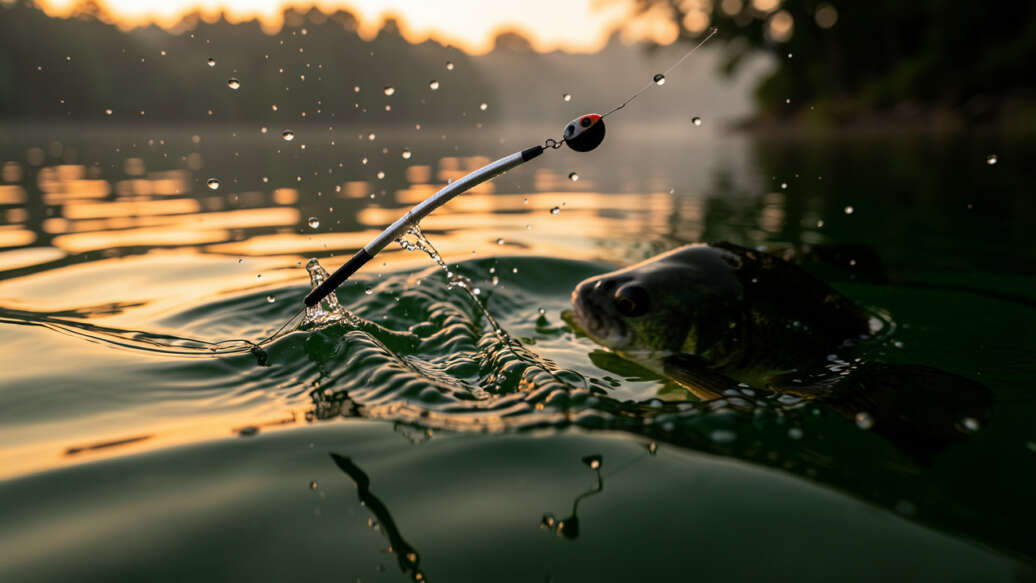
The spinning blade makes noise and splashes. This attracts bass from a distance. They see the commotion and think it’s prey.
This often triggers a reaction strike. It’s like a dinner bell for hungry bass. The visual element of the bait moving on the surface is also key.
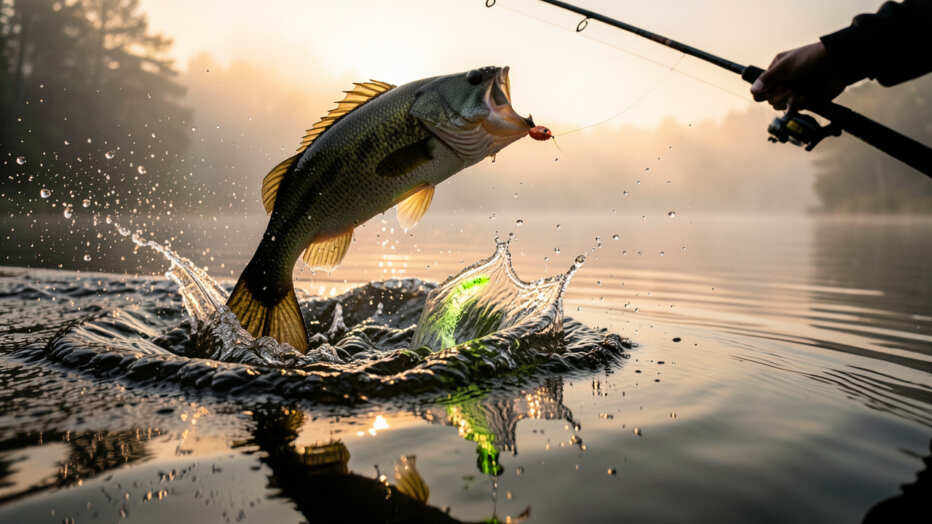
Observing the strike on a buzzbait is one of the most exciting moments in bass fishing; keep your rod tip low and line tight to capitalize on the visual explosion.
The action of a buzzbait mimics injured baitfish. Injured baitfish often struggle on the surface. This makes them easy targets for bass.
The noisy, erratic movement of the buzzbait is irresistible. This is why Buzzbait Bass Tactics: Surface Commotion That Triggers Bites are so effective. They tap into a bass’s natural predatory instincts.
It’s a fun way to fish because you often see the strike happen right before your eyes.
Choosing the Right Buzzbait for the Job
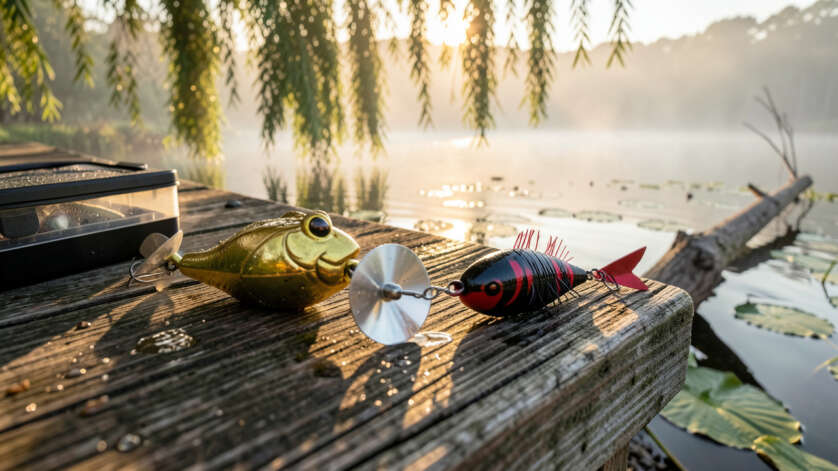
Not all buzzbaits are created equal. Different designs work better in various situations. The most common type has a single blade.
These are great for general use. They offer a consistent, moderate noise level. Some buzzbaits have multiple blades.
These create more noise and turbulence. They are excellent for muddy or stained water. The extra commotion helps bass find the bait.
The size of the buzzbait matters too. Smaller baits are good for smaller bass or clear water. Larger baits can attract bigger bass and are better in rougher conditions.
Think about the forage base in the water you are fishing. If baitfish are small, use a smaller buzzbait. If they are larger, go with a bigger one.
This is a simple but important part of effective Buzzbait Bass Tactics: Surface Commotion That Triggers Bites.
Blade Types and Their Impact
The shape and size of the blade are critical. A clacker blade makes a distinct “thwack-thwack” sound. This is very appealing to bass.
It’s a loud, attention-grabbing noise. Other blades are more streamlined. They create a steady hum or a splashing sound.
Match your buzzbait size to the local forage – smaller baitfish call for a 1/4-ounce buzzbait, while larger prey like shad favor 3/8-ounce or heavier options.
Some blades are flat, while others are cupped. Cupped blades displace more water and make more noise.
Experiment with different blade types. See what works best in your local waters. For instance, a larger, cupped blade might be perfect for early morning.
A smaller, quieter blade might be better on a calm, clear afternoon. Understanding these nuances helps you refine your Buzzbait Bass Tactics: Surface Commotion That Triggers Bites. It’s about matching the bait’s sound and action to the bass’s mood and environment.
Color Matters for Surface Lures
Buzzbait skirts come in many colors. The skirt adds visual appeal. It also helps to mimic baitfish.
White, black, and chartreuse are popular choices. White is a classic color. It looks like a baitfish on the surface.
Black is good in low light or dark water. It creates a strong silhouette. Chartreuse is a bright, attention-grabbing color.
It stands out well in murky water.
Consider the time of day and water clarity. On bright, sunny days, natural colors like white or silver work well. On overcast days or in stained water, brighter colors like chartreuse or even pink can be more effective.
Sometimes, a combination of colors on the skirt can be very enticing. This detail is a small but significant part of successful Buzzbait Bass Tactics: Surface Commotion That Triggers Bites.
Where and When to Throw a Buzzbait
Buzzbaits are best used when bass are actively feeding near the surface. This often happens in warmer months. Think spring, summer, and early fall.
Early mornings and late evenings are prime times. The low light conditions make bass more comfortable moving up to feed. Overcast days can also be excellent.
Bass feel less exposed and will chase prey further from cover.
Look for shallow areas. Bass love to ambush prey in shallow water. Think weed edges, lily pads, laydowns, and points that drop off into deeper water.
Areas with current can also be good. Bass will position themselves to ambush baitfish being pushed by the current. These are the spots where your Buzzbait Bass Tactics: Surface Commotion That Triggers Bites will likely pay off the most.
Targeting Bass in Different Cover
Weed lines are a top target. Cast your buzzbait parallel to the weed edge. Retrieve it just outside the weeds.
Bass will often dart out to grab it. Lily pads are another great option. You can cast directly over lily pads.
Even a poorly cast buzzbait can draw a strike; the surface commotion often overrides precision placement.
Let the buzzbait sit for a second, then start your retrieve. The splash can draw a bass out from under the pads.
Fallen trees and laydowns offer ambush points. Cast your buzzbait near the cover. Let it hit the water and start reeling.
Sometimes, a bass will explode on it right by the wood. Don’t be afraid to cast into tight spots. The commotion can trigger a strike even when the bait isn’t perfectly placed.
Mastering these locations is key to effective Buzzbait Bass Tactics: Surface Commotion That Triggers Bites.
Seasonal Considerations for Buzzbaiting
In spring, as water temperatures rise, bass move shallower. Buzzbaits can be very effective then. Focus on warmer, shallower bays and flats.
As summer progresses, bass might move a bit deeper during the heat of the day. However, they still feed on the surface during low light periods. Early morning and late evening are still your best bets.
In fall, as water cools, bass become more aggressive. They are feeding up for winter. Buzzbaits can continue to produce.
Pay attention to water temperature. When it’s in the 60s and 70s Fahrenheit, buzzbaits are often excellent. Understanding these seasonal shifts helps you apply the best Buzzbait Bass Tactics: Surface Commotion That Triggers Bites throughout the year.
How to Retrieve Your Buzzbait Effectively
The most common retrieve is a steady, consistent speed. You want the blade to spin properly and create that surface disturbance. Find a speed that keeps the bait on top of the water without it “blowing out” or skipping too much.
This steady retrieve often works best when bass are actively chasing. It mimics a fleeing baitfish.
However, don’t be afraid to vary your retrieve. Sometimes, a pause can be deadly. Let the buzzbait sit for a few seconds after it hits the water.
Then, give it a sharp twitch or two. This can trigger strikes from bass that are following but hesitant. Another tactic is to speed up your retrieve, then slow down.
This erratic action can fool bass into biting.
Speed and Cadence Adjustments
If the bass are aggressive, a fast retrieve can work wonders. You want to cover water and trigger reaction strikes. If the bass seem a bit hesitant or are following the bait without striking, try slowing down.
Incorporate occasional twitches by snapping the rod tip; this can mimic an injured baitfish and trigger reluctant bass to strike.
A slower retrieve allows the bait to stay in the strike zone longer. It also gives the bass more time to get a good look and commit to the bite.
Experiment with short pauses. A buzzbait can sit on the surface for a moment, then with a slight twitch of the rod, it can dart. This sudden movement can be the difference between a follow and a strike.
Learning to adjust your speed and cadence is a crucial part of mastering Buzzbait Bass Tactics: Surface Commotion That Triggers Bites. It’s about reading the bass’s behavior.
Twitching and Popping Techniques
A simple twitch of the rod tip can change the buzzbait’s action. It can make the blade spin erratically or cause the bait to dart. This can imitate a wounded baitfish.
Don’t overdo it. A subtle twitch is usually enough. Too much action can make the bait dig into the water.
Some buzzbaits are designed to “pop” or “chug” on the retrieve. These often have specific blade designs. This popping action creates a lot of disturbance.
It can be very effective in dirty water. It calls attention to the bait. Using these subtle variations in your retrieve can significantly improve your success with Buzzbait Bass Tactics: Surface Commotion That Triggers Bites.
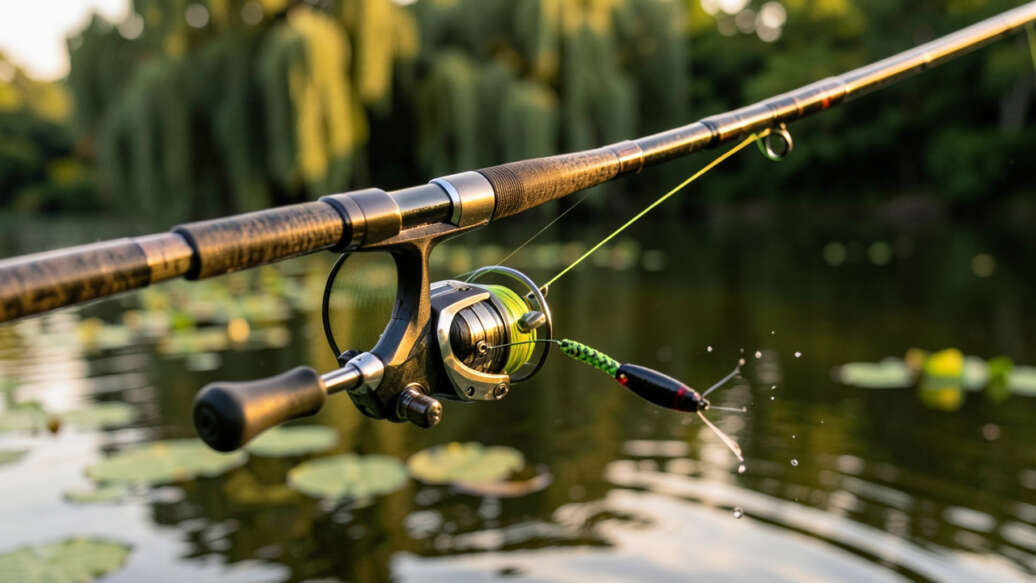
Rod, Reel, and Line for Buzzbaits
When fishing buzzbaits, you need equipment that can handle them. A medium-heavy to heavy action casting rod is ideal. It should be at least 6’6″ long.
This gives you the power to cast the bait accurately. It also helps you set the hook effectively when a bass strikes. A longer rod can help with casting distance.
For the reel, a baitcasting reel is preferred. It offers more control and power. A gear ratio of around 6.3:1 to 7.1:1 is a good range.
This allows you to retrieve the buzzbait at a steady pace. It also lets you reel in slack quickly if a bass strikes. The right gear is a foundational element of successful Buzzbait Bass Tactics: Surface Commotion That Triggers Bites.
Using braided line with no stretch requires a softer hookset to avoid tearing the hook out of a bass’s mouth.
Choosing the Right Line
Monofilament line is often recommended for buzzbaits. It floats, which helps keep the bait on the surface. It also has some stretch.
This stretch can help absorb the shock of a strike. It prevents the hook from tearing out of the bass’s mouth. 10-20 pound test monofilament is a common choice.
Braided line is another option. It floats very well and has no stretch. This can lead to very solid hooksets.
However, the lack of stretch can sometimes cause you to rip the hook out. If you use braid, be sure to use a softer rod action and a lighter drag. Fluorocarbon line is generally not ideal for buzzbaits because it sinks.
It can pull the bait down.
Hooksets and Fighting Bass on Buzzbaits
Hooking a bass on a buzzbait can be exciting. Bass often attack the bait with great force. When you feel a strike, resist the urge to set the hook immediately.
Wait for the fish to actually take the bait. You’ll feel weight on the line. Then, reel down and sweep the rod to set the hook.
This “wait and reel” technique is crucial. If you set the hook too early, you might pull the buzzbait away from the fish. This is a common mistake.
Mastering this timing is a key part of effective Buzzbait Bass Tactics: Surface Commotion That Triggers Bites. It ensures you connect with the fish when it’s truly got the bait.
Wait until you feel the weight of the fish before setting the hook; a sweeping motion rather than a hard yank ensures better penetration.
Dealing with Missed Strikes
It’s common to have bass miss a buzzbait. They might slap at it or just nipping at the skirt. If this happens, don’t give up.
Often, the bass is following and curious. Try pausing the bait. Let it sit for a moment.
Then, give it a slight twitch. Sometimes this is all it takes to get them to commit.
If they miss it again, try casting back to the same spot. They might still be interested. You can also try a different color or blade type on your next cast.
Persistence and observation are vital. These are the elements that elevate your Buzzbait Bass Tactics: Surface Commotion That Triggers Bites from beginner to advanced.
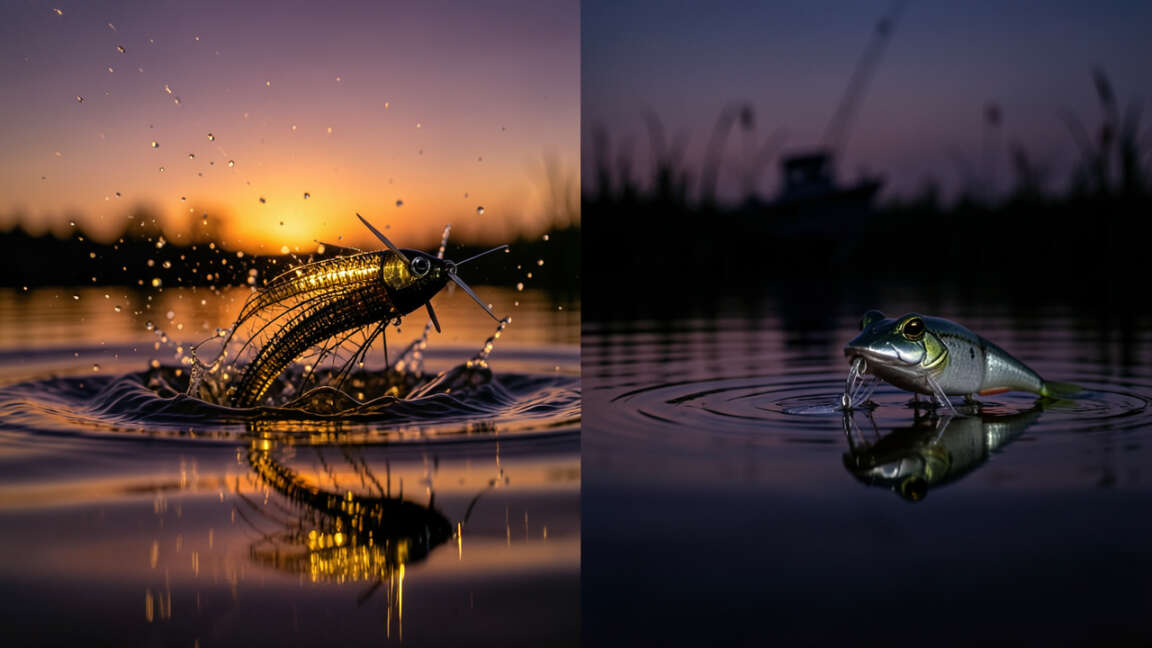
Comparison: Buzzbait vs. Other Topwater Lures
As you can see, each lure has its strengths. The buzzbait is king for pure commotion. This makes it ideal for drawing fish from a distance.
A buzzbait’s steady surface disturbance is ideal for covering water quickly, while poppers and walking baits excel when bass want a more erratic or subtle presentation.
It’s also great when visibility is low. Poppers and walking baits require more finesse in their retrieve. They excel when bass are looking for a more subtle visual cue.
Understanding these differences helps you choose the right lure for the situation. It’s all part of having a well-rounded approach to topwater fishing and successful Buzzbait Bass Tactics: Surface Commotion That Triggers Bites.

Common Mistakes to Avoid
One common mistake is setting the hook too early. As mentioned, wait for the weight. Another error is retrieving the buzzbait too slowly.
If the blade isn’t spinning, it’s not making noise. The bait is just dragging. Ensure the blade is always turning and churning water.
Fishing too deep is also an issue. Buzzbaits are surface lures. They are meant to be fished on top.
If you’re feeling them dig into the water, you’re likely reeling too fast or have the wrong angle. Keep that bait on the surface. This is fundamental to all Buzzbait Bass Tactics: Surface Commotion That Triggers Bites.
Retrieving Too Slowly or Too Fast
A buzzbait that is too slow will sink. It won’t create the necessary commotion. This makes it ineffective.
A buzzbait that is too fast might “blow out.” This means it skips and jumps erratically, losing its consistent action. Find that sweet spot where the blade spins freely and consistently.
If you frequently miss strikes on buzzbaits, try using a firm sweep rather than a sharp jerk to set the hook.
If you’re unsure, reel steadily until you feel the blade start to work. Then, maintain that speed. You can experiment from there.
Sometimes, a burst of speed followed by a pause is perfect. Other times, a steady retrieve is all you need. It’s about adapting to the fish’s mood.
Not Waiting for the Hookset
This is perhaps the most frequent mistake. Bass often hit a buzzbait with a lot of power. They might swirl around it or slap it with their tail.
If you yank the rod the moment you see the splash, you’ll likely pull the lure away. The fish never gets a chance to get the hooks in its mouth.
The best approach is to feel the weight. When you feel that solid weight, that’s when you set the hook. A firm sweep of the rod will drive the hooks home.
This simple adjustment can drastically improve your hook-up ratio. It’s a core principle of effective Buzzbait Bass Tactics: Surface Commotion That Triggers Bites.
Frequently Asked Questions
Question: What is the best time of year for buzzbait fishing?
Answer: Buzzbaits are most effective in warmer months, typically from spring through early fall. Bass are more active and tend to feed near the surface when water temperatures are between 60-80°F.
Question: Should I use braided line or monofilament for buzzbaits?
Answer: Monofilament is often preferred because it floats and has some stretch, helping keep the buzzbait on the surface and absorbing shock. Braided line can also work but requires careful hooksetting to avoid tearing the hook out.
Question: How do I know when to set the hook on a buzzbait strike?
Answer: Wait until you feel solid weight on the line. Don’t set the hook the instant you see the splash. Reel down to take up slack, then sweep your rod firmly to set the hooks.
Question: What is the most important factor for successful Buzzbait Bass Tactics: Surface Commotion That Triggers Bites?
Answer: Creating consistent surface disturbance with the buzzbait’s blade is crucial. This sound and visual appeal attracts bass from a distance and triggers their predatory instinct for a strike.
Question: Can I use a buzzbait in dirty water?
Answer: Yes, buzzbaits are excellent in dirty or stained water. The loud commotion and vibration they create help bass locate the lure when visibility is poor.
Question: How do I retrieve a buzzbait if bass are just following it?
Answer: Try pausing the buzzbait for a few seconds, then give it a sharp twitch or two. You can also vary your retrieve speed, speeding up and then slowing down to make the bait act erratically.
Final Thoughts
Using buzzbaits is a thrilling way to catch bass. The surface action is exciting, and the strikes are often explosive. By understanding how to pick the right bait, cast it in productive areas, and retrieve it effectively, you can significantly increase your success.
Mastering these Buzzbait Bass Tactics: Surface Commotion That Triggers Bites will lead to more memorable days on the water.




One Comment