





Smallmouth Bass: Behavior, Habitat, And Identification Tips
Smallmouth bass are a distinct species known for preferring cooler, clearer water with rocky bottoms and structures, and their aggressive predatory diet includes small fish, insects, and crustaceans. Key identification features include vertical barring along the sides, a large mouth that extends past the eye, and reddish eyes that set them apart from other bass. Their territorial nature makes them predictable around specific underwater features, though their location and activity shift significantly with seasonal changes. Understanding these behavioral and habitat patterns allows anglers to anticipate smallmouth movements and choose the best fishing spots effectively.
Catching a smallmouth bass can be a rewarding experience for any angler. Knowing where they like to hang out, how they act, and how to spot them makes all the difference. Understanding the nuances of Smallmouth Bass: Behavior, Habitat, and Identification Tips helps you find more fish and enjoy your time on the water.
You’ll learn how to predict their movements and choose the best spots to cast your line, leading to more successful fishing trips.
Key Takeaways
- Smallmouth bass prefer cooler, clearer water with rocky bottoms and structures.
- They are aggressive predators that feed on a variety of small fish, insects, and crustaceans.
- Key identification features include vertical barring, a large mouth that extends past the eye, and reddish eyes.
- Understanding their territorial nature helps predict where they will be found.
- Seasonal changes significantly influence smallmouth bass behavior and location.
Where to Find Smallmouth Bass: Habitat Essentials
Smallmouth bass are often called “bronze backs” for their distinctive coloring. They thrive in specific environments that offer both food and shelter. Unlike their largemouth cousins, smallmouths generally prefer cooler, clearer water.
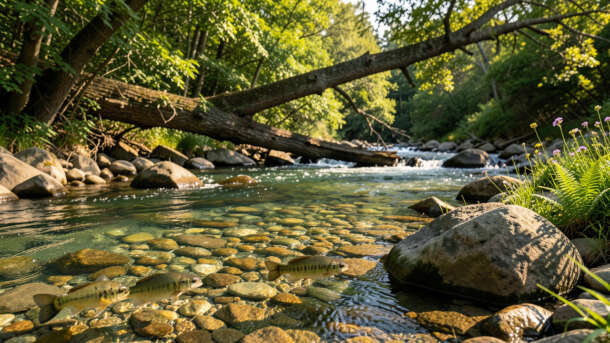
You’ll often find them in rivers, streams, and the rocky, gravelly areas of lakes and reservoirs. These fish are drawn to structures like submerged rocks, fallen trees, and weed beds. These spots provide ambush points for hunting and hiding from larger predators.
The ideal water temperature for smallmouth bass is typically between 65 and 70 degrees Fahrenheit. When water gets too warm, they tend to move to deeper, cooler areas. This is a crucial piece of information for anglers looking to find them during the hot summer months.
Target clear, rocky areas in rivers and lakes where smallmouth bass use their sharp eyesight to ambush prey.
The clarity of the water is also a big factor. Smallmouth bass have excellent eyesight and prefer to hunt in clear conditions where they can easily spot prey.
River systems are prime habitats for smallmouth bass. Look for areas with moderate current, riffles, and deep pools. The edges of these features, where fast water meets slow water, are often loaded with smallmouth.
In lakes, focus on the rocky shorelines, points, and offshore humps. Areas with a mix of rock, gravel, and sand are particularly attractive. Understanding these habitat preferences is the first step in mastering Smallmouth Bass: Behavior, Habitat, and Identification Tips.
Smallmouth Bass Behavior: What Makes Them Tick
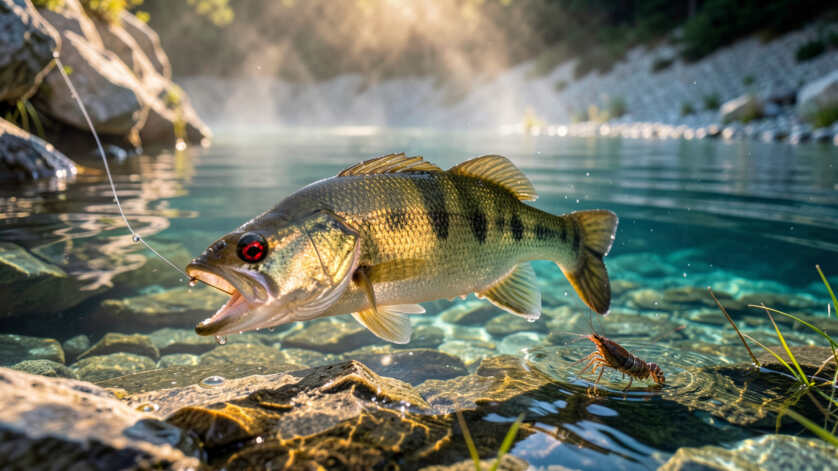
Smallmouth bass are known for their aggressive nature. They are opportunistic feeders, meaning they will strike at a wide variety of prey. Their diet includes small fish like minnows and shad, crayfish, insects, and even smaller amphibians.
This aggressive feeding behavior makes them a lot of fun to catch on artificial lures.
These fish are also quite territorial, especially during the spawning season. Males will defend their nests vigorously against any perceived threat. This territoriality means that if you find one smallmouth bass in a prime spot, there’s a good chance others are nearby.
Because smallmouth bass are territorial, catching one often indicates that more are patrolling the same area.
They often patrol specific areas, waiting for an easy meal to swim by. Learning about their territorial habits can significantly improve your success rate when fishing for Smallmouth Bass: Behavior, Habitat, and Identification Tips.
During different times of the year, their behavior changes. In spring, as water temperatures rise, they move into shallower areas to spawn. After spawning, they become more active hunters in the warmer months.
As fall approaches and water cools, they may move to deeper water, but they remain aggressive feeders until winter sets in. Understanding these seasonal shifts is key to consistent catches.
Identifying Smallmouth Bass: Spotting the Bronzeback
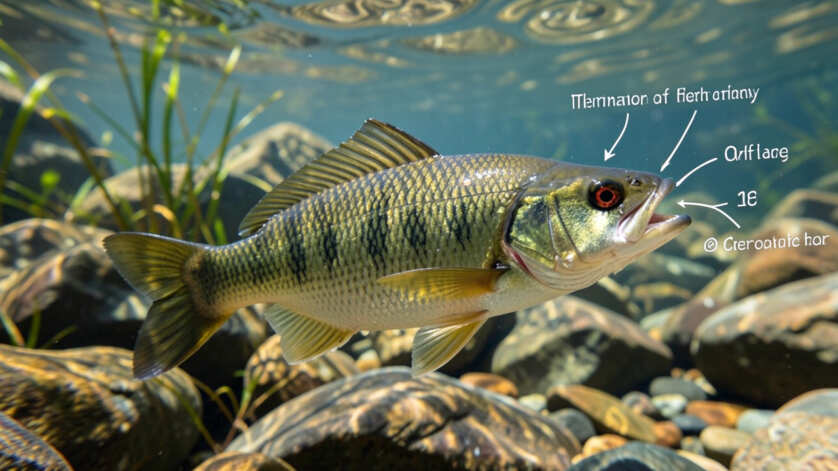
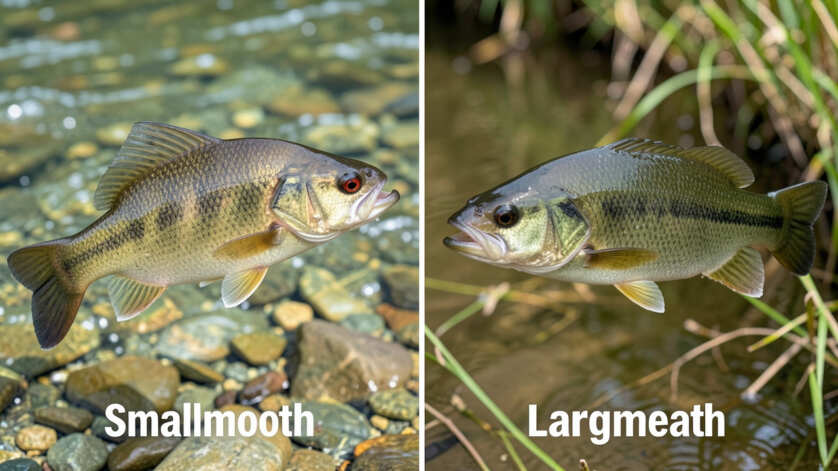
Distinguishing a smallmouth bass from other bass species, like the largemouth, is important for anglers. The most obvious feature is their mouth. The smallmouth’s mouth is smaller, and its upper jaw typically does not extend beyond the back of the eye.
In contrast, a largemouth bass’s mouth extends well past the eye. This is a primary identifier for successful Smallmouth Bass: Behavior, Habitat, and Identification Tips.
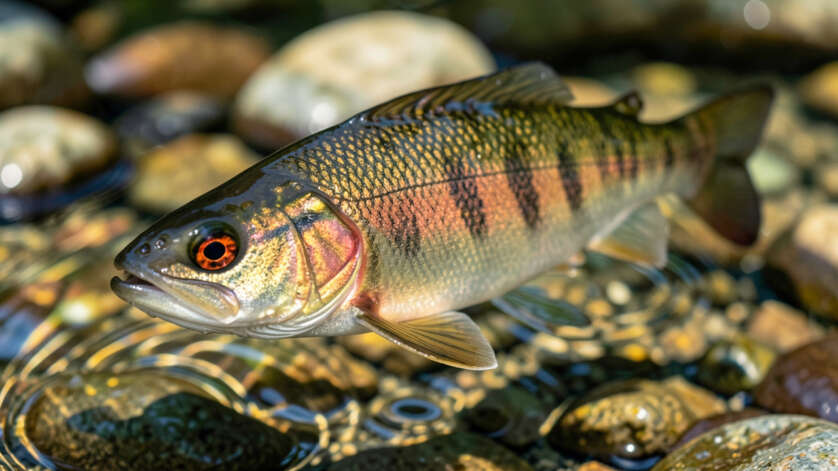
Coloration is another key identifier. Smallmouth bass usually display vertical bars or stripes along their sides, rather than the distinct lateral stripe seen on largemouth bass. Their body color can range from a light olive green to a deep bronze or brown, with a lighter belly.
The smallmouth bass's upper jaw does not extend past the back of the eye, a key difference from the largemouth's jaw that extends well past the eye.
Their eyes are often a striking reddish-orange color. These visual cues help you confirm you’ve hooked a smallmouth.
The dorsal fin of the smallmouth bass is also different. It’s more deeply notched than the largemouth’s, appearing almost as two separate fins. The overall body shape is also more elongated and streamlined compared to the deeper, more laterally compressed largemouth.
Knowing these differences ensures you can accurately identify your catch and appreciate the specific characteristics of the smallmouth bass.
Seasonal Strategies for Catching Smallmouth Bass
The best time to catch smallmouth bass often depends on the season. In the spring, as ice melts and water warms, smallmouth bass move from their deeper wintering areas into shallower sections of rivers and lakes. This is when they prepare to spawn.
Look for them around rocky points and flats.
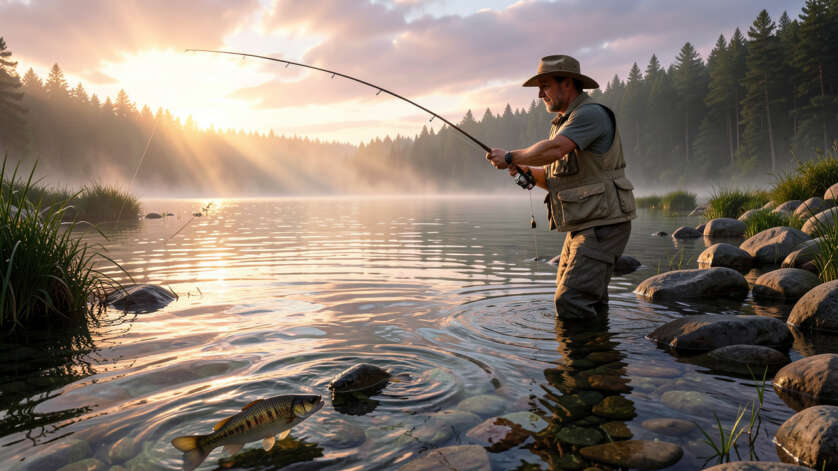
Summer is prime time for active smallmouth bass. They are feeding heavily and can be found in a variety of habitats. In rivers, target areas with current breaks, like behind large rocks or fallen trees.
In lakes, deep drop-offs, weed edges, and offshore humps are productive. Surface lures can be very effective on calm summer mornings and evenings.
In late summer and fall, target main lake points and channel swings in rivers where smallmouth bass feed aggressively before winter.
As fall arrives and water temperatures begin to drop, smallmouth bass become more concentrated. They often school up in areas where baitfish are abundant. Look for them near main lake points, channel swings in rivers, and deeper rocky areas.
They remain aggressive feeders, making them a great target for anglers looking for action before winter.
During the winter, smallmouth bass become less active and move to their deepest, most comfortable water. They tend to congregate in deeper pools of rivers or in the deepest parts of lakes. Fishing can be slower, but jigs and live bait fished slowly can still produce results.
Understanding these seasonal shifts is a vital part of Smallmouth Bass: Behavior, Habitat, and Identification Tips.
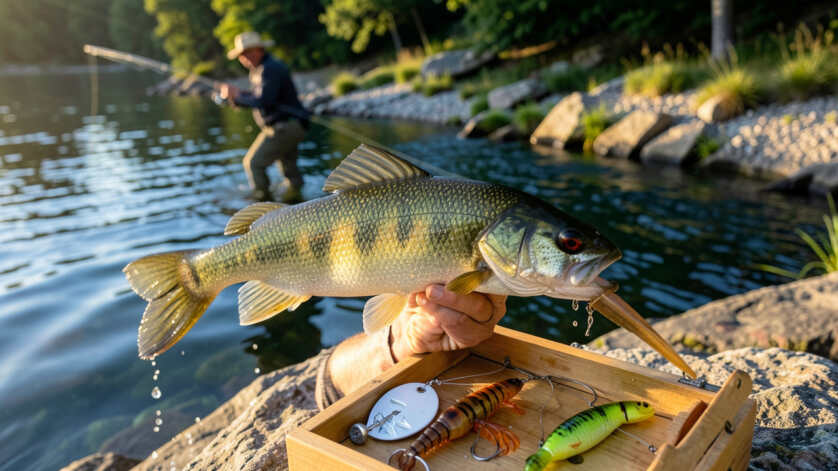
Lures and Techniques for Smallmouth Success
Catching smallmouth bass often requires adapting your lure choice and fishing technique to their habitat and behavior. For rivers and clear lakes, imitating their natural prey is often the most effective strategy.
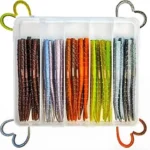
Jigs are incredibly versatile for smallmouth bass. A football jig or a finesse jig bounced along a rocky bottom can entice even the most finicky fish. Pair them with a crawfish imitation trailer for added attraction.
When fishing rocky areas, a drop-shot rig is also highly effective, allowing you to present your bait naturally at precise depths.
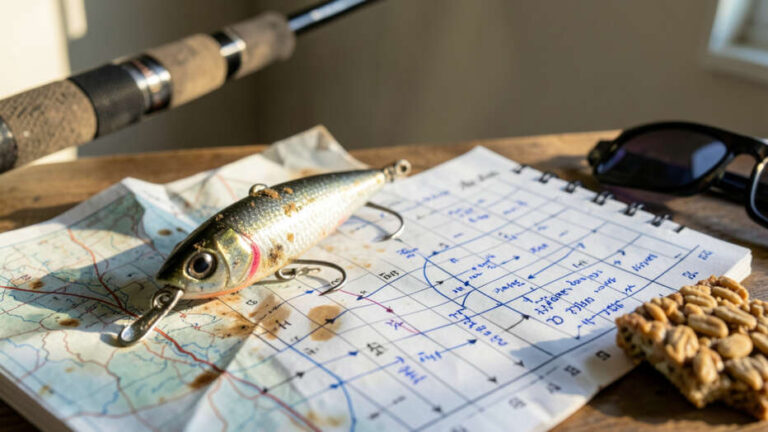
Avoid using lures that don't mimic local prey; crawfish imitations are often the most effective for smallmouth in rocky habitats.
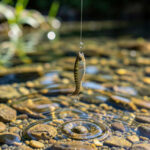
Topwater lures can create explosive strikes, especially during low-light conditions in the summer. Poppers, walk-the-dog baits, and prop baits mimic injured baitfish or struggling insects, triggering aggressive strikes from smallmouth bass. Remember, smallmouth often strike baitfish on the surface.
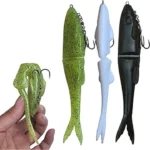
For imitating crayfish, a popular smallmouth food source, consider using soft plastic crawfish or creature baits. Dragging these along the bottom in rocky areas can be irresistible to smallmouth bass. Similarly, small swimbaits and grubs rigged on a jig head can mimic baitfish very effectively.
When it comes to techniques, always try to present your lure naturally. In clear water, stealth is important. Make long casts and retrieve your lure smoothly.
If the bass are holding tight to structure, work your lure right alongside it. Patience and observation are key to mastering Smallmouth Bass: Behavior, Habitat, and Identification Tips.
Smallmouth Bass vs. Largemouth Bass: Key Differences
Anglers often encounter both smallmouth and largemouth bass. While both are sought-after game fish, they have distinct differences in appearance, habitat preference, and behavior. Knowing these differences helps with identification and tailoring your fishing approach.
This comparison is a core part of understanding Smallmouth Bass: Behavior, Habitat, and Identification Tips.
The habitat preference is a major distinction. Smallmouth bass favor clear, cool waters with rocky substrates, gravel, and boulders. They are often found in rivers and the rocky sections of lakes.
The most reliable way to distinguish smallmouth from largemouth bass is by checking the jaw: a smallmouth's upper jaw stops before the eye, while a largemouth's extends well beyond.
Largemouth bass, on the other hand, prefer warmer, more stagnant water with abundant vegetation, submerged trees, and other forms of cover. This difference in habitat is a fundamental aspect of Smallmouth Bass: Behavior, Habitat, and Identification Tips.
Behaviorally, both are aggressive predators. However, smallmouth are often more concentrated around specific structures due to their territorial nature. Largemouth tend to relate more to cover and vegetation.
Understanding these differences allows you to adjust your search area and lure selection effectively, leading to more successful fishing trips.
Frequently Asked Questions
What is the best time of year to catch smallmouth bass?
Spring and fall are generally excellent times to catch smallmouth bass as they move into shallower feeding and spawning areas. Summer also offers great opportunities, especially during early morning and late evening.
What is the most important identifying feature of a smallmouth bass?
The most important identifying feature is the size of its mouth; the smallmouth’s upper jaw does not extend past the back of its eye, unlike the largemouth bass.
Do smallmouth bass live in lakes or just rivers?
Smallmouth bass live in both lakes and rivers. They prefer cooler, clearer water with rocky bottoms in both environments.
What kind of bait do smallmouth bass eat?
They eat a variety of prey, including crayfish, minnows, shad, insects, and smaller fish. This makes them susceptible to many different lures.
How can I improve my chances of catching a smallmouth bass?
Focus on understanding their habitat preferences, seasonal movements, and aggressive behavior. Using lures that imitate their natural food sources and presenting them naturally will greatly improve your success.
Are smallmouth bass aggressive?
Yes, smallmouth bass are known for their aggressive nature, making them a very exciting fish to catch on the end of your line.
Final Thoughts
Mastering the art of catching smallmouth bass comes down to understanding their world. Knowing their preferred rocky, clear habitats, their aggressive feeding habits, and how to spot them by their distinctive markings will make you a more successful angler. Apply these insights about Smallmouth Bass: Behavior, Habitat, and Identification Tips on your next outing.



5 Comments