



River Bass Fishing: Current, Eddies, And Smallmouth Tactics
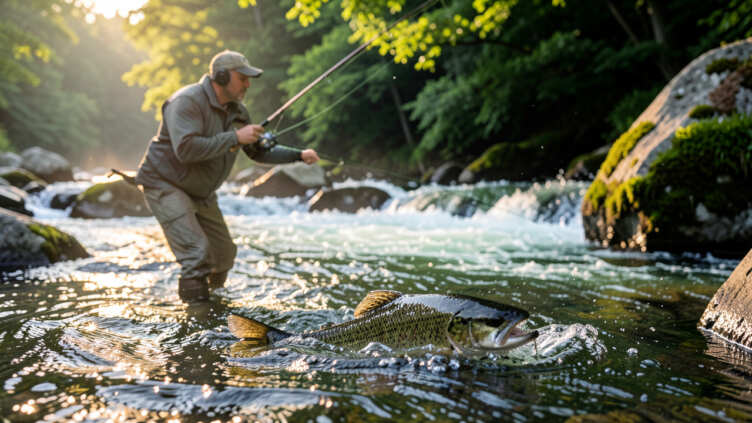
River bass fishing success depends on carefully reading current and eddies to locate smallmouth, which use these water features for feeding and conserving energy. Current breaks create various eddy types where bass ambush prey, with slower eddies holding resting fish and faster ones attracting actively feeding bass. Matching lure weight to current speed and using drifting retrieves keeps the bait in the strike zone longer, directly improving catch rates.
Catching bass in rivers can be a thrilling experience, especially when you know how to read the water. The way the current moves and where it creates calmer spots, called eddies, tells you a lot about where the fish are likely to be. Understanding these river dynamics is key to success, particularly when targeting smallmouth bass.
This guide will help you master these river features and improve your fishing game, giving you more bites and bigger catches.
Key Takeaways
- Learn how river current shapes bass behavior and habitat.
- Identify productive spots like eddies and current breaks.
- Discover effective lure choices for different river conditions.
- Master casting and retrieval techniques for river bass.
- Understand how to adapt your strategy to changing river flows.
Why Current Matters for River Bass
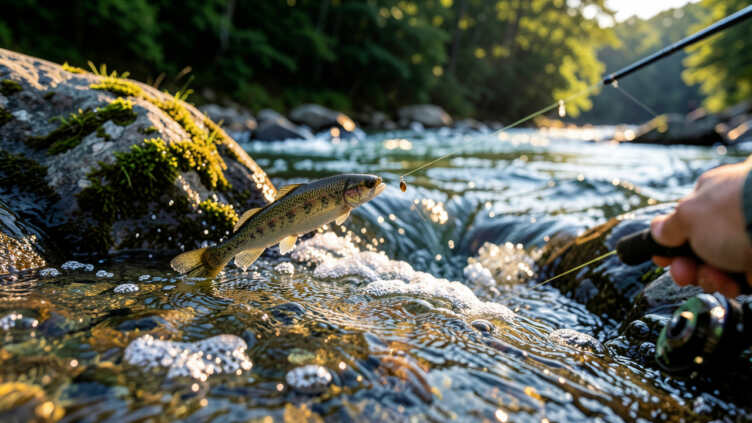
The flow of a river is the lifeblood for bass. It affects how they feed, where they rest, and how they move. Bass, especially smallmouth, are built to handle moving water.
They use the current to their advantage. Understanding this helps you find them.
Fast water pushes baitfish around. This makes it easy for bass to ambush their next meal. They will position themselves where they can conserve energy but still be in a prime spot to grab food.
Eddies provide bass with a resting area away from the main current, allowing them to dart out to feed without wasting energy.
Look for spots where strong current meets slack water; bass position themselves there to conserve energy while ambushing prey.
This means looking for places where the current is strong but has a little bit of slack water nearby.
The strength of the current also tells you about the oxygen levels in the water. More oxygen is usually found in faster-moving water. This makes the fish more active and willing to bite.
So, a good, strong current often means a good day of fishing.
Finding Bass in River Eddies
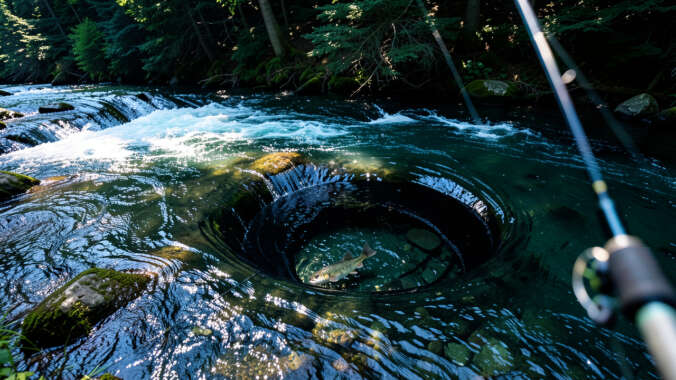
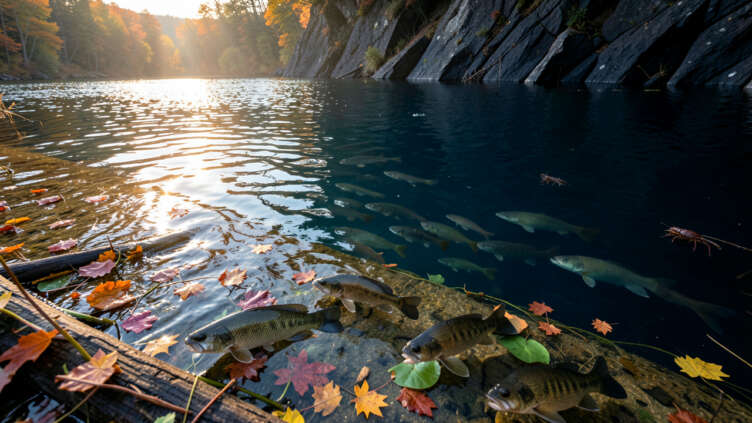
Eddies are calm water pockets that form behind obstacles in the river. Think of a rock, a fallen tree, or a bridge piling. Water flows around these things, creating a swirling, slower area.
These are prime resting and ambush spots for bass. This is a core part of River Bass Fishing: Current, Eddies, and Smallmouth Tactics.
Smallmouth bass love eddies because they offer a break from the main current. They can hang out here without fighting the flow. From an eddy, they can easily dart out into the faster water to grab passing bait.
It’s like a bass buffet.
Look for eddies on the downstream side of any obstruction. The bigger the obstacle, the bigger the eddy can be. Also, consider the depth.
Deeper eddies often hold larger fish. These calm areas are where you should focus your casts.
Current breaks are crucial; they create less stressful zones where bass can hold without fighting the flow.
Types of Eddies and How to Fish Them
Not all eddies are the same. Some are small and shallow, others are large and deep. Each type requires a slightly different approach.
Small, shallow eddies are great for active, smaller bass. They are often found around smaller rocks or vegetation. Try casting small, fast-moving lures like inline spinners or small crankbaits here.
The quick retrieves mimic fleeing baitfish.
Large, deep eddies are more likely to hold bigger, more mature smallmouth. These might be found behind large boulders, bridge piers, or river bends. For these, use slower presentations.
Think soft plastics like crawfish or fluke-style baits, or even a jig.
Eddies with structure offer even more hiding places. If there’s a submerged log or a patch of weeds within an eddy, that’s a goldmine. Bass will use these features for cover.
Make sure your lure gets close to the structure.
Reading River Current for Bass Locations
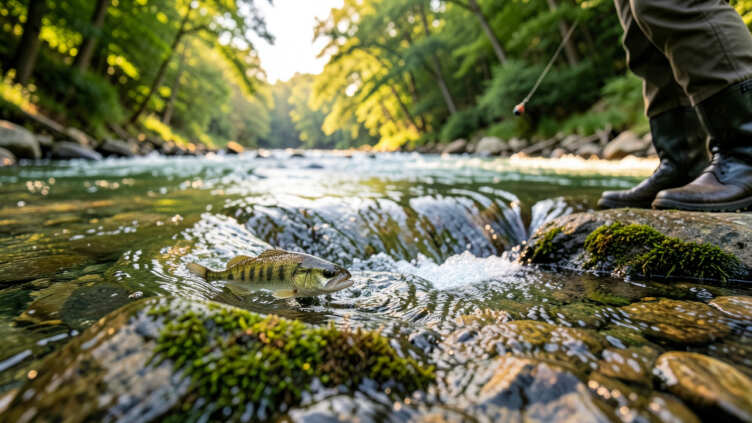
Reading the river’s current is a skill that improves with practice. It’s not just about seeing the water move; it’s about understanding what that movement tells you about the underwater terrain and the fish. Mastering River Bass Fishing: Current, Eddies, and Smallmouth Tactics means becoming a water reader.
Current breaks are crucial. These are spots where the main current is interrupted, creating a less stressful zone for bass. Examples include the downstream side of large rocks, fallen trees, bridge supports, or even changes in the riverbed.
Bass will position themselves just on the edge of the current, waiting for food.
Seams are another important feature. This is where faster current meets slower current. It looks like a line on the water’s surface.
Baitfish often travel along these seams, and bass will patrol them, ready to strike. Cast your lure right into the seam for a good chance at a bite.
Rig soft plastics weedless when fishing around cover; they can be worked slowly in eddies or twitched along the bottom in current.
Swirls and boils indicate underwater structure or depth changes. A swirl might mean a rock or drop-off. A boil can indicate a strong current hitting a submerged object.
These are areas where bass might hold. Pay attention to these subtle signs.
How Different Current Speeds Affect Bass
The speed of the current directly influences how bass behave and where they position themselves. This is a key element in effective River Bass Fishing: Current, Eddies, and Smallmouth Tactics.
In slow to moderate currents, bass are more willing to chase. They will move to intercept bait. This is often a good time for faster-moving lures that cover more water.
When the current picks up, bass become more energy-conscious. They seek out those slack water areas. Your bait needs to be presented in or very near these resting spots.
Best Lures for River Bass
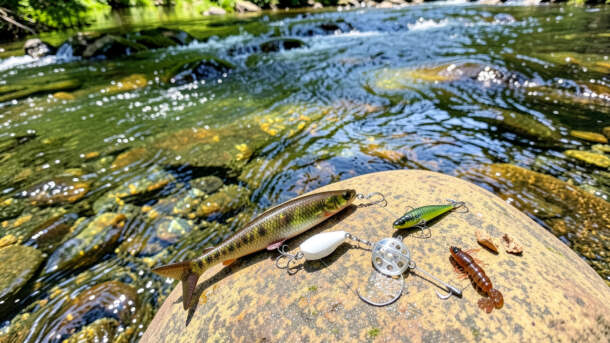
Choosing the right lure for river conditions is vital. The current and the type of bottom will dictate what works best. For River Bass Fishing: Current, Eddies, and Smallmouth Tactics, diversity in your tackle box is key.
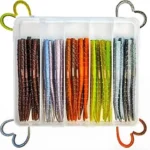
Soft Plastics are incredibly versatile. Tubes, crawfish imitations, and fluke-style baits work wonders. Rig them weedless for fishing around cover.
They can be fished slowly and deliberately in eddies or twitched along the bottom in current.
Jigs are excellent for bass holding tight to the bottom. A football jig or a finesse jig can be bounced along the riverbed. They mimic crawfish and other bottom-dwelling prey.
A jig is a go-to for many river anglers when the current is strong.
Inline Spinners and Spinnerbaits excel in moving water. The blade creates vibration and flash that attracts bass. They are great for covering water and can be fished at various speeds.
Always consider whether to let the current present your bait naturally or to actively work it; matching the presentation to the situation is key.
A willow-leaf blade spinner is good for cutting through current.
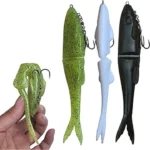
Crankbaits can be effective, especially those that dive to the bottom. They can be good for searching flats or along ledges. Choose models that can handle the current without being swept away too easily.
Small, tight-wobbling crankbaits are often best.
Topwater Lures can be dynamite during low-light conditions or when bass are actively feeding near the surface. Poppers, walk-the-dog baits, and buzzbaits can trigger explosive strikes. Target them in calmer areas or along the edges of current.
Matching Lure Weight to Current
The weight of your lure is critical in river fishing. Too light, and the current will wash it downstream too fast. Too heavy, and it might snag or be too difficult to work properly.
- Light Current: Use lures in the 1/8 to 1/4 ounce range. This allows for natural drift and presentation.
- Moderate Current: Opt for 1/4 to 3/8 ounce lures. This provides enough weight to stay in contact with the bottom.
- Strong Current: Go with 3/8 to 1/2 ounce or heavier. This ensures your lure stays down and in the strike zone.
For soft plastics, consider adding a bullet weight or a screw-lock weight to your rig. This gives you control over sink rate and depth.
Casting and Retrieval Techniques
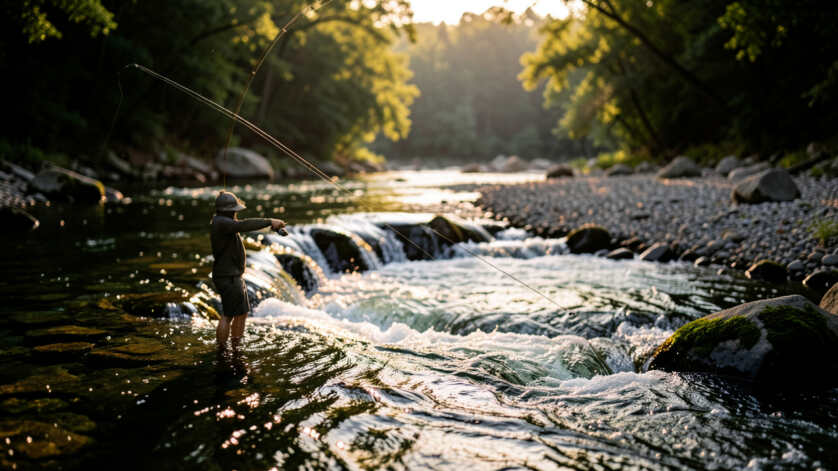
How you cast and retrieve your lure makes a big difference in river fishing. You need to present your bait naturally, even with the current working against you.
Casting upstream is often more effective than casting downstream in rivers. When you cast upstream and retrieve with the current, your lure moves more like natural bait. It drifts downstream with the flow, which is what bass expect.
Targeting current breaks is key. Cast your lure to the edge of the faster water, letting it drift into the slack area. For eddies, cast to the far side and retrieve back towards you, or cast into the eddy and let it swirl.
In stained or high water, use darker colors or high-visibility lures and target areas where clearer water enters the main river.
Vary your retrieve speed. Don’t just reel at one constant pace. Speed up, slow down, add pauses. This mimics the erratic movements of baitfish and can trigger strikes from hesitant bass.
Work your lure along structure. If there’s a log, rock pile, or weed bed, make sure your lure gets close to it. Bass use these as hiding places. A well-placed cast can mean the difference between a bite and a blank.
Drifting vs. Reeling
Sometimes, letting the current do the work is better than actively reeling. This is where drifting comes in.
- Drifting involves casting upstream and letting your lure drift downstream with the current, controlling it with your reel. This is great for soft plastics and jigs. It makes your bait look natural.
- Reeling is when you actively retrieve your lure against or across the current. This is better for lures like spinners or crankbaits that need a consistent retrieve to work properly.
For effective River Bass Fishing: Current, Eddies, and Smallmouth Tactics, you need to know when to let the river present your bait and when to actively work it.
Adapting to Changing River Conditions
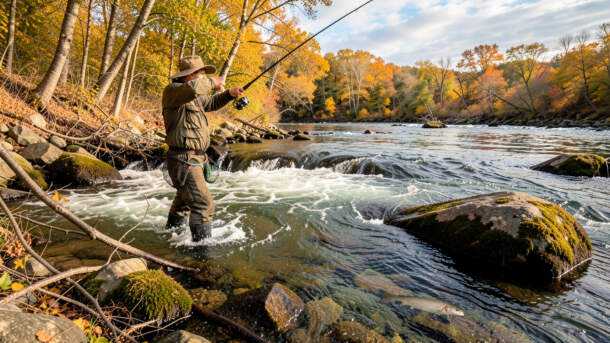
Rivers are dynamic environments. Water levels and current speeds can change quickly due to rain, snowmelt, or dam releases. Being able to adapt your strategy is crucial for consistent success.
High Water Levels: When the river is high and fast, bass will move to more protected areas. Look for calmer backwaters, large eddies, or areas behind significant structure. They will also move into shallower areas near the banks if there’s cover.
Low Water Levels: In low water, bass will concentrate in deeper pools and channels. They might become more lethargic. Focus on areas with good current flow that still offer depth and cover.
Smaller, more finesse presentations might be needed.
Turbid Water (Muddy): If the water is muddy, bass rely more on scent and vibration. Use lures with rattles or strong scents. Darker colors and high-visibility lures can also help them find your bait.
Target areas where clearer water might be entering the main river.
Seasonal Adjustments
The time of year also plays a big role in river bass behavior.
- Spring: Bass move shallower to feed and prepare for spawning. Look for them in warmer, slower-moving backwaters and along current breaks.
- Summer: Bass are often found in deeper, cooler sections of the river. Eddies and current breaks remain prime spots. Topwater can be excellent during low-light periods.
- Fall: Bass feed aggressively to prepare for winter. They move to find baitfish, often in deeper pools and along river edges with good current.
- Winter: Bass become less active and move to deeper, slower pools. They will hold tight to bottom structure. Presentations need to be very slow.
Frequently Asked Questions
What is the best time of day for river bass fishing?
Early morning and late evening are often best, especially during warmer months, as bass are more active then. However, overcast days can provide good fishing all day. Pay attention to how current patterns change throughout the day.
How do I find smallmouth bass in a river?
Look for areas with current breaks, eddies, and structure like rocks or fallen trees. Smallmouth prefer oxygen-rich, moving water. Areas where faster current meets slower water (seams) are also productive for finding River Bass Fishing: Current, Eddies, and Smallmouth Tactics.
Should I cast upstream or downstream in a river?
Casting upstream and letting your lure drift with the current often works best. This makes your bait appear natural to the bass. You can also cast across current to cover different zones effectively.
What is the most important factor in river bass fishing?
Understanding and reading the river’s current is arguably the most important factor. Knowing how current affects baitfish and bass positioning will significantly improve your success in River Bass Fishing: Current, Eddies, and Smallmouth Tactics.
Are jigs good for river smallmouth?
Yes, jigs are excellent for river smallmouth, especially in moderate to strong currents. They mimic crawfish and other bottom-dwelling prey, and their weight helps keep them in the strike zone when the current is strong.
How deep should I fish for river bass?
Bass can be found at various depths depending on the river’s structure and the season. Look for them in deeper pools, along drop-offs, and in calmer water behind current breaks. Depth is less important than finding areas where they can ambush prey or rest.
Final Thoughts
Mastering river bass fishing means understanding how current and eddies shape the fish’s world. By learning to read these water features and adapting your tactics, you’ll find more smallmouth bass. Focus on structure, current breaks, and the right lures to make every trip more successful.

2 Comments