







Striped Bass Vs Hybrid Striper: Key Identification Markers
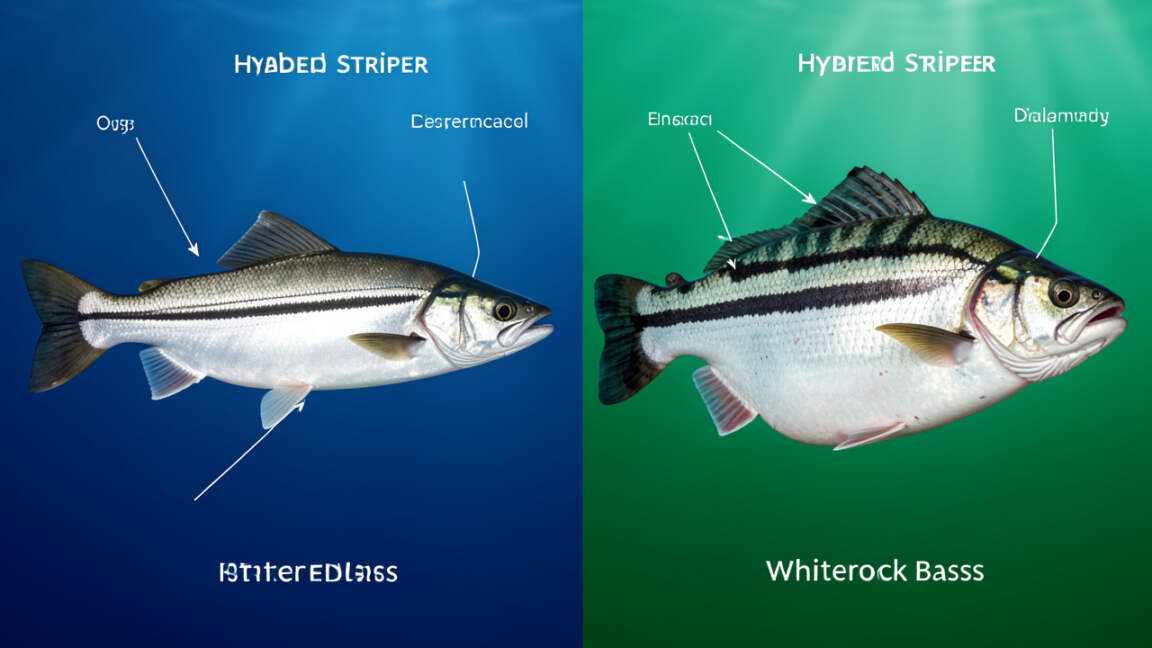
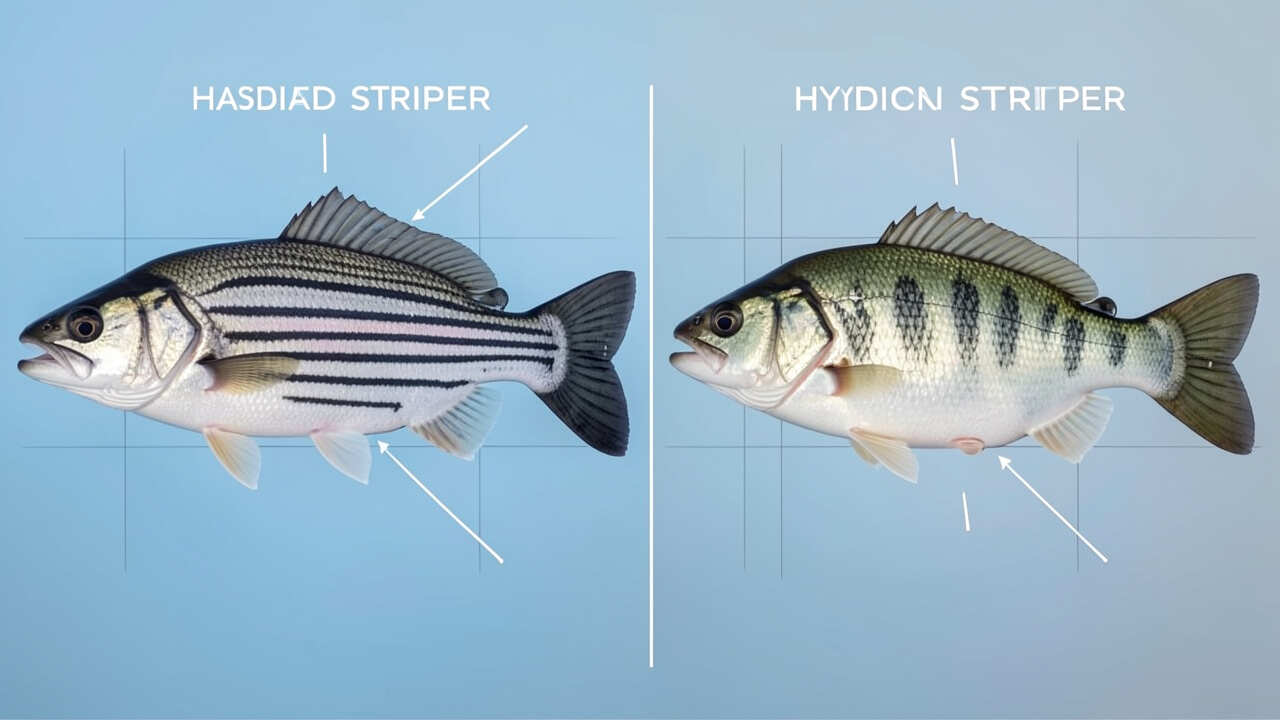
Striped bass and hybrid striper are distinguished by examining their stripe patterns, fin structures, and overall body shape. Striped bass display bold, uninterrupted stripes that usually extend onto the tail, while hybrid stripers show broken or interrupted stripe lines that often stop before the tail. The dorsal fins also offer a key clue: striped bass have two clearly separated dorsal fins, whereas hybrid stripers typically have these fins partially connected or with a much smaller gap. Recognizing these specific physical markers enables anglers to confidently identify their catch, which matters for following fishing regulations and selecting the best preparation method.
Knowing the difference between a striped bass and a hybrid striper can make your fishing trips more rewarding. It helps you understand what you’ve caught and how to best enjoy it. This guide makes it easy to spot these fish.
We’ll cover the Striped Bass vs Hybrid Striper: Key Identification Markers so you can confidently tell them apart. You’ll learn exactly what to look for on their bodies to make the right identification every time.
Key Takeaways
- Distinctive Body Lines: Learn how the stripes on each fish differ in thickness and continuity.
- Fin Structure: Understand the specific characteristics of the dorsal and anal fins that help distinguish them.
- Body Shape: Recognize the subtle but important differences in their overall body build.
- Coloration Variations: Note the typical color patterns and how they can provide clues.
- Size Expectations: Be aware of the general size differences between the two species.
- Habitat Clues: Understand where each fish is typically found, which can aid in identification.
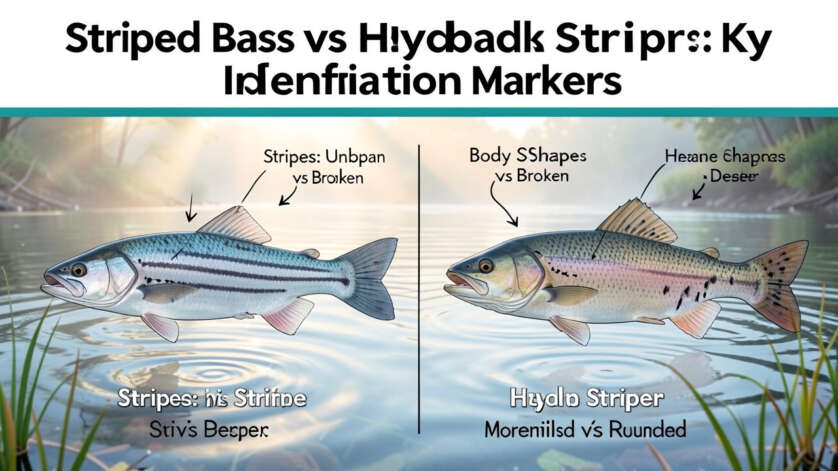
Understanding the Differences: Striped Bass vs Hybrid Striper
Many anglers enjoy fishing for basses. Two popular types are the striped bass and the hybrid striper. They look quite similar at first glance.
This can make it tricky to tell them apart. But once you know what to look for, it becomes simple. This is why understanding the Striped Bass vs Hybrid Striper: Key Identification Markers is so important for any angler.
Focus on the stripe pattern first, as it is the most reliable visual clue to distinguish these fish.
Knowing the difference helps you appreciate each fish. It also helps with fishing regulations. Sometimes, rules for catching and keeping fish are different for each species.
Being able to identify them correctly ensures you follow all the rules. This makes your fishing experience more enjoyable and responsible.
The Signature Stripes: A Closer Look
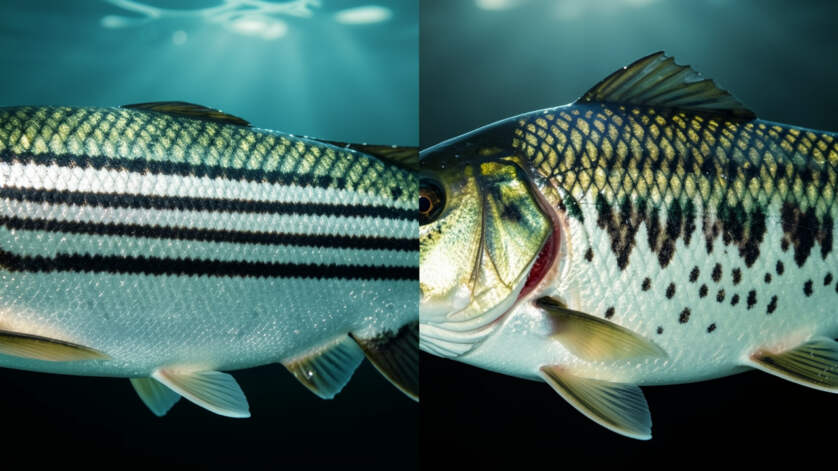
The most obvious way to tell these fish apart is by looking at their stripes. Striped bass are famous for their long, dark, horizontal stripes. These stripes run down the length of their body.
They are usually quite clear and well-defined.
Hybrid stripers also have stripes. However, their stripes are often broken. They can look more like dashes or spots than solid lines.
The stripes on a hybrid might also be thinner and less prominent. This difference in stripe pattern is a key part of the Striped Bass vs Hybrid Striper: Key Identification Markers.
Striped Bass Stripes
A true striped bass will have very distinct, dark, unbroken stripes. These lines are typically solid and run from the gill cover all the way to the tail fin. There are usually seven or eight of these dark lines.
Stripes on hybrid stripers often appear broken or dashed, while striped bass typically have solid, unbroken lines.
The spaces between the stripes are lighter, often silvery or olive-green.
Hybrid Striper Stripes
Hybrid stripers are a crossbreed. They are usually a mix of striped bass and white bass. This mix often results in stripes that are not as solid.
You might see stripes that are broken into dashes. Sometimes they look more like a series of dots. The stripes can also be lighter in color.
They might not be as dark as those on a pure striped bass.
It’s important to remember that stripe appearance can change slightly. Factors like age and water clarity can affect how stripes look. But the general pattern of solid versus broken stripes is a reliable indicator.
Fin Features: Subtle but Telling
Beyond the stripes, the fins also offer clues. The dorsal fins and anal fins can provide important information. Paying attention to these details is part of mastering the Striped Bass vs Hybrid Striper: Key Identification Markers.
Dorsal Fins
Striped bass have two distinct dorsal fins. The front dorsal fin is spiny. The second dorsal fin is soft-rayed.
These two fins are usually well-separated. There is a noticeable gap between them.
The gap between the two dorsal fins is a key visual cue; striped bass have a noticeable separation, while hybrids' fins are closer together.
Hybrid stripers also have two dorsal fins. However, their dorsal fins are often more connected. The gap between the spiny front fin and the soft-rayed back fin is much smaller.
Sometimes, they can appear almost joined together. This closeness of the dorsal fins is a subtle but useful marker.
Anal Fin
The anal fin is located on the underside of the fish, towards the tail. Striped bass typically have three distinct spines in their anal fin. The fin itself is generally more rounded.
Hybrid stripers often have fewer distinct spines in their anal fin. They might have two or three, but they are often less pronounced. The anal fin on a hybrid can also appear more pointed or angular compared to the rounded fin of a striped bass.

Body Shape and Size: What to Expect
The overall body shape and typical size can also help you identify these fish. While there can be overlap, some general differences exist.
Body Shape
Striped bass tend to have a more elongated body. They are built for power and speed. Their bodies are often described as more streamlined.
They are deep-bodied fish, especially when mature.
Hybrid stripers can appear a bit more stout or chunky. While still powerful swimmers, their body shape might be slightly deeper or wider in proportion to their length. This difference is subtle and might be harder to spot on younger fish.
Use body shape as a secondary clue; striped bass are more elongated, while hybrids appear stockier. Combine with stripe and fin analysis for certainty.
Size Matters
Striped bass can grow to be very large fish. They are known to reach sizes of 50 pounds or more. It’s not uncommon to catch striped bass in the 20-30 pound range.
Their potential for size is impressive.
Hybrid stripers are also strong fighters and can get quite large. However, they typically do not reach the same maximum sizes as pure striped bass. A large hybrid might be in the 15-25 pound range.
While still a good catch, they generally don’t hit the true giant sizes of striped bass.
When you catch a large fish, its size can be a clue. If it’s exceptionally large, it’s more likely to be a striped bass. However, this is not a definitive marker on its own.
Always rely on other physical characteristics for accurate identification.
Coloration Clues
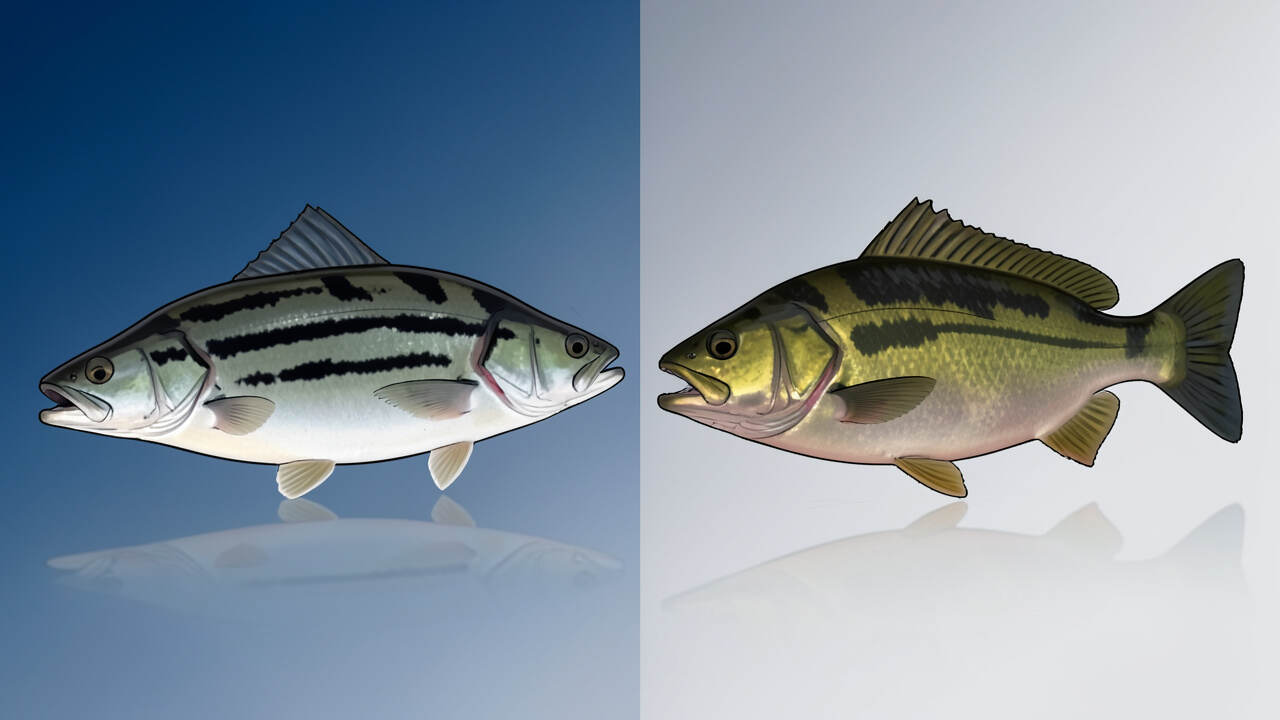
While stripes are the main color feature, other coloration can offer hints. Both fish share a similar silvery base color. This is common for many predatory fish in freshwater and saltwater environments.
Striped bass often have a darker olive-green or brassy hue to their body. This can be more pronounced on their back. The underside is typically lighter, often white or silver.
Relying on coloration alone can mislead you; water conditions and genetics cause significant variation.
The dark stripes stand out against this lighter background.
Hybrid stripers might show a more uniform silvery sheen. Their coloration can sometimes be brighter or more metallic. However, this can vary greatly depending on water conditions and the specific hybrid genetics.
Color is often the least reliable indicator for distinguishing between them.
Habitat Preferences: Where They Live
Where you catch a fish can also give you a clue, especially if you’re new to identifying them. Understanding the typical habitats of each species is part of the Striped Bass vs Hybrid Striper: Key Identification Markers.
Striped Bass Habitats
Striped bass are highly adaptable. They live in both saltwater and freshwater environments. In saltwater, they are found along the Atlantic coast of North America.
They can also be found in the Gulf of Mexico. They often inhabit coastal waters, estuaries, and rivers.
Striped bass are found in both saltwater and freshwater, whereas hybrids are more typically stocked in freshwater systems.
In freshwater, striped bass have been introduced into many large lakes and reservoirs. They thrive in these bodies of water. They are often found in deeper areas of lakes and near structures like dams or points.
Hybrid Striper Habitats
Hybrid stripers are primarily found in freshwater environments. They were developed by crossing striped bass with white bass. They are popular game fish in many inland lakes and reservoirs.
They are not typically found in the ocean.
Hybrids prefer larger bodies of water. They often inhabit areas with structure, such as submerged humps, points, and drop-offs. They can also be found near dams and inlets.
Their preference for freshwater is a key differentiator.
A Comparison Table for Quick Reference
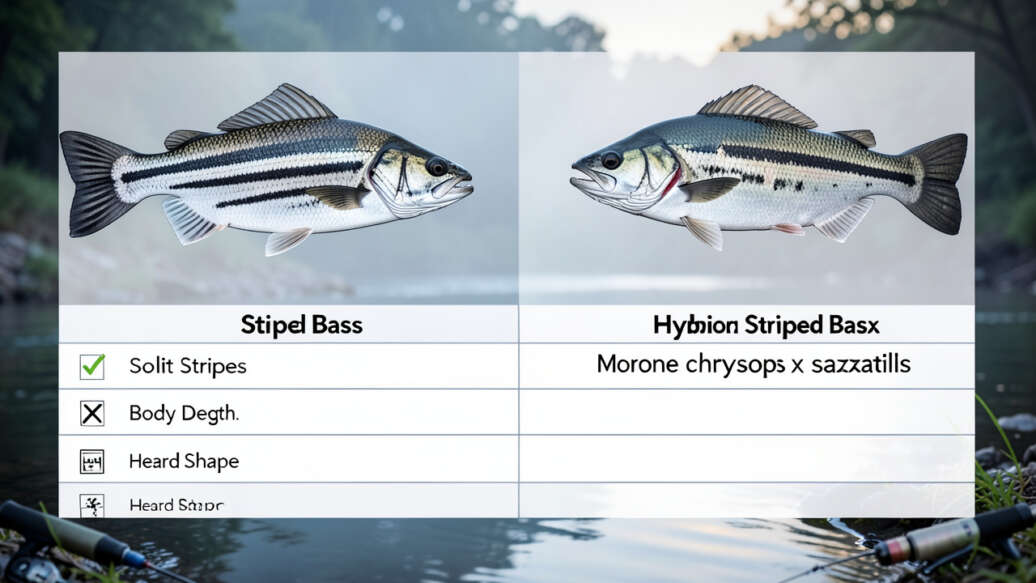
To make identification even easier, here’s a table summarizing the key differences. This table highlights the most important Striped Bass vs Hybrid Striper: Key Identification Markers.
A quick glance at the stripe pattern and dorsal fin spacing is usually enough for confident identification.
Tips for Accurate Identification
When you land a fish, take a moment to observe it closely. Don’t just rely on one feature. Use a combination of the Striped Bass vs Hybrid Striper: Key Identification Markers to be sure.
First, look at the stripes. Are they solid and dark, or broken and faint? This is usually the most telling sign. Hybrid stripers often display broken lines, dashes, or spots instead of solid stripes.
Second, check the dorsal fins. See how much space is between the spiny and soft parts. Next, examine the anal fin for distinct spines.
When stripes are ambiguous, examine the dorsal fin separation and anal fin spines for a definitive answer.
Then, consider the body shape and overall size. Finally, think about where you are fishing. Is it saltwater or freshwater?
Remember that younger fish of both species can sometimes be harder to identify. Their stripes might not be fully developed. In these cases, fin structure and body shape become even more important.
Practice makes perfect. The more fish you identify, the better you’ll become at spotting the differences.
Frequently Asked Questions
What is the main difference between a striped bass and a hybrid striper?
The main difference is in their stripes. Striped bass have dark, solid, unbroken stripes, while hybrid stripers have broken, dashed, or spotted stripes.
Can hybrid stripers live in saltwater?
Hybrid stripers are primarily freshwater fish and are not typically found in saltwater environments. They are a cross between striped bass and white bass.
How can I tell if a fish is a young striped bass or a hybrid?
For young fish, focus on fin structure. Striped bass dorsal fins are more separated than the nearly joined fins of a hybrid. Also, look for any signs of broken stripes on the hybrid.
Do hybrid stripers get as big as striped bass?
No, hybrid stripers generally do not grow as large as true striped bass. While they are strong fighters, they typically max out around 25 pounds, whereas striped bass can exceed 50 pounds.
Are the Striped Bass vs Hybrid Striper: Key Identification Markers always clear?
While these markers are usually clear, sometimes variations in coloration or stripe patterns can occur. It’s best to use a combination of features like stripes, fins, and habitat for the most accurate identification.
Is it important to know the Striped Bass vs Hybrid Striper: Key Identification Markers for fishing regulations?
Yes, it is very important. Fishing regulations regarding size limits, bag limits, and seasons can differ between striped bass and hybrid stripers. Correct identification ensures you comply with all rules.
Final Thoughts
Mastering the Striped Bass vs Hybrid Striper: Key Identification Markers is a valuable skill for any angler. By focusing on stripe patterns, fin shapes, and habitat, you can confidently identify these popular game fish. This knowledge enhances your fishing experience and ensures you fish responsibly.