How To Match Rod To Line Strength: A Practical Guide Today
Matching rod power to line strength ensures your fishing setup casts farther, detects bites more reliably, and lands fish without snapping the line. Rod power, labeled as light, medium, or heavy, indicates the lure weight it handles, while line strength is measured in pound-test—the force the line can withstand before breaking. A rod’s recommended line rating, typically printed on the blank, directly correlates to its power; for example, a medium-power rod usually pairs with 8–12 lb test line for balanced performance. Proper pairing prevents breakoffs and maximizes control, making the difference between a frustrating lost fish and a successful catch.
Getting your fishing gear just right makes a huge difference. It’s not just about having the best equipment; it’s about making sure your rod and line work together perfectly. When they’re a good match, you’ll cast further, feel bites better, and land more fish without breaking your line.
This guide will help you understand How to Match Rod to Line Strength: A Practical Guide Today so you can enjoy your time on the water more. We’ll show you what to look for and why it’s so important for a great fishing experience. Read on to learn how to get your setup dialed in.
Key Takeaways
- Understanding the relationship between rod power and line strength prevents broken lines and lost fish.
- Matching your rod and line ensures optimal casting distance and accuracy.
- The right rod and line combination improves your ability to detect subtle bites.
- Knowing the pound-test of your line and the lure weight your rod can handle is crucial.
- Different fishing environments and target species require specific rod and line pairings.
- Properly matched gear leads to a more enjoyable and successful fishing trip.
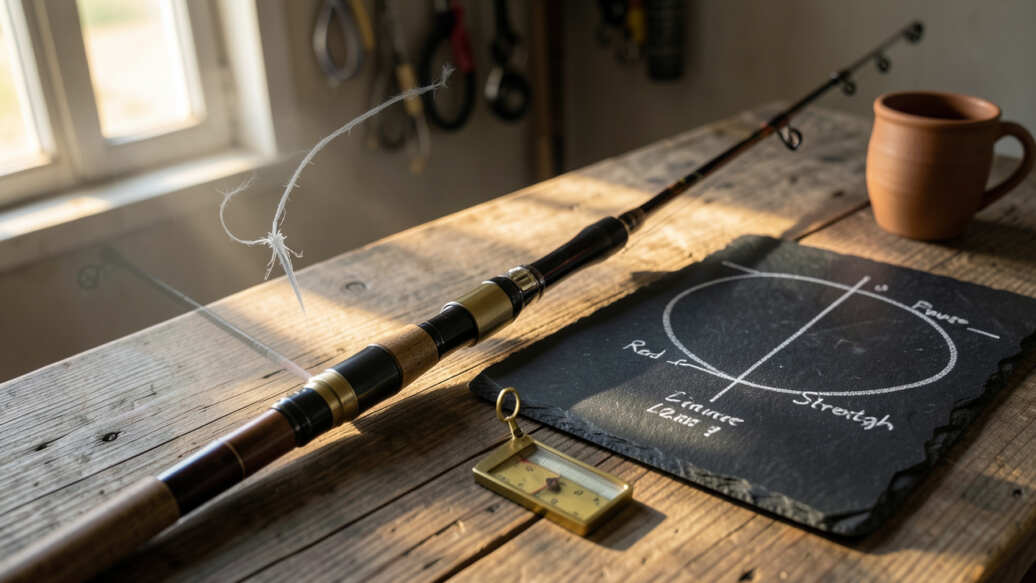
Why Rod and Line Strength Must Be Paired
Fishing success often comes down to the right gear working together. Your fishing rod and line are like a team. If one is too weak for the other, you’ll have problems.
A rod that’s too light for a strong line might break. A line that’s too light for a powerful rod can snap easily. This is where understanding How to Match Rod to Line Strength: A Practical Guide Today becomes really useful.
To avoid frustrating break-offs, always check the rod's recommended line weight range before spooling your reel.
It helps you avoid frustrating break-offs and ensures you can handle the fish you’re after. Getting this balance right means better control and more confidence when you’re out on the water.
When your rod and line are properly matched, you get a system that’s designed to perform. The rod’s action and power are built to cast a certain range of lure weights and to fight fish with a specific line strength. If you use a line that’s too heavy for your rod, you might not be able to cast effectively.
The rod won’t load properly, and your lures won’t go as far as they should. On the other hand, if your line is too light for the rod’s power, you risk snapping the line when you set the hook or fight a strong fish. This is why knowing How to Match Rod to Line Strength: A Practical Guide Today is so important for any angler.
Understanding Rod Power and Action
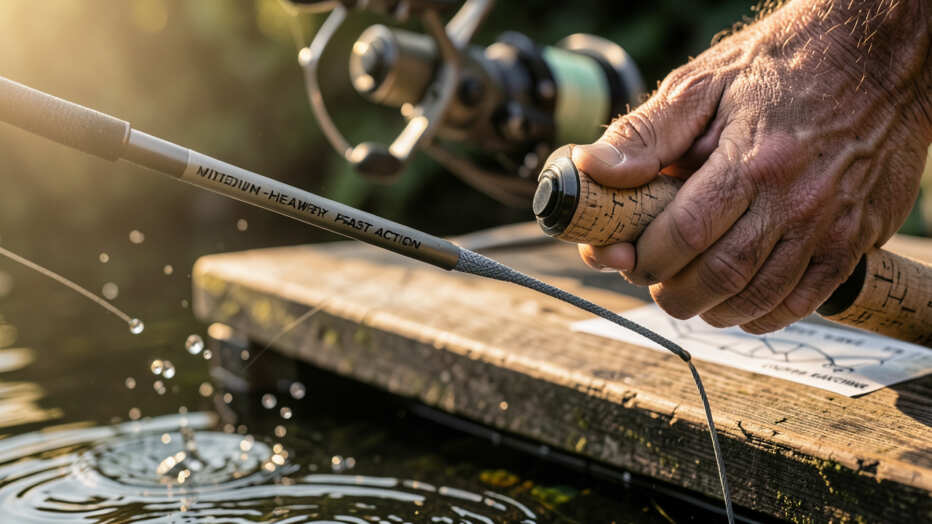
Fishing rods are described by their “power” and “action.” These terms tell you how stiff the rod is and where it bends. Power refers to the rod’s lifting strength. It’s often labeled as light, medium, heavy, or extra-heavy.
A heavier power rod can handle thicker lines and bigger fish. A lighter power rod is better for smaller fish and lighter lines.
Action describes how much of the rod bends and where it bends. A “fast” action rod bends mostly at the tip. This gives you quick hook sets and good sensitivity.
A “slow” action rod bends along its entire length. This is good for casting lighter lures and for keeping fish from shaking the hook.
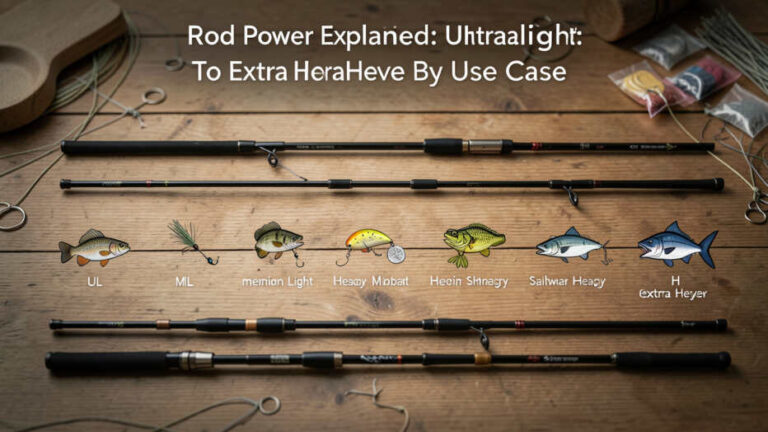
Rod Power Explained
The power rating of a rod is a key factor in matching it to line strength. Think of it as the rod’s muscle. A rod with more power can handle more stress.
A slow action rod bends deeply along the blank, which helps protect lighter lines from sudden stress during a fight.
This stress comes from casting heavy lures, setting hooks firmly, and fighting strong fish. Manufacturers usually rate rod power on a scale. Common ratings include:
- Ultralight: For very small fish and light lures.
- Light: For small to medium fish, and lighter lures.
- Medium: A versatile option for many types of fishing.
- Medium-Heavy: For larger fish and heavier lures.
- Heavy: For big game fish and heavy-duty fishing.
- Extra-Heavy: For the largest and strongest fish.
Choosing the right rod power means you can use a line that’s strong enough without overwhelming the rod. This balance is essential for effective fishing. It’s a core part of How to Match Rod to Line Strength: A Practical Guide Today.
Rod Action Explained
Rod action is about flexibility. It tells you how the rod bends when pressure is applied. The common actions are:
- Fast Action: Bends mostly at the tip. Great for casting accuracy and quick hook sets.
- Moderate Action: Bends in the upper half of the rod. Offers a good balance of casting and hook-setting power.
- Slow Action: Bends throughout the entire rod. Excellent for casting light lures and absorbing the shock of a fighting fish.
Action affects how you feel a bite and how you fight a fish. A fast action rod with a strong line can set a hook very quickly. A slow action rod with a lighter line can protect that line from breaking during a fight.
Understanding rod action helps you pick the right line to complement its characteristics.
Understanding Line Strength (Pound-Test)
Fishing line strength is usually measured in pound-test. This number tells you the approximate weight the line can hold before breaking. For example, a 10-pound-test line should hold 10 pounds of steady pressure.
However, this is a guideline, and actual breaking strength can vary.
There are different types of fishing lines, and their strengths matter. Monofilament is common and stretches a lot. Fluorocarbon is less stretchy and sinks faster.
Braided line is very strong for its diameter and has almost no stretch. Each type behaves differently and affects how you match it to your rod.
Line diameter often influences rod performance more than the pound-test rating alone.
Types of Fishing Line and Their Strengths
The material of your fishing line plays a big role in its strength and how it feels. This is a crucial part of learning How to Match Rod to Line Strength: A Practical Guide Today.
- Monofilament: Stretchy, affordable, and good for absorbing shock. It’s forgiving with rod action.
- Fluorocarbon: Less stretch than mono, sinks well, and is nearly invisible underwater. It offers better feel for bites.
- Braided Line: Extremely strong for its thinness, no stretch, and very sensitive. It requires a rod with a more forgiving action to prevent break-offs.
When you choose a line, consider its pound-test and how it will perform with your rod. A braided line might have a higher pound-test but a thinner diameter than monofilament. This means you can fit more on your reel, but you need to be careful about how you set your drag.
The Role of Line Diameter
Line diameter is also important. A thicker line has more friction on the reel and guides. It can also affect casting distance.
For the same pound-test, braided line is usually much thinner than monofilament. This is why you can often use a higher pound-test braided line on a reel that would normally hold a lower pound-test monofilament. When you’re figuring out How to Match Rod to Line Strength: A Practical Guide Today, always check the line diameter specifications.
Matching Rod Power to Line Strength
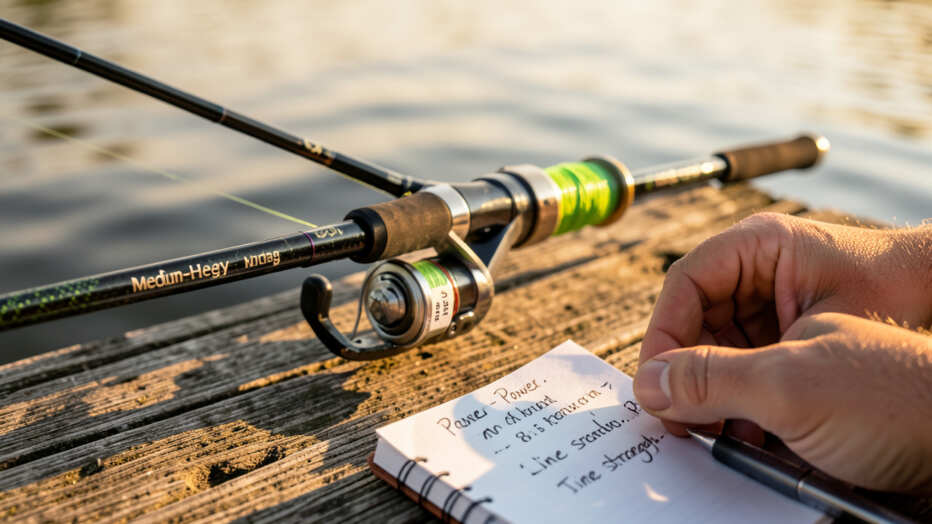
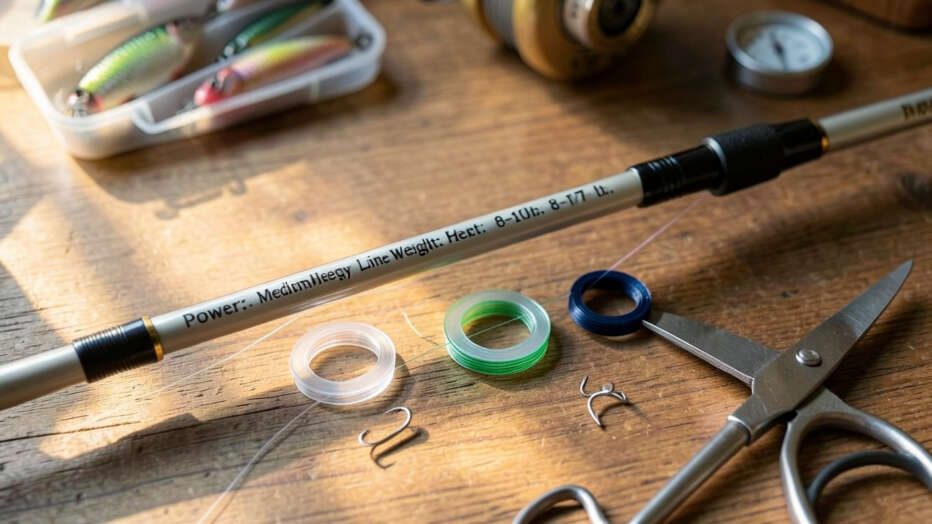
The most direct way to match your rod and line is by looking at the recommended ranges. Most fishing rods have specifications printed on them. These specs usually tell you the recommended line weight and lure weight.
For example, a rod might say “Line: 6-12 lb” and “Lure: 1/4-1/2 oz.”
If your rod is rated for 6-12 lb line, using a 20 lb line would be too much for the rod. It could cause the rod to break. Conversely, using a 2 lb line on a rod rated for 6-12 lb line would mean the line breaks too easily.
You’d likely lose fish.
General Guidelines for Matching
Here are some general rules of thumb for pairing rod power with line strength. This is a core concept for How to Match Rod to Line Strength: A Practical Guide Today.
When fishing near heavy cover or obstacles, use a line strength near the upper limit of the rod's rating to help pull fish free.
- Ultralight Rods: Typically matched with 2-6 lb test line.
- Light Rods: Best with 4-10 lb test line.
- Medium Rods: Pair well with 8-17 lb test line.
- Medium-Heavy Rods: Use with 10-25 lb test line.
- Heavy Rods: Generally matched with 15-30 lb test line.
- Extra-Heavy Rods: Can handle 20 lb test line and up.
These are just starting points. Always check your rod’s specific recommendations.
When to Deviate from Recommendations
Sometimes, you might want to use a line that’s a bit stronger or weaker than the rod’s recommendation. This often depends on the type of fishing and the fish you’re targeting. For instance, if you’re fishing in an area with lots of underwater obstacles like rocks or weeds, you might use a slightly stronger line to pull fish away from them.
This is a good time to know How to Match Rod to Line Strength: A Practical Guide Today for different situations.
If you use braided line, remember it’s much thinner than monofilament for the same strength. A 30 lb braided line might be as thin as a 10 lb monofilament. This means you can use a higher pound-test braided line on a rod that’s designed for lighter mono, but you need to be careful not to over-stress the rod.
The lack of stretch in braid also means you need a rod with a more moderate or slow action to absorb the shock.
Matching Rod Action to Line Type and Strength
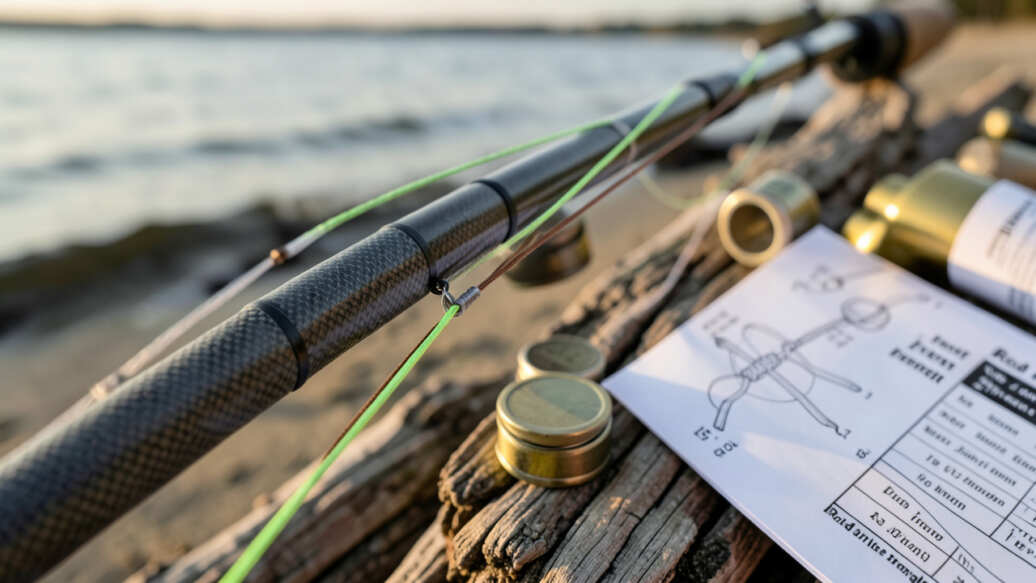
Rod action and line type work together closely. A fast-action rod is great for setting hooks quickly. If you use a super-stretchy monofilament line with it, the stretch can absorb some of that hook-setting power.
This might be fine for some fish, but for others, you might not get a good hook set.
Conversely, a slow-action rod is very forgiving. It bends easily and absorbs a lot of shock. This makes it a good choice for lighter lines that might snap under sudden pressure.
If you pair a slow-action rod with a stiff, low-stretch line like braided line, the rod’s flexibility can help compensate for the line’s lack of stretch. This is a key aspect of learning How to Match Rod to Line Strength: A Practical Guide Today.
Pairing a fast action rod with braided line can cause sudden hook sets that snap the line; use a leader to add stretch.
Fast Action Rods and Line Choices
Fast action rods are sensitive and provide quick response. They are excellent for:
- Quick Hook Sets: The tip snaps forward fast, driving the hook home.
- Feeling Bites: You feel even the slightest nibble.
- Accuracy: They offer precise casting.
With a fast action rod, you can often use monofilament or fluorocarbon lines in the recommended pound-test range. If you use braided line, consider using a rod with a more moderate action to prevent the line from snapping when a strong fish pulls hard. This is a common consideration when learning How to Match Rod to Line Strength: A Practical Guide Today.
Moderate and Slow Action Rods and Line Choices
Moderate and slow action rods are more flexible. They bend deeper into the rod blank. This makes them ideal for:
- Absorbing Shock: They protect lighter lines from breaking.
- Casting Light Lures: They load up well with lighter baits.
- Fighting Fish: They put steady pressure on a fish without jarring it.
These rods pair very well with any line type. However, they are particularly beneficial when using braided line because the rod’s flex acts as a shock absorber. This helps prevent line breakages, even with the braid’s lack of stretch.
It’s important to consider these interactions for effective How to Match Rod to Line Strength: A Practical Guide Today.
Considering Your Target Species and Environment
The type of fish you’re trying to catch and where you’re fishing greatly influence your rod and line choices. A light rod and 6 lb line might be perfect for panfish in a calm lake. However, it would be completely inadequate for battling a large saltwater species in heavy current.
For example, if you’re fishing for bass in heavy cover, you’ll need a stronger rod and line to pull them out before they get tangled. If you’re targeting trout in clear, shallow streams, you’ll want lighter line and a more sensitive rod for stealth and detecting subtle bites. Understanding these factors is key to mastering How to Match Rod to Line Strength: A Practical Guide Today.
Freshwater Fishing Considerations
In freshwater, common targets include bass, trout, walleye, and panfish. The environments can vary from small streams to large lakes and rivers.
For trout in clear streams, choose a light power rod with 4-6 lb test line to maximize stealth and sensitivity.
- Panfish (Bluegill, Crappie): Light to ultralight rods with 2-6 lb test line.
- Trout: Light rods with 4-8 lb test line, often monofilament or fluorocarbon.
- Bass (Largemouth, Smallmouth): Medium to medium-heavy rods with 8-20 lb test line, depending on cover. Braided line is popular for heavy cover.
- Walleye: Medium action rods with 8-14 lb test line.
Knowing your target helps you make informed decisions for How to Match Rod to Line Strength: A Practical Guide Today.
Saltwater Fishing Considerations
Saltwater fishing often involves stronger currents, larger fish, and harsher conditions. This typically requires heavier gear.
- Inshore Species (Redfish, Speckled Trout): Medium to medium-heavy rods with 10-30 lb test line.
- Nearshore/Offshore (Snapper, Grouper, Tuna): Heavy to extra-heavy rods with 30-80 lb test line or more. Braided line is very common.
The environment, like surf fishing versus boat fishing, also matters. Surf fishing might require longer rods to cast over waves. Boat fishing in rough seas demands strong, reliable gear.
Practical Tips for Pairing Your Gear
When you’re out shopping or rigging up, keep these practical tips in mind. They will help you make the best choices for your fishing needs. This is the essence of How to Match Rod to Line Strength: A Practical Guide Today.
- Read Your Rod’s Label: Always check the recommended line weight and lure weight printed on the rod. This is your primary guide.
- Consider Your Target Fish: Think about the size and fighting ability of the fish you expect to catch. Bigger, stronger fish need stronger lines and rods.
- Factor in the Environment: Fishing in heavy cover or strong currents requires beefier gear than fishing in open, calm water.
- Line Type Matters: Remember that braided line is thinner and stronger for its diameter than monofilament or fluorocarbon. Adjust your pound-test choice accordingly.
- Match Action to Line: Use rods with more forgiving actions (moderate or slow) when using low-stretch lines like braid.
- Don’t Forget the Reel: Your reel’s drag system is crucial. It works with your rod and line to tire out a fish. Ensure your reel can handle the line strength and the fighting power of the fish.
Using a Comparison Table
To make things even clearer, let’s look at how different line types might be paired with a versatile medium-action rod. This table shows how you might adjust your pound-test based on line type and target. This is a practical way to visualize How to Match Rod to Line Strength: A Practical Guide Today.
Always start by reading the rod's label for recommended line and lure weights—it's your most reliable guide for proper pairing.
Notice how the pound-test for braided line can be much higher than for monofilament on the same rod. This is because braid is so much thinner. A 40 lb braid is often as thin as 10-12 lb mono.
This allows you to pack more line on your reel and provides immense strength, but it requires a rod that can handle the lack of stretch.
Troubleshooting Common Pairing Issues
Even with careful planning, you might encounter issues. Understanding common problems helps you fix them quickly and improve your fishing. This knowledge is part of mastering How to Match Rod to Line Strength: A Practical Guide Today.
Line Breakages
If your line is breaking frequently, consider these reasons:
If you're not getting good casting distance, check that the line weight isn't too heavy for the rod's power rating.
- Line Too Light: Your pound-test is too low for the fish or the conditions.
- Rod Too Light: The rod cannot handle the stress of the line when fighting a fish.
- Line Damage: The line might have nicks or abrasions from rocks or the reel.
- Drag Set Too Tight: The drag on your reel is not releasing line properly, causing sudden, sharp breaks.
- Line Type Mismatch: Using stiff braided line on a fast-action rod without a properly set drag.
Casting Problems
If you’re not casting far or accurately, it could be due to:
- Line Too Heavy: A line that’s too thick or too strong for the rod’s power rating can prevent the rod from loading correctly.
- Line Too Light: A very light line might not have enough weight to cast lighter lures effectively, especially in windy conditions.
- Rod Not Suitable: The rod’s power or action might not be suited for the lure weights you’re using.
Poor Bite Detection
If you’re missing bites, it could be because:
- Line Stretch: Highly stretchy monofilament can absorb subtle bites, especially at a distance.
- Rod Action: A very slow action rod might mute the feel of light bites.
- Line Diameter: Very thick lines can sometimes reduce sensitivity.
Choosing the right line and rod combination is key to feeling every tug. This is a vital part of How to Match Rod to Line Strength: A Practical Guide Today.
Frequently Asked Questions
What happens if my rod’s line rating is higher than my line’s pound-test?
If your line’s pound-test is lower than the rod’s recommendation, the line is likely to break before the rod does. This means you might lose fish, and your rod might not be performing to its full potential.
Can I use braided line with any rod?
While you can use braided line with any rod, it’s best paired with rods that have a moderate or slow action. These rods absorb the shock better, preventing line breakages due to braid’s lack of stretch.
How do I know if my rod is too stiff for my line?
If your line breaks frequently when setting the hook or fighting a fish, and the rod seems to be bending very little, your rod might be too stiff for your line, or the line is too light for the rod’s power.
Does line diameter matter as much as pound-test?
Yes, line diameter is very important. Thicker lines create more drag and can affect casting. For the same pound-test, braided lines are much thinner than monofilament, allowing for higher pound-test options on reels.
What is the most common mistake anglers make when matching rod and line?
A common mistake is not checking the rod’s recommended line weight or overestimating the strength of a light line for a powerful rod and fish. This often leads to break-offs.
How does the drag system on my reel affect rod and line matching?
Your reel’s drag system is designed to release line under pressure, protecting both your rod and line from breaking. A properly set drag is crucial for absorbing the shock of a fighting fish.
Final Thoughts
Getting your rod and line to work together perfectly is key to a great fishing day. Always check your rod’s specs and consider your target fish and fishing spot. By following these tips, you’ll enjoy more successful casts and land more fish without frustration.
Happy fishing!