
Bass In Cypress Trees: Southern Backwater Fishing Tactics
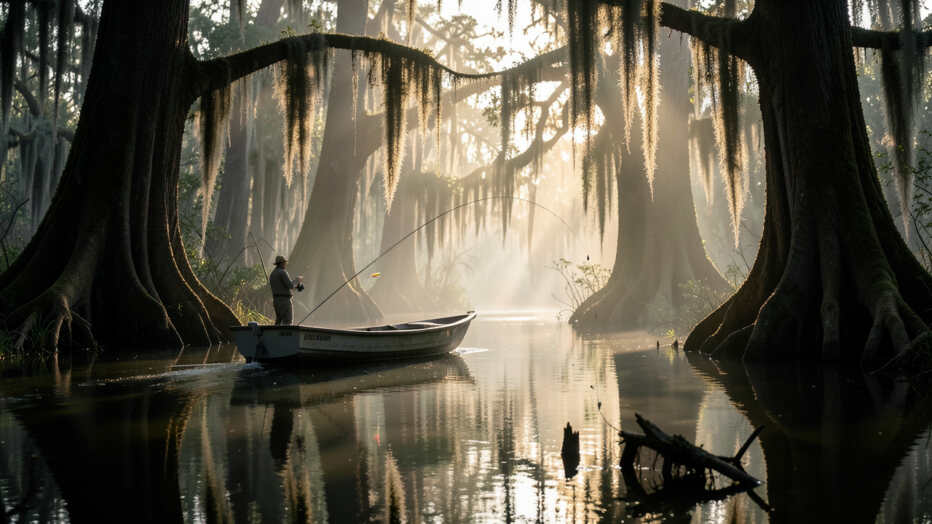
The key southern backwater fishing tactics for bass in cypress trees demand specialized, weedless lures and a stealthy presentation to navigate the dense roots and shaded ambush points. Successful anglers read the water and understand bass behavior to pinpoint prime hiding spots within cypress knees and fallen timber. Timing outings around weather conditions and using proper line strength prevents lost fish in the heavy structure, directly improving catch rates.
Catching bass in the tangled roots and shadowed waters of southern backwaters can seem tricky. But when you know the right moves, it’s incredibly rewarding. Understanding how to fish around cypress trees helps you find more fish and land them successfully.
This knowledge can seriously boost your catch rates and make your fishing trips more exciting. We’ll cover the best ways to approach these unique fishing spots and what gear works best for Bass in Cypress Trees: Southern Backwater Fishing Tactics.
Key Takeaways
- Cypress trees offer prime ambush points for bass in southern backwaters.
- Specialized lures and techniques are needed to fish effectively around cypress knees and roots.
- Understanding bass behavior in shallow, shaded environments is crucial for success.
- Proper line and knot selection prevents losing fish in the dense structure.
- Timing and weather conditions play a significant role in catching bass in these areas.
- Reading the water and identifying the best spots within cypress tree formations is key.
Why Cypress Trees Are Bass Havens
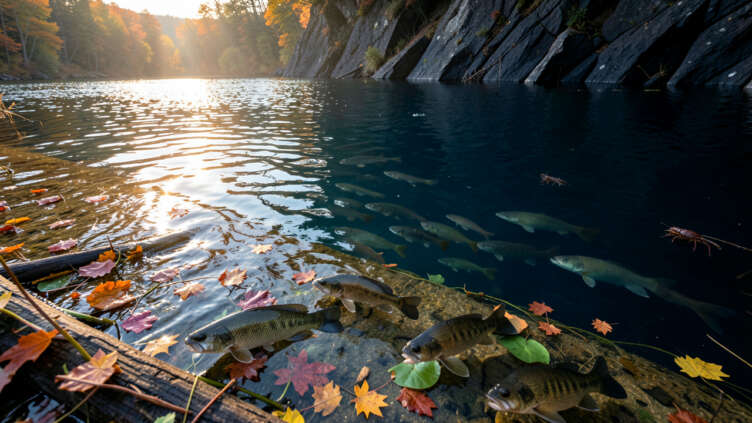
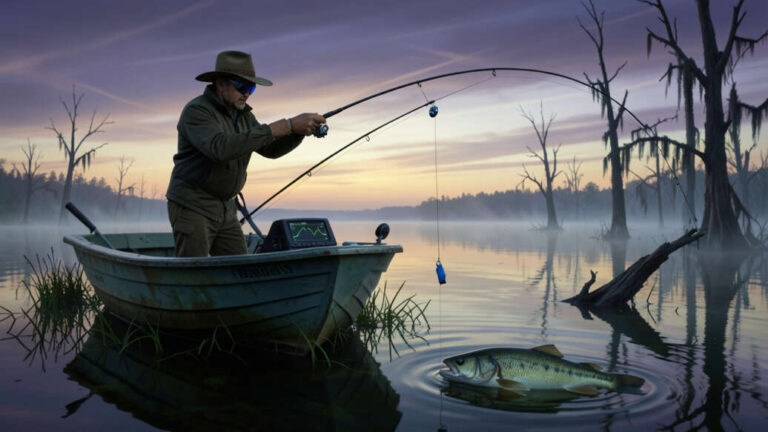
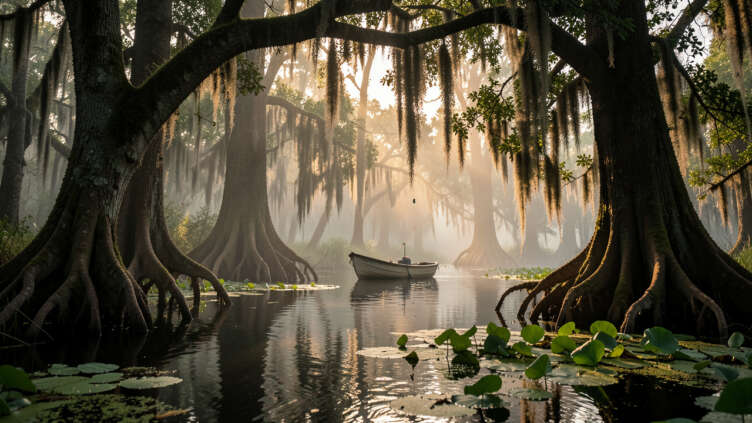
Cypress trees create a unique underwater habitat. Their knobby knees and sprawling root systems provide perfect cover. Bass love these spots because they offer shade and protection.
Fish can hide here waiting for prey. These areas are often shallow and rich with baitfish. This makes them ideal feeding grounds for bass.
Mastering Bass in Cypress Trees: Southern Backwater Fishing Tactics means understanding this natural attraction.
Focus on cypress trees with dense root systems and shade, as they attract baitfish and create prime ambush points for bass.
The dappled sunlight filtering through the cypress canopy creates a dynamic environment. Bass use the shadows to their advantage. They can ambush unsuspecting baitfish.
The submerged roots offer a complex structure. This structure provides multiple hiding places. It also makes it difficult for prey to escape.
For anglers, this means careful presentation is vital. You need to get your lure into the strike zone without spooking the fish.
Choosing the Right Gear for Backwater Bass
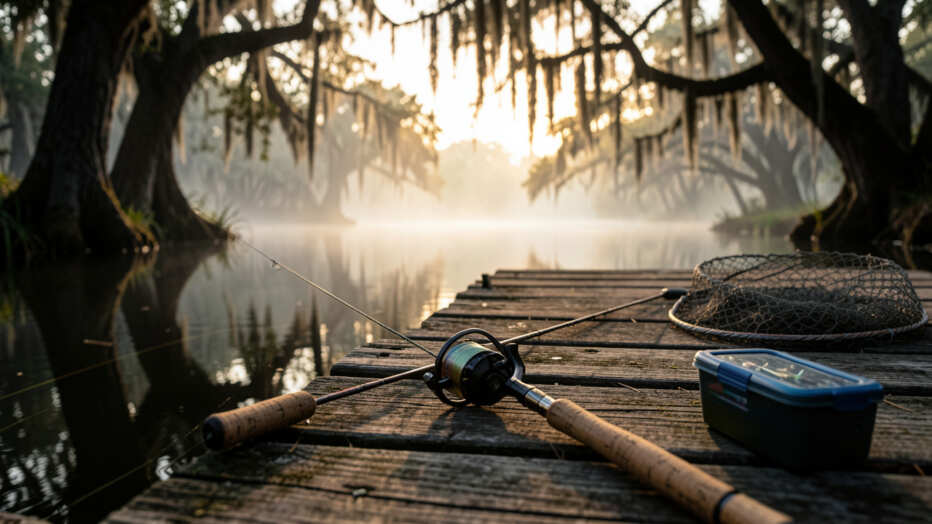
Fishing in dense cypress canopies requires specific gear. You need tackle that can handle the tough conditions. A medium-heavy to heavy action casting rod is recommended.
This gives you the backbone to pull fish out of cover. Pair it with a quality baitcasting reel. Look for a reel with a good gear ratio for quick line pickup.
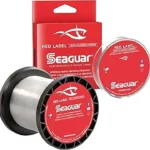
Line choice is also critical. Braided line is a top choice for Bass in Cypress Trees: Southern Backwater Fishing Tactics. It offers incredible strength and no stretch.
This allows you to set the hook quickly and pull fish free from snags. A 50-pound test braid is a good starting point. You can also use fluorocarbon leaders.
Using a fluorocarbon leader in addition to braided mainline significantly increases your chances of landing bass in heavy cover due to its invisibility and abrasion resistance.
These leaders are nearly invisible underwater and add abrasion resistance.
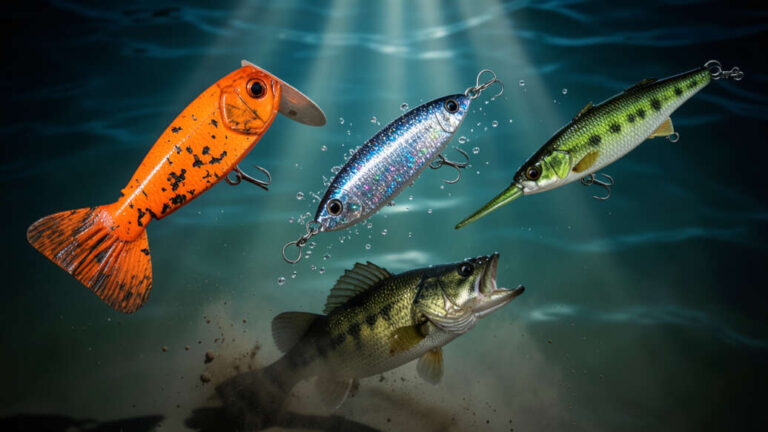
The right lures can make a huge difference. Many anglers favor soft plastics. They can be rigged weedless to avoid snags.
Think about Texas-rigged worms, creature baits, or swimbaits. These imitate natural forage. Topwater lures can also be very effective.
They work best during low-light conditions like early morning or late evening. The commotion on the surface can trigger aggressive strikes.
Effective Lure Strategies for Cypress Structures
When targeting bass around cypress trees, lure selection and presentation are key. The goal is to get your lure as close to the cover as possible. This is where the bass are hiding.
Soft plastic baits are incredibly versatile. They can be fished in many ways.
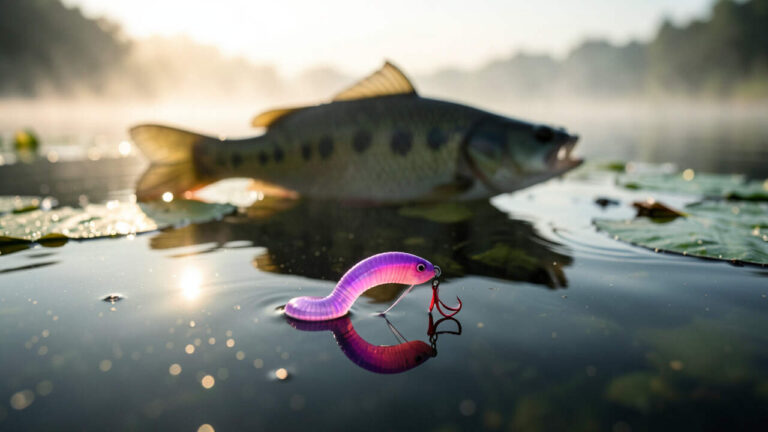
First, try a Texas-rigged worm. Use a heavy tungsten weight. This helps your bait sink quickly into the dense structure.
Rig it weedless to prevent snags. Cast your bait right next to a cypress knee or into the root ball. Let it fall.
Give it a few subtle twitches. If nothing happens, reel it in and try again. Many strikes happen on the fall.
Second, consider a jig. A jig with a soft plastic trailer can be deadly. Black and blue, green pumpkin, and crawfish patterns are popular.
Presentation is everything; getting your lure close to the cover is the single most important factor for enticing a strike from bass hiding in cypress trees.
Pitch the jig into the deepest parts of the cypress structure. Work it slowly along the bottom. The jig’s profile mimics a crawfish or other bottom-dwelling prey.
This is a natural meal for bass.
Next, topwater lures shine in these environments. Walking baits like a Zara Spook or prop baits can draw fish out. Cast them near the edges of the cypress canopy.
Work them with a steady retrieve and pauses. The erratic action can trigger aggressive strikes from lurking bass. Buzzbaits are also excellent.
They create a lot of noise and commotion on the surface.
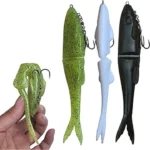
Then, swimbaits can be very effective. Rig a paddle-tail swimbait on a weighted hook. Cast it past the cypress trees.
Slow roll it back. The natural swimming action can attract curious bass. You can also try a jig trailer swimbait.
This adds extra action and scent to your bait.
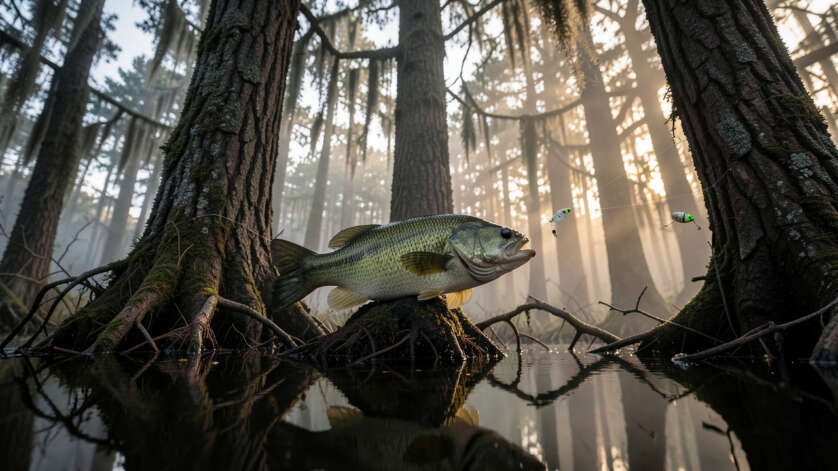
Reading the Cypress Trees: Where Bass Hide
Not all cypress trees are created equal when it comes to holding bass. You need to learn to read the water. Look for specific features that make a cypress tree a prime bass location.
Understanding these nuances is vital for successful Bass in Cypress Trees: Southern Backwater Fishing Tactics.
Look for cypress trees that are in slightly deeper water. Even a foot or two can make a difference. These spots often provide a thermal refuge for bass.
They can also be closer to main channels or deeper water, allowing bass to move in and out easily to feed.
Pay attention to the root systems. Cypress trees with large, exposed root balls or dense clusters of knees are better. These offer more hiding places.
Target cypress trees in slightly deeper water near main channels, as these offer thermal refuge and easy access to feeding areas.
The more complex the structure, the more likely a bass is to be found there. Also, look for trees that have baitfish schooling around them. Where there’s bait, there will be bass.
Consider the shade. Bass prefer the shade provided by the cypress canopy. They will often position themselves in the deepest shadow.
Cast your lure into these shaded areas. The edges of the shade line are also prime ambush points. Bass will wait in the dark and dart out to grab passing prey.
Wind can also play a role. If there’s a slight breeze, look for cypress trees that are on the downwind side of a bank or cove. This concentrates baitfish and insects.
It also pushes oxygenated water into these areas. These spots can be magnets for bass.
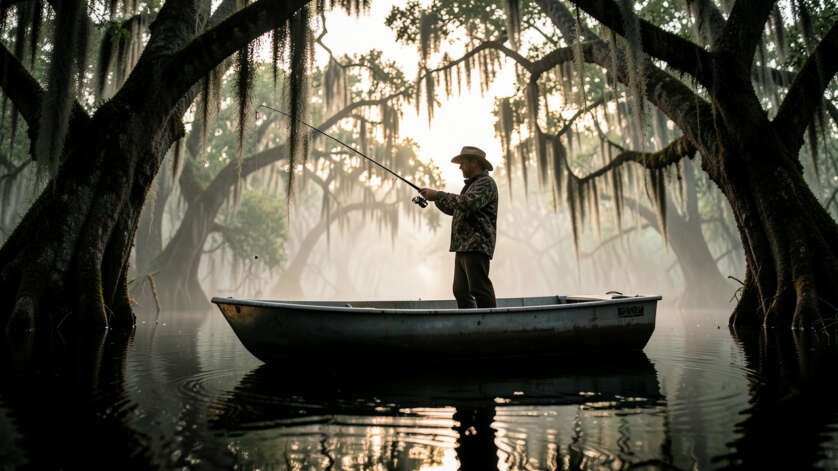
The Importance of Presentation and Stealth
Fishing in shallow backwaters demands a stealthy approach. Bass in these areas are often highly attuned to their surroundings. Loud noises or heavy footsteps can spook them.
You need to be quiet and make accurate casts.
First, approach your target cypress trees slowly and quietly. If you’re in a boat, use an electric trolling motor. Keep it on a low setting.
Avoid making sudden movements or dropping equipment. The less disturbance you create, the better your chances of fooling a wary bass.
Second, focus on accurate casting. You want to place your lure right next to the cypress knees or into the root system. This means practicing your casting accuracy.
Be extremely cautious with noise; even a single loud footstep or dropped tackle can spook wary bass in shallow cypress backwaters, ruining your chances.
A poorly placed cast can spook the fish or get your lure hung up. Aim for the pockets and openings within the structure.
Then, vary your retrieve. Don’t just reel your lure in at a constant speed. Experiment with different cadences.
Try slow retrieves with pauses. Try faster retrieves with short bursts of speed. Observe how bass react to your lure.
Adjust your retrieve based on their behavior.
Finally, pay attention to line management. Keep your line slack when your lure is falling. This allows for a natural presentation.
When a fish strikes, be ready to set the hook firmly. Keep constant pressure on the line to keep the bass from getting back into the cypress roots.
When to Fish Cypress Trees for Bass
Timing is everything in fishing, and cypress backwaters are no exception. Certain conditions can make these spots even more productive. Understanding these factors will improve your success with Bass in Cypress Trees: Southern Backwater Fishing Tactics.
Low-light conditions are generally best. Early mornings and late evenings are prime times. The bass are more active and less wary.
They will move into shallower areas to feed. Overcast days can extend this prime feeding window. The cloud cover provides consistent shade.
Low-light periods like early morning and overcast days see the most aggressive feeding activity, as bass feel secure moving into shallow areas to ambush prey.
Water temperature plays a big role. In spring, as water temperatures rise, bass move shallower. They will seek out the warmer water around cypress trees.
In summer, cypress trees offer crucial shade and cooler water temperatures. This makes them important refuges from the midday heat. In fall, as temperatures cool, bass often return to shallow areas to feed heavily before winter.
Consider the season and the bass’s spawning cycle. During the spring spawn, bass will guard their nests in shallow, protected areas. Cypress trees often provide ideal nesting locations.
You might find aggressive bass protecting their territory.
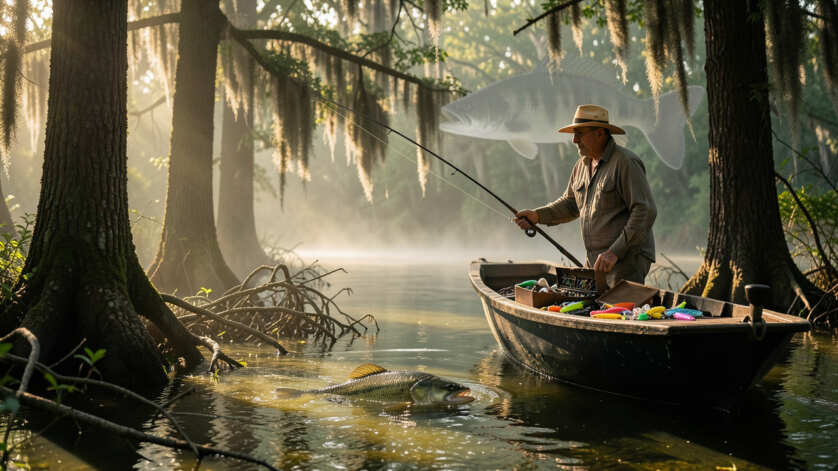
Common Mistakes to Avoid
Even experienced anglers can make mistakes when fishing cypress trees. Being aware of these common pitfalls can help you avoid them. This will lead to more fish in your boat.
Even seasoned anglers often overlook the importance of using the right line and lure; monofilament and non-weedless baits are common reasons for lost fish in cypress cover.
- Overfishing a Spot: Don’t stay too long in one spot if you aren’t getting bites. Move on and try another promising cypress formation.
- Using the Wrong Line: Using monofilament line in heavy cover can lead to lost fish. It stretches too much and lacks abrasion resistance.
- Poor Lure Selection: Not using weedless lures can result in constant snags. This wastes valuable fishing time.
- Lack of Stealth: Being too noisy or making aggressive movements can scare fish away before you even cast.
- Not Working Lures Deep Enough: Bass are often right at the base of the cypress knees or in the root system. Your lure needs to get down there.
- Giving Up Too Easily: Cypress backwaters can be challenging. Persistence is key. Keep trying different lures and techniques.
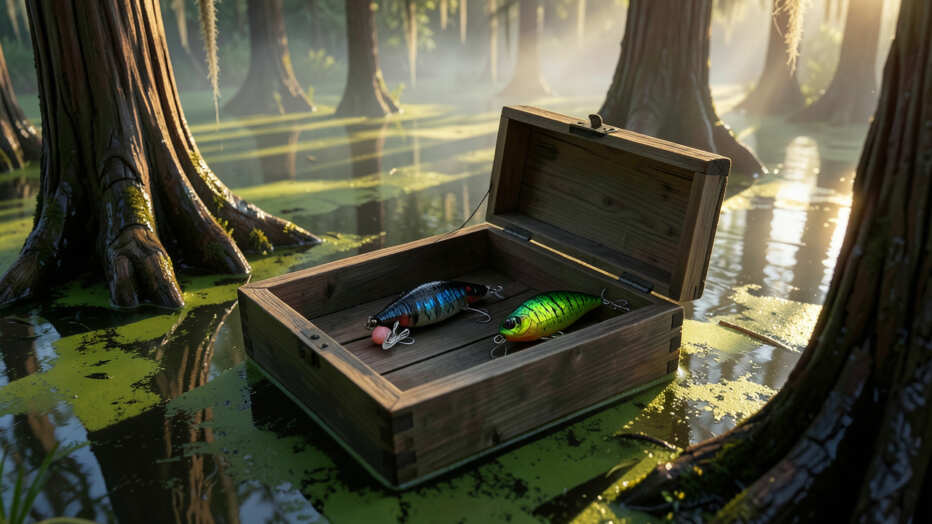
Table: Lure Comparison for Cypress Tree Bass
When fishing deep cover, choose a Texas-rigged worm with a heavy tungsten weight for a fast, weedless drop that gets your bait right into the strike zone.
Frequently Asked Questions
Question: What is the best time of day for Bass in Cypress Trees: Southern Backwater Fishing Tactics?
Answer: Early morning and late evening are generally the best times. Overcast days can extend these prime feeding periods.
Question: What type of line is best for fishing around cypress trees?
Answer: Braided line is highly recommended for its strength and lack of stretch. Fluorocarbon leaders add abrasion resistance and stealth.
Question: How do I avoid getting my lure snagged on cypress roots?
Answer: Use weedless-rigged soft plastics and jigs. Practice your casting accuracy to place lures in open pockets rather than directly into dense roots.
Question: Should I fish the shade or the sunlit areas around cypress trees?
Answer: Bass typically prefer the shade provided by the cypress canopy for cover and cooler temperatures. Focus your efforts on these shaded areas.
Question: What are the most effective lure colors for cypress tree bass?
Answer: Natural colors like green pumpkin, black, brown, and crawfish patterns work well. White or chartreuse can be effective for topwater lures.
Final Thoughts
Fishing for bass in cypress trees is a rewarding challenge. By using the right gear, lures, and presentation, you can master Bass in Cypress Trees: Southern Backwater Fishing Tactics. Remember to be stealthy, read the water carefully, and be persistent.
You’ll soon be enjoying more success in these unique southern backwaters.