



Moon Phase Effect On Bass: What Anglers Really Need To Know
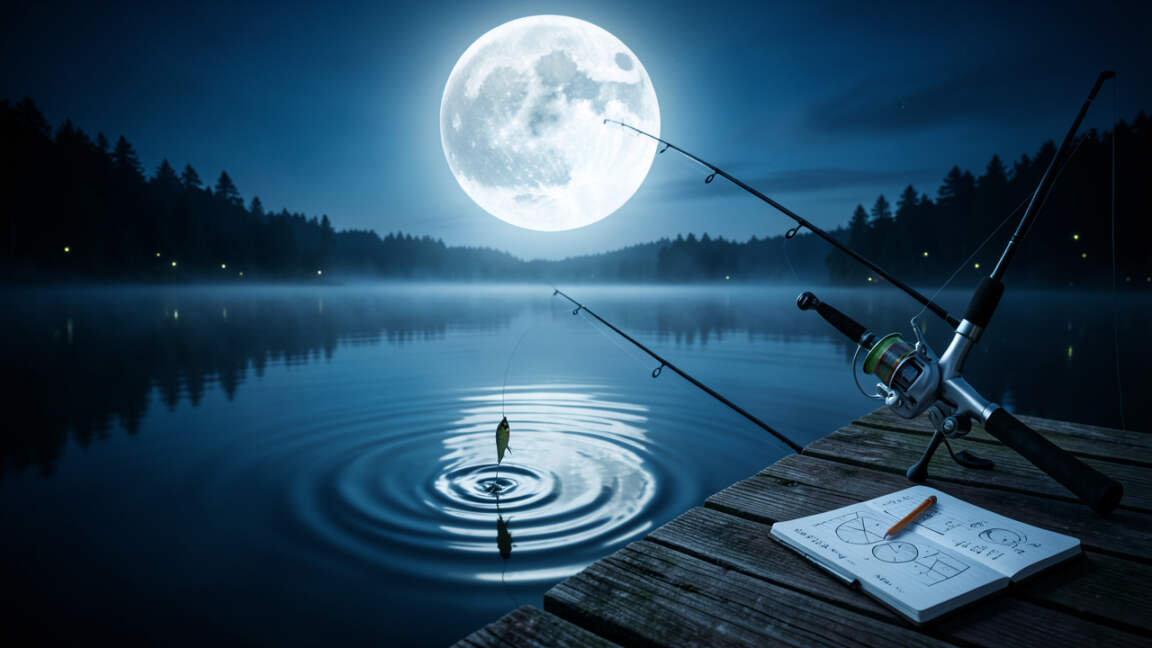
Moon phases affect bass behavior primarily through changes in light levels and tidal movements, with full and new moons often triggering increased feeding activity. During a full moon, increased nocturnal light allows bass to feed more actively at night, while the new moon's darkness can make them more aggressive during low-light periods. Anglers should plan trips around the three days before and after a full or new moon to capitalize on enhanced feeding windows. In coastal waters, tidal surges associated with these lunar phases further concentrate prey, making bass more predictable and accessible.
Some days the bass are biting like crazy, and other days it’s like they’ve all gone on vacation. Many anglers wonder if the moon plays a role in this. Understanding the Moon Phase Effect on Bass: What Anglers Really Need to Know can help you plan your fishing trips better.
It’s not just about luck; knowing how lunar cycles might influence fish behavior can lead to more successful outings. We’ll break down what the science suggests and what experienced anglers observe, so you can make smarter decisions on the water and hopefully catch more fish.
Key Takeaways
- Different moon phases can influence bass feeding patterns and activity levels.
- The full moon and new moon often represent periods of increased feeding opportunities.
- Understanding tidal influences, especially in coastal areas, is crucial for moon phase fishing.
- Bass behavior can be affected by light penetration and prey movements tied to lunar cycles.
- Pay attention to specific moon phases like the “golden hours” around the full and new moon.
- Combining moon phase knowledge with other fishing factors leads to better results.
How Moon Phases Influence Bass Behavior
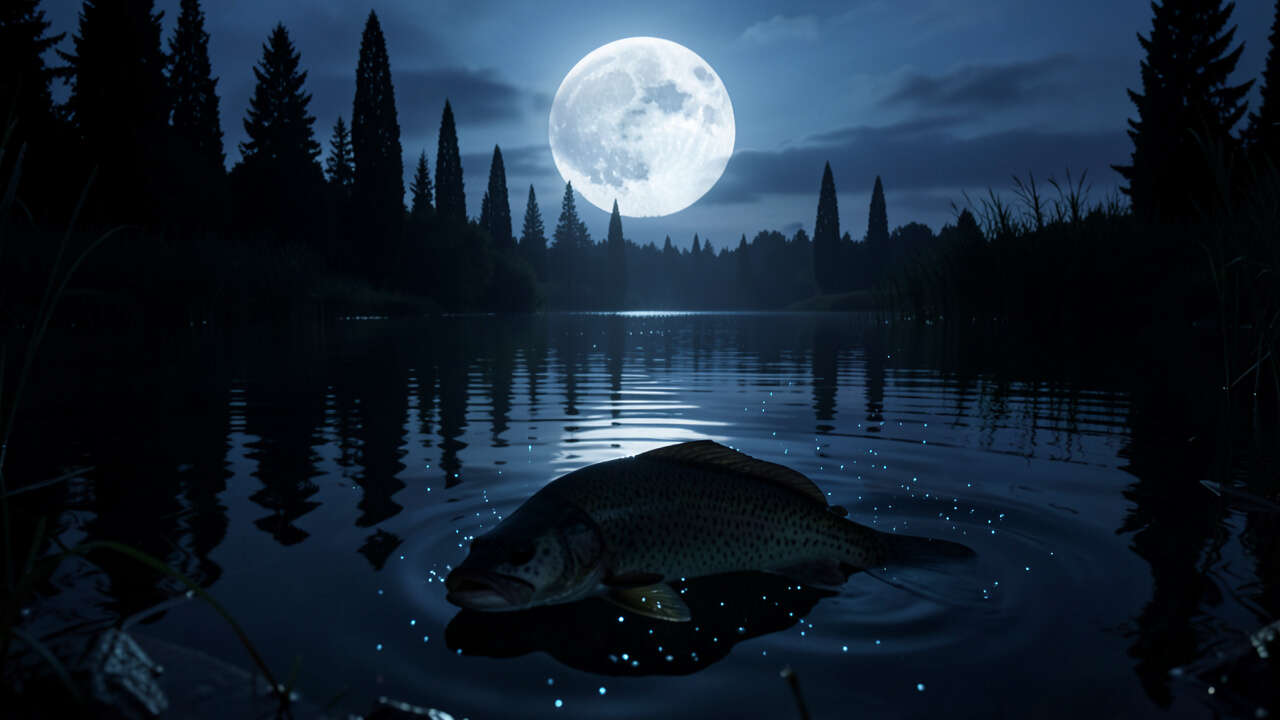
The moon hangs in the sky every night, and its presence can affect the water. This is especially true for bass, which are predators. The amount of light from the moon can change how bass hunt and where they position themselves.
It can also influence the behavior of their prey, like baitfish and invertebrates. This interaction between the moon, its light, and the food chain is a big part of the Moon Phase Effect on Bass: What Anglers Really Need to Know.
During a full moon, there’s more natural light. This can allow bass to hunt for longer periods into the night or start their feeding earlier in the evening. Some believe this extra light makes them more active and aggressive.
While full moons boost feeding activity, the brightest nights can sometimes spook bass; experienced anglers often fish the days just before and after the full moon for best results.
Adjust your lure choice based on available moonlight: brighter nights call for more natural, visible presentations to match the bass's enhanced visual hunting.
On the flip side, during a new moon, there’s very little natural light. This can push bass to feed more actively during dawn and dusk, when natural light is present but the moon isn’t a factor.
The periods just before and after the full moon and new moon are often considered prime fishing times. These are sometimes called “feeding windows.” Anglers often report excellent fishing during these times. It’s believed that the gravitational pull of the moon, which causes tides, also plays a role in fish activity.
This is particularly true in areas with significant tidal movement.
The Full Moon: A Time of Increased Activity
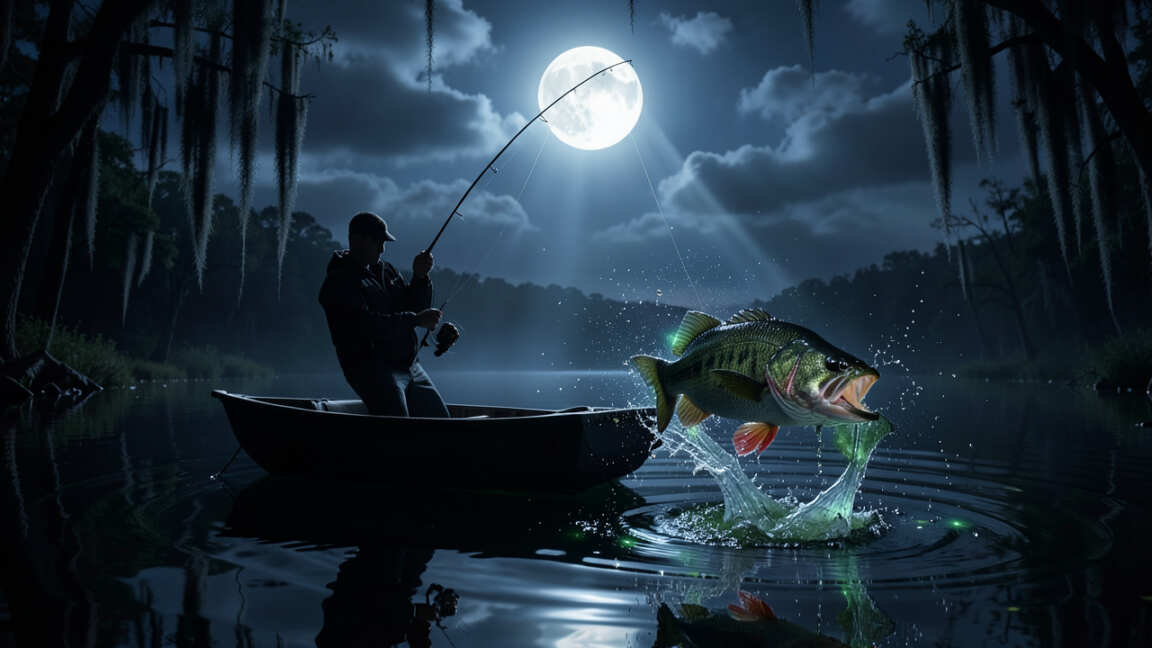
The full moon is often talked about in fishing circles. More light means bass can see their prey better. This can lead to more active hunting.
Many anglers find that the days surrounding the full moon can be very productive. It’s a time when bass might be more willing to chase lures.
During a new moon, bass become more active during dawn and dusk, making these twilight hours the prime window for successful fishing.
This increased activity isn’t just about sight. The full moon’s gravitational pull can also stir up the water. This might bring more baitfish closer to shore or into shallower areas.
When the food source moves, the bass are sure to follow. This makes the full moon a critical period to consider when thinking about the Moon Phase Effect on Bass: What Anglers Really Need to Know.
However, it’s not always a simple case of “more light equals more bites.” Some experienced fishermen notice that bass can become almost too active or even a bit spooked during the brightest parts of the full moon. They might be more cautious or feed in shorter bursts. So, while it’s a prime time, understanding the nuances is key.
The New Moon: Feeding in the Dark
The new moon presents a different scenario. With little to no moonlight, the night is much darker. This doesn’t mean bass stop feeding.
Instead, their feeding patterns might shift. They often become more active during the twilight hours of dawn and dusk.
In saltwater or brackish areas, target new and full moons for the strongest tidal currents that push baitfish into feeding zones for bass.
These low-light periods are when their natural prey is often most active. Small baitfish and invertebrates move around more when there isn’t bright moonlight. Bass use these times to their advantage.
Anglers who target bass during new moons often focus their efforts on these transitional light periods.
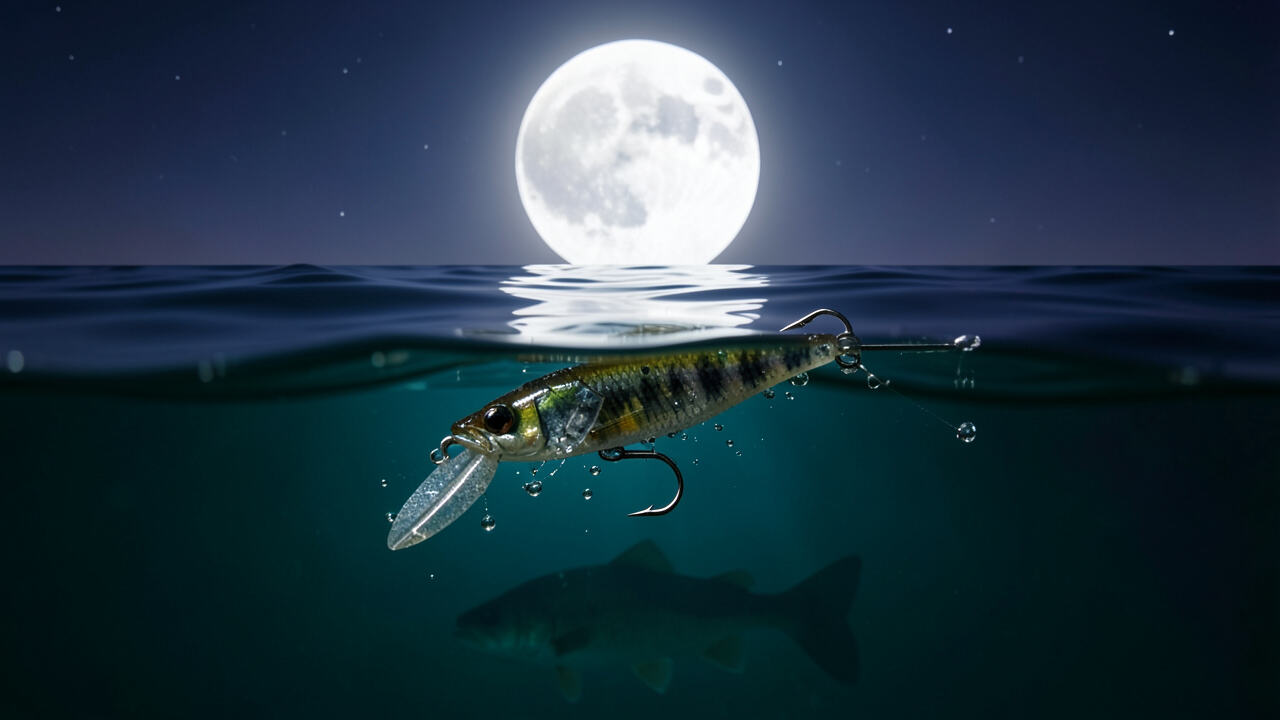
The lack of bright light can also make bass feel more secure in shallower waters. They might move into areas they avoid during brighter moon phases. This is another aspect of the Moon Phase Effect on Bass: What Anglers Really Need to Know that can help you find fish when the moon is dark.
Understanding Tidal Influences and Moon Phases
For anglers fishing in saltwater or brackish water, the moon’s effect on tides is undeniable. The moon’s gravitational pull is the primary driver of ocean tides. High tides and low tides create moving water.
Moving water often means more active fish.
During periods of strong tidal influence, like during new and full moons (when the sun, moon, and earth align, creating spring tides), the water movement is more pronounced. This surge and ebb can push baitfish into feeding zones. Bass, being opportunistic predators, will take advantage of these movements.
Avoid assuming the full moon is always best; the darkest hours of a new moon can trigger equally intense feeding, so plan trips around these specific lunar windows.
This is a significant part of the Moon Phase Effect on Bass: What Anglers Really Need to Know in tidal fisheries.
Even in freshwater lakes and rivers, there can be subtle water level changes influenced by lunar gravity, though much less dramatic than ocean tides. Some researchers suggest these minor shifts can still impact fish behavior and feeding.
The “Golden Hours” of Lunar Fishing
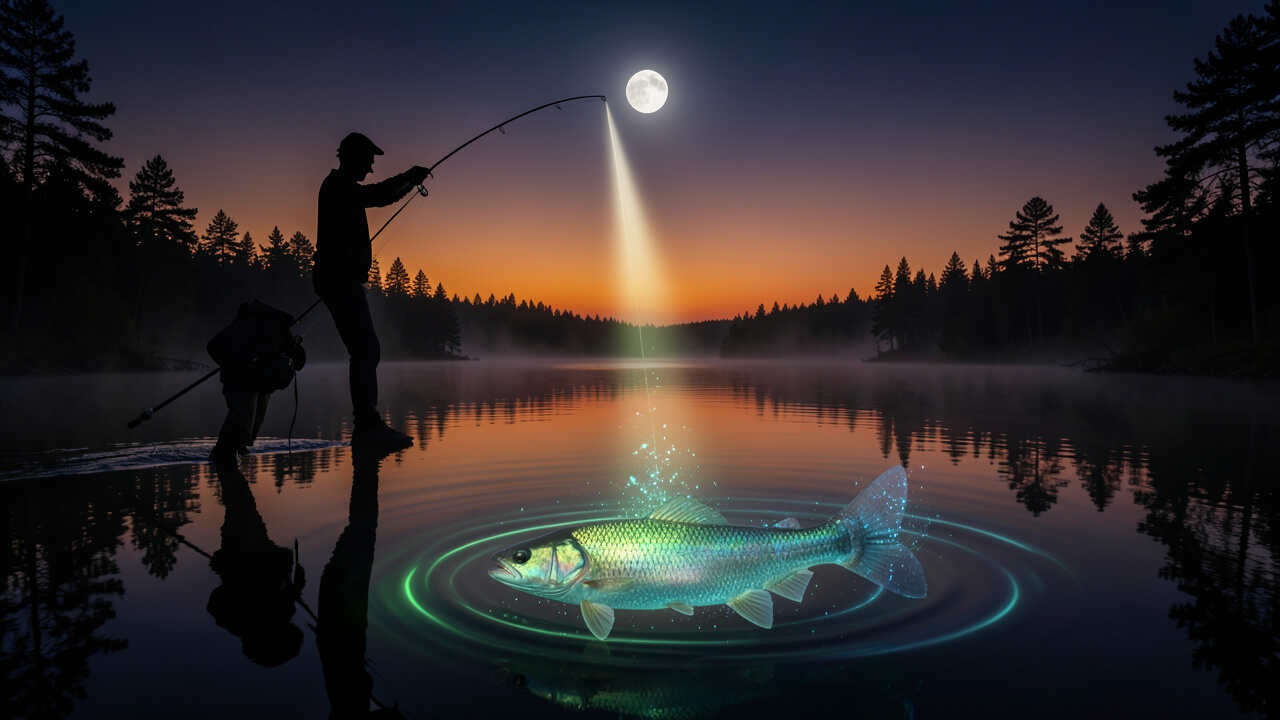
Beyond just the full and new moon, specific moments during these cycles are often highlighted. These are the “golden hours” for lunar fishing. They typically occur when the moon is at its fullest or darkest, and also during the transition periods.
Moon phase is just one variable; weather fronts, water temperature, and barometric pressure often override lunar effects, so always check local conditions first.
The peak of the full moon, when it’s highest and brightest, can be a prime feeding time for bass. Similarly, the darkest part of the new moon, when the sky is clearest of lunar light, can also trigger feeding. Anglers often report success just before or just after these peak moments.
These periods are thought to be when the moon’s influence on baitfish and the bass themselves is strongest. Understanding these specific windows is a key piece of the Moon Phase Effect on Bass: What Anglers Really Need to Know. It helps you fine-tune your fishing schedule.
Other Factors to Consider
While the moon is an interesting factor, it’s not the only thing that affects bass fishing. Many other elements are just as important, if not more so. It’s crucial to remember that the Moon Phase Effect on Bass: What Anglers Really Need to Know is just one piece of the puzzle.
Weather conditions play a huge role. Changes in barometric pressure, wind direction, water temperature, and cloud cover can all impact bass activity. A clear, bright full moon night might be less productive if a cold front is moving in.
Targeting bass by moon phase means focusing on the transitional light periods around dawn and dusk for new moons, and the evenings and early mornings for full moons.
The type of water body also matters. Lakes, rivers, and reservoirs behave differently. The presence of structure, cover, and available food sources are always primary drivers of where bass will be and when they will feed.
Your fishing technique and lure choice are also critical. Even during a prime moon phase, if you’re not presenting your bait effectively, you won’t catch fish. It’s about combining all these factors for the best chance of success.
Tips for Fishing During Different Moon Phases
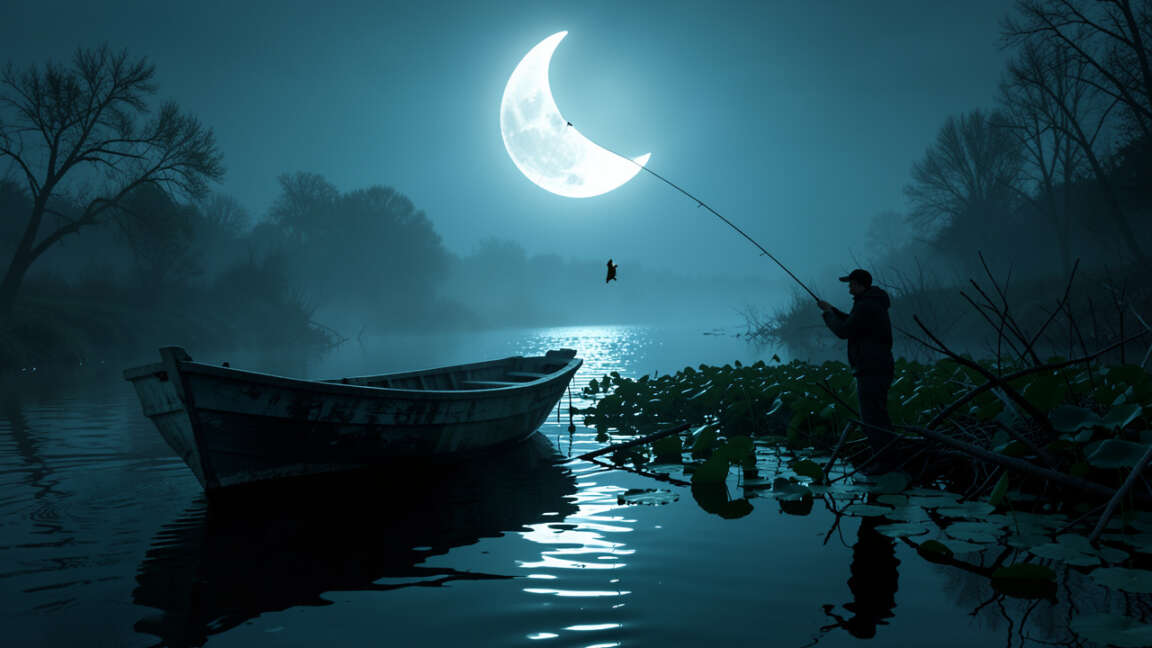
To make the most of the Moon Phase Effect on Bass: What Anglers Really Need to Know, here are some practical tips:
Remember that scientific studies show mixed results; the moon's direct light effects on bass are often weaker than indirect tidal influences, so prioritize tidal predictions when fishing.
- Full Moon: Fish during the evening and early morning. Consider using lures that mimic natural prey. If fishing at night, use a light source to help see your lure and surroundings. Be aware that bass might be more spread out.
- New Moon: Focus your efforts on dawn and dusk. Look for bass in shallower areas or around cover where they feel more secure. Darker lures can be effective in low light.
- Waxing and Waning Phases (First and Third Quarters): These periods can offer good, consistent fishing. Pay attention to the “golden hours” around the peak of the moon phase. Activity might be more moderate but steady.
- Tidal Waters: Always fish the tide changes, especially during new and full moons when tides are strongest. Look for baitfish being pushed by the current.
- Observe and Adapt: Keep a fishing journal. Note the moon phase, weather, and your catch. Over time, you’ll see patterns specific to your local waters.
Scientific Perspectives on Moon Phases and Fish
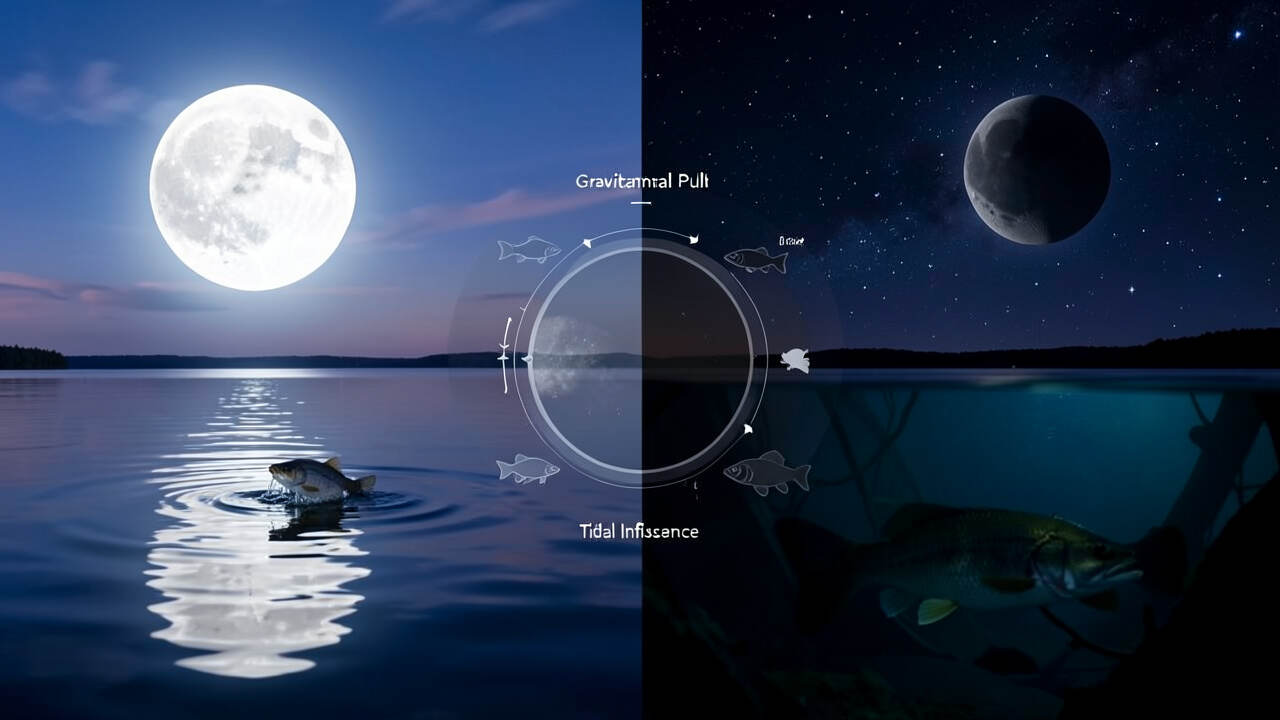
While many anglers swear by the moon’s influence, scientific research offers a mixed view. Some studies suggest that lunar cycles do affect fish behavior, particularly in regard to feeding and spawning. These effects are often linked to changes in light intensity and gravitational forces. However, scientific research shows that lunar cycles affect fish behavior during different moon phases.
For example, research has shown that some fish species exhibit increased activity during full moons. This is attributed to the extended periods of light allowing for more foraging. Other studies point to the moon’s influence on reproduction cycles in certain aquatic animals, which can indirectly affect predator behavior. For example, some studies indicate bass become more active during full moons due to increased light.
However, the impact can vary greatly depending on the species, the environment, and other influencing factors like weather and food availability. The Moon Phase Effect on Bass: What Anglers Really Need to Know from a scientific standpoint is that there’s a plausible biological basis, but it’s not a guaranteed outcome every time.
It’s important to distinguish between direct effects of moonlight and indirect effects like tidal movements. Both can influence when and where bass are likely to feed. The scientific community continues to explore these connections, but practical application by anglers often relies on observation and experience.
Frequently Asked Questions
Does the full moon always mean great bass fishing?
Not always. While the full moon often brings increased activity, other factors like weather and food availability play a big role. It’s a prime time to try, but success isn’t guaranteed.
Is the new moon a bad time to fish for bass?
No, the new moon can be excellent for bass fishing, especially during dawn and dusk. Bass often feed more actively in low-light conditions during this phase.
How does the Moon Phase Effect on Bass: What Anglers Really Need to Know apply to freshwater versus saltwater?
In saltwater, the moon’s effect on tides is much more pronounced and directly impacts bass fishing. In freshwater, the influence is more subtle, primarily related to light levels and potential minor water fluctuations.
Should I change my lure selection based on the moon phase?
While not a strict rule, you might consider brighter lures during brighter moon phases and darker lures during new moons. However, matching the hatch and presenting your lure well are usually more important.
What are the best times to fish around the full moon?
The best times are often the peak of the full moon itself, as well as the evening and morning hours leading up to and following it. These are considered the “golden hours” for lunar fishing.
How can I track moon phases for my fishing trips?
You can easily find moon phase calendars online, through fishing apps, or on weather websites. Many fishing apps also integrate this information directly into their forecasts.
Final Thoughts
Understanding the Moon Phase Effect on Bass: What Anglers Really Need to Know can be a valuable tool in your fishing arsenal. While not the only factor, the moon’s cycles can influence bass feeding patterns, especially during full and new moons. By paying attention to these lunar rhythms, alongside weather and other conditions, you can better plan your fishing trips for increased success.

One Comment