The Bass Diet Calendar: What Bass Eat Through The Seasons
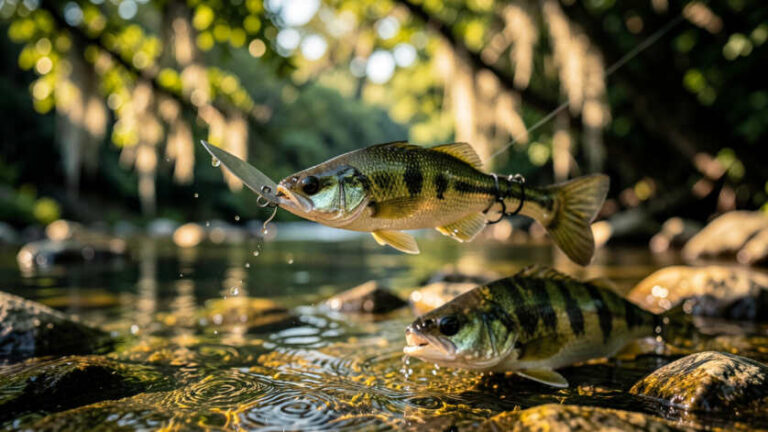
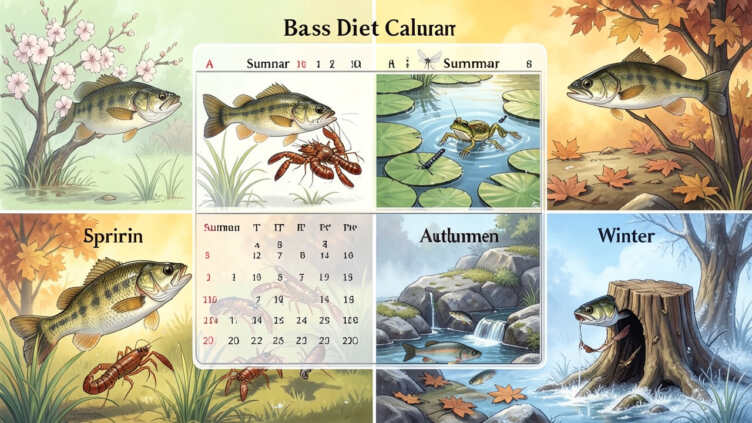
The bass diet calendar shows that seasonal water temperature and prey availability dictate what bass eat through spring, summer, autumn, and winter. In spring, bass focus on spawning baitfish like shad and emerging insects in warming shallow waters. Summer bass retreat to deeper, cooler structures, targeting smaller, faster prey such as crayfish and juvenile bluegill. Autumn triggers a feeding frenzy on larger forage to build energy reserves, while winter slows metabolism, making slow presentations of dormant prey the most effective approach.
Knowing what bass are eating at different times of the year can make a huge difference in your fishing success. It helps you pick the right bait and the best spot to cast your line. Understanding The Bass Diet Calendar: What Bass Eat Through the Seasons is like having a secret map to where the fish are and what they want.
This knowledge helps you catch more fish, whether you’re a beginner or a seasoned angler, by matching your strategy to the bass’s natural feeding patterns.
Key Takeaways
- Bass feeding habits change significantly with the seasons due to water temperature and prey availability.
- Spring sees bass become more active, feeding on spawning baitfish and insects as waters warm.
- Summer requires anglers to adapt to bass seeking cooler, deeper water and adjusting their diet to smaller, faster prey.
- Autumn brings a feeding frenzy as bass prepare for winter, targeting larger meals like shad.
- Winter slows down bass metabolism, leading to less frequent feeding on slower-moving or dormant prey.
- Seasonal understanding of The Bass Diet Calendar: What Bass Eat Through the Seasons is crucial for consistent fishing success.
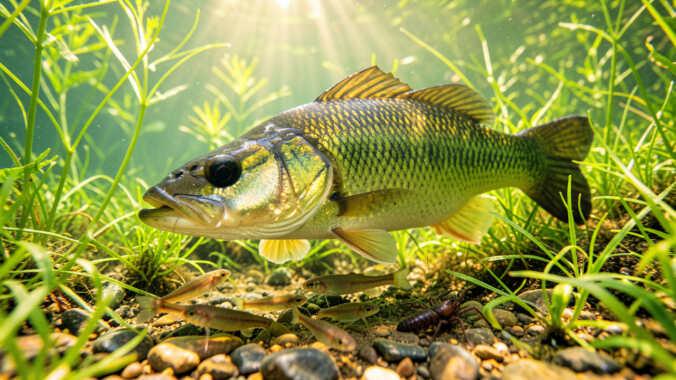
Spring: The Awakening Feast
As winter’s chill fades, spring brings a noticeable shift in bass behavior. The warming waters signal a time of increased activity and a renewed appetite. This is a prime time for anglers to capitalize on hungry fish.
Bass begin to move from their deeper winter haunts into shallower areas. They are actively seeking out food sources that are also becoming more active.
Early Spring: Warming Waters and First Bites
In early spring, water temperatures are still cool, often in the 40s and 50s Fahrenheit. Bass metabolism is slowly increasing. They are not yet in their full feeding frenzy, but they are definitely looking for meals.
Their diet at this stage often includes whatever is easiest to catch. This can be small baitfish that are also starting to move into shallows, crayfish, and various aquatic insects. Anglers often find success with slower-moving baits that mimic these available food sources.
Think about soft plastics that offer a subtle action or crankbaits that run at a steady retrieve.
During summer heat, bass often suspend near deep structure; employing a slow-rolled spinnerbait or a deep-diving crankbait can trigger strikes from lethargic fish.
Focus on shallow, wind-blown banks where warming water first attracts baitfish and crayfish, as bass will be aggressively feeding on them.
Mid to Late Spring: The Spawn and Beyond
As water temperatures climb into the 60s Fahrenheit, the bass spawn begins. This is a critical period where their feeding habits are heavily influenced by reproduction. During the spawn, both male and female bass can become aggressive.
Males are protecting their nests, and females are replenishing energy after spawning. Their diet expands to include a wider range of prey. Small baitfish like shad, minnows, and bluegill become primary targets.
Larger bass might even feed on smaller bass. This is when many anglers experience explosive action. Topwater lures can be very effective during this time, especially in the early mornings and late evenings.
Spring Lures and Tactics
To match the spring feeding patterns, consider using lures that imitate common forage. Spinnerbaits are excellent for covering water and attracting attention. Jigs with trailers can mimic crayfish or other bottom-dwelling creatures.
Soft plastic worms, especially in natural colors, work well for a more subtle presentation. For the spawning season, topwater frogs or prop baits can trigger aggressive strikes from guarding bass.
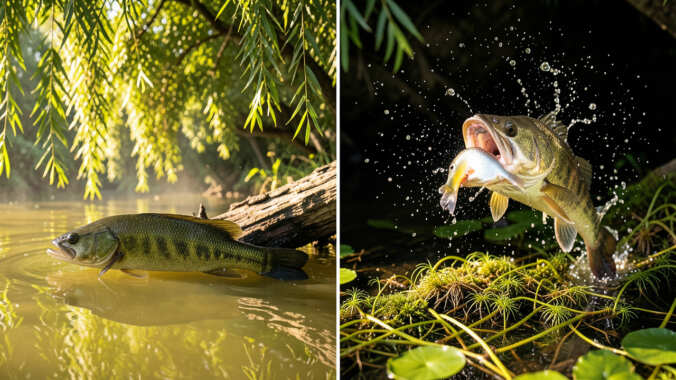
Summer: Heat, Hiding, and Hunting
Summer brings warmer weather and higher water temperatures. This often forces bass to change their feeding strategies. The intense heat can make them less active during the hottest parts of the day.
They tend to seek out cooler, more comfortable environments. This is a key factor in understanding The Bass Diet Calendar: What Bass Eat Through the Seasons during this challenging period.
Early Summer: Transitioning to Deeper Water
As summer begins, water temperatures rise into the high 70s and low 80s Fahrenheit. Bass will start moving away from the super-shallow areas they may have frequented during the spawn. They look for cooler water, often found in deeper sections of lakes and rivers.
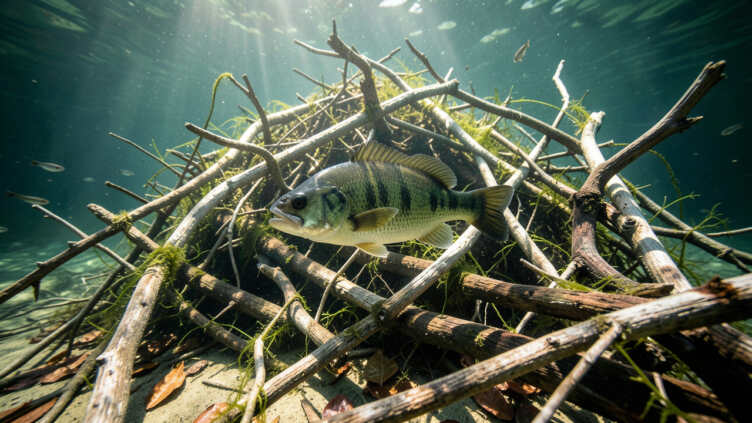
This might be drop-offs, submerged structures, or areas with good shade cover. Their diet remains similar, but their hunting grounds shift. They still target baitfish, but now they’re ambushing them from deeper positions.
The autumn feeding frenzy is driven by cooling waters that signal bass to pack on weight, making them more willing to chase larger prey like shad.
Mid to Late Summer: Peak Heat and Forage
During the hottest months, bass activity is often concentrated during dawn and dusk. Midday can be tough. They often suspend in the water column or hold tight to structure where the water is cooler.
Their diet continues to consist of baitfish, but they may also feed on smaller fish, frogs, and even large insects. The key is finding where the baitfish are, as the bass will not be far behind. When bass feed in summer, they often prefer quicker meals, so faster retrieves can be effective.
Summer Lures and Tactics
To succeed in summer, anglers need to adapt. Deep-diving crankbaits are great for reaching bass holding in deeper water. Texas-rigged soft plastics, like worms or craws, are effective for probing submerged structures.
Drop shot rigs can present bait enticingly to suspended bass. When bass are active at dawn or dusk, topwater lures like poppers or walking baits can produce explosive strikes. Focus on areas with current, shade, or significant underwater structure.
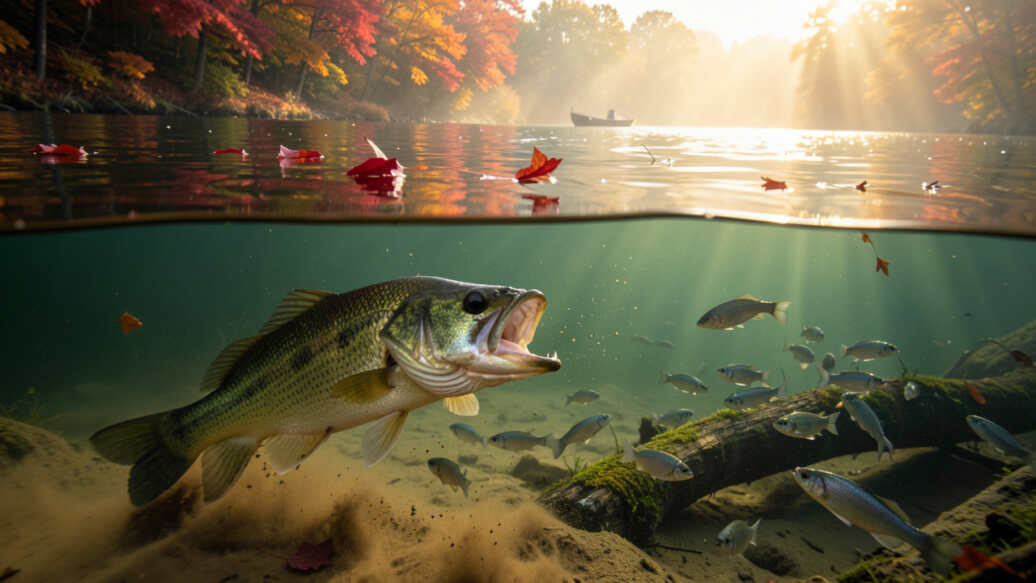
Autumn: The Pre-Winter Feast
Autumn is often considered one of the best times to catch large bass. As the water begins to cool down from its summer highs, bass enter a period of intense feeding. They are bulking up to prepare for the leaner months of winter.
This makes them more aggressive and more willing to chase down larger prey. Understanding The Bass Diet Calendar: What Bass Eat Through the Seasons is especially rewarding in the fall.
Early Autumn: Cooling Waters and Increased Activity
As water temperatures drop from the 70s back into the 60s Fahrenheit, bass metabolism kicks into high gear. They become much more active throughout the day. Baitfish, such as shad, start to school up in larger numbers.
Bass will follow these schools, feeding aggressively. This is a prime time to target larger bass that are also looking for substantial meals to build up reserves.
In winter, slow your presentation dramatically; a jig dragged along the bottom or a live minnow on a drop shot can entice a bite from sluggish bass.
Late Autumn: Final Push Before Winter
In late autumn, as temperatures dip into the 50s Fahrenheit and below, bass are making their final push. They will actively seek out larger food sources to store energy. This is when you’re most likely to catch your personal best bass.
They are less concerned with energy expenditure and more focused on calorie intake. Their diet will heavily feature larger baitfish like shad, but they might also be opportunistic and take down larger artificial lures that mimic these substantial meals. The focus shifts from smaller, quick snacks to larger, more energy-rich prey.
Autumn Lures and Tactics
Fall fishing often calls for lures that imitate larger forage. Large crankbaits that mimic shad are highly effective. Umbrella rigs, which simulate a school of baitfish, can be devastating.
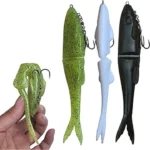
Jigs, especially football jigs, are great for targeting bass on deeper structure. Swimbaits, both hard and soft, can also be excellent choices for their realistic profile and action, mimicking fleeing baitfish. Focus on areas where baitfish congregate, such as flats near deep water or along channel edges.
Winter: Slowing Down and Survival
Winter presents the biggest challenge for anglers hoping to catch bass. As water temperatures plummet into the 30s and low 40s Fahrenheit, bass metabolism slows dramatically. They become lethargic and their feeding patterns change significantly.
This is a period of survival and conserving energy, making them much harder to find and catch. Understanding The Bass Diet Calendar: What Bass Eat Through the Seasons during winter is about patience and subtle presentations.
Early Winter: Lingering Activity
In the early part of winter, especially when temperatures are still in the 40s, bass may still show some feeding activity. They will typically move to deeper, more stable water where they can find some comfort and a more consistent food source. Their diet will consist of whatever is available, which might be smaller baitfish, crayfish, or even slow-moving bait.
They are not actively hunting, but rather ambushing prey that comes within striking distance.
Never assume bass are feeding on the same prey all year; matching your lure to the dominant seasonal forage is critical for consistent success.
Mid to Late Winter: Lethargy and Conservation
As winter progresses and water temperatures drop further, bass become extremely lethargic. They conserve energy by moving very little. They will often school up in deeper, warmer pockets of water, like the bottom of main lake basins or near thermal refuges.
Their feeding becomes very infrequent. When they do feed, it’s usually on slow-moving or dormant prey. They are not chasing down fast baits.
Any meal they consume needs to provide maximum caloric benefit for minimum energy expenditure.
Winter Lures and Tactics
Winter fishing requires a completely different approach. The key is to present baits very slowly and deliberately. Jigs, especially football jigs and shaky head jigs, are excellent for dragging along the bottom.
Live bait, such as minnows or small shad, can be very effective when fished on a jig head or a drop shot. Soft plastic baits that offer subtle action, like small worms or grubs, are also good choices. The goal is to get the bait right in front of a lethargic bass and hope it has enough energy to strike.
Patience is paramount during winter fishing.
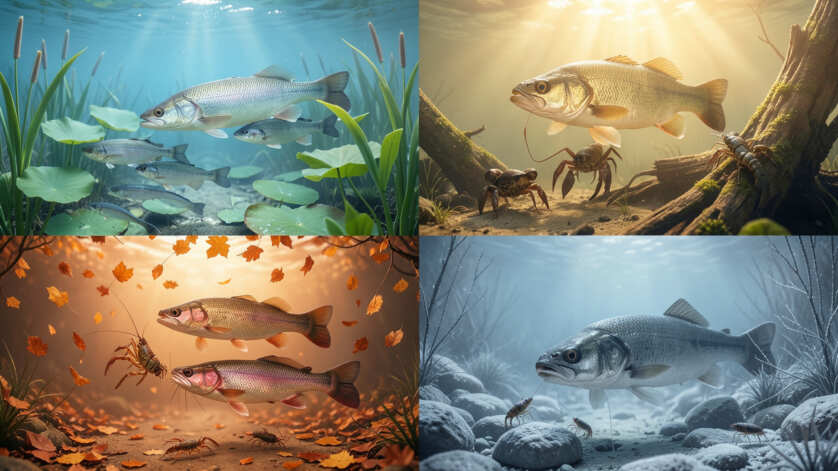
Understanding Prey Availability Across Seasons
The availability of their natural food sources is the primary driver behind The Bass Diet Calendar: What Bass Eat Through the Seasons. Different prey species have their own seasonal cycles that directly influence bass feeding behavior.
The seasonal diet comparison reveals that primary food sources shift from small baitfish in spring to larger shad and bluegill in summer, guiding lure selection.
Spring Prey
- Minnows and Small Baitfish: As waters warm, these begin to become more active and move into shallower areas.
- Crayfish: They become more active as temperatures rise, seeking out new food and molting.
- Insects: Aquatic insects hatch and emerge, providing a readily available food source, especially for smaller bass.
Summer Prey
- Shad: They often school in larger numbers and can be found in deeper water or near main lake structure.
- Bluegill and Perch: These panfish are common targets, especially in vegetated areas or near docks.
- Frogs: Especially in warmer, shallower areas, frogs become a significant food source for bass.
Autumn Prey
- Shad: This is a prime time for shad, and bass will follow them relentlessly.
- Smaller Bass: Larger bass are opportunistic and will feed on smaller bass or other juvenile fish.
- Crawfish: They remain a consistent food source throughout the fall.
Winter Prey
- Dormant Baitfish: Slower-moving or lethargic baitfish are easier targets in cold water.
- Crawfish: While less active, they can still be found and are an easy meal.
- Anything Easy: Bass are not picky; they will eat whatever they can easily get with minimal energy expenditure.
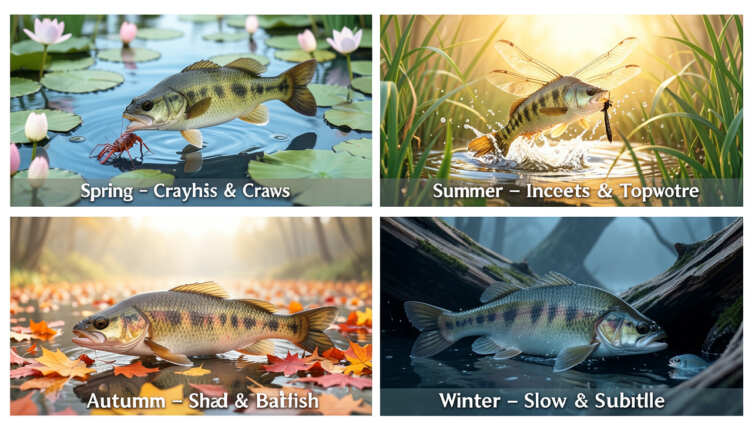
Seasonal Bass Diet Comparison
To better illustrate the seasonal shifts, here is a simplified comparison of what bass typically eat:
Your lure box should be a seasonal reflection of what bass are naturally eating, not a collection of personal favorites.
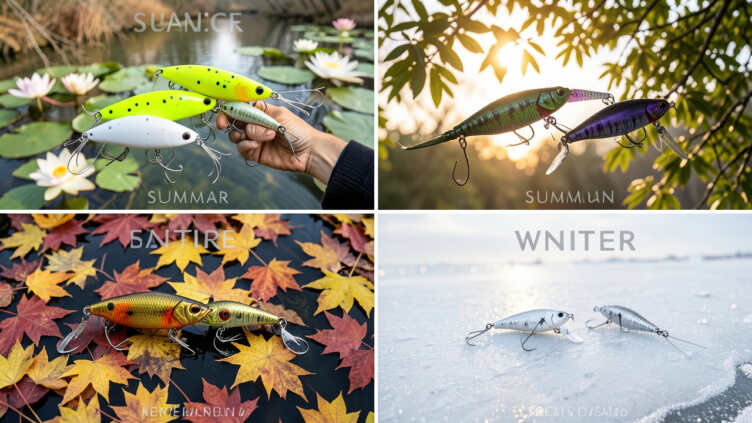
Adapting Your Lure Choices to the Season
Your lure box should reflect the current season and the bass’s dietary needs. Understanding The Bass Diet Calendar: What Bass Eat Through the Seasons allows for targeted lure selection.
Spring Lure Selection
- Spinnerbaits: Excellent for covering water and attracting attention in warming shallows.
- Jigs: Mimic crayfish and bottom-dwelling creatures, perfect for early spring.
- Soft Plastic Worms: Natural colors and subtle action are great for less aggressive bass.
- Topwater Lures: Effective during the spawn for triggering reaction strikes.
Summer Lure Selection
- Deep-Diving Crankbaits: Reach bass holding in cooler, deeper water.
- Texas-Rigged Soft Plastics: Ideal for probing submerged structures and weed lines.
- Drop Shot Rigs: Present bait enticingly to suspended or finicky bass.
- Topwater Poppers/Walkers: Produce explosive strikes during low-light periods.
Autumn Lure Selection
- Large Crankbaits: Imitate larger baitfish like shad, a fall staple.
- Umbrella Rigs: Simulate a school of baitfish, irresistible to aggressive bass.
- Football Jigs: Effective for targeting bass on deeper structure as they feed.
- Swimbaits: Mimic fleeing baitfish with realistic action and profile.
Winter Lure Selection
- Jigs (Shaky Head, Football): Slow-dragged along the bottom for lethargic fish.
- Live Bait (Minnows, Small Shad): Natural scent and action are hard to resist.
- Subtle Soft Plastics: Baits with minimal action, presented very slowly.
Frequently Asked Questions
How does water temperature directly affect what bass eat?
Water temperature dictates bass metabolism. Colder water slows them down, making them eat less often and prefer slower prey. Warmer water speeds them up, increasing their appetite and willingness to chase faster food.
Is it true that bass eat more in the fall?
Yes, bass feed heavily in the fall. As water temperatures cool from summer highs, their metabolism increases, and they target larger prey to build fat reserves for winter. This is a key aspect of The Bass Diet Calendar: What Bass Eat Through the Seasons.
What is the best season to catch large bass based on their diet?
Autumn is often considered the best season for catching large bass. They are actively feeding on large baitfish and other substantial meals to prepare for winter, making them more aggressive and susceptible to larger lures.
Should I change my bait color based on the season?
While not the primary factor, bait color can matter. Natural colors are often best when bass are feeding on specific baitfish. In clearer water or low-light conditions, brighter colors might attract more attention, regardless of the season.
What do bass eat in the winter when everything is frozen?
Even in winter, bass can find food. They target slow-moving baitfish, crawfish, or anything else available in deeper, more stable water. Their metabolism is so slow they eat very infrequently, focusing on energy conservation.
How does understanding The Bass Diet Calendar: What Bass Eat Through the Seasons improve fishing?
Knowing what bass eat seasonally helps you choose the right lures, presentations, and fishing locations. This leads to more effective fishing trips and a higher chance of catching fish by matching their current needs.
Final Thoughts
Adjusting your fishing strategy based on the season is key to consistent success. By understanding The Bass Diet Calendar: What Bass Eat Through the Seasons, you can predict bass behavior and their preferred meals. This knowledge empowers you to choose the right lures and tactics, leading to more enjoyable and productive days on the water. Local regulations and bass fishing seasons affect lure choices year-round.
Understanding the Bass Diet Calendar helps anglers predict seasonal feeding patterns.
Effective fishing lure selection mimics natural prey in each season.