Rod Length Selection Guide: When To Use 6, 7, Or 8 Foot Now
A 6-foot rod provides maximum control for short, accurate casts in heavy cover or tight spaces, while an 8-foot rod delivers the leverage and distance needed to cover open water and detect subtle strikes. The 7-foot rod serves as the most versatile choice, balancing casting range with maneuverability across various techniques and environments. Anglers targeting bass in dense structure should prioritize a shorter rod for precision, whereas trout fishing in small, bushy creeks calls for a 7-foot model to manage overhead obstacles. Selecting the correct length directly improves casting accuracy, bite detection, and hook-setting power, making rod length a critical factor for fishing success.
Picking the right fishing rod length can make a big difference in how much fun you have and how successful you are out on the water. A rod that’s too long or too short can feel awkward and affect your casting and how you feel a fish bite. We’ll help you figure out the best size for your needs.
This Rod Length Selection Guide: When to Use 6, 7, or 8 Foot Now will show you why it matters and what you’ll gain by choosing wisely, so you can cast farther, feel more bites, and reel in more fish without frustration. Let’s get started on finding your perfect rod.
Key Takeaways
- Understanding how rod length impacts casting distance and accuracy is crucial for effective fishing.
- 6-foot rods are best for tight spaces and quick, accurate casts near your boat or shore.
- 7-foot rods offer a versatile balance, suitable for a wide range of fishing situations and techniques.
- 8-foot rods excel at long-distance casting, covering more water and detecting subtle bites from afar.
- Matching rod length to your fishing style, target species, and environment ensures optimal performance.
- Proper rod length selection leads to improved casting control, better lure presentation, and increased hook-up rates.
Why Rod Length Matters for Your Fishing Success
When you’re out fishing, the length of your rod might seem like a small detail. However, it plays a huge role in how well you fish. A rod’s length affects everything from how far you can cast to how sensitive you are to a fish nibbling your bait.
Choosing the right one means you’ll enjoy your time more and catch more fish. This Rod Length Selection Guide: When to Use 6, 7, or 8 Foot Now is here to help you make that important choice.
Choose a rod length based on your fishing environment: shorter rods excel in tight spaces with precise casts, while longer rods provide greater casting distance in open water.
Think about it this way: a shorter rod is like a short, powerful swing. It’s great for quick, precise movements. A longer rod is like a long, sweeping motion.
It can cover a lot more ground. The type of fishing you do, the kinds of fish you’re after, and even where you’re fishing all play a part in what length is best for you.
The Benefits of a 6-Foot Fishing Rod
A 6-foot fishing rod is a fantastic choice for many anglers. These shorter rods are often called “casting rods” or “spincasting rods” and are known for their accuracy and ease of use. They are particularly good for fishing in areas with a lot of obstacles or where you need to be precise with your cast.
One of the biggest advantages of a 6-foot rod is its control. Because it’s shorter, it’s easier to make quick, accurate casts. This is super helpful when you’re fishing from a kayak, a small boat, or even from a crowded riverbank.
A 6-foot rod offers exceptional control and accuracy, making it ideal for fishing in heavy cover or from a kayak, and its sensitivity helps detect light bites from finicky fish.
You don’t want to snag your line on trees or bushes behind you. With a 6-foot rod, you can place your lure exactly where you want it.
Another benefit is the quick action these rods provide. When a fish bites, a shorter rod can help you set the hook faster. This is important for species that have a light bite or tend to spit out the hook quickly.
The shorter length also makes them easier to handle for younger anglers or those who prefer a lighter, more maneuverable setup.
When to use a 6-foot rod:
- Fishing in tight spaces: Think small streams, dense brush along riverbanks, or fishing from a kayak where space is limited.
- Targeting panfish or smaller game fish: Species like crappie, bluegill, or small trout are often caught with shorter, more sensitive rods.
- When accuracy is key: If you need to place your bait or lure precisely near structure like docks or fallen trees.
- Beginner anglers: The shorter length is easier to learn casting techniques with.
The Versatility of a 7-Foot Fishing Rod
The 7-foot fishing rod is often considered the “all-arounder” of the fishing world. It strikes a great balance between the control of a shorter rod and the casting power of a longer one. This makes it an excellent choice for anglers who fish in a variety of conditions and target different types of fish.
One of the main reasons a 7-foot rod is so popular is its casting distance. It allows you to cast your lure or bait farther than a 6-foot rod, giving you the ability to cover more water. This is beneficial when you’re fishing in larger lakes or rivers where fish might be spread out.
The 7-foot rod balances casting distance and control, making it the most versatile choice for anglers who fish varied conditions and target multiple species.
By covering more water, you increase your chances of finding active fish.
Beyond casting distance, a 7-foot rod offers good sensitivity. You can feel subtle bites more easily than with a very long rod, which is important for detecting when a fish has taken your bait. It also provides enough backbone to handle a variety of fish sizes, from smaller panfish to medium-sized bass or walleye.
This versatility means you can often get away with using just one or two 7-foot rods for many different fishing trips.
When to use a 7-foot rod:
- General freshwater fishing: Excellent for bass, walleye, pike, and trout in lakes, rivers, and ponds.
- Versatile casting: Good for both accuracy and distance, making it suitable for various casting techniques.
- When you want one rod for many situations: If you don’t want to carry multiple rods, a 7-footer is a solid choice.
- Fishing from a boat or shore: It’s long enough for good casting from shore but not so long that it’s difficult to manage in a boat.
The Power of an 8-Foot Fishing Rod
An 8-foot fishing rod is a powerhouse, designed for anglers who need to cast long distances and detect the slightest nibbles from far away. These longer rods are especially useful in open water situations where reaching distant fish is key to success. They offer significant advantages in terms of casting range and line control.
The primary benefit of an 8-foot rod is its ability to cast a lure or bait much farther than shorter rods. This is because the longer blank stores more energy during the cast, which is then released to propel your line and lure a greater distance. This is invaluable when fishing in large bodies of water like big lakes, reservoirs, or the ocean, where fish may be holding far from the shore or boat.
For long-distance casting and fighting large fish, an 8-foot rod provides superior leverage and line control, especially in open water and when using finesse techniques.
Another advantage of an 8-foot rod is its sensitivity. The extra length can act like an extension of your arm, helping you feel even the most subtle strikes. This is particularly helpful when fishing for wary fish or when using finesse techniques where the bite might be very light.
The longer rod also provides better leverage for fighting larger fish, helping you keep them away from snags and under control.
When to use an 8-foot rod:
- Long-distance casting: Ideal for covering large areas of open water, such as big lakes, reservoirs, or surf fishing.
- Detecting subtle bites: When fishing for finicky or wary species that bite very lightly.
- Fighting larger fish: The added leverage helps manage powerful runs and keep big fish away from cover.
- Using larger lures: Better suited for casting and working heavier or bulkier lures that require more line speed.
Comparing Rod Lengths: A Quick Look
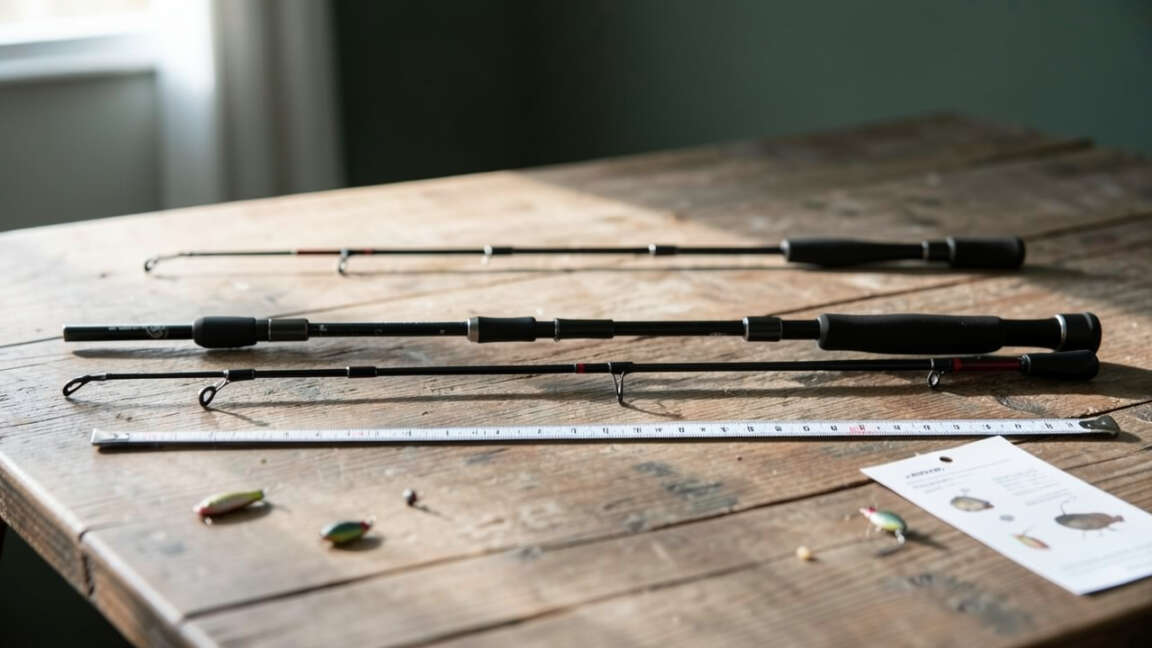
To help you visualize the differences, let’s break down the key aspects of each rod length. Understanding these distinctions is a vital part of your Rod Length Selection Guide: When to Use 6, 7, or 8 Foot Now.
Avoid choosing a rod solely based on length without considering your specific fishing style; each length has trade-offs in accuracy, distance, and maneuverability.
As you can see, each length has its strengths. The best choice depends on what you prioritize for your fishing trips. This comparison is a core part of any good Rod Length Selection Guide: When to Use 6, 7, or 8 Foot Now.
Factors Beyond Length: What Else to Consider
While rod length is a critical factor, it’s not the only thing that matters. To truly master your Rod Length Selection Guide: When to Use 6, 7, or 8 Foot Now, you need to think about other aspects of a fishing rod.
Rod Power: This refers to how much force it takes to bend the rod. It’s often described as ultralight, light, medium, heavy, or extra-heavy. A lighter power rod is more flexible and suited for smaller fish and lighter lures.
A heavier power rod is stiffer and better for larger, stronger fish and heavier lures.
Rod Action: This describes where the rod bends when pressure is applied.
Rod power and action are equally crucial—a light power rod is best for small fish and light lures, while heavy power rods handle big fish and heavy cover.
- Fast action rods bend mostly at the tip. They offer quick hook sets and good sensitivity.
- Medium action rods bend in the upper half.
They provide a good balance of casting distance and hook-setting power.
- Slow action rods bend throughout their entire length. They are great for casting lighter lures and absorbing the shock of a fighting fish.
Target Species: The type of fish you’re trying to catch heavily influences rod choice. For small panfish, a lighter, shorter rod is usually best. For large, powerful game fish like tuna or musky, you’ll need a heavier, often longer rod.
Fishing Environment: Are you fishing in a crowded urban canal, a vast open lake, or the surf? The environment dictates the casting distances required and the potential for snags. A Rod Length Selection Guide: When to Use 6, 7, or 8 Foot Now must account for these variables.
Your Casting Style: Some anglers prefer a smooth, sweeping cast, while others like a quick, snappy motion. Your personal casting style can influence which rod length feels most comfortable and effective for you.
Choosing the Right Rod for Specific Fishing Scenarios
Let’s put this knowledge into practice with some common fishing scenarios. This will solidify your understanding of the Rod Length Selection Guide: When to Use 6, 7, or 8 Foot Now.
Scenario 1: Bass Fishing in a Lake with Lots of Cover
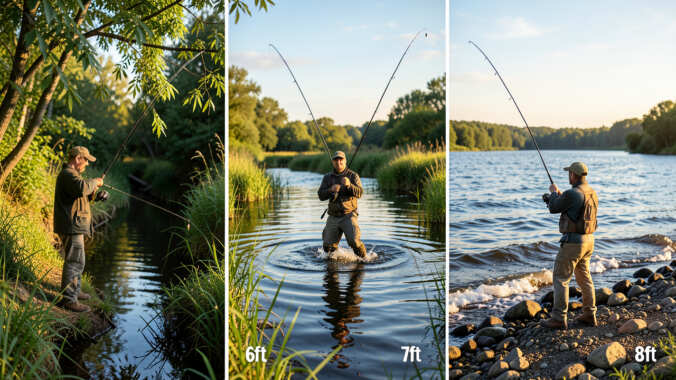
If you’re targeting bass in a lake with many submerged logs, docks, and weed beds, you’ll want a rod that offers good control and the ability to make accurate casts. A 6-foot or 7-foot rod with a medium to medium-heavy power and a fast action would be ideal. The shorter length helps you cast precisely into tight spots without snagging.
The fast action allows for quick hook sets when a bass strikes near cover.
Scenario 2: Trout Fishing in a Small, Bushy Creek
For trout fishing in a narrow creek with overhanging branches and limited casting room, accuracy is paramount. A 6-foot rod, perhaps even slightly shorter like 5’6″, with a light or ultralight power and a medium-fast action is a great choice. This setup will allow you to flick your lure or bait under branches and into small pockets where trout hide.
The lighter power will also make the fight with a smaller trout more enjoyable.
Matching rod length and power to your fishing scenario, such as using a 6-foot rod for bass in heavy cover, greatly improves your catch rate and enjoyment.
Scenario 3: Walleye Fishing in a Large River
When fishing for walleye in a large river, you often need to cast a good distance to cover the current and find fish holding near structure. A 7-foot rod with medium or medium-heavy power and a moderate-fast action is a versatile choice. It allows for good casting distance to reach those prime spots and provides enough sensitivity to feel subtle walleye bites.
If you’re fishing from a boat and need to cast very far or detect the faintest tick, an 8-foot rod could also be considered.
Scenario 4: Surf Fishing for Striped Bass
Surf fishing requires casting lures or bait out into the waves, often over long distances. For this, a longer rod is essential. An 8-foot rod, or even longer (9-10 feet), with heavy power and a fast action is typically used.
The length is crucial for getting your bait past the breaking waves and into deeper water where larger fish might be. The heavy power is needed to handle strong currents and the fighting power of large saltwater species.
Understanding these scenarios helps to make the Rod Length Selection Guide: When to Use 6, 7, or 8 Foot Now practical for your specific fishing adventures.
Frequently Asked Questions
What is the most common fishing rod length?
The 7-foot fishing rod is generally considered the most common and versatile length for a wide range of freshwater and light saltwater fishing applications.
Can I use a 6-foot rod for saltwater fishing?
Yes, a 6-foot rod can be used for some types of saltwater fishing, especially in calmer inshore areas or for smaller species like speckled trout or redfish. However, for open water or larger saltwater game fish, longer rods are usually preferred.
Will an 8-foot rod be too long for a beginner?
An 8-foot rod can be a bit challenging for a complete beginner due to its length and casting mechanics. Starting with a 6 or 7-foot rod might be easier to learn the basics of casting and handling.
How does rod length affect hook setting?
Longer rods generally provide more leverage for hook sets, especially for fish with tough mouths. Shorter rods allow for quicker, more direct hook sets, which can be beneficial for fish with softer mouths or light bites.
Should I choose a longer rod if I want to cast farther?
Yes, generally, longer fishing rods will allow you to cast your lure or bait farther. This is due to the increased leverage and energy storage in the longer rod blank.
Is a 7-foot rod good for both baitcasting and spinning reels?
Absolutely. A 7-foot rod is a versatile length that works well with both baitcasting and spinning reel setups for a variety of fishing techniques.
How does the Rod Length Selection Guide: When to Use 6, 7, or 8 Foot Now apply to ice fishing?
Ice fishing typically uses very short rods, often under 3 feet, to allow for easy manipulation of lures directly below the ice hole. The 6, 7, or 8-foot lengths are not suitable for traditional ice fishing.
Final Thoughts
Choosing between a 6, 7, or 8-foot fishing rod depends on your fishing style and where you cast. A shorter 6-foot rod offers precision for tight spots, a versatile 7-foot rod balances distance and control, and a longer 8-foot rod excels at reaching distant fish. Use this guide to pick the length that best suits your needs for more enjoyable and successful fishing trips.