
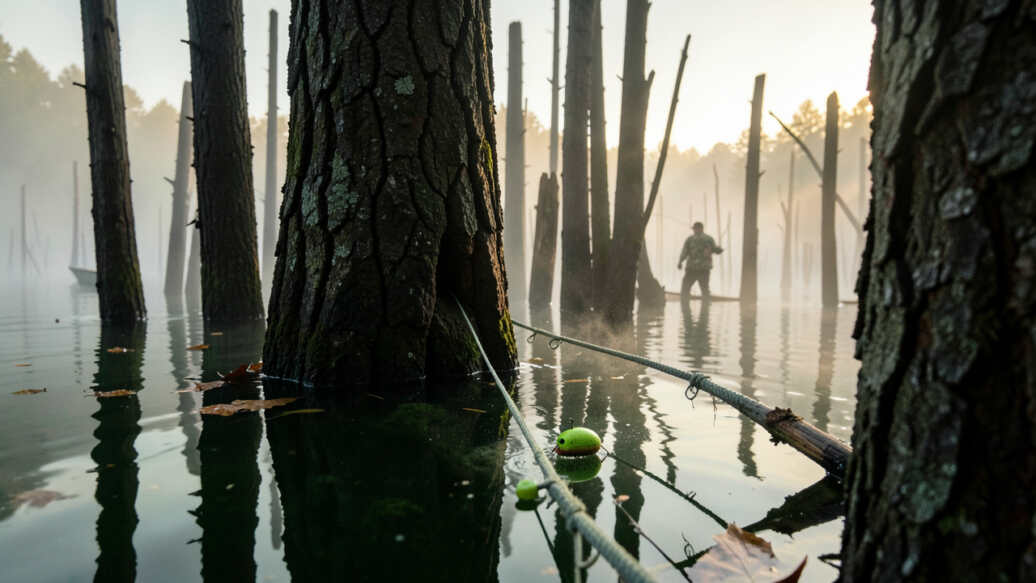
Bass Fishing Standing Timber: Vertical Presentation Tactics
Vertical presentation tactics are essential for bass fishing in standing timber because they allow anglers to precisely place lures in the strike zone around submerged wood. Success requires specific gear choices including a stiff rod with a sensitive tip, a high-speed reel with braided line, and lures like jigs, soft plastics, or swimbaits that drop vertically through branches. Mastering the drop speed and maintaining line contact with the lure is critical to triggering strikes from bass holding tight to the wood.
When bass hide in flooded trees, getting your lure to them can be tricky. You want to present your bait right where the fish are holding, making it easy for them to strike. Mastering Bass Fishing Standing Timber: Vertical Presentation Tactics helps you put more fish in your boat by showing you how to effectively fish these challenging spots.
This skill is key to catching bass that might otherwise be out of reach, leading to more successful fishing trips and bigger catches.
Key Takeaways
- Understand why vertical presentations work best in standing timber.
- Learn the essential gear needed for fishing submerged wood.
- Discover the top lure choices for vertical presentations in timber.
- Master techniques for accurately placing your bait near structure.
- Develop strategies for reading timber and predicting bass locations.
- Improve your hook-setting and fighting fish around wood.
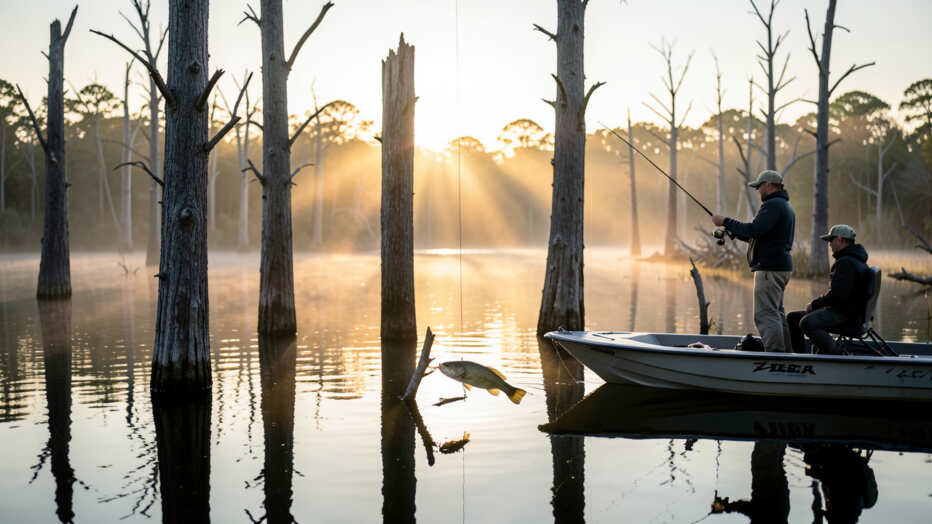
Why Vertical Presentation is King in Timber
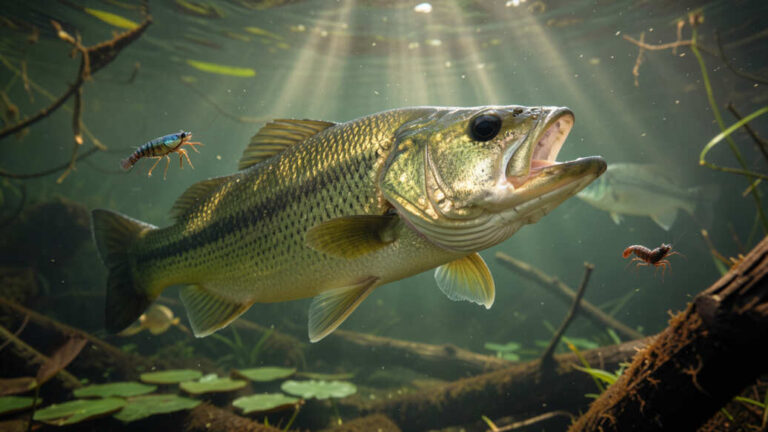
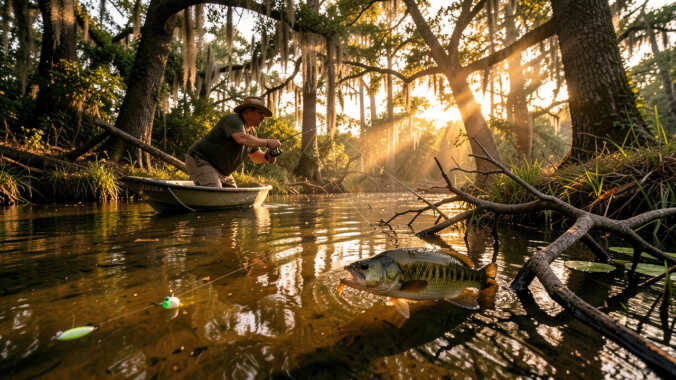
Standing timber, those submerged trees and logs, creates a complex underwater world. Bass love these spots because they offer shade, cover, and ambush points. When fishing this type of structure, a horizontal presentation often gets snagged.
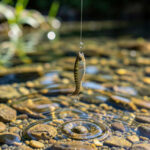
Bass are looking down, waiting for a meal to drop. This is where Bass Fishing Standing Timber: Vertical Presentation Tactics become incredibly effective. You’re dropping your bait directly into their zone, mimicking a natural food source.
Drop your bait straight down into the bass’s strike zone to avoid snags and mimic a natural food source.
Think of it like this: a bass in a tree is like a person in a house. You wouldn’t cast your lure through the front door hoping they’d swim out. Instead, you’d try to get it right to their window or even drop it down their chimney.
Vertical presentations allow you to do just that. You’re not fighting the branches on the way in or out. You’re presenting the bait in a way that’s natural and less likely to spook the fish.
This focus on vertical movement is a core principle for success.
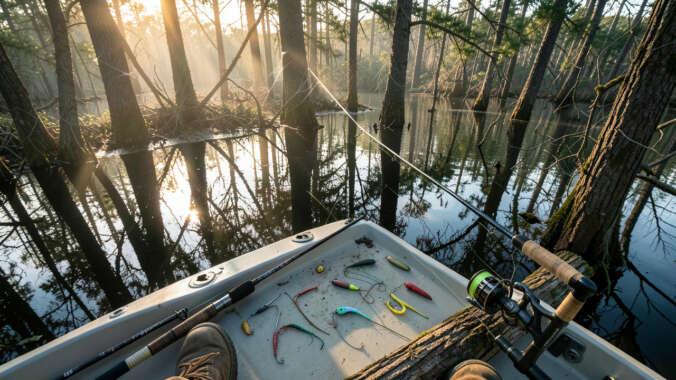
Essential Gear for Timber Tactics
Fishing around heavy wood cover requires specific gear. You need equipment that can handle the stress of pulling a fish away from sharp branches and potential snags. Using the right rod, reel, and line is crucial for effective Bass Fishing Standing Timber: Vertical Presentation Tactics.
This setup needs to be strong and reliable.
Rod Selection for Wood
For vertical presentations in standing timber, a rod with plenty of backbone is essential. You need a rod that can generate enough power to rip a bass free from cover quickly. A medium-heavy to heavy power spinning or baitcasting rod works best.
The length often ranges from 6’6″ to 7’6″. A shorter rod offers more control in tight spaces, while a longer one can help with casting and leverage.
The action of the rod is also important. A fast or extra-fast action tip allows for quick hooksets. This is vital when a bass strikes your bait as it drops.
You want to feel the bite instantly and drive the hook home before the fish can retreat into the wood. A rod with a stiff backbone prevents the fish from using the cover against you.
Rods with heavy backbone and reels with a gear ratio between 6.4:1 and 7.1:1 provide the pulling power needed to rip bass from heavy cover.
Reel Choice and Line Strength
Your reel needs to be smooth and durable. A baitcasting reel is often preferred for its power and line control, especially with heavier lures and lines. Gear ratios between 6.4:1 and 7.1:1 are good all-around choices for pulling power and speed.
Spinning reels can also be effective, particularly for lighter baits or when a more finesse approach is needed, but ensure they have a strong drag system.
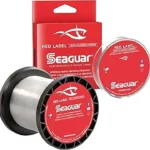
Line choice is arguably the most critical component. Braided line is highly recommended for fishing standing timber. Its zero stretch means you feel every subtle bite and can set the hook instantly.
It also has incredible strength for its diameter, allowing you to pull big bass out of tight spots. Use a heavy test, typically 50-pound braid or higher. Some anglers prefer to add a fluorocarbon leader to their braid.
This leader can be more abrasion-resistant and less visible underwater. The length of the leader can vary, but 18-36 inches is a common range.
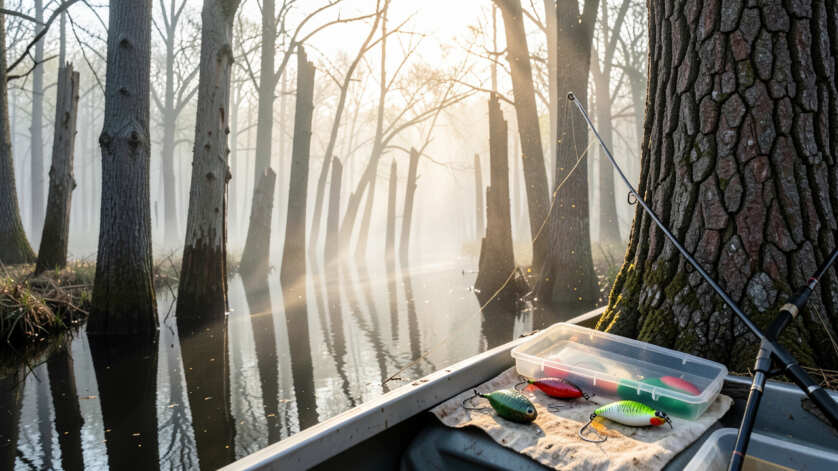
Top Lures for Vertical Presentation
When you’re employing Bass Fishing Standing Timber: Vertical Presentation Tactics, your lure selection needs to be precise. You want baits that can be dropped straight down, imitate a natural forage, and entice a bite from a bass holding tight to wood. Simplicity and effectiveness are key.
Jigs: The Undisputed Champion
Jigs are the workhorses of vertical presentations in standing timber. A football jig, a flipping jig, or a swim jig can all be effective. The key is to get the jig down to the bottom or suspended near the cover.
Jigs mimic crawfish and other bottom-dwelling baitfish, which are common forage for bass in these areas.
When fishing jigs, you want to rig them with a trailer that adds bulk and action. A craw trailer, a grub, or a paddle-tail trailer can all entice strikes. The color of the jig and trailer should match the water clarity and the forage base.
Darker colors like black and blue or green pumpkin are good for stained water, while lighter or natural colors work well in clear water.
Soft Plastics: Versatile and Deadly
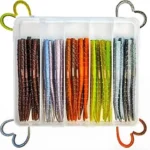
Soft plastics are incredibly versatile for vertical presentations. Creatures baits, tube baits, and bulky worms are all excellent choices. Rigging them Texas-style with a stout hook and a bullet weight allows them to be dropped straight down.
Jig color should match water clarity and forage base—dark for stained water, natural for clear.
You can also rig them weightless for a slower fall, or with a small jig head for more control.
A popular technique is to use a creature bait or a crawfish imitation. These baits have a lot of natural action and appeal to bass. You can also use a bulky worm, like a beaver-style bait, to get a reaction bite.
The key is to make sure the bait falls naturally and has some enticing movement as it descends.
Swimbaits and Grubs
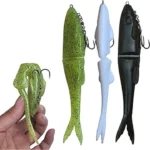
Smaller swimbaits or grub-style baits on a jig head can also be very effective. When dropped vertically, these baits can flutter and present a tempting target. A 3-4 inch swimbait on a 1/4 to 1/2 ounce jig head is a great option.
The subtle tail action of the swimbait can trigger bites from finicky bass.
Grubs, especially those with a curly tail, provide a lot of action on the fall. Rigged on a jig head, they can be dropped right next to a log or tree trunk. The fluttering tail mimics a dying baitfish or a small invertebrate, making it irresistible to bass.
Mastering the Vertical Presentation Technique
The actual act of presenting your lure vertically is an art. It’s not just about dropping the bait; it’s about controlling the fall and enticing a strike. Effective Bass Fishing Standing Timber: Vertical Presentation Tactics require patience and precision.
You need to be able to feel what’s happening with your bait at all times.
The Drop Shot Rig
While often associated with finesse fishing, the drop shot rig can be surprisingly effective in standing timber, especially when bass are suspended or a more subtle approach is needed. The key is to use a heavier weight and a shorter leader. This keeps the bait in the strike zone longer and directly above the structure.
You can drop the bait straight down to a suspended fish or let it dangle next to a submerged branch.
The advantage of the drop shot is its ability to keep the bait stationary in the water column. This is perfect for bass that are not actively chasing. You can also reel up slightly and drop back down to make the bait dance enticingly.
The hook is also set away from the weight, which can help prevent snags.
The drop shot rig offers a subtle, natural presentation that triggers strikes from suspended bass in timber.
Flipping and Pitching Techniques
Flipping and pitching are fundamental techniques for fishing around cover, and they translate perfectly to vertical presentations in standing timber. Flipping involves using a shorter rod and a controlled pendulum motion to place your bait precisely into tight spots. Pitching uses a similar motion but with a slightly longer casting arc.
When fishing timber, you want to pitch your bait right next to the trunk of a tree, under a submerged limb, or into a hollow. The goal is to get the bait as close to the fish’s hiding spot as possible without spooking it. Work your bait slowly on the bottom or with a subtle jigging motion.
Feel for any slight tap or hesitation that indicates a bite.
Baitcasting vs. Spinning for Vertical Presentations
Both baitcasting and spinning gear have their place when employing Bass Fishing Standing Timber: Vertical Presentation Tactics. Baitcasting reels offer more power and control, making them ideal for heavier lines and lures like jigs and Texas-rigged plastics. They allow for precise placement and strong hooksets, crucial for pulling bass from heavy cover.
Spinning reels can be excellent for lighter baits, drop shots, or when you need a more finesse approach. They are easier to cast accurately with lighter lures and offer smooth line retrieval. However, ensure your spinning reel has a robust drag system capable of handling a strong fight.
The choice often comes down to personal preference and the specific lure and conditions you are facing.

Reading the Timber and Predicting Bass Locations
Standing timber isn’t just a random collection of wood. It’s an ecosystem that bass use for various reasons. Learning to read the timber will significantly improve your success with Bass Fishing Standing Timber: Vertical Presentation Tactics.
Identifying Prime Cover
Bass will position themselves in different ways depending on the time of day, water temperature, and weather. Look for trees that offer the most shade and protection. Overhanging branches, submerged logs, and dense clusters of timber are prime areas.
Bass will often hold tight to the trunk or under a limb, waiting for prey to pass by.
Pay attention to changes in the timber. Are there any visible signs of baitfish activity around certain trees? Are there areas with deeper water adjacent to the timber?
These are clues that bass might be present. Also, consider the orientation of the trees. Trees that are leaning or have exposed roots can create unique underwater structures that bass will utilize.
If bites stop, move to a different depth or timber section rather than staying in one spot.
Depth and Water Clarity Factors
The depth at which bass hold in standing timber will vary. In hot summer months, they may seek deeper, cooler water. In cooler spring or fall conditions, they might be shallower.
Water clarity also plays a significant role. In clear water, bass may be more spread out and suspended, while in stained or muddy water, they will likely be tighter to the cover.
When using vertical presentations, you need to experiment with different depths. Start by targeting areas where you expect bass to be based on the conditions. If you’re not getting bites, don’t be afraid to move to a different depth or a different section of the timber.
This adaptability is key to successful Bass Fishing Standing Timber: Vertical Presentation Tactics.
Using Electronics to Your Advantage
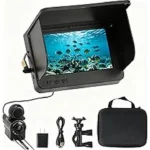
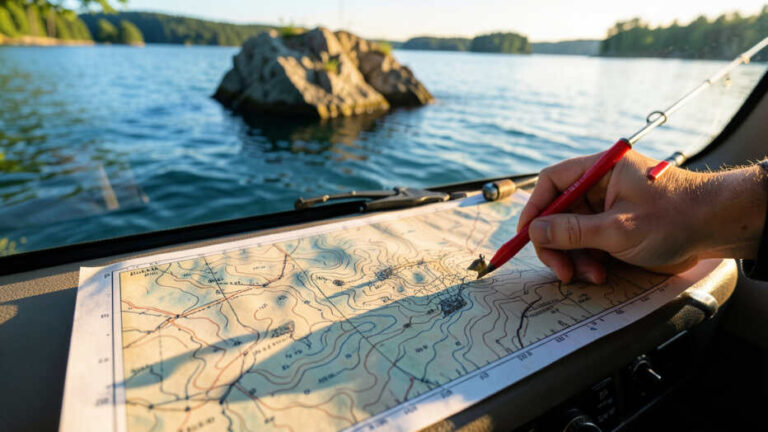
Modern fish finders are invaluable tools for fishing standing timber. They can help you identify submerged wood, locate baitfish, and even spot bass themselves. Side-imaging sonar is particularly useful for mapping out the extent of timbered areas and identifying individual trees.
When you see a promising piece of cover on your screen, use your electronics to get a precise location. Then, position your boat so you can make a vertical presentation directly to that spot. Even if you don’t see bass on the screen, seeing the structure and baitfish is often enough to warrant a thorough vertical presentation.
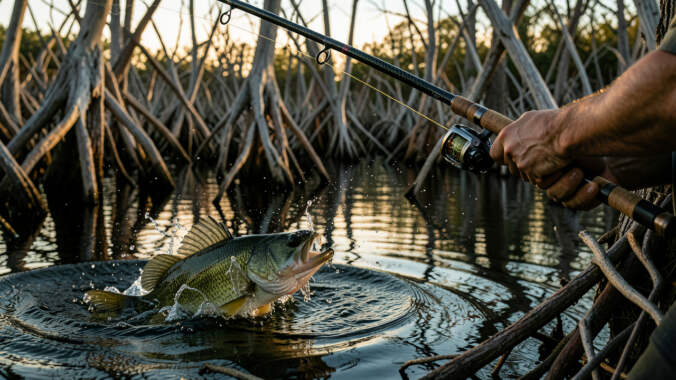
Hooksets and Fighting Fish in Timber
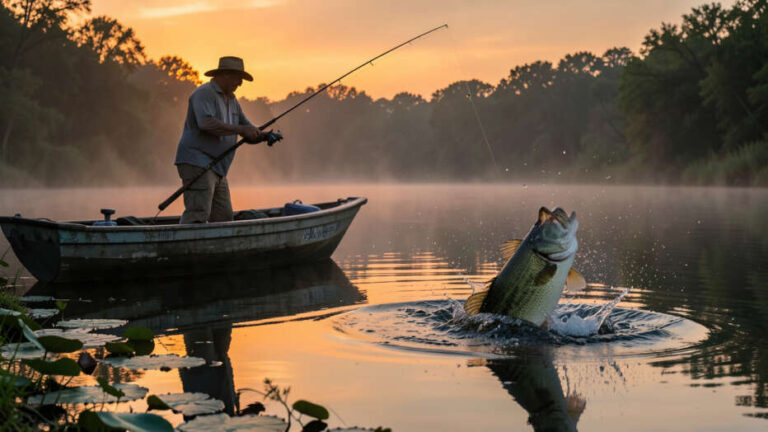
One of the most challenging aspects of fishing standing timber is the hookset and the subsequent fight. Bass are notorious for trying to bury themselves in wood once hooked. Proper technique is crucial to landing your fish.
The Aggressive Hookset
When you feel a bite, especially on a jig or Texas rig, you need to set the hook hard and fast. Because you have zero-stretch braided line, your hookset will be very direct. Swing the rod with authority to ensure the hook penetrates the bass’s jaw.
This is where the heavy power rod and strong line pay off.
Don’t hesitate. A bass in cover will try to turn and run into the wood immediately. A delayed hookset can mean the difference between landing a trophy and losing it to a snag.
Be ready to react instantly to any tap or pull.
Point the rod tip toward the fish and rely on reel drag to absorb shock, preventing line breakage against wood.
Keeping the Bass Away from Cover
First, once the hook is set, you need to apply pressure and steer the fish away from the wood. If you feel the fish heading towards a specific branch or the trunk, use your rod to guide it in the opposite direction. Keep the line tight but avoid horsing the fish too much, which can lead to a pulled hook or broken line.
Second, if the bass makes a strong run towards cover, don’t reel. Instead, point your rod tip towards the fish and use the drag on your reel to absorb the shock. This allows the fish to tire itself out without you risking a break-off.
Once the run subsides, you can resume reeling and guiding the fish.
Next, if the fish gets tangled in the wood, don’t panic. Sometimes, you can gently pull the line or work the rod to free the fish. If it’s truly stuck, you may need to try and back your boat up slowly, creating slack and hoping the fish will swim free.
However, often, the best strategy is to maintain steady pressure and let the fish fight itself out of the cover. This is where the strength of braided line is a lifesaver.
Finally, when you finally get the bass free from the timber and to the boat, be careful. They can still make a last-ditch effort to dive back into the cover. Keep steady pressure and guide them into your net or boat carefully.
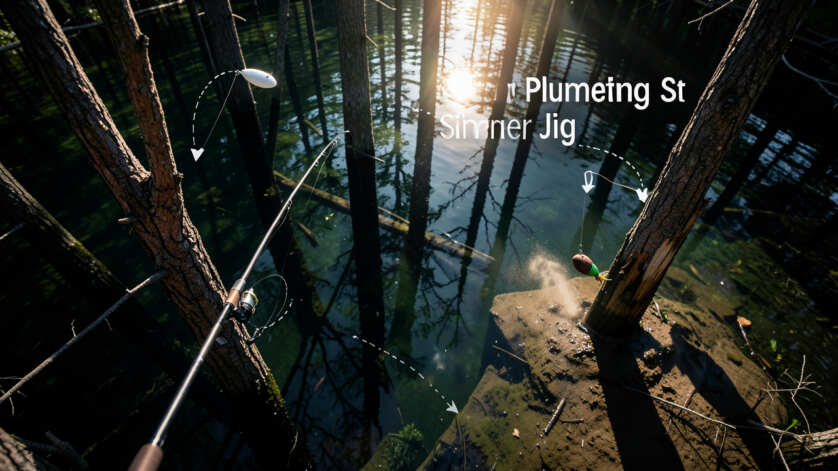
Comparing Vertical Presentation Styles
Different vertical presentation methods suit different situations. Understanding when to use each can make a big difference in your success. Here’s a look at how some common vertical tactics compare.
Understanding when to use flipping versus drop shot is crucial for adapting to cover and bass behavior.
Frequently Asked Questions
What is the best lure for Bass Fishing Standing Timber: Vertical Presentation Tactics?
Jigs are often considered the best all-around lure for Bass Fishing Standing Timber: Vertical Presentation Tactics because they mimic crawfish and can be fished effectively straight down. Texas-rigged creature baits and worms are also highly effective.
How do I avoid getting snagged when fishing standing timber vertically?
Use weedless lures like jigs with trailers that cover the hook point and Texas-rigged plastics with stout hooks. Fishing with braided line and maintaining control of your lure’s fall also helps minimize snags.
When is the best time of day to use vertical presentation tactics in standing timber?
Vertical presentations can be effective throughout the day, but they are often best during low-light periods like early morning and late evening, or on overcast days when bass are more likely to be actively feeding near cover.
What kind of line should I use for Bass Fishing Standing Timber: Vertical Presentation Tactics?
Braided line is highly recommended for its strength and lack of stretch, allowing for quick hooksets and powerful pulls. A fluorocarbon leader can add abrasion resistance and reduce visibility.
How deep should I present my bait when fishing standing timber?
Bass can be found at various depths in standing timber. You should experiment with different depths, from the bottom to suspended fish, using your electronics to help guide your presentation and adapt to what the bass are doing.
Should I use a baitcasting or spinning reel for vertical presentations in timber?
Baitcasting reels are generally preferred for their power and control when dealing with heavy cover and strong fish, but a spinning reel with a robust drag system can also be effective, especially for lighter lures or more finesse approaches.
Final Thoughts
Mastering Bass Fishing Standing Timber: Vertical Presentation Tactics is a game-changer for any angler targeting bass in wood. By using the right gear, lures, and techniques, you can effectively present your bait where the fish are hiding and significantly increase your catch rates. Keep practicing these methods, and you’ll find yourself consistently putting more bass in the boat.

2 Comments