

Brush Pile Bass: Finding And Working Submerged Cover Right
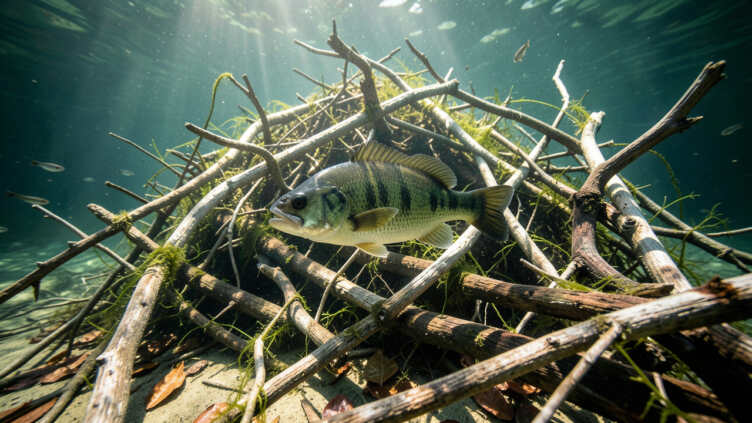
Brush pile bass fishing requires anglers to locate submerged cover like sunken trees and brush piles, then work it effectively with the right lure presentation to trigger strikes from ambush-positioned bass. Mastering this involves reading the cover for depth and density, selecting Texas-rigged worms or jigs, and avoiding snags by keeping the lure moving vertically near the structure. This approach increases catch rates by turning hidden brush piles from frustrating fish-holding spots into consistent producers throughout the season.
Catching bass around sunken wood can be super rewarding. Many anglers struggle to find these hidden spots and then figure out how to get those fish to bite. Mastering Brush Pile Bass: Finding and Working Submerged Cover Right means you’ll spend less time searching and more time reeling in.
You’ll learn to spot the best cover, choose the right lures, and present them in a way that makes bass can’t resist. This will boost your catch rates and make your fishing trips much more successful.
Key Takeaways
- Learn to identify the most productive types of submerged cover for bass.
- Discover effective techniques for locating hidden brush piles and laydowns.
- Understand how to select the best lures for different brush pile scenarios.
- Master the art of presenting lures to bass holding tight to cover.
- Gain tips on how to avoid getting your line hung up in the brush.
- Improve your overall bass fishing success by targeting submerged structures.
Why Bass Love Brush Piles
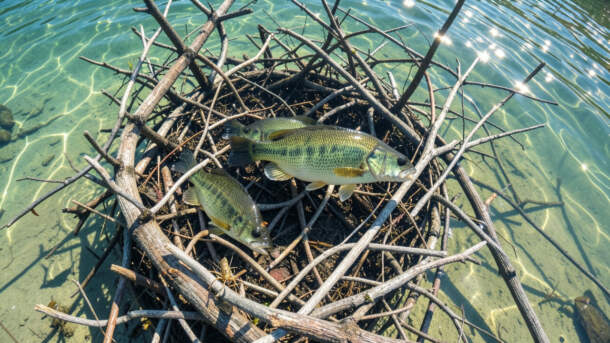
Bass are ambush predators. They love places where they can hide and wait for food to swim by. Submerged cover, like brush piles and fallen trees, offers perfect hiding spots.
These structures provide shade, protection from bigger fish, and a place for smaller baitfish and crawfish to hang out. Bass patrol these areas, ready to dart out and grab a meal. Understanding this natural behavior is the first step to successful Brush Pile Bass: Finding and Working Submerged Cover Right.
When scouting a brush pile, remember that bass use it as an ambush point—so focus on the edges and pockets where they can dart out to grab passing prey.
Think of a brush pile as a bass buffet. It’s a natural attractant for many types of forage. This makes it a prime feeding ground for bass.
When you find a good brush pile, you’re often looking at a concentration of fish. They aren’t just passing through; they’re living there. This is why learning to work these spots effectively can dramatically increase your chances of catching a big bass.
Spotting the Best Submerged Cover
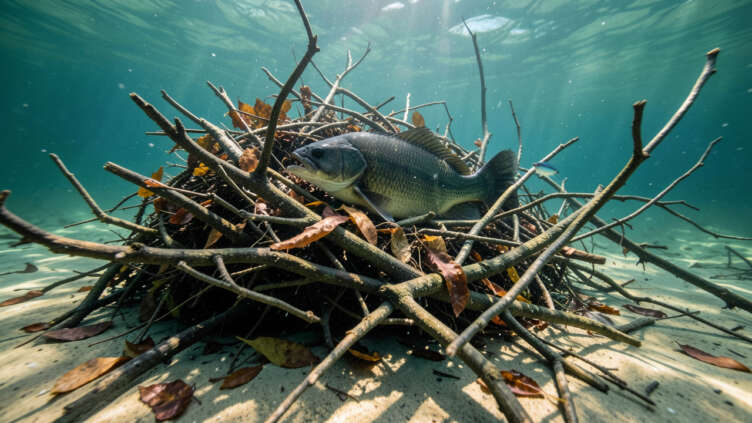
Finding good brush piles isn’t always easy. They can be hard to see from the surface. Look for subtle signs.
Areas where trees naturally fall into the water are great starting points. Old pilings from docks or bridges also create similar habitats. Sometimes, you can see a slight disturbance on the water’s surface, like a subtle ripple, that indicates something submerged below.
On your fish finder, look for dense, irregular shapes on the bottom. These often represent submerged wood. Don’t just look for a solid blob; look for something with structure.
A subtle ripple on the surface or a slight discoloration in the water can signal a submerged brush pile, so keep your eyes scanning for these clues even when your fish finder is quiet.
A thick, tangled mass is better than a single log. Water clarity plays a role too. In clear water, you might see the tops of branches.
In stained water, you’ll rely more on your electronics and experience.
Consider the depth. Bass will use brush piles at various depths depending on the season and time of day. In summer, they might move to deeper, cooler water.
In spring and fall, they could be shallower. A good strategy for Brush Pile Bass: Finding and Working Submerged Cover Right is to check brush piles at different depths.
Reading the Cover: What to Look For
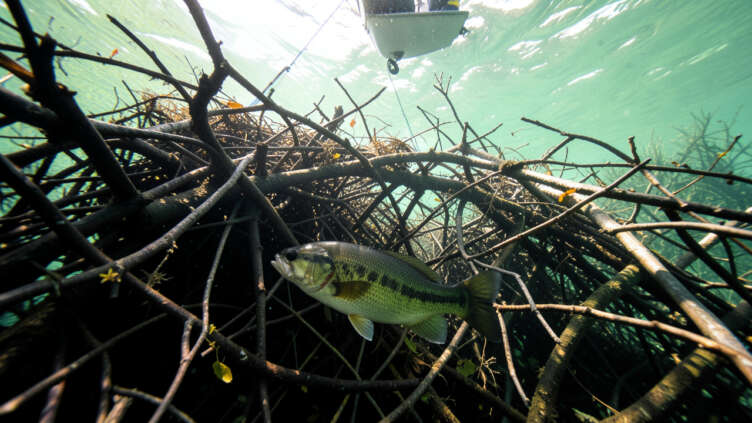
Not all brush piles are created equal. Some are much more productive than others. The best ones have a good mix of dense and open areas.
This allows bass to hold tight to the cover but also have room to move and strike. Look for piles that have a variety of wood sizes, from small twigs to larger branches and logs.
The location of the brush pile matters too. Is it near a drop-off? Is it in a creek channel?
The most productive brush piles offer a mix of dense and open areas, giving bass both a tight hiding spot and room to maneuver when striking.
Is it close to open water where baitfish might travel? These are all factors that make a brush pile more attractive to bass. A brush pile on a flat might hold fish, but one at the edge of a channel bend is often a hotspot.
Also, consider the type of wood. Hardwoods tend to last longer and create more stable structures than softwoods. However, any sunken wood can attract fish.
The key is the complexity and accessibility of the cover. A well-placed, complex brush pile is prime real estate for bass.
Lure Selection for Brush Pile Bass
Choosing the right lure is crucial for success with Brush Pile Bass: Finding and Working Submerged Cover Right. You need lures that can get into the cover without getting snagged too easily. Many anglers prefer lures that mimic the natural prey of bass, like crawfish and baitfish.
Jigs are excellent for working brush piles. A football jig or a compact flipping jig can be bounced and dragged through the cover. The skirt of the jig helps to hide the hook and makes it more weedless.
Use a trailer that matches the forage in the area. Darker colors often work best in stained water.
Texas-rigged soft plastics are another top choice. Worms, crawfish imitations, and creature baits can be rigged weedless. This allows you to pitch them directly into the thickest parts of the brush.
Use a stout hook and a bullet weight just heavy enough to reach the bottom—too heavy and you’ll snag constantly, too light and you won’t get deep enough into the cover.
The key is to use a stout hook and a bullet weight that is just heavy enough to get down but not so heavy that it snags.
Spinnerbaits and chatterbaits can also be effective, especially when bass are more active. They can be burned over the top of the brush or slow-rolled through it. Choose models with single, stout Colorado or willowleaf blades that can cut through the cover.
Look for weedless designs.
Crankbaits with a square lip are good for deflecting off the wood. They can be bounced off branches and logs, triggering reaction strikes. You need to be careful not to get them too deep into the tangle, or they will hang up.
A good rule of thumb is to target the edges and tops of the brush pile with crankbaits.
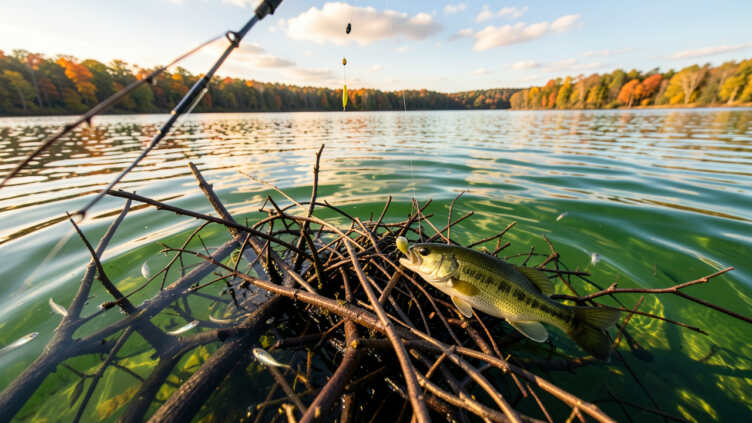
Techniques for Working Brush Piles
Once you’ve found a brush pile and chosen your lure, it’s time to fish it. The approach depends on the lure and the density of the cover. Precision is key for effective Brush Pile Bass: Finding and Working Submerged Cover Right.
First, approach the brush pile quietly. Use your trolling motor on a low speed or drift with the wind. Cast your lure to the edges of the brush pile.
Let it sink and then work it slowly. For jigs and Texas rigs, a slow, methodical retrieve with plenty of pauses is often best.
Second, try pitching or flipping your lure directly into the thickest parts of the brush. This technique requires practice but can be incredibly effective. Let the lure fall naturally, and be ready for a sudden strike.
If you get a bite, set the hook firmly. You’ll likely need to pull hard to get the fish out of the cover.
When you feel a bite or a tick on your line, set the hook immediately—delaying even a second gives the bass time to dive back into the tangled branches.
Next, if you’re using a spinnerbait or chatterbait, try rolling it just above the submerged branches. You want to feel the blade thumping. If you hit a branch, give it a small twitch or a pause.
This can often entice a bass to strike.
Then, pay attention to your line. If it suddenly moves sideways or jumps, that’s a bite! Set the hook quickly.
When fighting a fish from a brush pile, keep your rod tip up and reel steadily. Try to guide the fish away from the thickest parts of the cover. Don’t let it bury itself in the wood.
Finally, don’t be afraid to experiment. If one lure or technique isn’t working, try another. Bass behavior can change.
Sometimes they want a fast-moving bait, other times they want something slow and subtle. Observe your surroundings and adjust your approach.
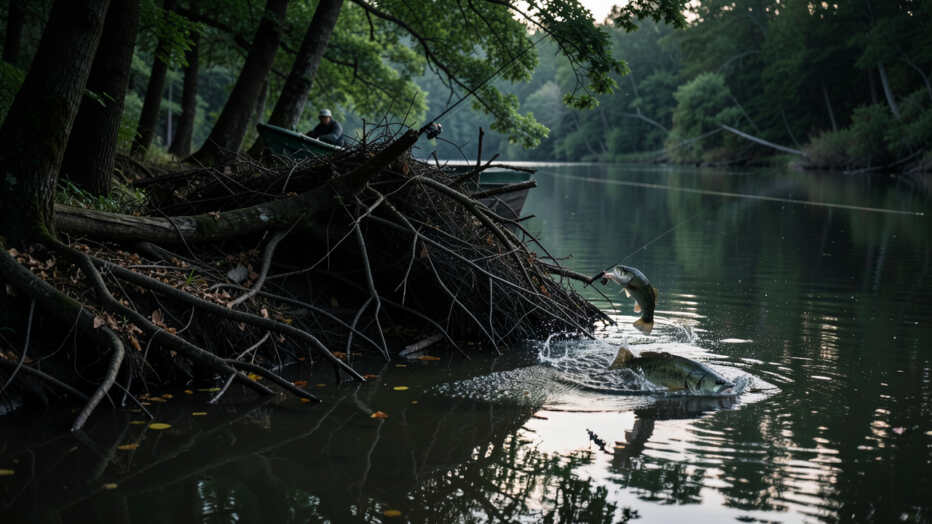
Avoiding Snags and Fighting Fish
Getting snagged is part of fishing brush piles. The trick is to minimize it. Use weedless lures and stout hooks.
When you do get hung up, try to back your boat up and pull the lure free from a different angle. Sometimes, gently wiggling the rod or the line can free it.
When you hook a bass in a brush pile, the fight can be intense. The fish will try to dive back into the cover. You need to be strong and decisive.
Instead of yanking straight up when snagged, back your boat away and pull the lure free from a different angle—this often saves your rig and avoids breaking the line.
Keep pressure on the fish, but don’t horse it too hard. If it heads for a thick branch, try to turn its head away from it. A strong, sharp hookset is essential to penetrate the bass’s jaw, which is often tough from biting down on wood.
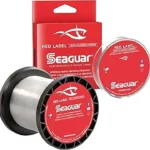
Having the right gear makes a big difference. Use a sturdy rod with plenty of backbone. A baitcasting reel spooled with strong line, like 20-pound test fluorocarbon or monofilament, is ideal.
Fluorocarbon is less visible in the water and sinks, which is good for getting lures down. Monofilament has more stretch, which can help absorb shock when fighting a fish.
Learning the art of Brush Pile Bass: Finding and Working Submerged Cover Right involves mastering these techniques. It’s about patience, precision, and understanding how bass use these underwater structures to your advantage. With practice, you’ll develop an instinct for where the fish are holding and how to get them to bite.
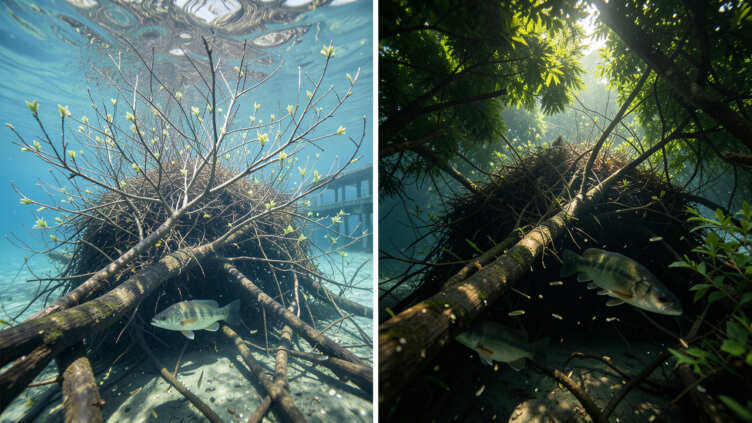
Seasonal Considerations for Brush Piles
The effectiveness of brush piles can change with the seasons. Understanding these shifts helps you adapt your strategy.
Spring: As water temperatures rise, bass move shallower. They often stage in or around brush piles near spawning flats. They are looking for warmer water and areas to prepare for spawning.
Lures that imitate crawfish and smaller baitfish work well.
In summer, deep brush piles still hold bass, but the retrieve must become painfully slow—think a jig or grub crawled over each branch to trigger a strike.
Summer: Bass may move deeper to find cooler water, especially in lakes with clear water. They will still use brush piles, but these might be in deeper creek channels or offshore structure. In stained water, shallower brush piles can still be productive all day long.
Fall: Bass often become more active as water cools. They will feed aggressively, chasing baitfish. Brush piles located near major creek channels or points can be excellent.
Look for areas where baitfish are schooling.
Winter: In colder climates, bass become lethargic. They will seek out the deepest, most stable brush piles they can find. Slow-moving baits like jigs and grub-tailed baits fished very slowly are usually the most effective.
Finding the right brush pile is still key, but the retrieve needs to be much slower.
Frequently Asked Questions
What is the best time of day for Brush Pile Bass?
Bass are often most active around brush piles during low-light periods like early morning and late evening. However, they can be caught throughout the day, especially if the cover is deep enough to offer shade or if the water is stained.
How do I find brush piles if I don’t have a fish finder?
Look for natural signs like fallen trees, overhanging branches that reach the water, or areas where water currents might have collected debris. You can also spot them by observing subtle disturbances on the water’s surface or by seeing the tops of branches in clear water.
What kind of line is best for Brush Pile Bass: Finding and Working Submerged Cover Right?
A strong line like 20-pound test fluorocarbon is highly recommended. It is abrasion-resistant, less visible, and sinks well, helping you get lures down into the cover. Braided line can also be effective for its strength and sensitivity, but it may be more prone to snagging if not managed carefully.
Are there specific types of brush piles that are better than others?
Yes, brush piles with a variety of wood sizes, from small twigs to larger logs, and those that offer both dense areas for hiding and more open pockets for striking are generally more productive. Location, like proximity to drop-offs or channels, also plays a big role.
How do I avoid getting my lure stuck in the brush?
Using weedless lures like Texas-rigged soft plastics and jigs with good skirt flair is essential. Rigging your baits correctly and using stout hooks helps. When fishing, try to keep your lure moving and avoid letting it sit motionless in the thickest parts of the cover for too long.
Gentle tugs or backing up your boat can help free snags.
Final Thoughts
Focusing on Brush Pile Bass: Finding and Working Submerged Cover Right will significantly improve your fishing success. By learning to locate these prime spots and using the right lures and techniques, you can consistently catch more bass. Remember to be patient, adapt to conditions, and enjoy the thrill of fishing these productive underwater structures.