Fishing Lily Pads For Bass: Punching, Frogging, Pitching
Fishing lily pads for bass requires mastering three specific techniques—punching, frogging, and pitching—each suited to different mat densities and bass behavior. Punching uses heavy line and tungsten weights to penetrate thick cover, frogging relies on hollow-body topwater lures to trigger aggressive strikes, and pitching delivers baits precisely into pad edges and pockets. Choosing the right rod, reel, and line for each method, along with adjusting to seasonal water conditions, directly improves catch rates on these productive bass-holding structures.
Bass love to hide in lily pads, and learning how to catch them there can really boost your success. These dense mats offer great shade and cover for hungry bass. Mastering techniques like Fishing Lily Pads for Bass: Punching, Frogging, Pitching means you’ll know exactly what to do when you see those promising green patches.
This knowledge can lead to more bites and bigger fish, making your fishing trips far more rewarding.
Key Takeaways
- Understanding the appeal of lily pads to bass is crucial for effective fishing.
- Punching involves using heavy line and specialized lures to get through dense lily pad cover.
- Frogging uses hollow-body topwater lures to mimic frogs, attracting aggressive strikes from bass.
- Pitching is a precise technique for placing baits accurately into pockets and edges of lily pads.
- Choosing the right gear, like rods, reels, and line, is essential for success when fishing lily pads.
- Seasonal changes and water conditions significantly impact how bass behave around lily pads.
Why Bass Love Lily Pads
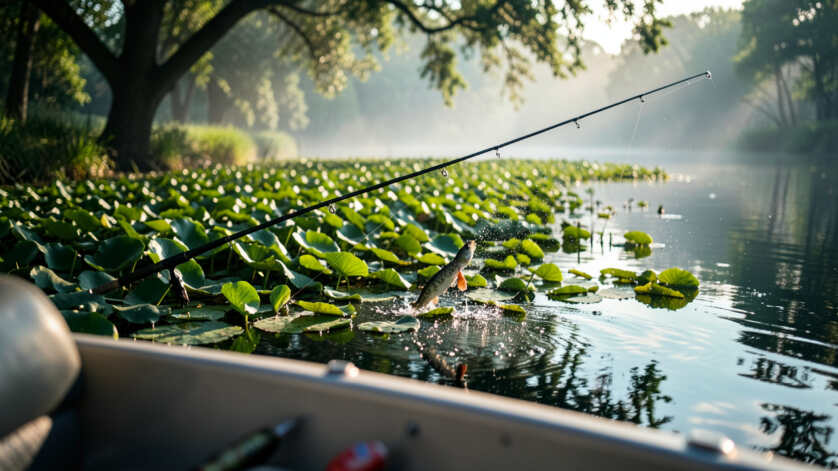
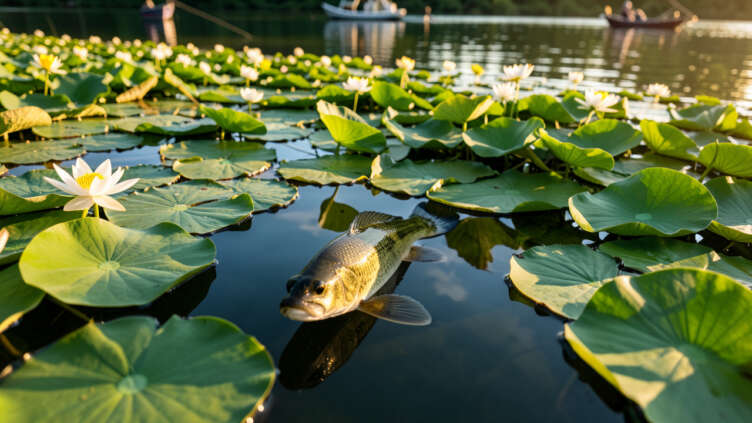
Lily pads are a bass magnet for several good reasons. They create shade, which helps keep the water cooler on hot days. This shade also hides them from their prey.
Plus, the dense foliage provides excellent ambush points. Bass can wait there, unseen, for small fish, frogs, or insects to swim by. It’s a perfect setup for them to find food and stay safe.
For punching through thick lily pads, braided line is essential as it cuts through weeds and provides the strength needed to extract big bass from cover.
Use the shade from lily pads to target bass on hot days, as they seek cooler water and ambush spots.
When you’re Fishing Lily Pads for Bass: Punching, Frogging, Pitching, you’re targeting these prime locations. Understanding why bass are there helps you choose the right bait and approach. It’s not just about casting; it’s about thinking like the fish.
They see lily pads as a buffet and a safe haven. Your job is to get your lure into that haven effectively.
Mastering the Punching Technique
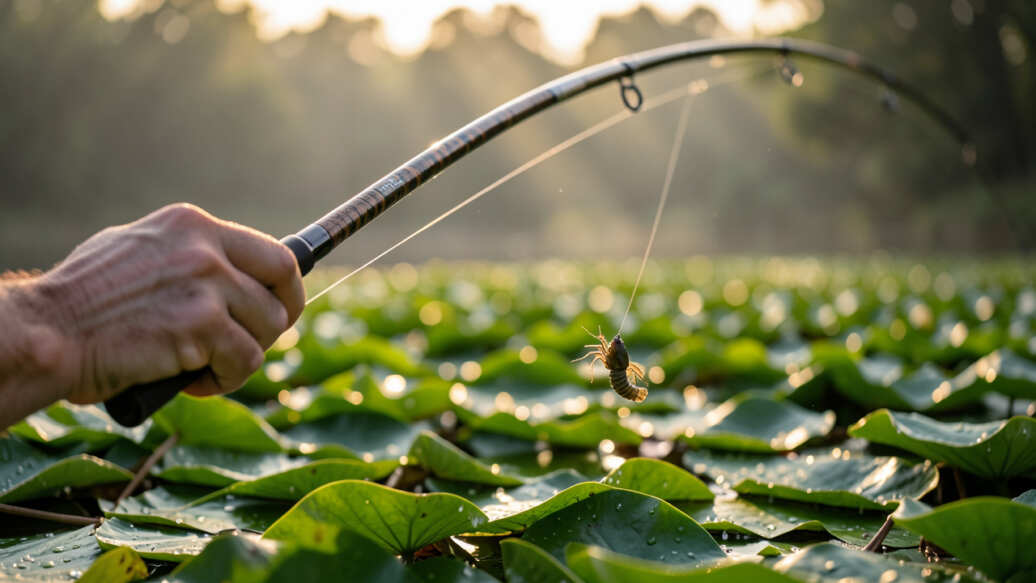
Punching is a powerful way to fish through thick lily pads. You need heavy-duty gear for this. Think a stout rod, a strong reel, and braided line.
Braided line is key because it cuts through weeds and doesn’t stretch. This lets you pull a big bass out of the thickest cover before it can bury itself.
The lures for punching are usually compact and heavy. Texas-rigged creature baits or jigs work well. You want something that will fall straight down through the holes in the pads.
The action is simple: cast your bait to a hole, let it sink, and then work it with light rod twitches. If you get a bite, set the hook hard and start reeling immediately. This is a core skill for Fishing Lily Pads for Bass: Punching, Frogging, Pitching.
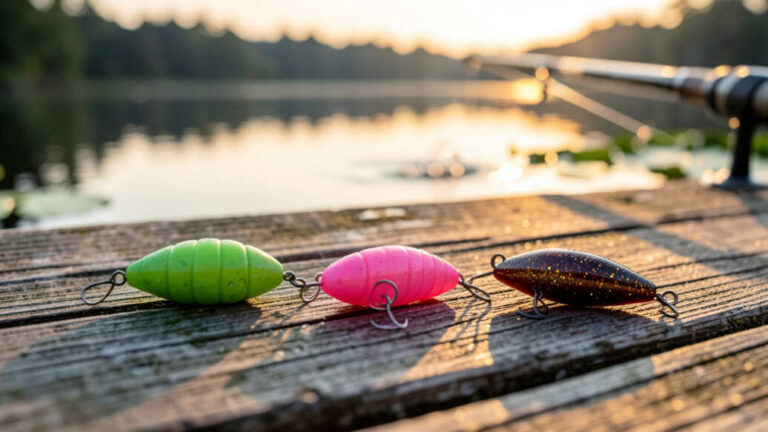
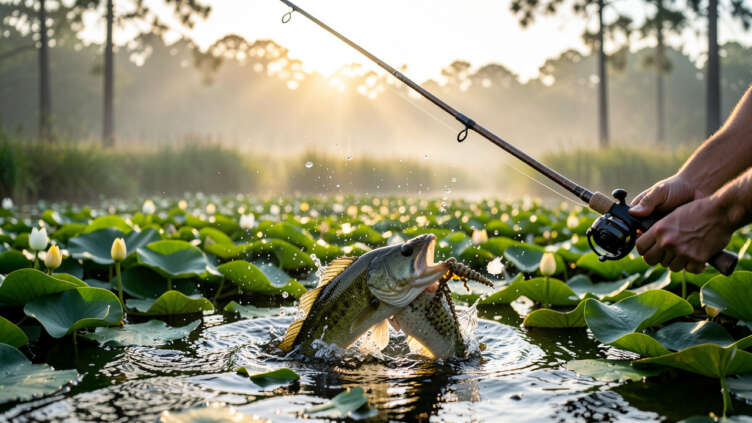
The most effective frog lures create surface commotion that triggers explosive strikes from bass hidden beneath lily pads.
Choosing the Right Punching Setup
For punching, a medium-heavy to heavy power rod is recommended. It should be around 7’4″ to 7’10” long. This length gives you leverage.
Your reel should have a good drag system. A 7.1:1 gear ratio or higher is useful for quickly retrieving line and fish. Use 50-pound to 80-pound test braided line.
This strength is non-negotiable for getting fish out of heavy cover.
When to Punch Lily Pads
Punching is best when lily pads are thick and cover a large area. This is often during the warmer months, from late spring through early fall. Look for areas with less boat traffic.
The quieter the water, the more likely bass are to be holding tight to cover. It’s a technique that rewards patience and persistence.

The Art of Frogging
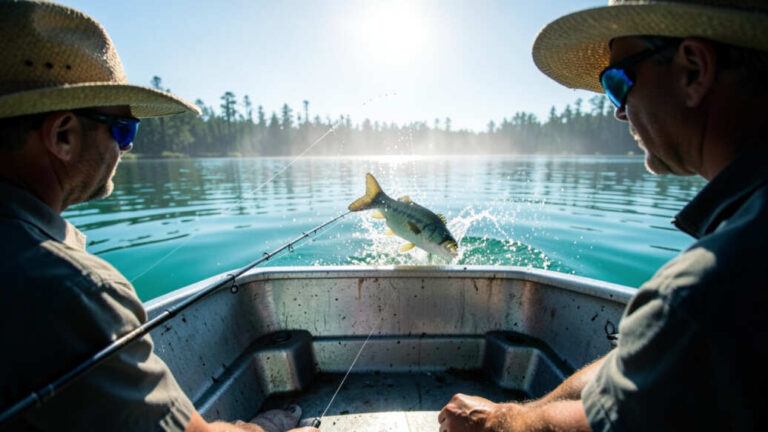
Frogging involves using topwater lures that imitate frogs. This technique is exciting because you often see the strike. Bass will explode on a frog lure dancing on the surface.
It’s an aggressive bite that gets your heart racing. This is another vital part of Fishing Lily Pads for Bass: Punching, Frogging, Pitching.
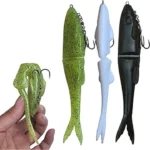
The lures themselves are usually hollow-bodied. This design helps them float and prevents them from snagging too easily. They have hooks that are weedless.
You cast them over the lily pads, letting them hop or walk through the gaps. A common mistake is setting the hook too early. Wait until you feel the weight of the fish before you set the hook firmly.
When bass are finicky or pads are sparse, pitch your bait precisely into small openings and edges for a subtle presentation.
Popular Frog Lures
There are many types of frog lures. Some are designed to kick and walk the dog. Others have legs that trail behind and create a lot of commotion.
There are also hollow-body frogs that make a sputtering sound. Experimenting with different styles can help you find what works best on a particular day. The color can also make a difference, often matching the natural color of frogs in the area.
Best Conditions for Frogging
Frogging is often best in low light conditions. Early mornings, late evenings, and overcast days are prime times. Bass are more active and willing to chase prey on the surface then.
Calm water also makes it easier for the lure to work properly and for you to see strikes. However, even on sunny days, bass will hit frogs if they are hungry and feel threatened.
Effective Pitching to Lily Pads
Pitching is a more subtle approach than punching. It’s about accuracy. You use shorter, controlled casts to place your bait into the small openings and edges of lily pads.
This is great for finicky bass or when the pads aren’t super dense. It’s a precise way of Fishing Lily Pads for Bass: Punching, Frogging, Pitching.
The gear for pitching is similar to punching but can be slightly lighter. You still want a strong rod and reel, but maybe a 7-foot medium-heavy rod. The key is accuracy.
You want to drop your lure right where you think a bass is hiding. This often means targeting the edges of the pad field or individual pads with gaps around them.
Choosing the wrong technique for the cover density can ruin your presentation, so match your approach to the thickness of the lily pads.
Pitching Lure Choices
For pitching, Texas-rigged worms, crawfish, or small creature baits are popular. You can also use small jigs. The goal is to present a natural-looking bait that mimics prey.
Keep your lure presentations subtle. Let the bait sit on the bottom for a few seconds before giving it a slight twitch. This can entice a hesitant bass to bite.
When Pitching Works Best
Pitching is effective throughout the spring, summer, and fall. It’s particularly good when bass are a bit more cautious. If the water is clear and the pads are not too thick, pitching can be superior to punching.
It allows for stealthier presentations. You can also cover more water this way than with a slow, deep-digging punch bait.
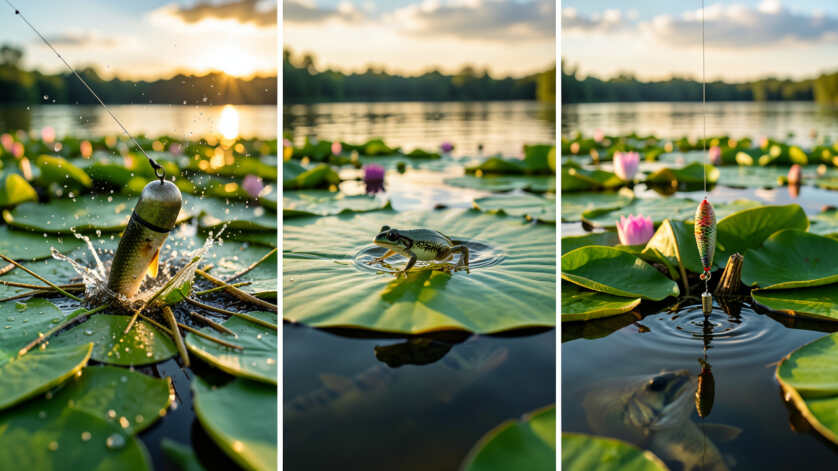
Comparing Techniques: Punching vs. Frogging vs. Pitching
Each of these techniques has its strengths and weaknesses. Choosing the right one depends on the conditions and the bass’s behavior. Understanding the differences helps you adapt your strategy.
This is a key part of successful Fishing Lily Pads for Bass: Punching, Frogging, Pitching.
A 7- to 7.5-foot medium-heavy rod paired with a high-torque reel offers the control needed for accurate pitching to lily pad edges.
As you can see, they all target bass in similar environments but with different methods. Punching is for the densest cover. Frogging is for exciting topwater action.
Pitching is for precise presentations. Mastering all three gives you a complete arsenal for Fishing Lily Pads for Bass: Punching, Frogging, Pitching.
Essential Gear for Lily Pad Bass Fishing
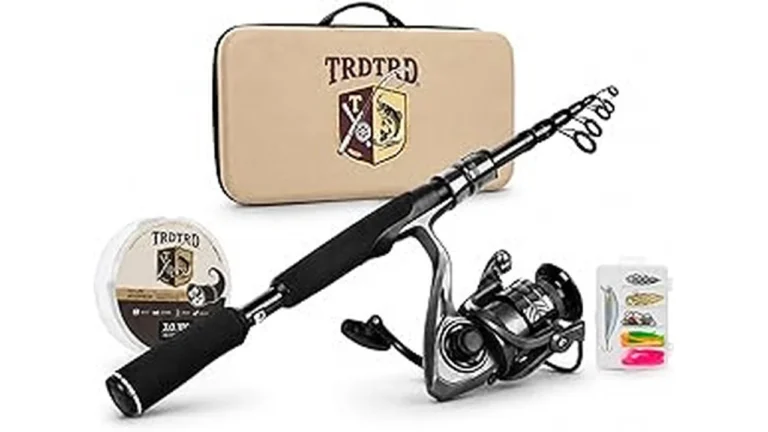
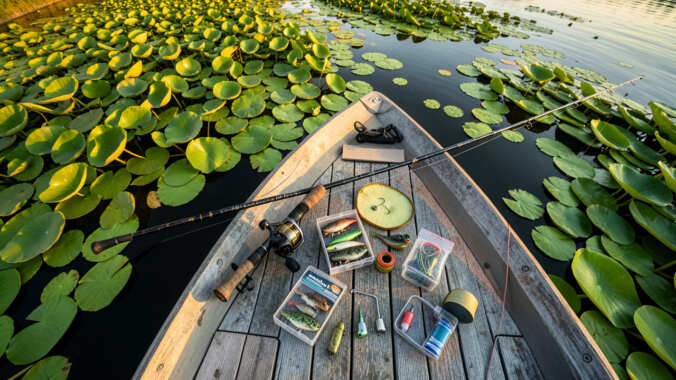
Having the right equipment makes a huge difference. It’s not just about the lures. Your rod, reel, and line must be up to the task.
This is especially true when you’re fighting a big bass in thick cover. Good gear helps you land the fish of a lifetime.
Rods and Reels
For punching and frogging, you’ll want a powerful rod. A 7’4″ to 8′ heavy action rod is ideal. For pitching, a 7′ to 7’6″ medium-heavy action rod is often sufficient.
Reels with good torque and a strong drag system are important. Look for gear that can handle the stress of pulling fish out of dense vegetation.
Even in summer, bass rely on lily pads for ambush, and pitching smaller baits to the edges during warm afternoons can yield consistent action.
Line Selection
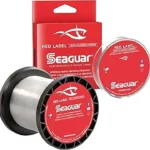
Braided line is almost essential for punching and frogging. Its strength and lack of stretch allow you to rip fish free from weeds. Use 50-pound to 80-pound test braid.
For pitching, fluorocarbon line is a good choice. It sinks, offers good sensitivity, and has less stretch than monofilament. 15-pound to 25-pound test fluorocarbon is common.
Terminal Tackle and Accessories
Don’t forget the small things. You’ll need stout hooks for Texas rigging. Bullet weights are common for punching.
Swivels can be useful for some lures. A good pair of pliers for hook removal is a must. Also, consider a fishing vest or bag to keep your lures and tools organized.
Seasonal Strategies for Lily Pad Fishing
Bass behavior changes throughout the year. This affects how they use lily pads and how you should fish them. Adapting your strategy based on the season is key to consistent success.
Spring
In spring, as the water warms, bass move shallower. Lily pads start to form, and bass will use them for spawning beds and cover. Punching and pitching can be very effective.
Look for pads in protected coves and shallow bays. The bass are aggressive as they prepare to spawn.
Summer
Summer is prime time for Fishing Lily Pads for Bass: Punching, Frogging, Pitching. The pads are thick, offering maximum shade and cover. Frogging is often excellent during the hot summer months, especially in the early morning and late evening.
Punching is also highly effective for working through the dense mats. Bass are actively feeding and looking for ambush points.
Fall
As the water cools in the fall, bass become more active feeders. They move out of the thickest cover to chase baitfish. However, they will still use lily pads for ambush points, especially in warmer, sunny afternoons.
Pitching smaller baits into the edges of the pad fields can be very productive. They are fattening up for winter.
Frequently Asked Questions
What is the best time of day for fishing lily pads?
Early morning and late evening are often best, especially for topwater lures like frogs. However, bass will bite lily pad lures throughout the day, particularly when they are seeking shade or cover.
Do I need special lures for fishing lily pads?
Yes, you need weedless lures. For Fishing Lily Pads for Bass: Punching, Frogging, Pitching, lures designed to resist snagging are essential. This includes hollow-body frogs, Texas-rigged baits with covered hooks, and compact jigs.
What is the difference between punching and frogging?
Punching involves getting heavy lures through dense lily pad cover to the fish below. Frogging uses topwater lures that mimic frogs to entice aggressive strikes on the surface. Both are effective but use different lure types and techniques.
Can I use a spinning reel for fishing lily pads?
While a casting reel is generally preferred for its power and control, a strong spinning reel can be used for pitching and lighter frogging applications, especially with braided line.
How do I avoid getting my lure stuck in the lily pads?
Using weedless lures is the first step. For punching and frogging, the gear is strong enough to rip through some weeds. For pitching, precise casting into open pockets is key.
Always check your lure for snags after each cast.
When should I use fluorocarbon line versus braided line for fishing lily pads?
Braided line is best for punching and frogging due to its strength and lack of stretch, allowing you to pull fish from heavy cover. Fluorocarbon is excellent for pitching because it sinks and is less visible in clearer water.
Final Thoughts
Learning to target bass in lily pads using punching, frogging, and pitching opens up a whole new world of fishing. With the right gear and techniques, you can consistently catch more and bigger bass. Keep practicing these methods, and you’ll soon be a lily pad expert.