
Reel Gear Ratio Explained: When Fast Vs Slow Wins Big Today
Reel gear ratio defines the mechanical advantage between handle rotation and spool speed, directly affecting retrieval rate and power. High ratios (7:1 or more) deliver fast line retrieval essential for reaction baits like spinnerbaits and walking topwaters. Low ratios (5:1 or less) provide high torque for deep-diving crankbaits and fighting heavy fish. Selecting the correct ratio for your target species and lure type increases catch rates and reduces angler fatigue, making this a critical decision for any angler.
Choosing the right fishing reel can make a big difference in how much fun you have and how successful you are. It’s not just about looks; the internal workings matter a lot. Understanding the Reel Gear Ratio Explained: When Fast vs Slow Wins Big Today helps you pick a reel that matches your fishing style.
This knowledge means you can cast further, retrieve faster when needed, and fight fish more effectively, making every fishing trip more rewarding.
Key Takeaways
- A higher gear ratio means the reel’s spool turns more times with each crank of the handle, leading to faster line retrieval.
- A lower gear ratio means the spool turns fewer times, offering more torque and control, which is better for pulling heavy lures or fighting strong fish.
- The “best” gear ratio depends on the type of fishing you do, the lures you use, and the species you’re targeting.
- Matching your reel’s gear ratio to your fishing technique ensures better performance and less fatigue.
- Understanding the trade-offs between speed and power helps anglers make informed decisions for improved fishing success.
Why Your Reel’s Gear Ratio Matters So Much
When you’re out on the water, every piece of equipment plays a role. Your fishing reel is one of the most important. It helps you cast your line out, bring in your catch, and manage the line during a fight.
The gear ratio is like the transmission in a car. It tells you how many times the spool spins for every single turn of your reel’s handle. This ratio directly impacts how fast you can reel in line and how much power you have to pull in a fish.
For most freshwater fishing, a mid-range gear ratio around 6.0:1 offers a balanced blend of speed and power, making it a versatile starting point.
Getting the Reel Gear Ratio Explained: When Fast vs Slow Wins Big Today is key to enjoying your time fishing. If your reel is too slow for the way you fish, you might get tired quickly. If it’s too fast, you might not have enough power to control a big fish.
Knowing this simple number helps you make better choices. It can mean the difference between landing a trophy fish and losing it. This guide will break down what those numbers mean and how they help you win big today.
Understanding What Gear Ratio Numbers Mean
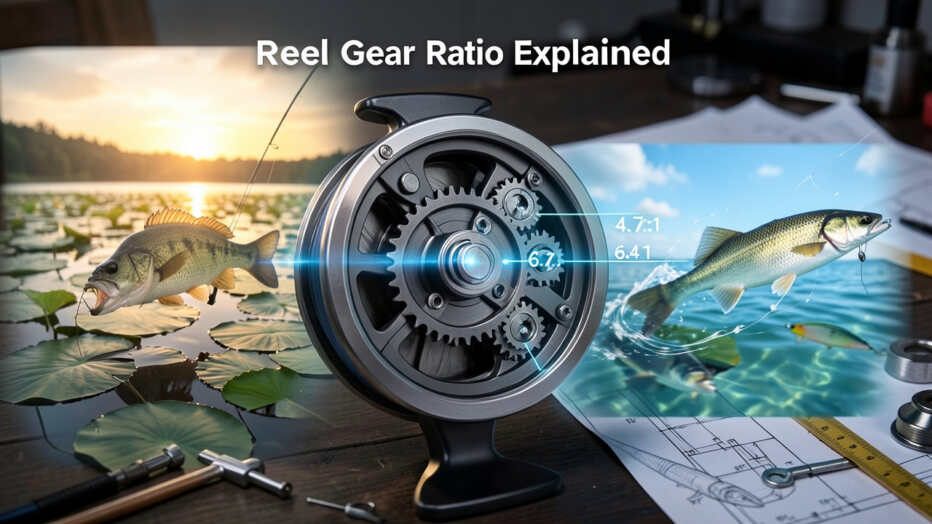
You’ll see numbers like 5.3:1, 6.4:1, or even 7.1:1 printed on your fishing reel. These numbers tell you the gear ratio. The first number, like 5.3, is how many times the spool rotates.
The second number, 1, represents one full turn of the reel handle. So, a 5.3:1 reel means the spool spins 5.3 times for every one turn of the handle.
The first number in the ratio, such as 5.3, directly indicates how many times the spool rotates per handle turn; a higher number means faster line retrieval.
A higher number means a faster reel. A lower number means a slower, more powerful reel. It’s a simple concept, but its impact on your fishing is huge.
Let’s look at how these numbers translate into real-world fishing benefits.
High Gear Ratio Reels: The Speed Demons
Reels with higher gear ratios, typically anything above 6.0:1, are built for speed. Think of them as sports cars of the fishing world. They are designed to pick up line very quickly.
This is incredibly useful in many fishing situations.
Covering water quickly with a high gear ratio reel is essential for locating active fish when fishing fast-moving lures.
For example, if you’re fishing with lures that need a fast retrieve, like topwater plugs or some crankbaits, a high gear ratio reel helps you maintain that speed. It allows you to cover more water quickly, which can be essential when you’re trying to find active fish. If a fish strikes and you need to quickly take up slack or speed up your lure to trigger a strike, a fast reel is your best friend.
Another big advantage of high gear ratio reels is for “power fishing” techniques. When you catch a fish and need to reel it in quickly before it gets into structure like weeds or rocks, a fast reel helps you do that. It can also be beneficial when you’re fishing in crowded areas and want to get your lure back to the boat or shore fast after a cast.
The ability to retrieve line rapidly is a major benefit in many angling scenarios, making the Reel Gear Ratio Explained: When Fast vs Slow Wins Big Today a critical piece of knowledge.
When to Choose a High Gear Ratio Reel
- Fishing for active, fast-moving fish: Species like bass or trout that chase lures benefit from quick retrieves.
- Using lures that require speed: Topwater baits, jerkbaits, and some crankbaits work best with fast line pickup.
- Covering a lot of water: Covering more water quickly increases your chances of finding fish.
- Quickly retrieving lures: When you need to get your lure back to the boat or shore fast.
- Fighting fish away from cover: Quickly reeling in can prevent fish from reaching snags.

Low Gear Ratio Reels: The Powerhouses
On the other end of the spectrum are reels with low gear ratios, usually below 5.5:1. These reels are the workhorses, built for power and control. They might not retrieve line as quickly, but they offer significantly more torque.
Imagine you’re fishing for powerful fish like catfish, carp, or large saltwater species. These fish can make long runs and have incredible strength. A low gear ratio reel gives you the leverage needed to fight these fish effectively.
When wrestling a large fish from heavy cover, a low gear ratio around 5.0:1 provides the torque needed to control the fight without tiring your arms.
With each turn of the handle, you get more pulling power. This means you can put more pressure on the fish without straining your arms or the reel itself.
Low gear ratio reels are also excellent for certain types of lures. Heavy jigs, large swimbaits, or lures that create a lot of drag benefit from the extra power. When you’re dragging a football jig along the bottom or pulling a big swimbait, the resistance can be substantial.
A low gear ratio reel makes this much easier and less tiring. It allows you to maintain a steady retrieve even with heavy resistance. Understanding the Reel Gear Ratio Explained: When Fast vs Slow Wins Big Today means knowing when this brute force is your best option.
When to Choose a Low Gear Ratio Reel
- Targeting strong, heavy-fighting fish: Catfish, carp, and large saltwater species require more pulling power.
- Using lures that create drag: Heavy jigs, large swimbaits, and deep-diving crankbaits demand more torque.
- Fishing in heavy cover: When you need to pull fish out of thick weeds, logs, or rocks.
- Precise lure control: Maintaining a slow, steady retrieve is crucial for some presentations.
- Reducing angler fatigue: Less effort is needed to crank in lures with significant resistance.
Mid-Range Gear Ratios: The All-Rounders
Not every fishing situation calls for an extreme. Many anglers find that reels with mid-range gear ratios, typically between 5.5:1 and 6.4:1, offer a good balance. These reels provide a decent speed for covering water but still have enough torque to handle a variety of fish and lures.
A mid-range gear ratio reel is often considered a versatile choice. It’s a great option for beginners who are still learning what works best for them. It can handle many common fishing techniques without being overly specialized.
Avoid the temptation to specialize too early; a mid-range reel (5.5:1 to 6.4:1) handles most techniques well and is a safe choice for building your fishing skills.
For example, you can often use a 6.0:1 reel for casting and retrieving many types of lures, from small crankbaits to medium-sized jigs.
If you’re an angler who fishes for a variety of species or uses a mix of techniques, a mid-range reel can be an excellent primary reel. It allows you to experiment and find what works without needing to own a specialized reel for every single scenario. This versatility makes the discussion around Reel Gear Ratio Explained: When Fast vs Slow Wins Big Today so important for all anglers.
Benefits of Mid-Range Gear Ratio Reels
- Versatility: Suitable for a wide range of fishing techniques and species.
- Good balance: Offers both reasonable speed and adequate power.
- Beginner-friendly: Easier to manage for those new to different reel types.
- Adaptable: Can handle various lure weights and retrieve speeds.
Comparing Gear Ratios: A Quick Look
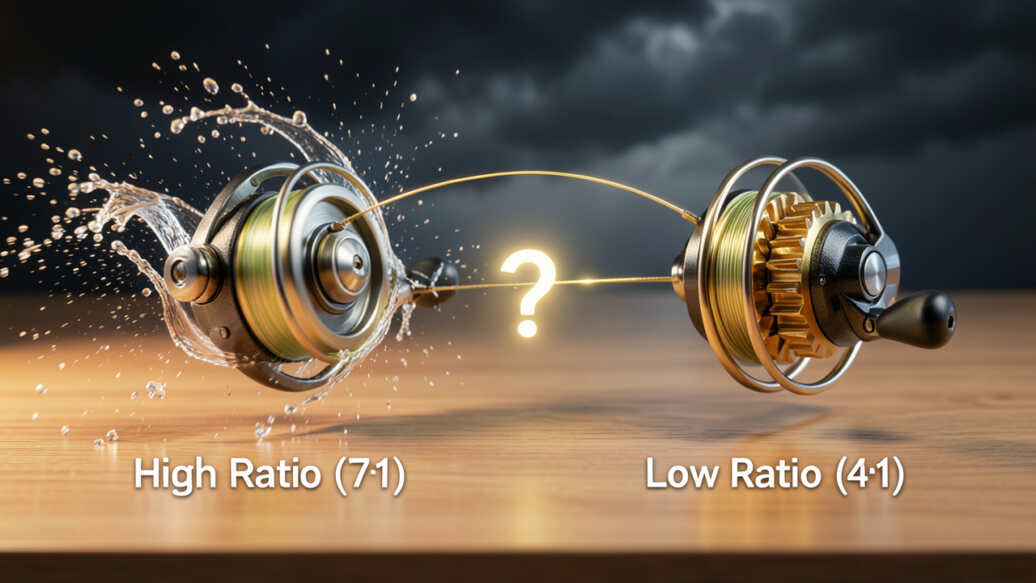
To really see the difference, let’s compare what happens with different gear ratios. Imagine you’re reeling in a lure from 100 feet away. We’ll assume a spool circumference of about 2 inches (this can vary greatly by reel size and spool depth).
The difference in line retrieval per handle turn between a 4.6:1 and an 8.1:1 reel is nearly double, significantly affecting how much line you pick up with each crank.
As you can see, with 10 turns of the handle, a low gear ratio reel retrieves about 7.67 feet of line, while a high gear ratio reel retrieves about 13.5 feet. That’s a significant difference in speed. This comparison highlights why understanding the Reel Gear Ratio Explained: When Fast vs Slow Wins Big Today is so vital for choosing the right tool for the job.
How Gear Ratio Affects Your Fishing Technique
Your choice of gear ratio directly influences how you fish. It’s not just about the reel; it’s about how the reel interacts with your technique and the environment.
Casting and Retrieving: High gear ratios let you cast and immediately start a fast retrieve to find active fish. Low gear ratios might require a slightly different casting approach if you’re using a very slow retrieve, ensuring you don’t reel too slowly to keep lures working properly.
Lure Presentation: Some lures need a consistent, slow retrieve to be effective. Think about a finesse worm or a slow-moving swimbait. A low gear ratio reel allows you to maintain that slow speed without your hand getting tired.
Your gear ratio determines not just speed but also the finesse of your lure presentation; a slow retrieve may fail to trigger strikes from fish expecting a faster-moving bait.
Other lures, like lipless crankbaits or spinnerbaits, often work best with a faster cadence. A high gear ratio reel makes it easy to impart that speed.
Fighting Fish: This is where the power versus speed trade-off is most apparent. When a fish takes off on a run, a low gear ratio reel gives you the leverage to turn its head and control its direction. A high gear ratio reel can help you quickly gain line back on a fish that’s swimming towards you, but it might offer less pulling power if the fish is making a strong run away from you.
The interplay between technique and gear ratio is a core part of effective fishing. Mastering the Reel Gear Ratio Explained: When Fast vs Slow Wins Big Today means aligning your reel’s capabilities with your fishing strategy.
Matching Reel Gear Ratio to Specific Fishing Scenarios
Let’s get specific. Different types of fishing benefit greatly from particular gear ratios.
Baitcasting Reels and Gear Ratios
Baitcasting reels are known for their power and precision. They often come with a wide range of gear ratios. For heavy cover fishing, like flipping jigs into thick brush, a lower gear ratio (around 5.0:1 to 6.0:1) is preferred for its pulling power.
When throwing reaction baits like crankbaits or spinnerbaits, a faster ratio (6.4:1 to 7.1:1) is common to keep the lure moving at the right speed.
For flipping jigs into thick brush, a baitcasting reel with a 5.0:1 gear ratio gives you the pulling power to haul fish out of cover.
For anglers who like to “power fish” and cover a lot of water with moving baits, a ratio of 7.0:1 or higher is becoming increasingly popular. This allows for rapid line pickup, which is great for setting the hook quickly and keeping up with fast-moving fish. This is a prime example of how the Reel Gear Ratio Explained: When Fast vs Slow Wins Big Today directly impacts baitcasting efficiency.
Spinning Reels and Gear Ratios
Spinning reels are generally more versatile and often have slightly higher gear ratios than comparable baitcasters. Many spinning reels fall into the 5.0:1 to 6.2:1 range. A reel around 5.0:1 is excellent for finesse techniques, where a slow, natural presentation is key.
It provides the control needed for delicate baits and light lines.
As you move up to 5.5:1 or 6.0:1, you get a good all-around reel that can handle a variety of lures and techniques. For anglers who want to cast and retrieve faster, especially for lures like small crankbaits or jigs, a spinning reel in the 6.0:1 to 6.4:1 range is a solid choice. The Reel Gear Ratio Explained: When Fast vs Slow Wins Big Today is just as relevant for spinning gear.
Reel Size and Gear Ratio: An Important Pairing
It’s not just the gear ratio itself, but also the size of the reel. A small reel with a high gear ratio might still retrieve less line per turn than a larger reel with a slightly lower gear ratio. Reel manufacturers often pair specific gear ratios with reel sizes that make sense for their intended use.
For example, a large saltwater reel might have a lower gear ratio (like 4.0:1 or 5.0:1) to provide the immense torque needed to battle big ocean fish. Conversely, a small, lightweight reel designed for finesse fishing might have a higher gear ratio (like 7.0:1) to help with quick line pickup on smaller lures, even though the absolute amount of line retrieved per turn is less than a larger reel.
Always consider the reel’s overall size and intended purpose when looking at the gear ratio. This pairing is a crucial part of understanding the Reel Gear Ratio Explained: When Fast vs Slow Wins Big Today.
Choosing Your Next Reel: What to Consider
When you’re in the market for a new reel, think about these points:
- What kind of fishing do you do most? Are you targeting small panfish with light lures, or battling large bass in heavy cover?
- What lures will you use? Some lures require specific retrieve speeds to be effective.
- What species are you targeting? Powerful fish need reels with more torque.
- What is your budget? Reels vary widely in price, and gear ratio is one factor in cost.
- Do you prefer speed or power? Be honest about what you value more in your fishing experience.
By considering these questions, you can better apply the knowledge from this Reel Gear Ratio Explained: When Fast vs Slow Wins Big Today guide. It’s about finding the reel that best suits your needs and preferences.
Frequently Asked Questions
What is the most common gear ratio for bass fishing?
For bass fishing, a common gear ratio is around 6.4:1 to 7.1:1. This range offers a good balance of speed for moving baits and power for pulling fish out of cover.
Is a higher gear ratio always better?
No, a higher gear ratio is not always better. It depends on the fishing technique. High ratios are for speed, while low ratios are for power.
The best choice depends on what you are fishing for and how you are fishing.
Does reel size affect the gear ratio’s performance?
Yes, reel size matters. A larger reel with a given gear ratio will retrieve more line per turn than a smaller reel with the same ratio due to its larger spool diameter. This is part of understanding the Reel Gear Ratio Explained: When Fast vs Slow Wins Big Today.
Can I use a fast reel for slow fishing techniques?
You can, but it’s harder. Using a high gear ratio reel for a slow retrieve can be tiring and may make it difficult to keep your lure at the correct depth and speed. A low gear ratio reel is generally better for slow presentations.
What gear ratio should I choose for saltwater fishing?
For saltwater fishing, it often depends on the species. Lighter saltwater species might use ratios around 6.0:1 to 7.0:1. However, for larger, powerful saltwater fish, lower ratios (4.0:1 to 5.0:1) are preferred for their superior torque and control.
How does gear ratio affect fighting a fish?
A lower gear ratio provides more torque, which helps you control and turn a strong fish. A higher gear ratio allows you to pick up line quickly, useful for reeling in a fish that is swimming towards you, but offers less leverage.
Final Thoughts
Choosing the right reel gear ratio is essential for successful and enjoyable fishing. Whether you need the speed of a high ratio for covering water or the power of a low ratio for strong fighters, understanding these numbers makes a big difference. Match your reel to your technique to win big today.

4 Comments