


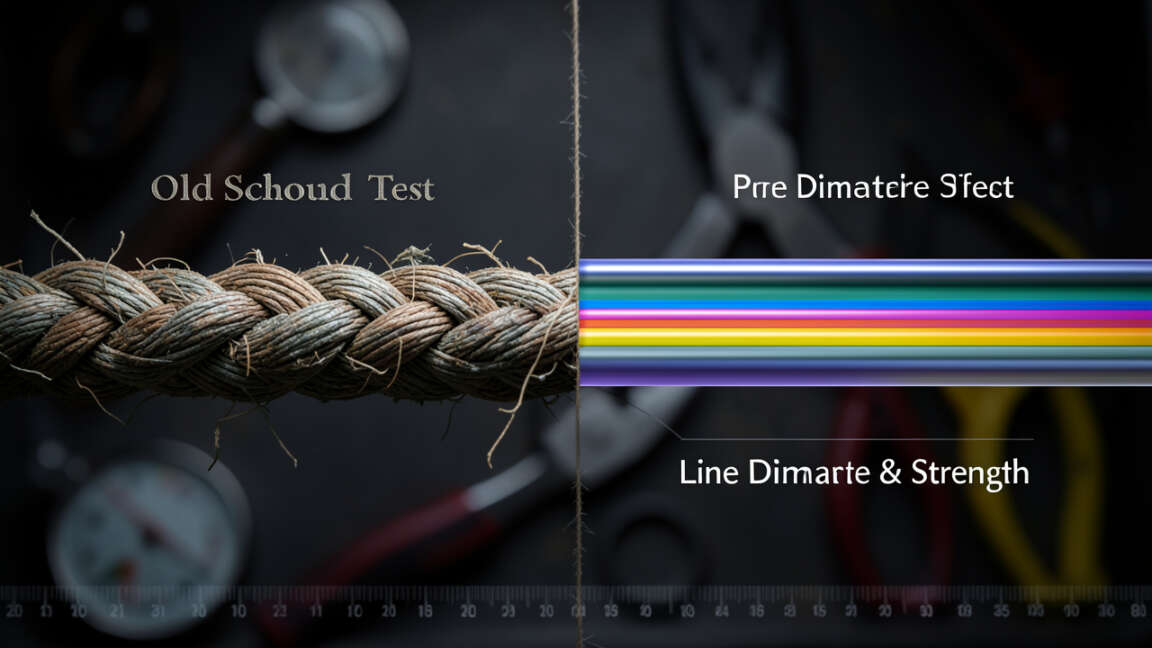
Line Diameter And Strength: Why Pound Test Alone Misleads Now
Fishing line pound test alone misleads because line diameter varies significantly between monofilament, fluorocarbon, and braided lines of the same stated strength, impacting reel capacity, casting distance, and sink rate. For example, a 20-pound braided line can have a much thinner diameter than a 20-pound monofilament, allowing greater line capacity and longer casts. Understanding both the actual diameter and material properties is essential to choosing the right line for specific fishing conditions and avoiding break-offs.
Picking the right fishing line can feel tricky. You see pound test numbers everywhere, and they seem like the most important thing. But there’s more to it than just how much weight the line can hold.
Understanding Line Diameter and Strength: Why Pound Test Alone Misleads Now helps you make smarter choices. Knowing this means you’ll get better performance from your gear and catch more fish. We’ll show you why the size of the line matters just as much as its strength rating and what that means for your fishing.
Key Takeaways
- Fishing line pound test is only one part of the story; diameter plays a huge role.
- Thicker lines can be weaker than thinner lines of the same pound test rating due to material properties.
- Line diameter affects how much line fits on your reel and how your lure casts and sinks.
- Different fishing conditions and techniques require different line diameter and strength balances.
- Understanding the relationship between line diameter and strength helps prevent break-offs and improves casting.
- Choosing the right line involves considering both pound test and diameter for optimal fishing success.
Why Pound Test Isn’t the Whole Story
Fishing lines are often sold with a pound test rating. This number tells you how much weight the line can hold before breaking under ideal conditions. It’s a helpful starting point, but it doesn’t tell you everything.
Two lines with the same pound test can be very different. This is where the concept of Line Diameter and Strength: Why Pound Test Alone Misleads Now becomes important for anglers.
When choosing fishing line, consider both pound test and diameter because two lines with the same pound test can differ greatly in strength and performance.
The material the line is made from greatly affects its strength and diameter. For example, braided lines are often much thinner than monofilament or fluorocarbon lines for the same pound test. This difference in diameter has real-world impacts on your fishing.
Ignoring it can lead to frustration and lost fish.
The Impact of Line Diameter
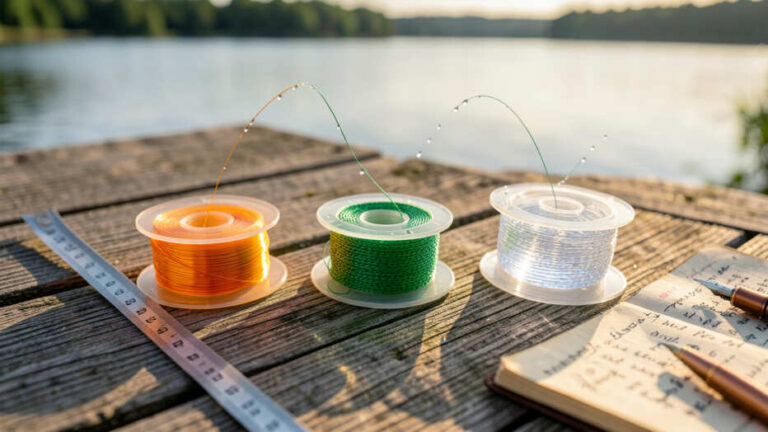
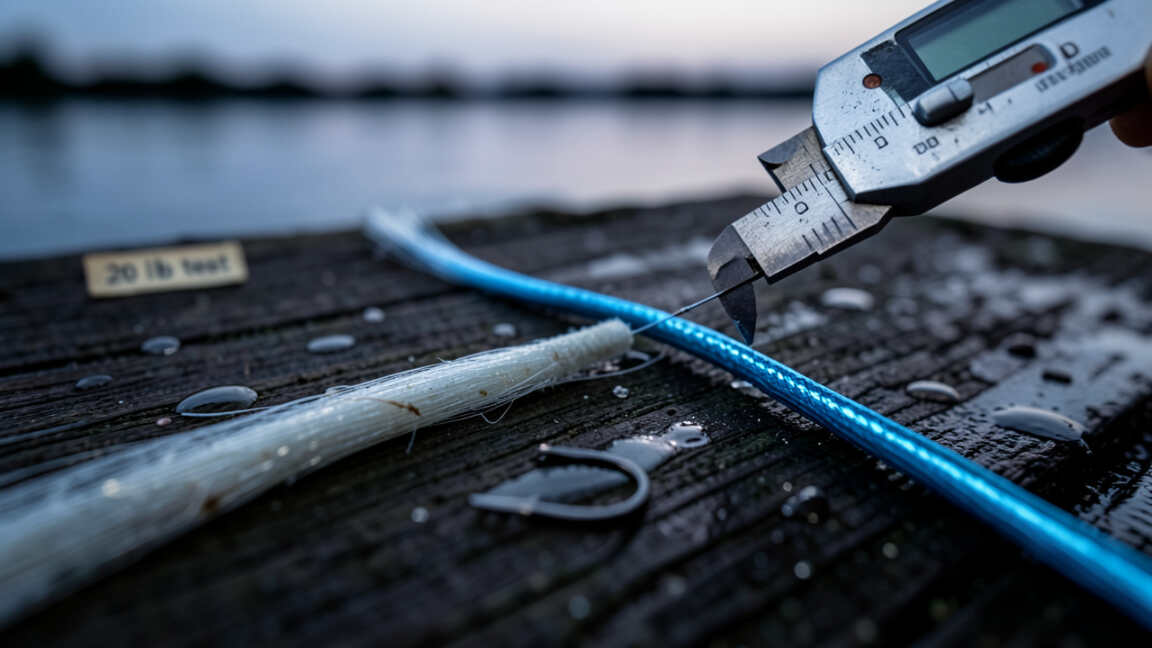
Line diameter refers to how thick the fishing line is. It’s usually measured in millimeters or thousandths of an inch. This might seem like a small detail, but it has a big effect on how your line performs.
First, a thicker line takes up more space on your reel. If you’re using a thick line, you might not be able to fit as much line onto your reel. This can be a problem if you’re targeting fish that make long runs.
You might run out of line sooner than you expect.
Thinner lines create less air resistance, allowing longer casts and better presentations when targeting distant fish.
Second, line diameter affects casting. Thinner lines generally cast farther than thicker lines. This is because thinner lines create less drag through the air.
When you’re trying to reach distant fish or make delicate presentations, a thinner line can give you an advantage.
Third, diameter influences how your lure behaves in the water. Thicker lines have more drag in the water. This can make your lure sink slower or suspend higher in the water column.
For certain fishing techniques, like drop-shotting or finesse fishing, this can be a significant disadvantage.
Understanding Material Differences
Different types of fishing lines have different properties. This is a key reason why Line Diameter and Strength: Why Pound Test Alone Misleads Now. Let’s look at the common types:
Monofilament Line
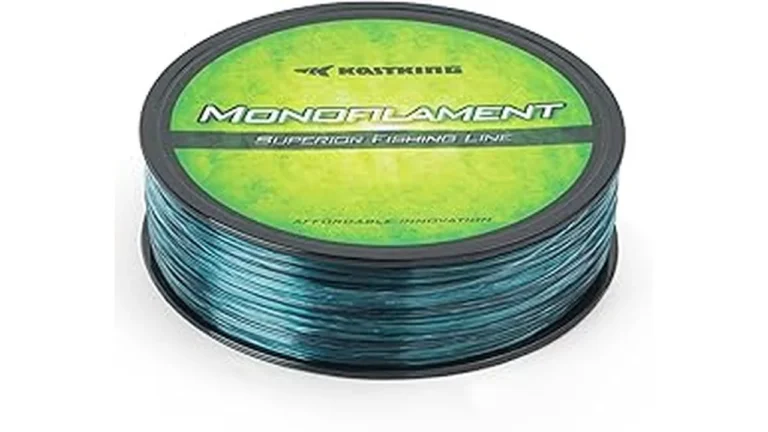
Monofilament is a common and affordable fishing line. It’s made from a single strand of nylon. It has some stretch, which can be forgiving when fighting fish.
However, it also has a relatively large diameter for its pound test rating.
For instance, 10-pound test monofilament might have a diameter of around 0.30mm. This makes it bulkier than other lines with the same strength.
Monofilament may be affordable, but its larger diameter for the same pound test can limit reel capacity and casting distance compared to braid.
Fluorocarbon Line
Fluorocarbon lines are denser and have very little stretch. They are also less visible in the water than monofilament. A major characteristic of fluorocarbon is that its diameter is often similar to, or slightly thicker than, monofilament for the same pound test.
A 10-pound test fluorocarbon line might have a diameter around 0.30mm to 0.33mm. This means you won’t gain much line capacity on your reel compared to mono, but you get better sensitivity and less stretch.
Braided Line
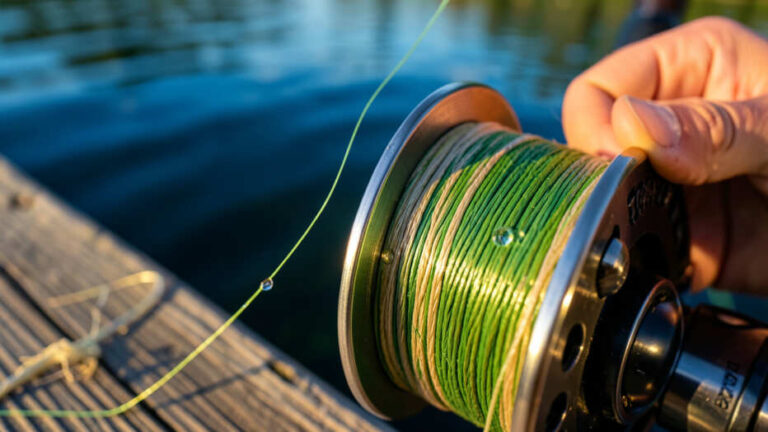
Braided lines are made from multiple strands woven together. They are known for their incredible strength and very thin diameter. Braided lines have virtually no stretch, making them very sensitive and powerful.
A 10-pound test braided line can have a diameter as small as 0.10mm to 0.15mm. This is significantly thinner than monofilament or fluorocarbon. This thinness allows you to put much more braided line on your reel.
Comparing Line Types by Diameter and Strength
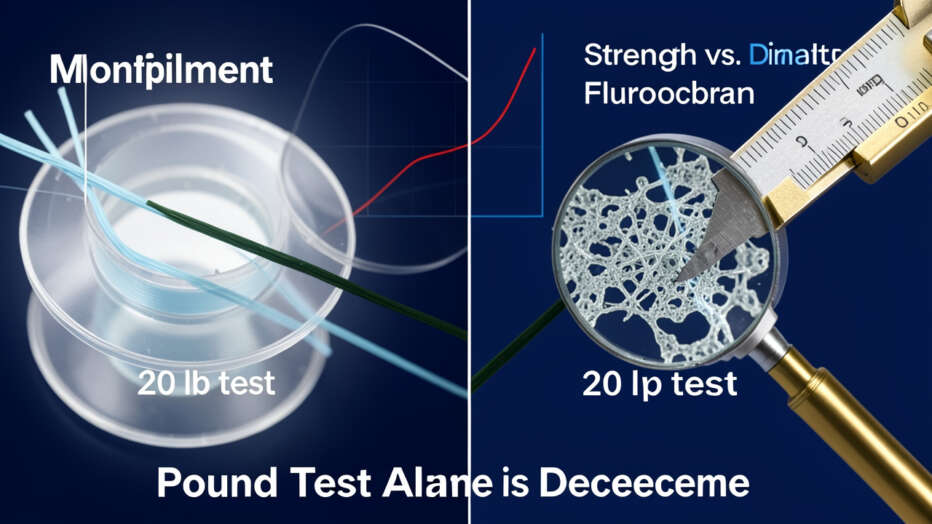
The differences in diameter and strength become clear when you compare them side-by-side. This is where the concept of Line Diameter and Strength: Why Pound Test Alone Misleads Now really hits home.
Using a braided line allows you to spool a much higher pound test on a reel designed for lighter lines, maximizing strength without sacrificing line capacity.
As you can see, for the same 10-pound test rating, braided line is dramatically thinner. This means you can spool up with a much higher pound test on a reel designed for lighter lines if you choose braid.
How Diameter Affects Reel Capacity
Reel capacity is how much line your reel can hold. This is directly related to line diameter. If you’re fishing in deep water or for powerful fish that run far, having plenty of line is crucial.
Relying solely on pound test without considering line diameter can lead to insufficient line capacity, especially when fishing for powerful, long-running fish.
First, consider a reel that typically holds 150 yards of 10-pound monofilament. If you switch to 10-pound braided line, which is much thinner, you could potentially fit 300 yards or even more onto the same reel. This extra line can save you when a big fish makes a long, powerful run.
Second, if you use a thick line, you might have to compromise on pound test. You might end up using 8-pound test monofilament just to get enough line on your reel. However, if you switched to braided, you could use 15-pound or even 20-pound test and still have ample line capacity.
Casting Performance and Line Diameter
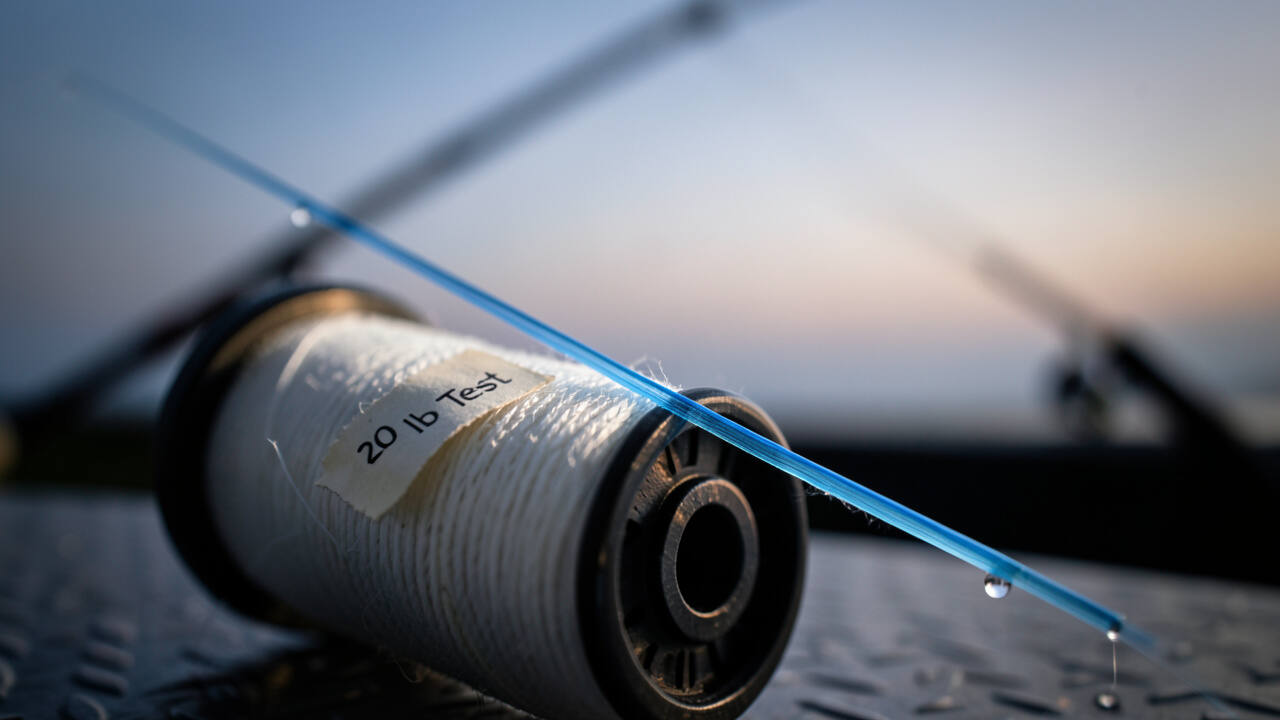
Casting is a fundamental skill in fishing. Line diameter plays a significant role in how far and accurately you can cast.
First, thinner lines experience less air resistance. This means they fly through the air more easily, allowing for longer casts. If you’re trying to reach fish that are far from the boat or shore, a thinner line is a definite advantage.
Thinner lines reduce air resistance and friction through rod guides, resulting in longer, more accurate casts, but avoid overfilling the spool to prevent backlashes.
Second, thicker lines create more friction when passing through the rod guides. This can slow down your lure and reduce casting distance. It can also make a “thunk” sound as the thicker line goes through the guides.
Third, the spooling of the line on the reel also matters. If you overfill your spool with a thick line, it can cause “line memory” and even lead to backlashes or tangles, further reducing casting performance.
Diameter’s Role in Lure Presentation
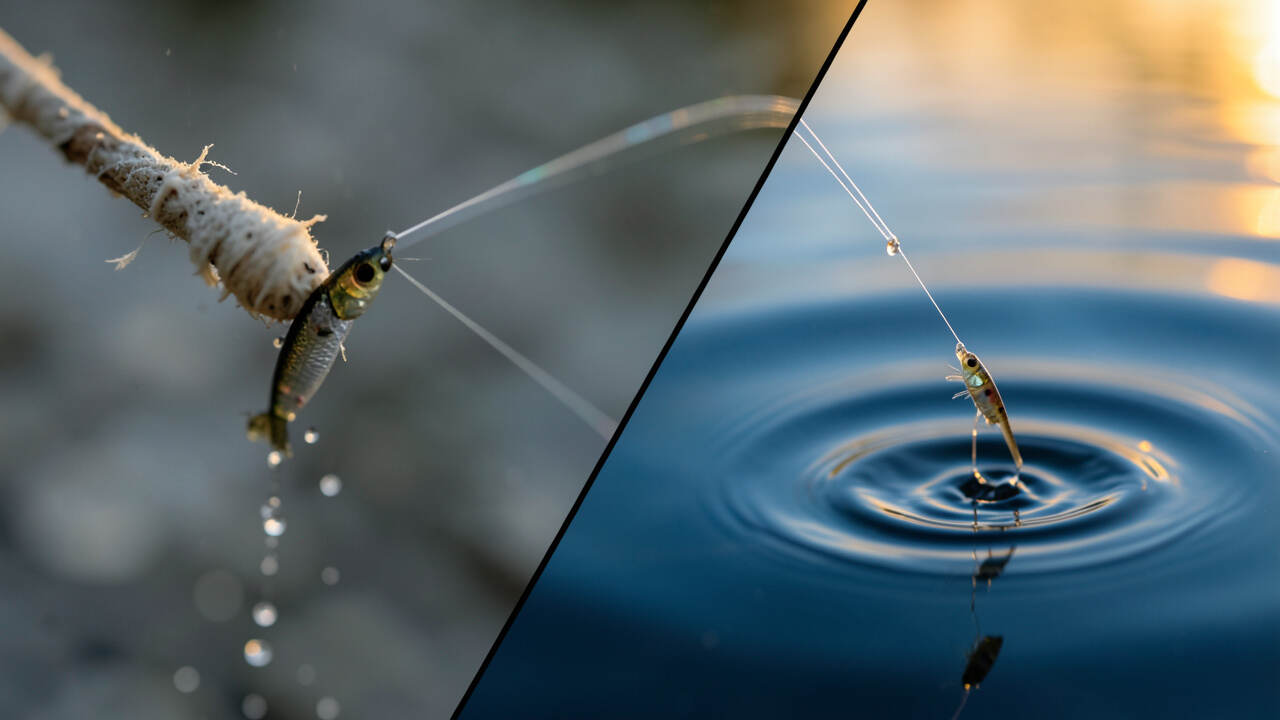
How your lure behaves in the water is critical for attracting fish. Line diameter influences this behavior in several ways.
First, thicker lines create more drag in the water. This can cause your lure to rise in the water column or sink more slowly. For lures designed to run at a specific depth, this can be a problem.
A thicker line might prevent a crankbait from reaching its advertised depth.
Line diameter dramatically affects lure presentation: thinner lines allow baits to sink faster and reach precise depths, critical for techniques like jigging.
Second, thinner lines have less water resistance. This allows lures to sink faster and reach their intended depth more effectively. This is especially important for techniques like jigging or fishing with soft plastics where precise depth control is key.
Third, the buoyancy of the line itself can matter. Monofilament tends to float, which can be good for topwater lures but bad for getting baits down. Fluorocarbon sinks, which helps get baits deeper.
Braided line floats, but its thinness can overcome some of that effect.
When Pound Test Might Be More Important
While diameter is crucial, there are times when pound test takes center stage. Understanding Line Diameter and Strength: Why Pound Test Alone Misleads Now means knowing when to prioritize each factor.
First, if you are fishing around heavy cover like thick weeds, submerged logs, or rocks, a higher pound test line is often necessary. This is to ensure you can pull fish away from structure and prevent them from breaking you off. In these situations, you might choose a thicker line with a higher pound test to gain that brute strength, even if it means sacrificing some casting distance or reel capacity.
In heavy cover, prioritize pound test over diameter to ensure you have the brute strength to pull fish from structure, even if it means reducing casting distance.
Second, for certain species, a higher pound test is simply required. For example, if you’re targeting large, powerful saltwater game fish, you need lines capable of withstanding immense pressure, and the pound test rating becomes a primary consideration.
Third, sometimes line diameter is restricted by regulations. Some fishing regulations might limit the maximum diameter of line you can use in certain waters, regardless of its strength.
Choosing the Right Line for Your Needs
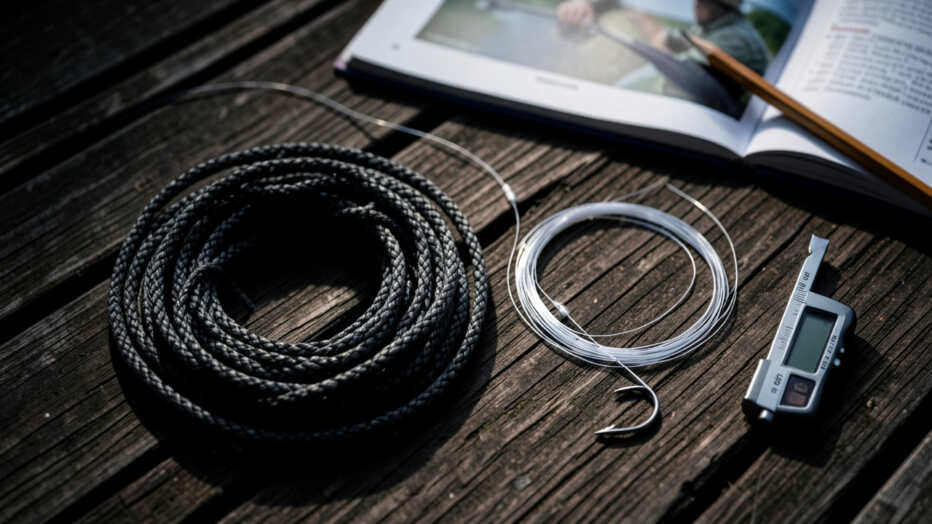
Making the best line choice involves balancing pound test, diameter, line type, and your fishing situation. It’s not just about picking the highest pound test number.
First, consider the type of fishing you’ll be doing. Are you casting for distance? Are you fishing in heavy cover?
Are you targeting finicky, easily spooked fish? Each scenario might call for a different line characteristic.
Second, think about your reel. How much line capacity do you need? If you’re fishing open water where long runs are common, you might want thinner line to maximize capacity, even if it means a slightly lower pound test than you might otherwise choose.
Third, consider the lure and technique. If you’re using lures that need to sink quickly or run deep, a thinner diameter line will be more effective. If you’re using finesse techniques, a thinner line is often preferred for stealth and sensitivity.
Finally, don’t be afraid to experiment. What works best can sometimes depend on your specific gear and the conditions on any given day. Understanding Line Diameter and Strength: Why Pound Test Alone Misleads Now gives you the knowledge to make informed decisions.
Frequently Asked Questions
Question: Why is pound test not enough when choosing fishing line?
Answer: Pound test only tells you how much weight a line can hold, but it doesn’t account for how thick the line is. Different materials have different diameters for the same pound test, affecting casting, reel capacity, and lure action.
Question: How does line diameter affect casting distance?
Answer: Thinner lines create less air resistance, allowing them to fly farther through the air. Thicker lines create more drag, which can reduce casting distance and accuracy.
Question: Can a thinner line be stronger than a thicker line?
Answer: Yes, depending on the material. For example, braided lines are much thinner than monofilament or fluorocarbon lines but can have a higher pound test rating. This is a key part of why Line Diameter and Strength: Why Pound Test Alone Misleads Now.
Question: Does line diameter matter for fishing in heavy cover?
Answer: While pound test is crucial for pulling fish out of cover, diameter can also play a role. A thicker line might create more friction and resistance when trying to maneuver a fish through dense weeds or structure.
Question: What is the main benefit of understanding line diameter?
Answer: Understanding line diameter helps you maximize reel capacity, improve casting distance and accuracy, and achieve better lure presentation, all of which lead to more successful fishing trips.
Question: Is braided line always the best choice because it’s thin?
Answer: Not always. While thinness is an advantage, braided line has no stretch, which can be too sensitive for some techniques or fish. Monofilament and fluorocarbon offer different benefits like stretch and visibility.
Final Thoughts
Remember that pound test is just one piece of the puzzle. The diameter of your fishing line significantly impacts how it performs. By considering both diameter and strength, you can choose the best line for your reel, your casting, and your lure.
This knowledge helps you fish smarter and catch more.