How To Match Rod Power To Lure Weight Like A Pro Today Now
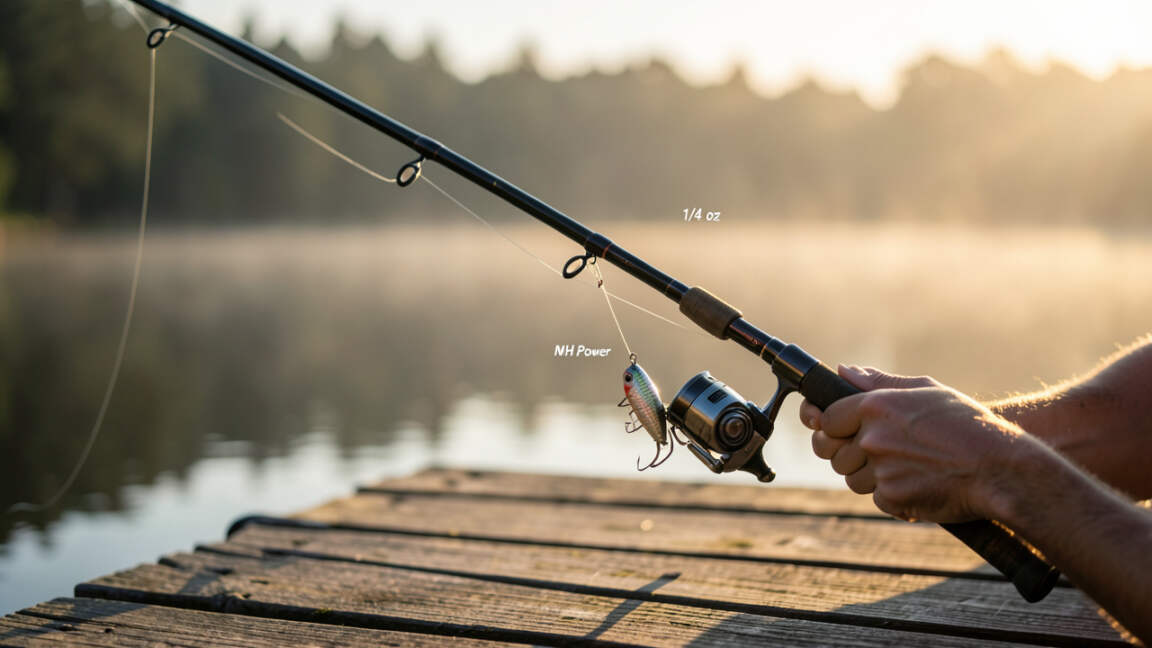
Matching rod power to lure weight ensures optimal casting performance, bite detection, and hook-up ratios by aligning the rod's backbone with the lure's resistance. Rod power ratings range from ultra-light to heavy, each designed for specific lure weights, such as a medium-power rod handling 1/4 to 3/4 ounce lures. Incorporating rod action—how the rod bends—further refines this match, improving control and distance. Avoiding lures that are too light or too heavy prevents rod damage and maximizes fishing efficiency.
Getting your fishing gear right makes a huge difference. When your fishing rod and lure work together perfectly, you cast better, feel more bites, and have more fun. It’s not just about having the right equipment; it’s about making sure they play well together.
Understanding How to Match Rod Power to Lure Weight Like a Pro Today Now means you’ll catch more fish and enjoy your time on the water. This guide will help you figure out exactly what you need to know to make that perfect connection between your rod and lure, so you can get out there and start catching more fish.
Key Takeaways
- Choosing the right rod power is crucial for casting accuracy and control.
- Matching rod power to lure weight prevents rod damage and improves casting distance.
- Understanding lure weight is key to selecting the appropriate rod action.
- Different fishing techniques require specific rod power and lure weight combinations.
- Proper matching leads to better bite detection and increased hook-up ratios.
- Learn to read rod and reel specifications for optimal performance.
Why Matching Rod Power to Lure Weight Matters
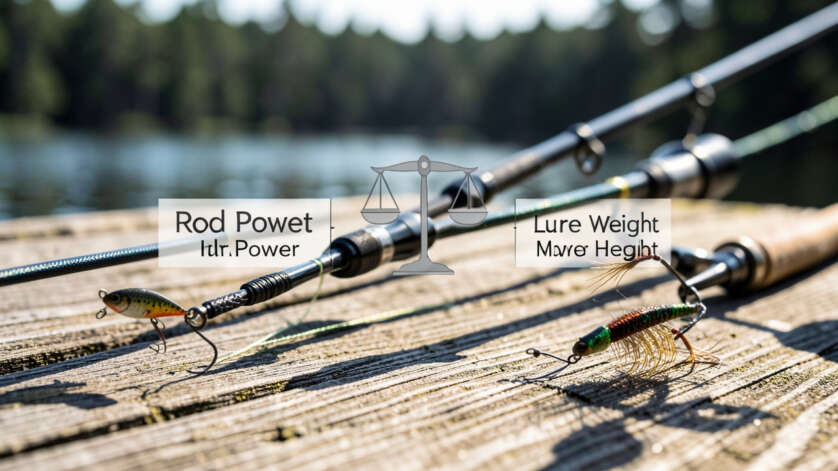
Fishing might seem simple, but there’s a lot of science behind it. When you’re out on the water, you want your gear to work for you. This is where matching your rod’s power to the weight of your lure becomes really important.
If they don’t match up well, things can go wrong. You might not cast very far, or worse, you could even break your rod. Getting this right helps you cast smoothly and accurately.
It also makes it easier to feel when a fish bites. This is a big part of How to Match Rod Power to Lure Weight Like a Pro Today Now and catching more fish.
Always check the rod's recommended lure weight range before casting to avoid breakage and ensure smooth performance.
Think of your fishing rod like a spring. It’s designed to bend and store energy. When you cast, you’re loading that spring with the weight of your lure.
If the lure is too light for the rod’s power, the rod won’t bend enough. This means your cast will be short and weak. If the lure is too heavy, you could overstress the rod.
This can lead to a broken rod tip or even a snapped rod. So, making sure the lure has the right weight for the rod’s power is really the first step to good fishing.
Understanding Rod Power Ratings
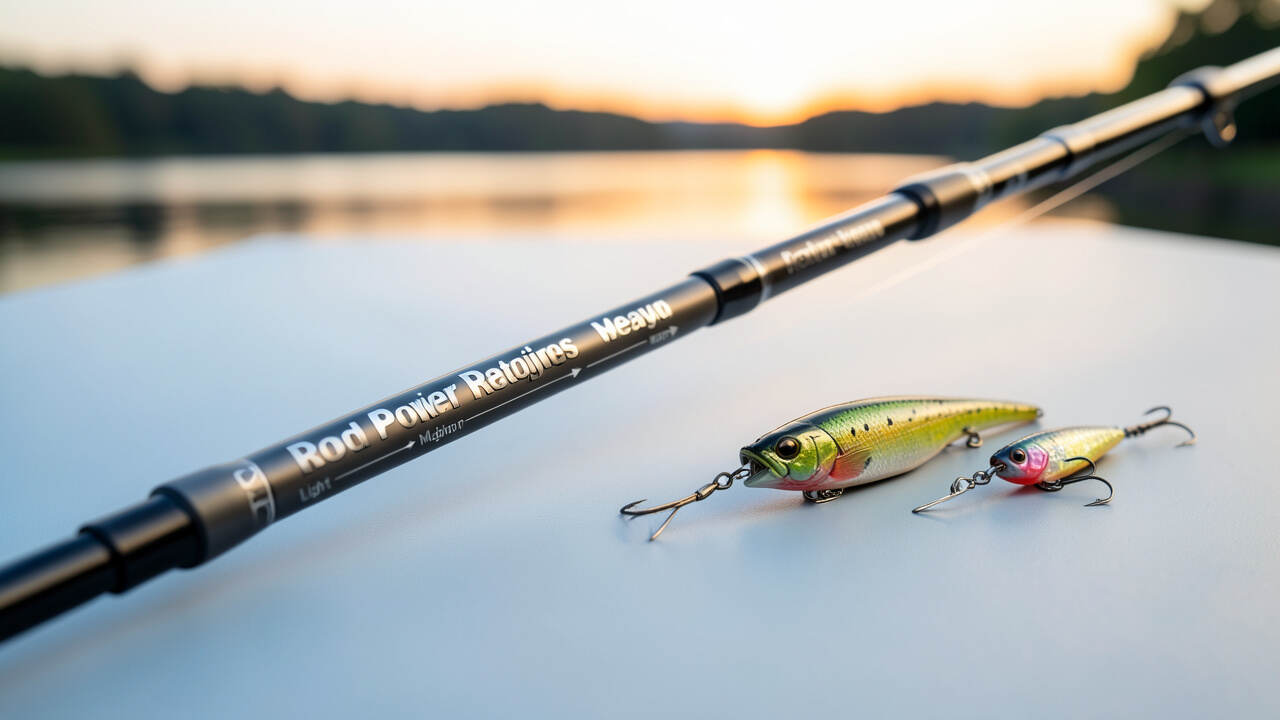
Fishing rods come with different power ratings. These ratings tell you how much force it takes to bend the rod. You’ll usually see terms like ultralight, light, medium-light, medium, medium-heavy, heavy, and extra-heavy.
These labels are your first clue about how strong the rod is and what kind of lures it can handle. Knowing what these mean is vital for How to Match Rod Power to Lure Weight Like a Pro Today Now.
An ultralight rod is very flexible and designed for very light lures. It’s great for small fish and delicate presentations. A heavy rod, on the other hand, is stiff and strong.
Rod power ratings like ultralight to extra-heavy directly indicate the rod's strength and the optimal lure weight it can handle.
It’s built for casting heavy lures and fighting big, powerful fish. The power rating is about the rod’s backbone, its ability to handle strain. It doesn’t tell you how fast the rod bends, that’s the action, which we’ll talk about later.
The Spectrum of Rod Power
Let’s break down the common rod power ratings and what they’re typically used for:
- Ultralight (UL): Best for lures weighing 1/32 to 1/8 ounce. Ideal for panfish, small trout, and crappie.
- Light (L): Good for lures weighing 1/16 to 1/4 ounce. Suitable for trout, bass, and smaller walleye.
- Medium-Light (ML): Handles lures from 1/8 to 3/8 ounce. Works well for bass, walleye, and smaller pike.
- Medium (M): Designed for lures weighing 1/4 to 3/4 ounce. A versatile choice for bass, walleye, and smaller inshore saltwater species.
- Medium-Heavy (MH): Best for lures from 3/8 to 1 ounce. Excellent for larger bass, pike, and many saltwater applications.
- Heavy (H): Handles lures weighing 1/2 to 2 ounces. Great for big bass, musky, pike, and larger saltwater fish.
- Extra-Heavy (XH): For lures over 1 ounce, often up to 4 ounces or more. Used for the largest game fish and heavy-duty applications.
These are general guidelines, and manufacturers might have slightly different ranges. Always check the rod’s specifications, usually printed near the handle, for the most accurate lure weight recommendations.
Decoding Lure Weight
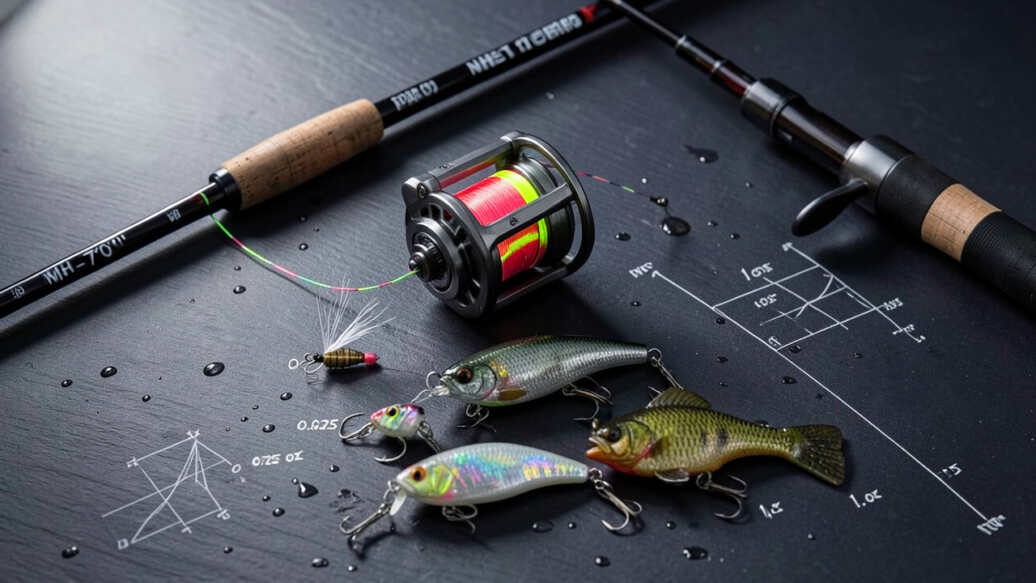
Lures come in all shapes and sizes, and their weight is a critical factor. The weight of a lure affects how it behaves in the water and how it interacts with your rod. You need to know the weight of your lures to make the right choice about your rod.
This is a key part of How to Match Rod Power to Lure Weight Like a Pro Today Now.
Lure weights are usually stated in ounces or grams. Smaller lures for panfish might weigh less than a gram. Larger lures for big game fish can weigh several ounces.
Knowing your lure's weight is just as important as knowing your rod's power for a perfect match.
Understanding this range helps you pick a rod that can cast them effectively. A lure’s weight isn’t just about how far it will fly; it also influences how the lure sinks or swims.
Common Lure Weight Categories
Lures can be grouped by their typical weight ranges. This helps in matching them to rod power:
- Very Light: Under 1/8 ounce. Think small jigs, micro spinners, and tiny spoons.
- Light: 1/8 ounce to 1/4 ounce. Common for finesse jigs, small crankbaits, and inline spinners.
- Medium: 1/4 ounce to 5/8 ounce. This is a very common range for many bass jigs, crankbaits, and topwater lures.
- Heavy: 5/8 ounce to 1.5 ounces. Includes larger jigs, swimbaits, and heavier crankbaits.
- Very Heavy: Over 1.5 ounces. Think large swimbaits, trolling lures, and specialized lures for big fish.
When you buy a lure, check the packaging for its weight. If it’s not listed, you can often find it on the manufacturer’s website. Knowing your lure’s weight is just as important as knowing your rod’s power.
The Role of Rod Action
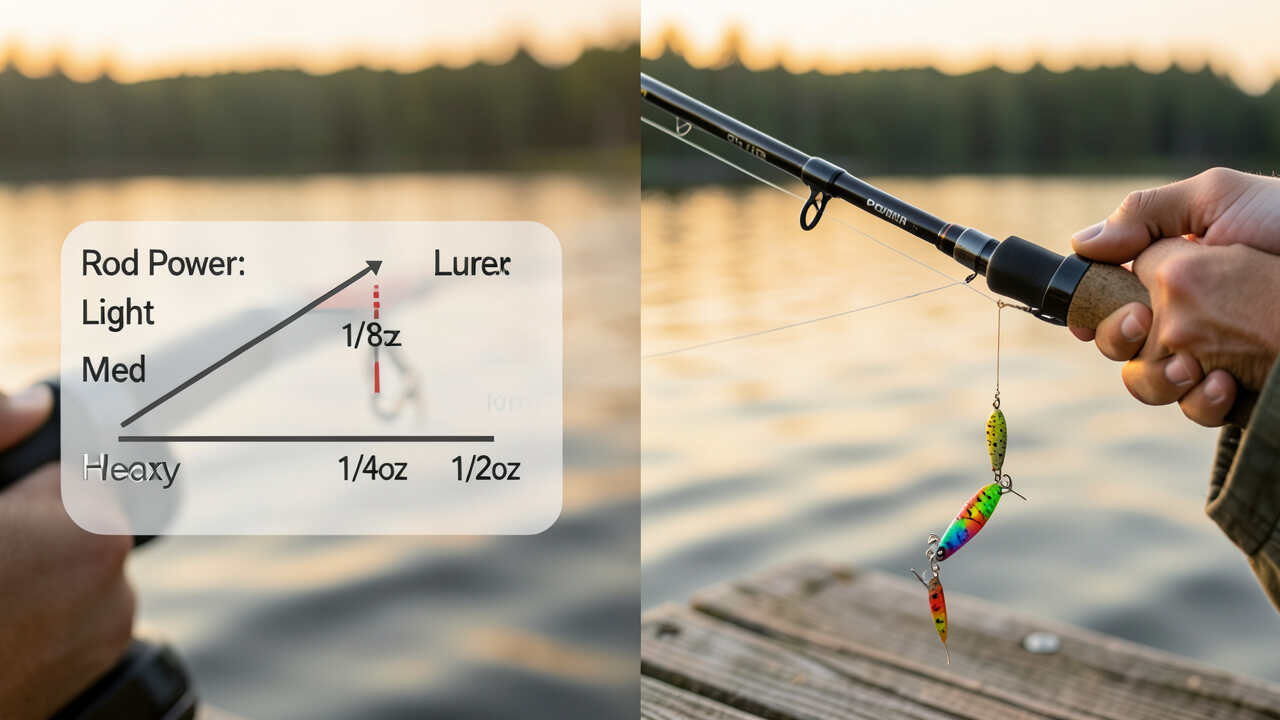
While rod power is about how much force it takes to bend the rod, rod action tells you where the rod bends. This is also very important for How to Match Rod Power to Lure Weight Like a Pro Today Now. Action affects how the rod casts, how it feels, and how it performs when fighting a fish.
For a fast-action rod, lures closer to the upper end of its weight range will load the rod better for controlled casts.
There are three main types of rod action:
- Fast Action: The rod bends mostly in the tip section. This provides sensitivity for detecting bites and allows for quick hook sets. Fast-action rods are great for techniques where you need to feel subtle bites, like jigging or Texas rigging.
- Moderate Action: The rod bends in the upper half. This offers a good balance between casting distance, hook setting power, and the ability to absorb shock from a fighting fish. Many all-around bass rods have moderate action.
- Slow Action: The entire rod bends evenly. These rods are very flexible and excellent for casting light lures a long distance and for playing fish without pulling the hooks out. They are often used for live bait fishing or for species that tend to throw hooks.
The action of your rod works with its power. A medium-power, fast-action rod will feel stiffer than a medium-power, slow-action rod. Both can handle similar lure weights, but they will cast and feel different.
For example, a fast-action rod will load better with a lure in its recommended weight range, allowing for a more controlled cast.
Putting It All Together: The Matching Process
Now, let’s combine what we’ve learned about rod power and lure weight. The goal is to find a rod that can comfortably cast the weight of your lure. This ensures optimal performance and prevents damage.
Mastering How to Match Rod Power to Lure Weight Like a Pro Today Now is about finding that sweet spot.
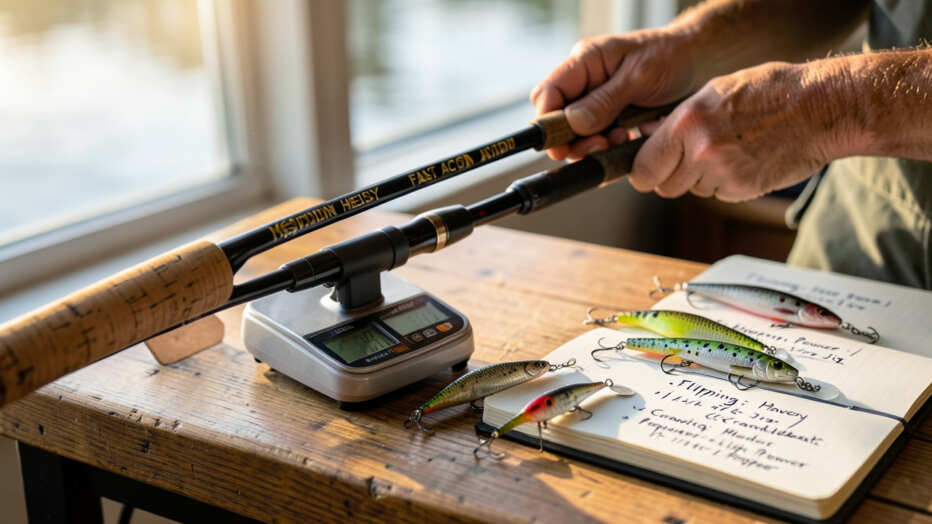
Most rod manufacturers provide a recommended lure weight range on the rod itself. This is the most important guide you have. For example, a rod might say “Lure Weight: 1/4 – 3/4 oz.” This means it’s designed to cast lures within that weight range effectively.
If your lure weighs 3/8 oz, it falls perfectly within that range for a medium-power rod.
When Lures Are Too Light
If your lure is too light for the rod’s power rating, you’ll struggle to cast it far. The rod won’t load properly. This means the energy from your cast won’t transfer efficiently to the lure.
You might end up with short, inaccurate casts. In some cases, you might feel like you’re “whipping” the rod to get any distance, which is not ideal and can be hard on the rod.
Ignoring the rod's printed lure weight range can lead to poor casting performance and even rod damage.
If you find yourself consistently using lures lighter than the lower end of your rod’s recommendation, you might need a lighter-powered rod. For instance, if you love using 1/8 oz jigs but your medium-power rod is rated for 1/4 oz and up, consider a medium-light or light-powered rod.
When Lures Are Too Heavy
Using a lure that’s too heavy for your rod is more dangerous. The rod is designed to bend to a certain point. If a heavy lure overloads it, the rod can break.
You’ll feel a lot of strain on the rod during the cast. The tip might feel overloaded or sluggish. It can also affect your casting accuracy because the rod won’t recover smoothly.
If your favorite lures are heavier than the upper end of your rod’s recommendation, you need a stronger rod. For example, if you want to throw 1.5 oz swimbaits and your medium-heavy rod is rated up to 1 oz, you’ll need a heavy or extra-heavy rod.
Finding the “Sweet Spot”
The best performance comes when your lure weight is somewhere in the middle of your rod’s recommended range. This is often referred to as the “sweet spot.” In this range, the rod loads and unloads efficiently, giving you great casting distance, accuracy, and feel. This is the core of understanding How to Match Rod Power to Lure Weight Like a Pro Today Now.
Let’s look at an example. If a rod is rated for 1/4 to 3/4 oz, lures around 3/8 oz to 1/2 oz will likely perform best. You’ll feel the rod load nicely during the cast, and it will have good sensitivity for detecting bites.
Matching Rods and Lures for Specific Techniques
Different fishing techniques call for different lure weights and, therefore, different rod power. Knowing this helps you choose the right gear for the job. This is a crucial aspect of How to Match Rod Power to Lure Weight Like a Pro Today Now.
Bass Fishing Techniques
Bass fishing often involves a variety of lures. A common technique is casting Texas-rigged worms or jigs. These often fall into the medium to medium-heavy power range for rods, with lure weights from 1/4 oz to 1 oz.
For topwater lures like poppers or walking baits, which can be lighter, a medium-power rod with a moderate or fast action is often preferred.
Swimbaits, especially larger ones, require heavier rods. A 4-6 inch swimbait might weigh 1 oz or more. For these, you’ll need a medium-heavy to heavy-power rod.
The action is also important; a moderate-fast action can help cast these heavier lures accurately.
Bass fishing with Texas-rigged worms typically requires a medium to medium-heavy rod, while heavy swimbait techniques demand a heavier power rod.
Inshore Saltwater Fishing
Inshore saltwater fishing often involves casting lures into the surf or around structures. Lures like bucktail jigs, سبينرات, and spoons can range from 1/2 oz to 2 oz or more. This typically calls for medium-heavy to heavy-power rods.
The faster action helps with casting distance and the quick hooksets needed in saltwater.
For finesse applications, like using small soft plastics on a jig head for redfish or speckled trout, you might use lighter lures (1/8 to 1/4 oz). This would suit a medium-light or medium-power rod with a sensitive tip.
Freshwater Panfish and Trout
For smaller fish like panfish and trout, lighter tackle is the norm. Ultralight or light-action rods are common. They are paired with very light lures, often 1/32 oz to 1/4 oz.
This allows for delicate presentations and makes it fun to fight even small fish.
Using a lure that is too heavy on an ultralight rod can damage the rod. Conversely, using a tiny 1/32 oz jig on a medium-heavy rod will result in poor casting and a lack of feel.
Tips for Perfecting Your Match
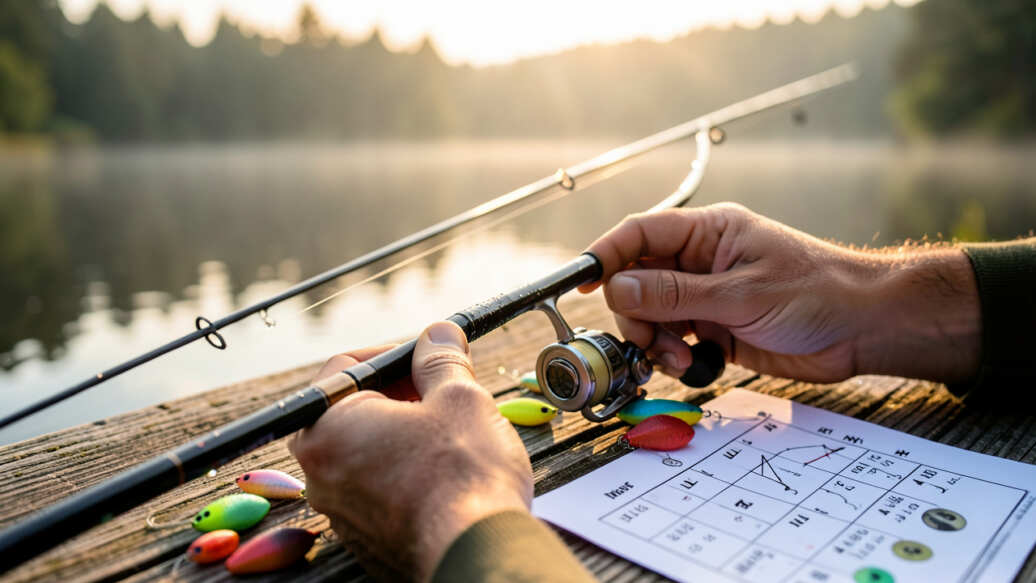
Even with the guidelines, experience is a great teacher. Don’t be afraid to experiment a bit to find what works best for you. Truly mastering How to Match Rod Power to Lure Weight Like a Pro Today Now involves fine-tuning.
First, always check the recommended lure weight range on your rod. This is your primary guide. Second, consider the action of your rod.
A faster action rod will feel best with lures closer to the middle or upper end of its power range. A slower action rod might handle lighter lures better within its power range.
Next, pay attention to how your setup feels when you cast. Does the rod load smoothly? Does the lure fly where you want it to?
A faster action rod performs best with lures in the middle or upper end of its power range, while slower actions handle lighter lures better.
If not, your lure weight might be off for that rod. Then, feel for bites. A rod that’s too stiff for a light lure might not transmit subtle bites well.
A rod that’s too soft for a heavy lure might feel mushy.
Finally, don’t forget about line weight. Your fishing line also plays a role. Heavier lines can affect casting distance with lighter lures.
Ensure your line weight is also appropriate for your rod and the fish you’re targeting.
Frequently Asked Questions
What happens if my lure is too light for my rod?
If your lure is too light, your rod won’t bend enough to cast it effectively. You’ll get short, inaccurate casts and won’t be able to transfer much power to the lure.
Can I use a heavy lure on an ultralight rod?
No, you should never use a heavy lure on an ultralight rod. The heavy lure will likely overstress and break the rod. Always match lure weight to the rod’s power rating.
How does rod action affect matching lure weight?
Rod action determines where the rod bends. A fast-action rod needs a lure weight that loads the tip effectively, while a slow-action rod can bend more evenly to cast lighter lures across its length.
Is it important to match rod power to lure weight for casting distance?
Yes, it is very important. When the lure weight is within the rod’s recommended range, the rod loads and unloads efficiently, giving you maximum casting distance and accuracy. This is key to understanding How to Match Rod Power to Lure Weight Like a Pro Today Now.
What if my lure weight is right in the middle of the rod’s rating?
This is often the “sweet spot.” Your rod should perform optimally, providing good casting, sensitivity, and control. This is the ideal scenario for How to Match Rod Power to Lure Weight Like a Pro Today Now.
Does reel size matter when matching rod power and lure weight?
While not directly part of matching rod power to lure weight, reel size should be proportionate to the rod. A small reel on a heavy rod can feel unbalanced, affecting casting and fighting fish.
Final Thoughts
Getting your rod power and lure weight to match perfectly is essential for a great fishing experience. It leads to better casts, more sensitive bites, and fewer gear issues. By understanding rod ratings and lure weights, you can make smart choices that improve your success on the water.
Start by checking your rod’s recommendations and experiment to find what feels best.

One Comment