
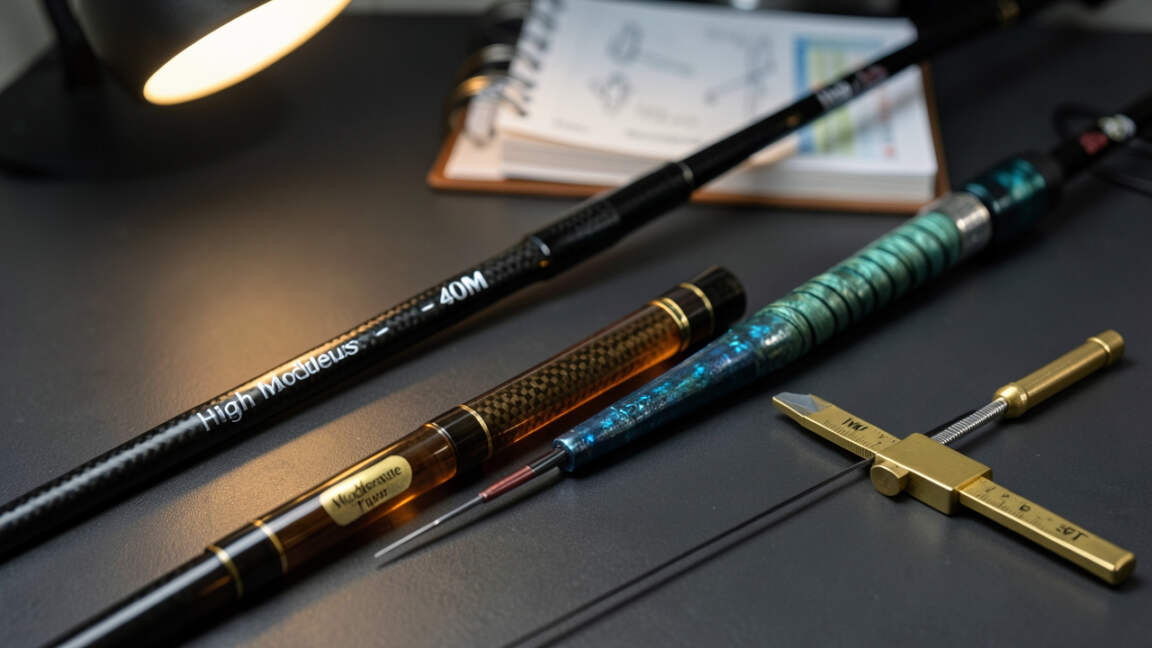
Rod Blanks Explained: Modulus, Taper, And Im Numbers Decoded
Rod blanks are defined by three key factors: modulus, taper, and IM numbers, each controlling stiffness, action, and graphite quality. Modulus measures the material’s stiffness and sensitivity, with higher modulus providing greater feel but lower durability. Taper—fast, moderate, or slow—determines how the rod bends, influencing casting distance and fish-fighting characteristics. IM numbers indicate the modulus range of the graphite, enabling anglers to select a blank that matches their specific fishing technique and target species.
Choosing the right fishing rod blank can make a huge difference in how much you enjoy your time on the water and how successful you are. It’s not just about picking one that looks good; understanding the technical bits helps you catch more fish and have more fun. We’ll break down the confusing terms like modulus, taper, and IM numbers so you can feel confident about your gear.
This Rod Blanks Explained: Modulus, Taper, and IM Numbers Decoded guide will help you pick the perfect rod for your needs. Get ready to understand your rod blank like never before and improve your fishing game.
Key Takeaways
- You’ll learn what modulus means for a rod blank and how it affects its stiffness and sensitivity.
- We’ll explain different taper types and how they impact a rod’s action and power.
- Understand the meaning of IM numbers (like IM6, IM7, IM8) and what they tell you about the graphite quality.
- Discover how these three factors work together to create the perfect rod for different fishing styles.
- Gain the confidence to choose the best rod blank for your specific fishing needs.
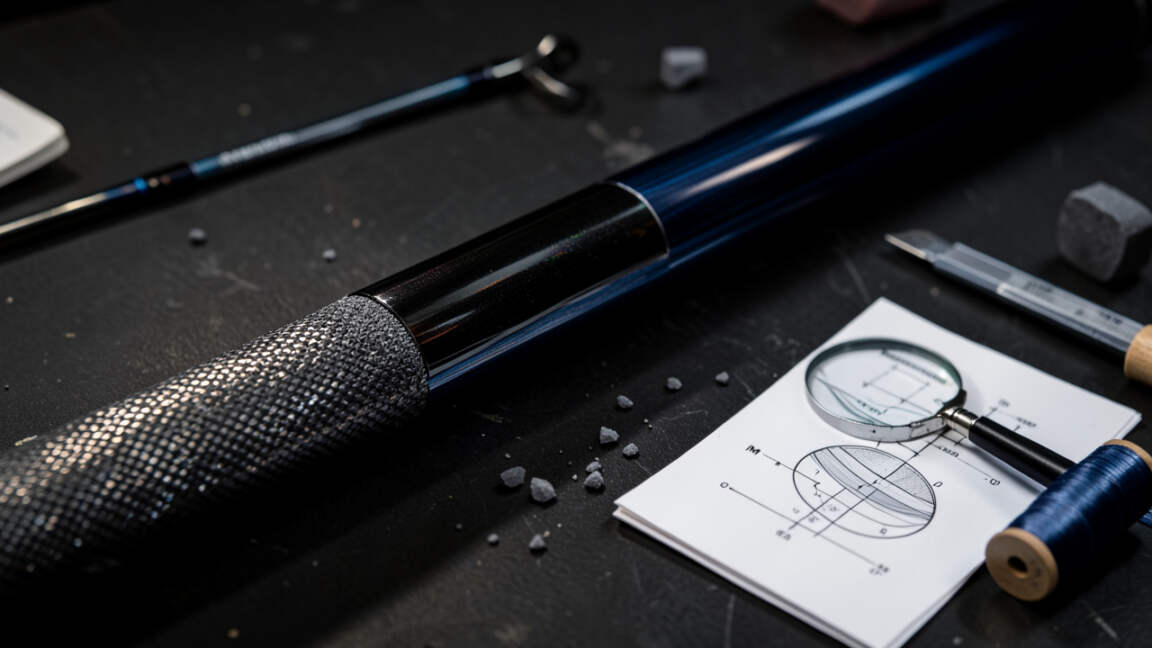
Understanding Rod Blank Materials: The Role of Modulus
The material a rod blank is made from plays a big role in how it performs. Most modern rod blanks use graphite, which is known for being strong and lightweight. The key property of graphite that matters most is its modulus.
Think of modulus as a measure of how stiff the graphite material is. Higher modulus graphite is stiffer and can be made thinner and lighter while still being strong.
Why does this matter to you? A higher modulus rod blank will be more sensitive. This means you can feel subtle bites from fish much easier.
It also means the rod will be lighter, which is great for long fishing days. You’ll feel less tired. However, higher modulus graphite can also be more brittle.
So, while it’s stiffer and lighter, it might break more easily if you put too much stress on it in the wrong way.
Lower modulus graphite is less stiff. Rods made with it are usually a bit heavier and less sensitive. But, they are also more durable.
Higher modulus graphite offers superior sensitivity but can be more brittle; consider your fishing style to balance feel with durability.
They can bend a lot more without breaking. For certain types of fishing where you might bend the rod to its absolute limit, like with some saltwater species, a lower modulus rod might be a better choice for its toughness.
Modulus Explained Simply
Imagine trying to bend a ruler. A very thin, flexible ruler is like low modulus material. It bends easily.
A thick, stiff ruler is like high modulus material. It’s much harder to bend.
The modulus rating is usually given in millions of pounds per square inch (MSI). You’ll often see numbers like 30 MSI, 40 MSI, or even 50+ MSI. A rod blank rated at 40 MSI is stiffer than one rated at 30 MSI.
This difference in stiffness directly affects how the rod feels in your hands and how it performs when casting and fighting a fish.
When you’re looking at rod blanks, the modulus rating is a good indicator of its quality and intended use. High modulus blanks are often found in premium, high-performance rods. They offer the best sensitivity and lightest weight.
Lower modulus blanks are typically found in more affordable or heavy-duty rods where extreme sensitivity isn’t the top priority.
Decoding Rod Blank Taper: The Shape That Matters
The taper of a rod blank refers to how its diameter changes from the butt (the thicker end you hold) to the tip (the thin end). It’s not just about looks; the taper is critical for a rod’s action and power. The action describes how much of the rod bends when you put pressure on it, and the power tells you how much force it takes to bend it that much.
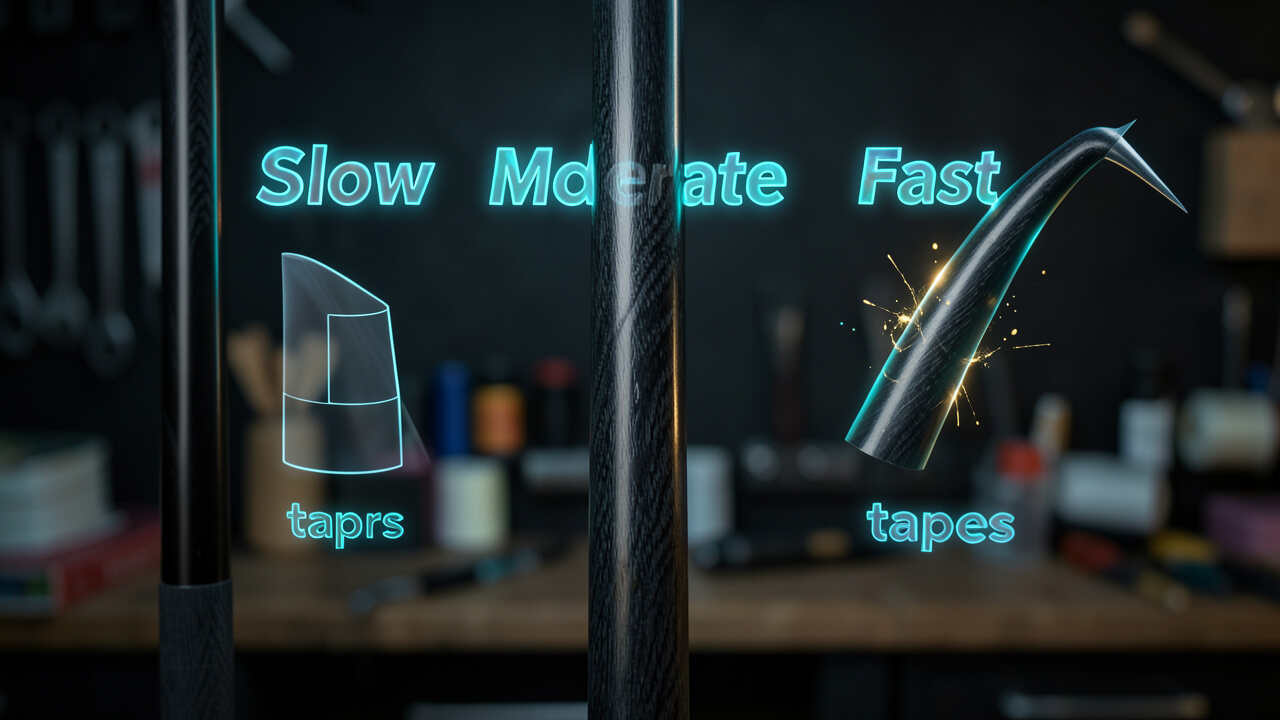
There are generally three main types of tapers: fast, moderate, and slow. Each one creates a different feel and performance characteristic. Understanding these tapers helps you match the rod blank to the type of fishing you do and the lures or baits you use.
Fast Taper Rod Blanks
A fast taper rod blank bends mostly in the top quarter of its length. This means the tip section is quite flexible, but the rest of the rod stays stiff. This design is great for casting accuracy.
It allows for quick hook sets because the rod tip responds very rapidly. Fast action rods are often preferred for techniques where you need to feel light bites and set the hook instantly, like bass fishing with soft plastics or drop shots.
The stiffness of the back half of the rod also helps with casting distance and power. It acts like a spring that loads up quickly. However, fast taper rods can sometimes be a bit less forgiving.
If you put too much pressure on them, they might break. Also, they can be harder to cast lighter lures with.
Moderate Taper Rod Blanks
A moderate taper rod blank bends more into the top half of its length. This gives it a more balanced flex. It still has a responsive tip for good casting and hook sets, but it also has more give in the mid-section.
This makes them more versatile than fast taper rods.
A fast taper rod tip responds rapidly, enabling precise casts and quick hook sets, but it may be less forgiving on the cast than a moderate or slow taper.
Moderate action rods are excellent for fishing with crankbaits and spinnerbaits. The bend in the rod helps to absorb the shock from the fish’s head shakes. This reduces the chance of the fish throwing the lure or the hook pulling out.
They are also easier to cast a wider range of lure weights with. Many anglers find moderate taper rods to be more comfortable to use for extended periods.
Slow Taper Rod Blanks
A slow taper rod blank bends all the way down into the butt section. The entire rod flexes when pressure is applied. This type of rod is often called a “full flex” or “parabolic” rod.
They are very forgiving and can absorb a lot of shock.
Slow taper rods are fantastic for fishing with very light lures or for targeting fish that tend to throw hooks easily, like trout on small flies. They load up gradually, making them excellent for casting light baits a good distance. They also provide a cushion for fighting fish, making it harder for them to escape.
However, they are not ideal for techniques requiring fast hook sets or pinpoint accuracy at long distances.
When you look at a rod blank, you can often tell its taper by looking at its shape. A rod that quickly gets thinner from bottom to top is likely a fast taper. A rod that thins out more gradually is likely a moderate or slow taper.
The manufacturer’s specifications will always give you the exact action and power ratings.

Understanding IM Numbers: Graphite Quality Explained
You’ve probably seen designations like IM6, IM7, or IM8 on fishing rods and rod blanks. These are known as IM numbers, and they refer to the modulus of the graphite used in the blank’s construction. IM stands for “Intermediate Modulus.” These numbers are a way for manufacturers to categorize the quality and performance of their graphite materials.
Generally, a higher IM number indicates a higher modulus graphite. This means the material is stiffer and lighter. Let’s break down what these numbers typically mean:
- IM6: This is a lower modulus graphite. Rods made with IM6 are typically more affordable and durable. They are often found in entry-level rods. They are not as sensitive as higher IM rods, but they are built to last.
- IM7: This is an intermediate modulus graphite. It offers a good balance of sensitivity, strength, and weight. IM7 blanks provide a noticeable improvement in feel over IM6. They are a popular choice for many all-around fishing rods.
- IM8: This is a higher modulus graphite. Rods made with IM8 are lighter, stiffer, and more sensitive than IM6 or IM7. They offer excellent performance for anglers who want to feel every vibration. However, they can be more expensive and potentially more brittle than lower modulus options.
It’s important to remember that IM numbers are not a strict, universal standard across all manufacturers. One company’s IM7 might be slightly different from another’s. However, within a single brand, the IM numbers usually follow this general progression of quality and performance.
IM numbers are not a universal standard; a higher number from one brand may not directly compare to the same number from another.
When you see higher IM numbers, expect a lighter, more sensitive, and often more expensive rod blank.
The IM number is a good starting point for understanding the rod blank’s material. However, it’s just one piece of the puzzle. You also need to consider the taper and how the blank is constructed.
A well-designed IM6 blank can sometimes outperform a poorly designed IM8 blank.
How Modulus, Taper, and IM Numbers Work Together
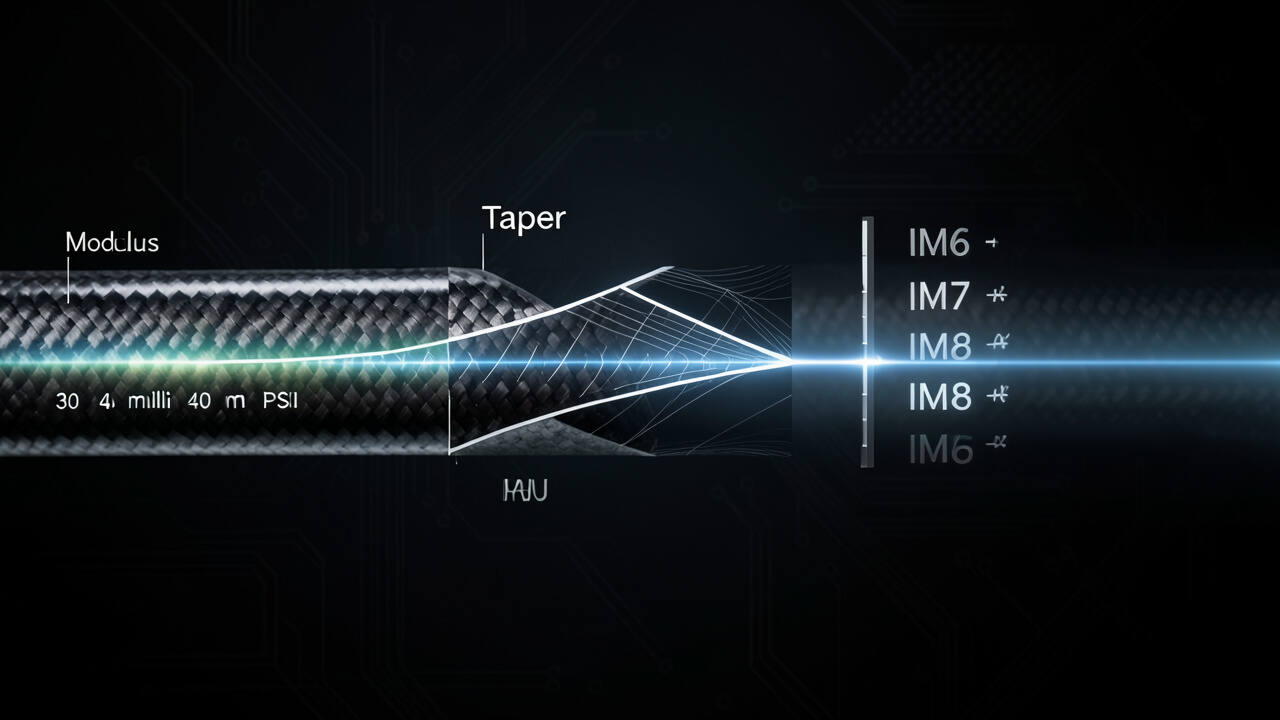
The real magic happens when you understand how modulus, taper, and IM numbers interact. They don’t exist in isolation. A rod blank’s overall performance is a result of how these elements are combined by the rod designer.
For example, a high modulus (high IM number) graphite allows a designer to create a blank that is both stiff and very thin. This thinness can then be shaped into a fast taper. The result is a rod that is incredibly light, super sensitive, and casts with great accuracy and power.
This is often the ideal setup for finesse fishing or techniques where feeling the slightest bite is crucial.
When selecting a rod blank, consider that a high modulus fast taper blank excels in sensitivity and accuracy, while a lower modulus slow taper provides durability and a more forgiving action.
On the other hand, a lower modulus graphite might be used to create a more durable, moderate taper rod. This kind of blank might have a higher IM number but be designed for a slower action and more flexibility. This approach prioritizes robustness and a forgiving feel, which is great for certain types of fishing where you might encounter larger, stronger fish or where the lure action is key.
Here’s a simple way to think about it:
When a rod designer chooses a specific graphite (like an IM8), they can then use that material to create different tapers. An IM8 can be made into a fast-action rod for maximum sensitivity or a moderate-action rod for versatility. The choice depends on the intended fishing application.
Understanding this interplay is key to making informed decisions. Don’t just look at the IM number. Consider the rod’s action and power, which are directly influenced by its taper.
A rod blank that effectively combines these features will serve you much better.
Choosing the Right Rod Blank for Your Fishing Needs
Now that you have a better grasp of rod blanks explained: modulus, taper, and IM numbers decoded, you can start to apply this knowledge to your own fishing. The best rod blank for you depends entirely on what kind of fishing you do most often.
Matching Blank Features to Fishing Styles
Consider these common fishing scenarios:
- Bass Fishing (Finesse Techniques like Drop Shot, Ned Rig): You need maximum sensitivity to detect subtle bites. Look for a high modulus (higher IM number) blank with a fast taper. This will give you the lightest weight and best feel.
- Bass Fishing (Moving Baits like Spinnerbaits, Crankbaits): You want a rod that absorbs shock and provides a good casting platform. A moderate taper rod, often made with a mid-range IM number graphite, is ideal. It will help keep fish hooked and allow for easier casting.
- Saltwater Inshore Fishing: Durability and power are often more important than extreme sensitivity. A moderate to moderate-fast taper blank made with a good quality graphite (perhaps a mid-range IM number) that can handle stress is a good choice. You might also consider a slightly lower modulus blank for extra toughness.
- Freshwater Panfish (Crappie, Bluegill): Lightness and sensitivity are key for these smaller fish. A high modulus, fast or moderate-fast taper rod will let you feel the slightest nibble.
- Trout Fishing (Light Lures or Flies): A slower taper rod can be excellent for casting light lures or flies. While sensitivity is still important, the forgiving nature of a slow taper helps protect light lines and hooks.
When you’re looking at rod blanks, don’t be afraid to pick them up if possible. Feel the balance. Wiggle them gently to get a sense of their taper and action.
A common mistake is choosing a high modulus fast taper blank for heavy cover fishing where a more robust slow taper blank would be more appropriate.
Read the specifications carefully. Many manufacturers provide detailed information about the modulus, taper, and intended use of their blanks.
Remember, the main goal is to find a rod blank that feels comfortable in your hand and performs well for the techniques you use most. The technical details like modulus, taper, and IM numbers are tools to help you make that decision. By understanding them, you’re already ahead of the game.
Frequently Asked Questions
What is the most important factor in a rod blank?
It’s a combination of factors, but modulus, taper, and IM numbers all work together. You need to consider how they suit your specific fishing style.
Are higher IM numbers always better?
Not necessarily. Higher IM numbers mean higher modulus graphite, which is lighter and more sensitive. However, they can also be more brittle.
The best choice depends on your fishing needs.
How does rod blank taper affect casting?
A fast taper loads quickly for accurate, powerful casts, especially with heavier lures. A slower taper loads more gradually, which is better for casting lighter lures with finesse.
Can I use a high modulus rod for heavy-duty fishing?
You can, but you need to be careful. High modulus rods are very sensitive and light but can be more prone to breaking under extreme stress. A moderate taper and mid-range IM number might be more suitable for durability.
What is the difference between rod action and rod power?
Action describes how much of the rod bends (fast, moderate, slow), while power describes how much force it takes to bend it (light, medium, heavy). Both are heavily influenced by the rod blank’s taper and materials.
Where do I find information about a rod blank’s modulus and taper?
This information is usually provided by the rod blank manufacturer on their website, in product catalogs, or on the product packaging. Look for specifications like “modulus rating” and “action” or “taper.”
Final Thoughts
Understanding the technical details of rod blanks empowers you to make better choices. You now know how modulus, taper, and IM numbers influence a rod’s performance. Use this knowledge to select a blank that truly fits your fishing style, leading to more enjoyable and successful trips on the water.

One Comment