
Line Stretch: Why Mono Stretches and Braid Doesn’t Explained
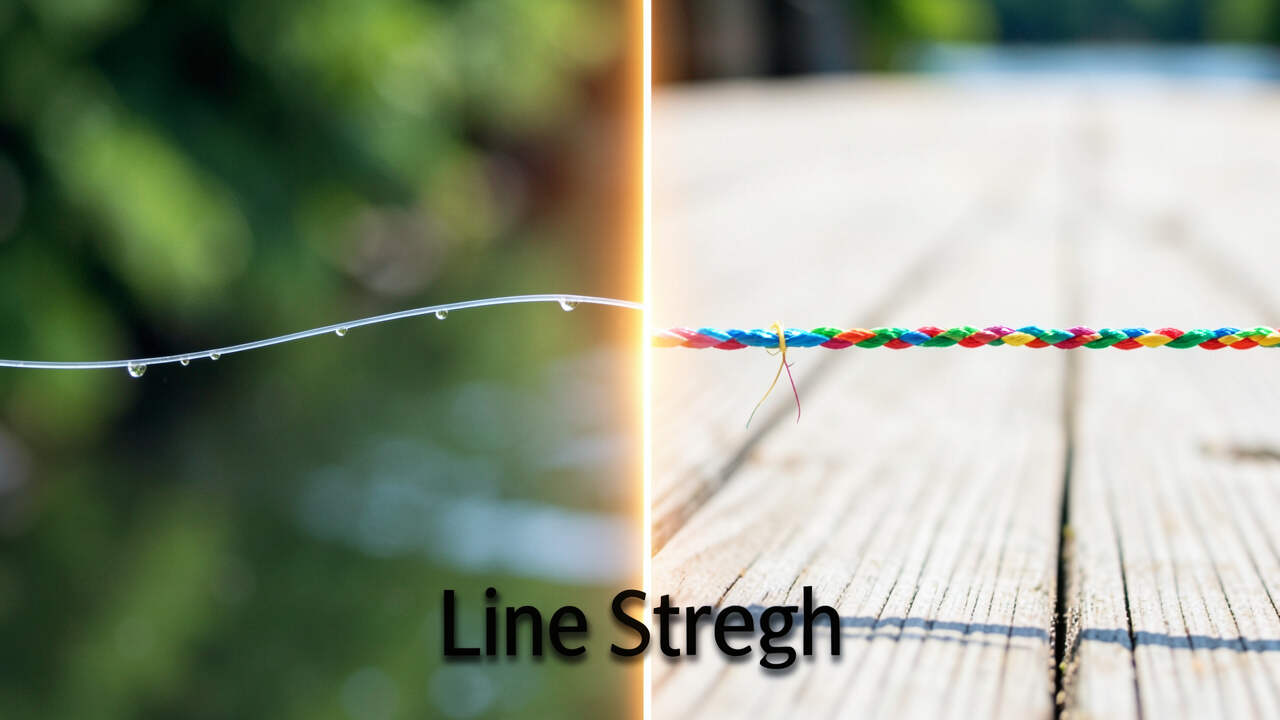
Monofilament stretches 20 to 25 percent of its length because its nylon polymer chains act like viscoelastic springs that absorb energy, whereas braided line made from ultra-high-molecular-weight polyethylene fibers stretches less than 5 percent and delivers near‑zero elasticity. This difference stems from molecular structure: nylon’s coiled polymer bonds uncoil under load, while UHMWPE’s densely woven crystalline chains resist elongation, giving braid its direct hooksets and mono its shock‑absorbing buffer. To choose between them, match the line’s stretch profile to your fishing technique—use mono for shock‑prone hooksets and braid for maximum sensitivity and instant strikes.
Monofilament feels like a rubber band on a big fish. Braided line gives you a direct, rock-solid hookset.
This article explains the material science behind why these two popular fishing lines behave so differently.
Simply put, line stretch comes down to molecular structure. Monofilament is made of nylon polymers that act like springs, absorbing shock but reducing sensitivity. Braided line, made from UHMWPE fibers, has almost no elasticity, offering maximum sensitivity and hook-setting power but zero shock absorption for your gear.
- Monofilament line typically stretches 20 to 25 percent of its length before breaking, acting as a shock absorber.
- Braided line stretches less than 5 percent, giving you nearly instant hooksets and extreme bottom sensitivity.
- The stretch in mono comes from its nylon material, which is a viscoelastic polymer that absorbs energy.
- Braid uses ultra-high-molecular-weight polyethylene fibers woven tightly, offering high strength with very thin diameters.
- Choosing between stretch and no stretch depends on your target species, fishing technique, and rod setup.
What Is Fishing Line Stretch?
Fishing line stretch is the amount a line elongates under tension before it breaks. It is a physical property of the material.
Manufacturers list the stretch percentage on the spool. A line with 25% stretch can extend a quarter of its length before snapping.
When selecting fishing line, always check the stretch percentage on the spool label, as it directly affects your hookset and sensitivity.
Line stretch impacts three main things in fishing: sensitivity, hooksets, and shock absorption. Each factor determines if the line is right for your bait.
Stretch is measured as a percentage of the original length. For example, a 10-foot section of mono may stretch to 12.5 feet before breaking. A 10-foot section of braid may only reach 10.2 feet.
The Science Behind Line Stretch
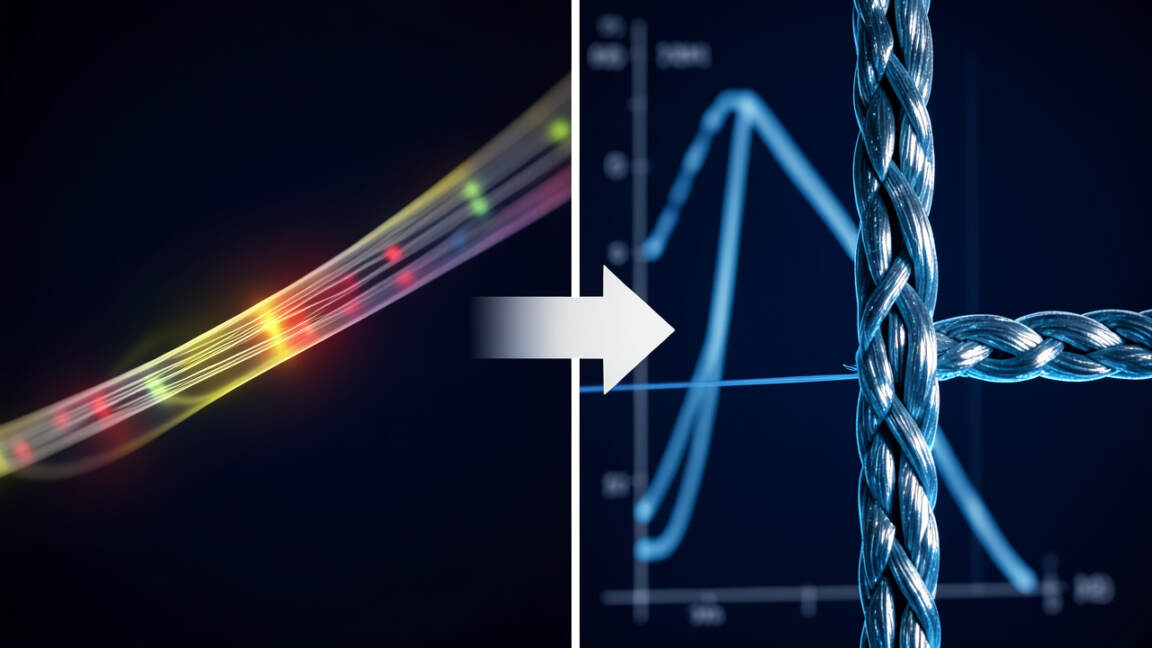
Stretch is caused by the material’s molecular bonds pulling apart under load. Nylon monofilament has long, coiled polymer chains.
When you pull on a mono line, these chains straighten out. This creates the elastic stretch that absorbs energy.
Nylon is a viscoelastic material. This means it acts like both a fluid and a solid. When you pull slowly, it flows or stretches. When you pull fast, it snaps.
Mono's viscoelastic nature means it flows under slow tension but snaps under fast force, explaining why sharp hooksets can break thick mono.
Braided line uses UHMWPE fibers. These fibers have a very high crystalline structure. They do not uncoil easily.
According to material science data from DSM (Dyneema), Dyneema fibers have a tensile modulus 15 times higher than steel. This is why braid has near-zero stretch.
Tip: Think of mono as a bungee cord and braid as a steel cable. Each has a distinct job. Using the wrong one can cost you the fish of a lifetime.
The modulus of elasticity measures a material’s resistance to stretching. Nylon has a low modulus. UHMWPE has an extremely high modulus. This is the core reason for the difference.
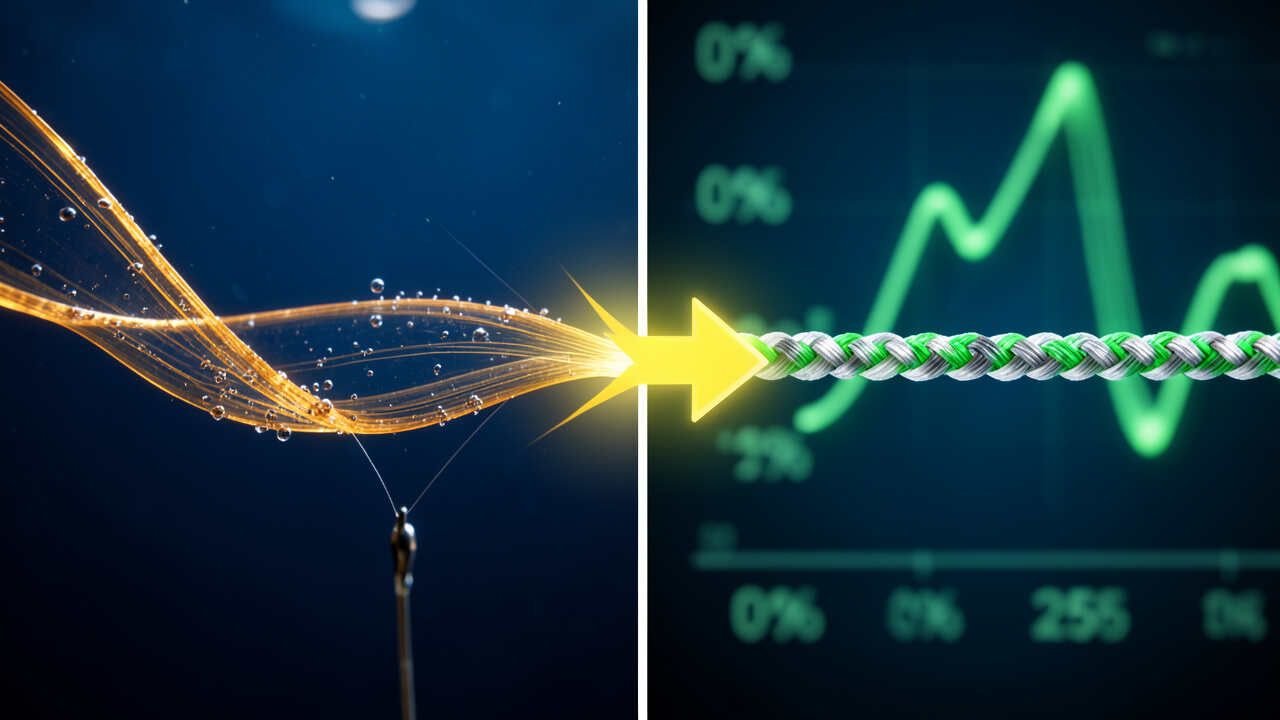
How Does Mono Stretch Differ from Braid?
The difference is extreme. Mono can stretch up to 25% of its length. Braid typically stretches less than 5%.
This difference changes how you fish. Mono requires a wider, sweeping hookset. Braid requires a sharp, short hookset.
With monofilament, the hook doesn't move the moment you set it—the line absorbs the energy first, causing delayed hooksets.
Mono stretch gives you a delayed reaction time. You feel the bite, set the hook, and then the line absorbs energy before the hook moves. This can cause missed hooksets on slack line.
Braid gives you an instant connection. The hook moves the exact millisecond your rod tip moves. There is no delay in the system.
Quick Comparison Table
Use monofilament for crankbaits and topwater for its shock absorption; switch to braid for jigs and Texas rigs for sensitivity.
| Feature | Monofilament | Braided Line |
|---|---|---|
| Stretch Percentage | 20% – 25% | < 5% |
| Sensitivity | Low (absorbs feedback) | Ultra-High (feels bottom structure) |
| Shock Absorption | Excellent (protects leaders & hooks) | Poor (transfers all force to rod/reel) |
| Diameter for Strength | Thick (high visibility) | Thin (low visibility in water) |
| Knot Strength | High (absorbs knot stress) | Lower (knots can slip) |
| Best For | Crankbaits, Topwater, Beginners | Jigs, Texas Rigs, Deep Water, Frogs |
Why Mono Stretches So Much
Mono is made from nylon. Nylon is a thermoplastic polymer. The molecules form a random coil structure.
When you apply tension, these coils straighten. This is why mono keeps stretching even after a hookset.
Be aware that mono's stretch increases in warmer water, reducing sensitivity and requiring stronger hooksets in summer.
According to Berkley’s research, their Trilene XL stretches about 25%. This makes it a great shock absorber.
The stretch acts like a built-in drag system. During a fish’s sudden run, the line absorbs the initial force. This gives your drag time to kick in and prevent break-offs.
- Excellent for treble hook lures. The stretch prevents the hooks from tearing out of the fish’s mouth during a hard hookset.
- Forgiving on light rods. It dampens sudden surges from large fish, protecting the rod tip.
- Absorbs headshakes from fish like bass and musky, keeping the hook pinned.
- More castable for light lures. The slight stretch allows the line to load up against the rod guide better during the cast.
Important: Mono’s stretch increases in warmer water. The nylon molecules become more pliable. This gives you more forgiveness in the summer but less sensitivity.
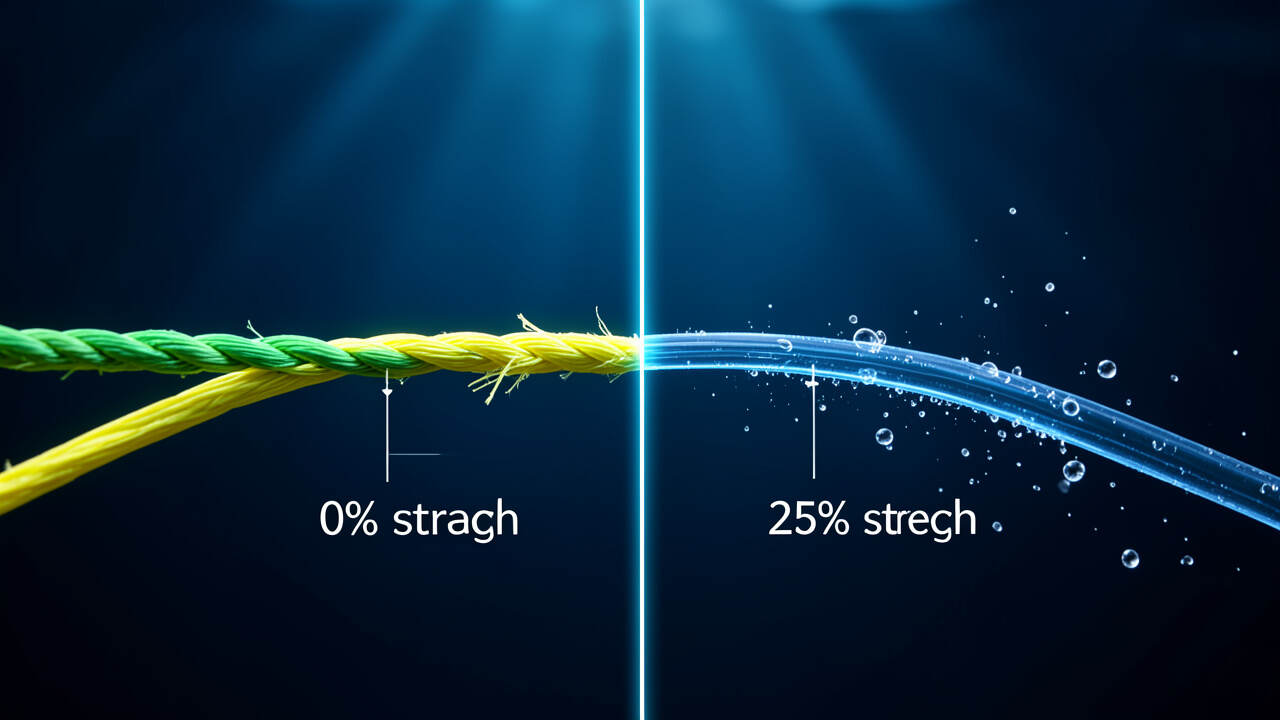
Why Braided Line Has Nearly Zero Stretch
Braided line is made from UHMWPE (Dyneema or Spectra). These fibers are incredibly strong for their weight.
The fibers are woven together, not extruded like nylon. They do not have the same coil structure. The molecules are already aligned in a straight line.
Braid's zero stretch transfers all force directly to the hook, making it ideal for bottom contact baits but risky for treble-hooked lures.
This alignment means they resist stretching entirely. All the force goes directly to the hook.
You feel the bottom, the bite, and the hookset instantly. There is no delay in the system. You can feel a fish breathe on your lure.
- Maximum sensitivity. You feel every rock, weed, and gravel transition on the bottom.
- Instant hooksets. No delay between the bite and the hook point penetrating.
- Better casting distance. The thin diameter cuts through the wind and water.
- No line memory. Braid lays flat on the spool without coils, reducing wind knots.
Warning: Braid’s lack of stretch can pull treble hooks loose or bend cheap hooks. Always check your drag setting and use sharp, quick hooksets.
Because braid has no stretch, it relies on the rod’s flex for shock absorption. A fast-action rod with braid gives you a very stiff setup. A moderate-action rod with braid is more forgiving.
How to Choose Based on Stretch Needs
Your choice depends on your technique. Line stretch directly affects your hookup ratio and fish-fighting success.
For moving baits like crankbaits and spinnerbaits, use mono. The stretch keeps the fish pinned.
Mono's stretch keeps treble hooks pinned during a fish's run, while braid's instant connection is essential for feeling bottom contact bites.
For bottom contact baits like jigs and worms, use braid. You need to feel the bite instantly.
For topwater frogs, use braid. You need to drive heavy hooks through thick plastic and weed guards.
For deep sea trolling, mono’s stretch acts as a shock absorber for massive pelagic fish. It prevents the hook from pulling on a 20-foot wave surge.
| Technique | Recommended Line | Reason for Choice |
|---|---|---|
| Crankbaits | Monofilament | Stretch absorbs lunges, keeps treble hooks pinned. |
| Jigs / Texas Rig | Braided Line | Zero stretch for instant hooksets and maximum feedback. |
| Topwater Frogs | Braided Line | Thin diameter, high strength, no stretch to drive the hook home. |
| Dropshot / Finesse | Fluorocarbon / Braid | Low stretch for sensitivity, but fluoro sinks. |
| Deep Sea Trolling | Monofilament | Massive shock absorption needed for giant fish in waves. |
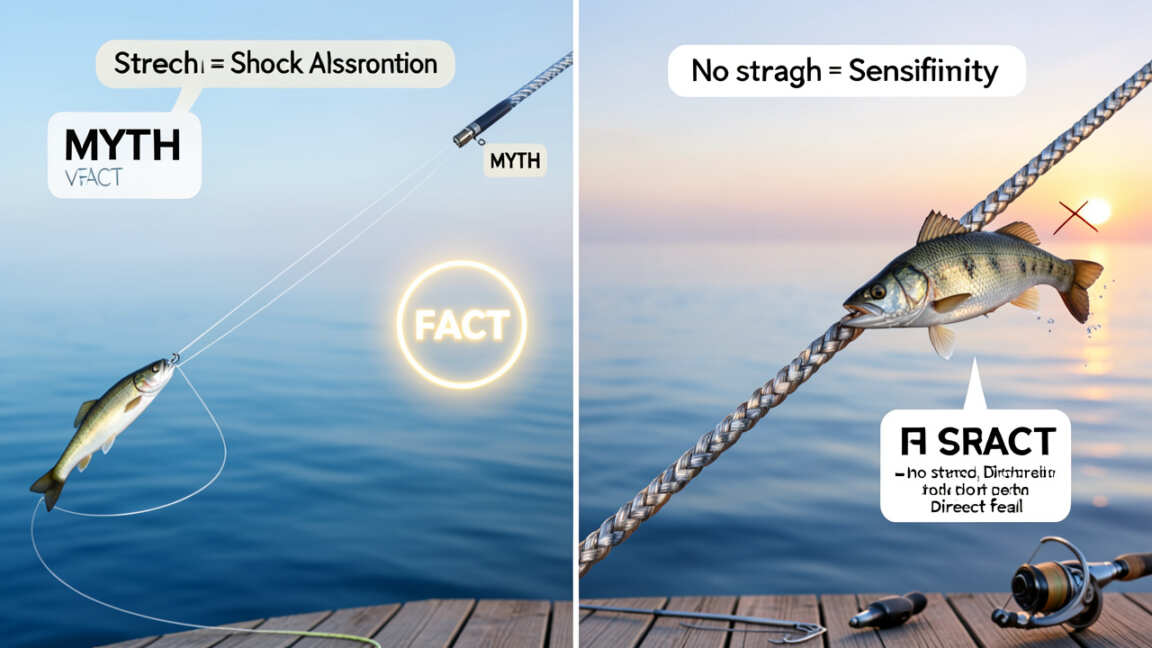
Common Myths vs Facts About Line Stretch
Myth 1: Fluorocarbon has no stretch
Fact: Fluorocarbon actually stretches slightly more than braid but less than mono. It typically has 10-15% stretch, making it a middle ground for sensitivity and shock absorption.
Always use a mono or fluorocarbon leader with braid to absorb the initial hookset shock and prevent hook pullouts.
Myth 2: Stretch makes mono weak
Fact: Stretch does not affect the breaking strength. In fact, stretch helps mono absorb shock loads that would snap braid. Its energy absorption makes it better for fighting large fish on light tackle.
Myth 3: Braid is better for every situation
Fact: Braid’s zero stretch is bad for treble hooks and light leader material. Without a mono or fluorocarbon leader, the force from a hookset can pull hooks free or snap the knot at the lure.
Pro Tips for Managing Line Stretch
- Use a mono top-shot or leader. Tie on a 4-to-6-foot leader of monofilament or fluorocarbon to your braid. This adds shock absorption near the lure while keeping the sensitivity of braid on the main line.
- Wet your mono before cinching knots. Dry mono generates friction heat when tightened. This heat melts the nylon, reducing knot strength by up to 20%.
- Match your hookset to your line. With mono, use a long, sweeping hookset. With braid, use a sharp, short snap to avoid over-penetrating or breaking the line.
- Account for stretch when setting the drag. A mono line with 25% stretch needs a tighter drag than braid. The stretch absorbs the initial run, so you need more resistance.
- Replace mono yearly. UV light and heat break down nylon polymers. Old mono loses its elasticity and strength, leading to unseen stretch damage and breaks.
- Tie a Palomar knot for braid. This knot retains the most strength with braided lines. The improved clinch knot can slip and fail under zero-stress loads.
Tip: When fishing deep water, use braid for the main line and a long fluorocarbon leader. Braid has no stretch, so you feel the bite at 50 feet deep. The fluorocarbon leader provides invisibility and a bit of shock absorption.
Frequently Asked Questions
What is the exact percentage of stretch for monofilament line?
Standard nylon monofilament stretches between 20% and 30% of its length before breaking. Brand-specific formulas like Berkley Trilene XL stretch closer to 25%.
Does braided fishing line really have zero stretch?
Technically, braid has less than 2% to 5% stretch. This is so minimal that anglers consider it zero stretch. The UHMWPE fibers do not elongate like nylon.
Why does stretch help keep fish hooked?
Stretch acts as a shock absorber. When a fish head-shakes or surges, the stretch in the mono allows the line to give slightly without the hook pulling free from the mouth.
Does line stretch affect casting distance?
Yes. Mono’s stretch dampens the energy transfer during a cast. Braid’s zero-stretch and thin diameter allow for longer, more efficient casts with less effort.
How does line temperature affect stretch?
Cold water and air stiffen monofilament, reducing its stretch capacity. Warm water makes mono more elastic and increases its stretch percentage.
Can I use a leader to combine stretch and no-stretch lines?
Yes. This is a very common technique. Use braid as the main line for sensitivity and a monofilament leader for shock absorption and invisibility.
Final Thoughts
Understanding line stretch is the difference between feeling a bite and missing it. Mono gives you forgiveness and shock absorption. Braid gives you raw sensitivity and power.
Pick the right line for the technique you fish most. A simple leader system can give you the best of both worlds.