
SEO Package
Primary Keyword: Garlic Butter Chicken Bites
Search Intent: Transactional/Informational — Home cooks want a fast, reliable weeknight chicken recipe with bold garlic-butter flavor, clear steps, and practical storage/reheat guidance.
Suggested SEO Title: Garlic Butter Chicken Bites — 20-Minute Weeknight Dinner
Alternative SEO Title: Easy Garlic Butter Chicken Bites Recipe (Pan-Seared, 30 Min)
Meta Description: Juicy pan-seared chicken bites in a rich garlic-herb butter sauce. Ready in 20 minutes with pantry staples. Includes storage, freezing, and reheating tips.
Suggested URL Slug: /garlic-butter-chicken-bites
Recipe Category: Main Course
Cuisine: American
Primary Cooking Method: Pan-Searing / Stovetop
Estimated Difficulty: Easy
—
Garlic Butter Chicken Bites — 20-Minute Weeknight Dinner
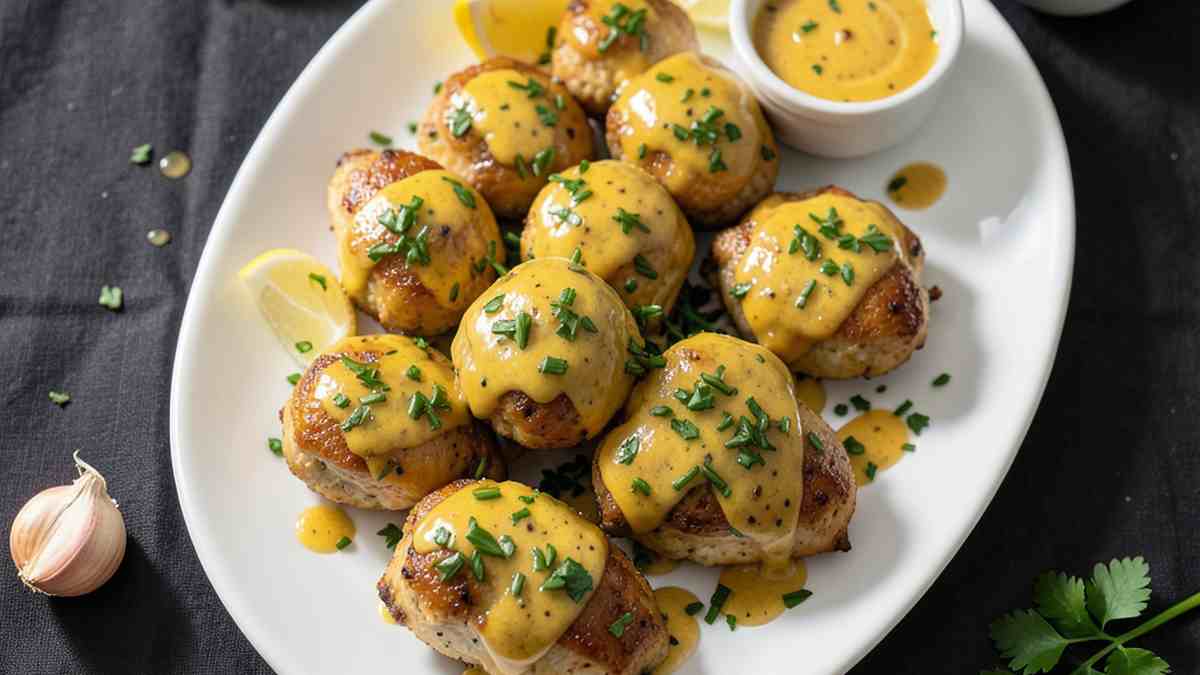
Garlic Butter Chicken Bites are boneless, skinless chicken pieces cut into 1-inch cubes, seasoned simply, seared in a hot skillet until golden, then finished in a pan sauce of melted butter, minced garlic, fresh herbs, and a splash of lemon. The method takes about 20 minutes start to finish, uses one skillet, and delivers tender, well-browned chicken coated in a glossy, savory butter sauce that clings to every piece. The high-heat sear creates flavor through the Maillard reaction while the short cook time keeps the interior moist. A final squeeze of lemon brightens the richness, and the sauce is thick enough to spoon over rice, pasta, or vegetables without being heavy.
—
Recipe at a Glance
| Detail | Value |
|---|---|
| Prep Time | 10 minutes |
| Cook Time | 10 minutes |
| Additional Time | 0 minutes |
| Total Time | 20 minutes |
| Servings | 4 |
| Yield | About 2 lb (900 g) cooked chicken bites with sauce |
| Difficulty | Easy |
| Course | Main Course |
| Cuisine | American |
| Cooking Method | Pan-Searing |
| Dietary Notes | Gluten-free, dairy-free option (see substitutions), low-carb/keto friendly |
—
Why This Recipe Works
- Uniform 1-inch cubes cook at the same rate, preventing dry edges while the center reaches a safe 165 °F (74 °C).
- Patting the chicken thoroughly dry before seasoning ensures immediate browning instead of steaming, which builds the fond that flavors the sauce.
- High-heat sear in a heavy skillet (cast iron or stainless steel) creates a deep golden crust in 2–3 minutes per side without overcooking the interior.
- Garlic added off-heat for the first 30 seconds prevents burning; the residual pan heat blooms its flavor without bitterness.
- Butter emulsified with pan juices and lemon juice forms a stable, glossy sauce that coats the chicken rather than pooling at the bottom.
- Finishing with fresh parsley and chives off-heat preserves their color and volatile aromatics, giving a fresh counterpoint to the rich butter.
—
Expected Flavour and Texture
The chicken bites are tender and juicy with a thin, golden-brown crust that offers slight resistance before giving way to moist interior. The sauce is rich, savory, and distinctly garlicky — not raw or burnt — with a silky, emulsified body that clings to each piece. Lemon juice cuts the butter’s richness with clean acidity, while parsley and chives add a grassy, onion-like freshness. A faint warmth from black pepper lingers. The overall impression is buttery, garlicky, bright, and satisfyingly savory — substantial enough for dinner but light enough not to feel heavy.
—
Complete Ingredients
For the Chicken
- 2 lb (900 g) boneless, skinless chicken breasts (about 2 large or 3 medium), trimmed and cut into 1-inch cubes
- 1 tsp (5 g) fine sea salt, divided (½ tsp for chicken, ½ tsp for sauce)
- ½ tsp (1 g) freshly ground black pepper
- 1 tsp (2 g) smoked paprika (optional, for color and subtle smokiness)
- 2 Tbsp (30 ml) high-heat neutral oil (avocado, grapeseed, or canola)
For the Garlic Butter Sauce
- 4 Tbsp (57 g) unsalted butter, cold and cut into 4 pieces
- 5 large garlic cloves (≈15 g), minced (about 1½ Tbsp)
- ¼ cup (60 ml) low-sodium chicken broth or dry white wine
- 1 Tbsp (15 ml) fresh lemon juice (about ½ medium lemon)
- ½ tsp (2.5 g) fine sea salt
- ¼ tsp (0.5 g) red pepper flakes (optional, for subtle heat)
- 2 Tbsp (8 g) fresh flat-leaf parsley, finely chopped
- 1 Tbsp (3 g) fresh chives, thinly sliced
For Serving (Optional)
- Cooked rice, mashed potatoes, pasta, or crusty bread
- Steamed green beans, roasted broccoli, or a simple green salad
- Lemon wedges
—
Ingredient Notes
Chicken: Breasts are lean and cook fast; thighs (same weight) are more forgiving and juicier but need 1–2 extra minutes. Cut pieces uniformly — larger pieces stay raw in the center; smaller ones dry out.
Butter: Unsalted lets you control salinity. Cold butter emulsifies better than melted. European-style butter (82 % fat) yields a richer, more stable sauce.
Garlic: Five large cloves give assertive but balanced garlic flavor. For milder garlic, use 3 cloves and add 1 tsp garlic powder to the chicken seasoning.
Chicken broth vs. wine: Broth keeps it simple and alcohol-free; dry white wine (Sauvignon Blanc, Pinot Grigio) adds acidity and complexity. Both deglaze the fond effectively.
Herbs: Flat-leaf parsley has cleaner flavor than curly. Chives add mild onion note; substitute 1 tsp dried chives or omit if unavailable. Add both after removing pan from heat.
Oil: High smoke point prevents burning during the sear. Olive oil works but may smoke at the high heat needed for good browning.
—
Ingredient Substitutions
| Original Ingredient | Best Substitute | Amount or Ratio | Expected Change |
|---|---|---|---|
| Chicken breast | Boneless skinless chicken thighs | 2 lb (900 g) | Juicier, richer flavor; +1–2 min cook time |
| Unsalted butter | Salted butter | 4 Tbsp (57 g) | Omit added ½ tsp salt in sauce |
| Unsalted butter | Ghee | 4 Tbsp (57 g) | Nutty flavor, higher smoke point, dairy solids removed |
| Unsalted butter | Vegan butter (stick style) | 4 Tbsp (57 g) | Dairy-free; sauce may be slightly less stable |
| Fresh garlic | Garlic powder + fresh garlic | 1 tsp powder + 2 cloves fresh | Less pungent, more even distribution |
| Chicken broth | Dry white wine | ¼ cup (60 ml) | Brighter acidity, subtle fruit notes |
| Chicken broth | Water + ¼ tsp chicken bouillon | ¼ cup (60 ml) | Saltier; reduce added salt |
| Fresh parsley | Dried parsley | 2 tsp (2 g) | Muted color and flavor; add with butter |
| Fresh chives | Green onion tops | 2 Tbsp sliced | Stronger onion flavor |
| Smoked paprika | Sweet paprika | 1 tsp (2 g) | No smokiness; color similar |
| High-heat oil | Light olive oil | 2 Tbsp (30 ml) | Lower smoke point; watch heat carefully |
Not recommended: Margarine (water content breaks sauce), pre-minced jarred garlic (harsh, metallic flavor), heavy cream (changes dish to cream sauce).
—
Equipment
- 12-inch (30 cm) heavy skillet — cast iron, carbon steel, or tri-ply stainless steel; holds chicken in a single layer without crowding
- Tongs — for turning pieces without piercing
- Small bowl — for seasoning mix
- Microplane or garlic press — for fine, even garlic mince
- Citrus juicer or reamer — for seed-free lemon juice
- Cutting board and chef’s knife — for cubing chicken and chopping herbs
- Instant-read thermometer — optional but recommended for food safety (target 165 °F / 74 °C)
- Measuring spoons and liquid measuring cup
—
Before Starting
- Trim chicken of any visible fat, tendon, or cartilage. Cut into even 1-inch (2.5 cm) cubes. Uniform size = even cooking.
- Pat chicken thoroughly dry with paper towels. Surface moisture is the enemy of browning.
- Mince garlic and chop herbs; measure broth, lemon juice, and butter. Keep butter cold until needed.
- Combine salt (½ tsp), pepper, and smoked paprika in a small bowl. Sprinkle evenly over chicken and toss to coat.
- Have a clean plate or tray ready for the seared chicken before making the sauce.
- Preheat skillet over medium-high heat 2 minutes before adding oil. A hot pan prevents sticking and starts the Maillard reaction immediately.
—
Detailed Method
Phase 1: Sear the Chicken
- Heat the skillet. Place a 12-inch heavy skillet over medium-high heat. Let it warm for 2 minutes until a drop of water skitters across the surface.
- Add oil. Swirl 2 Tbsp (30 ml) high-heat oil to coat the bottom evenly.
- Add chicken in a single layer. Working in two batches if necessary (do not crowd — pieces must not touch), place seasoned chicken cubes in the skillet. Let sear undisturbed 2–3 minutes until the bottom is deep golden brown and releases easily from the pan.
- Flip and sear second side. Using tongs, turn each piece. Cook 2–3 minutes more until the second side is golden and the pieces are almost cooked through (internal temp ~155 °F / 68 °C). They will finish in the sauce.
- Transfer to a plate. Remove all chicken to a clean plate, leaving the fond (browned bits) and any rendered fat in the skillet. Do not wash the pan.
Phase 2: Build the Garlic Butter Sauce
- Reduce heat to low. Let the pan cool 30 seconds — this prevents the garlic from burning in the next step.
- Bloom the garlic. Add 5 minced garlic cloves to the warm (not scorching) pan. Stir constantly for 30–45 seconds until fragrant and pale gold, not brown. If the pan seems too hot, lift it off the burner briefly.
- Deglaze. Pour in ¼ cup (60 ml) chicken broth (or wine), scraping the fond with a wooden spoon or silicone spatula. Simmer 1 minute, reducing by about half.
- Emulsify the butter. Remove pan from heat. Add cold butter pieces one at a time, whisking or swirling the pan constantly until each piece is fully melted and the sauce is glossy and slightly thickened. This takes about 1 minute.
- Finish the sauce. Whisk in 1 Tbsp (15 ml) lemon juice, ½ tsp (2.5 g) salt, and ¼ tsp red pepper flakes (if using). Taste and adjust salt or acid.
Phase 3: Combine and Serve
- Return chicken to pan. Add the seared chicken (and any juices on the plate) back to the skillet. Toss gently over low heat for 30–60 seconds just until the chicken is fully coated and heated through to 165 °F (74 °C).
- Remove from heat. Immediately stir in 2 Tbsp chopped parsley and 1 Tbsp sliced chives.
- Serve immediately. Spoon chicken and sauce over rice, potatoes, pasta, or bread. Garnish with extra herbs and lemon wedges if desired.
—
Doneness Cues
| Cue | What to Look For |
|---|---|
| Sear | Deep golden-brown crust on at least two sides; pieces release cleanly from pan when ready to flip |
| Internal temperature | 165 °F (74 °C) at the center of the largest piece (instant-read thermometer) |
| Visual (no thermometer) | Cut one large piece in half — meat is opaque white throughout, no pink; juices run clear |
| Sauce consistency | Glossy, emulsified, coats the back of a spoon; does not separate into oil and liquid |
| Garlic aroma | Nutty, sweet, fragrant — not acrid or burnt |
| Herb color | Parsley and chives remain vibrant green, not wilted to olive drab |
—
Recipe-Specific Success Tips
- Dry the chicken very well — even a damp surface creates steam, not crust. Pat, wait 30 seconds, pat again.
- Don’t crowd the pan — two batches in a 12-inch skillet. Crowding drops pan temperature, causing steaming and gray chicken.
- Use cold butter — it emulsifies into the pan juices; melted or room-temperature butter often separates.
- Remove pan from heat before adding butter — residual heat is enough. Direct flame breaks the emulsion.
- Add garlic after reducing heat — burnt garlic ruins the whole dish. 30 seconds off direct heat is plenty.
- Deglaze thoroughly — the fond holds concentrated flavor. Scrape every bit into the sauce.
- Taste the sauce before returning chicken — adjust salt, acid, or heat now; it’s harder once chicken is coated.
- Don’t overcook in the sauce — 30–60 seconds max. The chicken is already near done; extra time dries it out.
- Herbs go in last, off heat — preserves color and fresh flavor. Cooked parsley turns dull and bitter.
- Serve immediately — the sauce is best warm and emulsified. It thickens and can separate as it cools.
—
Common Mistakes
| Mistake | Why It Causes a Problem | How to Prevent It |
|---|---|---|
| Skipping the pat-dry step | Surface moisture lowers pan temp → steaming, no browning, pale chicken | Pat thoroughly with paper towels; let sit 1 min, pat again |
| Crowding the skillet | Too much chicken drops pan temp below searing threshold | Cook in 2 batches; use a 12-inch skillet or two pans |
| Adding garlic to a ripping-hot pan | Garlic burns in seconds → bitter, acrid sauce | Reduce heat to low, wait 30 sec, then add garlic |
| Using melted or warm butter | Butter won’t emulsify; sauce separates into oil puddles | Keep butter cold; cut into pieces; add off-heat one at a time |
| Overcooking chicken in the sauce | Lean breast dries out fast once past 165 °F | Remove chicken at ~155 °F; finish 30–60 sec in sauce only |
| Forgetting to deglaze | Fond (flavor gold) stays stuck to pan | Scrape vigorously with broth/wine; get every browned bit |
| Adding herbs during cooking | Heat destroys chlorophyll and volatile oils → dull, bitter herbs | Stir in parsley and chives after removing pan from heat |
| Using pre-minced jarred garlic | Preservatives and age create harsh, metallic flavor | Mince fresh cloves just before cooking |
| Not tasting sauce before adding chicken | Under-seasoned sauce = bland final dish | Taste after emulsifying butter; adjust salt, lemon, pepper |
| Letting finished dish sit covered | Steam softens crust; sauce separates and thickens excessively | Plate and serve immediately; hold at most 5 min uncovered |
—
Troubleshooting Table
| Problem | Likely Cause | How to Fix It Now | How to Prevent It Next Time |
|---|---|---|---|
| Chicken is pale, not browned | Pan not hot enough; chicken wet; overcrowded | Increase heat; pat chicken drier; cook in smaller batches | Preheat pan 2+ min; dry thoroughly; don’t crowd |
| Garlic tastes burnt/bitter | Added to too-hot pan; cooked too long | Discard sauce, wipe pan, restart sauce with fresh garlic | Reduce heat to low before garlic; 30 sec max |
| Sauce separated (oil pooling) | Butter too warm; added too fast; boiled after emulsifying | Whisk in 1 tsp cold water or broth off-heat; may not fully recover | Use cold butter; add piece by piece off-heat; never boil sauce |
| Chicken dry and tough | Overcooked (past 165 °F) or held too long | Slice thin, toss with extra warm broth or melted butter | Pull at 155 °F; finish 30 sec in sauce; serve immediately |
| Sauce too thin / won’t thicken | Not reduced enough; too much liquid; butter not cold | Simmer sauce 1 min longer before butter; ensure butter is cold | Reduce broth/wine by half; use cold butter pieces |
| Sauce too thick / gummy | Over-reduced; too much butter; cooled too long | Whisk in 1–2 Tbsp warm broth or water off-heat | Stop reducing when sauce coats spoon; serve fast |
| Chicken sticks and tears | Pan not hot enough; oil not shimmering; moved too early | Wait for full release; don’t force — it will let go when ready | Preheat properly; test with one piece first |
| Lemon flavor too sharp / too weak | Too much/too little juice; bottled lemon used | Balance with pinch of sugar (if sharp) or add fresh juice (if weak) | Use fresh lemon; start with 1 Tbsp, taste, adjust |
| Herbs wilted and dark | Added while pan still hot | Garnish with fresh herbs at table instead | Remove pan from heat completely before adding herbs |
| Chicken raw in center | Pieces too large; heat too high (burned outside, raw inside) | Finish in 350 °F oven 5–7 min or cut pieces smaller and re-sear | Cut uniform 1-inch cubes; medium-high heat, not high |
—
Variations
| Variation | Ingredient / Method Changes | Notes |
|---|---|---|
| Spicy Garlic Butter Chicken | Add ½–1 tsp cayenne or 1 tsp gochugaru to chicken seasoning; increase red pepper flakes to ½ tsp | Heat builds as it sits; taste before serving |
| Creamy Garlic Butter Chicken | After emulsifying butter, whisk in ¼ cup (60 ml) heavy cream; simmer 1 min until slightly thickened | Richer, more sauce volume; not dairy-free |
| Lemon-Herb Chicken Bites (No Butter) | Omit butter; increase oil to 3 Tbsp; add 2 Tbsp extra lemon juice and 1 Tbsp olive oil at end | Lighter, brighter; sauce is vinaigrette-style |
| Garlic Butter Chicken Thighs | Use 2 lb boneless skinless thighs; increase sear to 4 min/side; finish in sauce 1–2 min | Juicier, more forgiving; richer flavor |
| Air Fryer Garlic Butter Chicken | Toss chicken with oil, salt, pepper, paprika. Air fry 400 °F (200 °C) 8–10 min, shake halfway. Toss in sauce made separately on stove | Less fond for sauce; make sauce in pan while chicken cooks |
| Sheet-Pan Garlic Butter Chicken | Toss chicken with oil, salt, pepper. Roast 425 °F (220 °C) 12–15 min. Toss with sauce made on stove | Good for doubling; less crust, easier cleanup |
| Garlic Butter Chicken & Vegetables | Add 2 cups broccoli florets or halved baby potatoes to pan after first flip; cook with chicken | Vegetables absorb sauce; adjust cook time for veg |
| Keto / Low-Carb | Serve over cauliflower rice or zucchini noodles; omit optional sides | Naturally low-carb; check broth for hidden carbs |
| Gluten-Free | Recipe is naturally GF; verify broth and spices are certified GF if needed | No changes needed |
| Dairy-Free | Use 4 Tbsp ghee or high-quality vegan stick butter; ensure broth is dairy-free | Ghee adds nutty note; vegan butter may separate more easily |
—
Serving Suggestions
| Pairing | Why It Works |
|---|---|
| Steamed white or brown rice | Neutral canvas absorbs every drop of garlic butter sauce |
| Buttery mashed potatoes | Creamy texture mirrors the sauce; starch balances richness |
| Linguine or fettuccine | Long noodles catch sauce; toss with ¼ cup pasta water for emulsification |
| Crusty sourdough or baguette | Essential for sopping up the pan sauce — don’t waste it |
| Roasted broccoli or asparagus | Charred, slightly bitter veg cuts through butter richness |
| Green beans almondine | Crisp-tender beans + toasted almonds add texture contrast |
| Simple arugula salad with lemon vinaigrette | Peppery greens and acid cleanse the palate between bites |
| Cauliflower rice | Low-carb base that still absorbs sauce well |
| Polenta or grits | Creamy corn base complements savory garlic butter |
| White wine: Sauvignon Blanc, Pinot Grigio, or unoaked Chardonnay | Bright acidity matches lemon; body stands up to butter |
| Beer: Belgian witbier, saison, or light lager | Effervescence and citrus notes refresh the palate |
Garnish: Extra chopped parsley, chives, lemon zest, or a pinch of flaky sea salt (Maldon) at the table.
—
Portion and Scaling Guide
| Scale | Chicken | Butter | Garlic | Broth/Wine | Lemon Juice | Salt | Pan / Batch Notes |
|---|---|---|---|---|---|---|---|
| Half (2 servings) | 1 lb (450 g) | 2 Tbsp (28 g) | 3 cloves | 2 Tbsp (30 ml) | 2 tsp (10 ml) | ¼ tsp + ¼ tsp | 10-inch skillet; single batch |
| Standard (4 servings) | 2 lb (900 g) | 4 Tbsp (57 g) | 5 cloves | ¼ cup (60 ml) | 1 Tbsp (15 ml) | ½ tsp + ½ tsp | 12-inch skillet; 2 batches |
| Double (8 servings) | 4 lb (1.8 kg) | 8 Tbsp (113 g) | 10 cloves | ½ cup (120 ml) | 2 Tbsp (30 ml) | 1 tsp + 1 tsp | Two 12-inch skillets or cook in 4 batches; make sauce in batches or in a saucepan |
What does NOT scale linearly:
- Pan size / batches: Never crowd. Use multiple pans or cook sequentially.
- Garlic: Slightly less than double at large scale (8–10 cloves for 4 lb) — garlic flavor intensifies in volume.
- Red pepper flakes: Scale to ⅓ tsp for half, ½ tsp for double — heat perception is non-linear.
- Herbs: Scale linearly but add fresh at the very end for each batch.
- Oil: 1 Tbsp per batch is enough; don’t double oil in the pan.
—
Make-Ahead Instructions
| Component | How Far Ahead | Storage | Notes |
|---|---|---|---|
| Cut & seasoned chicken | Up to 24 hours | Airtight container, refrigerator | Pat dry again before searing; surface moisture accumulates |
| Mince garlic, chop herbs | Up to 4 hours | Small containers, refrigerator | Garlic loses potency; herbs wilt — best done just before cooking |
| Measure broth, lemon juice, butter | Up to 1 hour | Prep bowls at room temp | Butter must be cold for emulsification |
| Full cooked dish | Not recommended | — | Sauce separates and chicken dries on reheat; see Storage section |
| Sauce only (no chicken) | Up to 2 days | Jar, refrigerator | Reheat gently, whisk in 1 tsp water; add fresh herbs after reheating |
Best practice: Prep ingredients (mise en place) up to 4 hours ahead. Cook chicken fresh — it takes 10 minutes.
—
Storage, Freezing, Thawing, and Reheating
Refrigerator (Short-Term)
- Cool to room temperature within 2 hours (1 hour if kitchen > 90 °F / 32 °C).
- Transfer to airtight container. Sauce will solidify — this is normal.
- Keeps 3–4 days at 40 °F (4 °C) or below.
Freezer (Long-Term)
- Freezes moderately well for 2–3 months.
- Best method: Freeze chicken and sauce separately if possible. If already combined, freeze in a single layer on a parchment-lined tray, then transfer to a freezer bag.
- Container: Freezer-safe bag or rigid container; press out air. Label with date.
- Texture note: Butter sauce may separate slightly on thaw; reheating with a splash of broth usually restores it. Chicken texture remains good if not overcooked originally.
Thawing
- Refrigerator overnight (8–12 hours) — safest, best texture.
- Cold water bath (sealed bag, 30–60 minutes) — change water every 15 min.
- Microwave defrost — only if reheating immediately; can start cooking edges.
Reheating (Best to Least Best)
| Method | Temperature / Time | Technique | Tips |
|---|---|---|---|
| Stovetop (best) | Medium-low, 4–6 min | Place chicken + sauce in skillet; add 1–2 Tbsp broth/water; cover 2 min; uncover, stir, heat through | Restores emulsion; add fresh herbs at end |
| Microwave (fast) | 50 % power, 1–2 min | Cover loosely; stir halfway; add 1 tsp water per portion | Uneven heating; sauce may split — whisk after |
| Oven (for large batches) | 300 °F (150 °C), 15–20 min | Covered foil packet with 2 Tbsp broth | Gentle; good for meal prep portions |
| Air fryer (crisp) | 350 °F (175 °C), 3–4 min | Chicken only (sauce burns); make fresh sauce separately | Re-crisps exterior; sauce made fresh is best |
Do not: Reheat in slow cooker (overcooks chicken), boil sauce (breaks emulsion), or reheat more than once.
—
Estimated Nutrition
Per serving (¼ of recipe, ~225 g chicken + sauce), without optional sides.
| Nutrient | Amount |
|---|---|
| Calories | 380 kcal |
| Protein | 42 g |
| Carbohydrates | 2 g |
| Fat | 22 g |
| Saturated Fat | 11 g |
| Fiber | 0 g |
| Sugar | 1 g (naturally occurring) |
| Sodium | 580 mg (varies with broth and salt brand) |
Nutrition values are estimates and vary depending on brands, exact ingredient amounts, substitutions, and serving sizes. Calculated using USDA data for chicken breast, unsalted butter, and low-sodium chicken broth. Using chicken thighs adds ~50 kcal and 3 g fat per serving. Using ghee reduces sodium slightly.
—
Frequently Asked Questions
Can I use chicken tenders instead of breasts?
Yes. Tenders are the same muscle (pectoralis minor) and cook identically. Cut into 1-inch pieces. They may cook 30 seconds faster — watch closely.
Why did my butter sauce separate?
Most common causes: butter wasn’t cold, pan was too hot when butter was added, or sauce boiled after emulsifying. Fix: whisk in 1 tsp cold water or broth off-heat. Prevent: use cold butter, remove pan from heat, add butter piece by piece.
Can I make this with bone-in chicken?
Not recommended for this method. Bone-in pieces need longer, gentler cooking (oven or braise) to reach 165 °F without burning the exterior. The quick sear + sauce finish is designed for boneless cubes.
Is it safe to cook chicken to 155 °F and finish in sauce?
Yes, if it reaches 165 °F within 30–60 seconds in the hot sauce. Carryover heat completes the pasteurization. Use a thermometer to verify. If unsure, cook to 165 °F in the pan before removing.
Can I use dried herbs instead of fresh?
Use ⅓ the amount (2 tsp dried parsley, 1 tsp dried chives) and add them with the butter so they rehydrate. Flavor and color will be muted. Fresh is strongly preferred for the finish.
What’s the best pan if I don’t have cast iron?
Tri-ply stainless steel (All-Clad style) or carbon steel. Avoid nonstick — it doesn’t build fond well and can’t take the high heat needed for a proper sear.
Can I double the recipe in one pan?
Only if you have a 14-inch+ skillet and a powerful burner. Otherwise, cook in batches and make the sauce once at the end (keep seared chicken warm in a 200 °F oven), or use two pans simultaneously.
How do I keep the chicken warm while cooking batches?
Place seared chicken on a wire rack over a baking sheet in a 200 °F (90 °C) oven. Do not cover — steam softens the crust.
Is this recipe dairy-free / paleo / Whole30?
As written: no (butter). For dairy-free/paleo/Whole30: use ghee (dairy solids removed) or compliant vegan butter. Verify broth is compliant. Omit butter entirely for a lemon-garlic pan sauce (see Variations).
Can I meal-prep this for the week?
Yes. Cook fresh Sunday–Wednesday for best texture. Store chicken and sauce separately if possible. Reheat on stovetop with a splash of broth. Freeze portions for Thursday–Friday.
—
Standalone Recipe Card
Garlic Butter Chicken Bites
Description: Tender chicken cubes seared golden and tossed in a rich garlic-herb butter sauce with a squeeze of lemon. Ready in 20 minutes — perfect for busy weeknights.
Prep Time: 10 minutes
Cook Time: 10 minutes
Additional Time: 0 minutes
Total Time: 20 minutes
Course: Main Course
Cuisine: American
Servings: 4
Yield: ~2 lb (900 g) chicken bites with sauce
Calories: 380 kcal (estimated)
Ingredients
For the Chicken
- 2 lb (900 g) boneless, skinless chicken breasts, cut into 1-inch cubes
- ½ tsp (2.5 g) fine sea salt
- ½ tsp (1 g) freshly ground black pepper
- 1 tsp (2 g) smoked paprika (optional)
- 2 Tbsp (30 ml) high-heat neutral oil (avocado, grapeseed, or canola)
For the Garlic Butter Sauce
- 4 Tbsp (57 g) unsalted butter, cold and cut into 4 pieces
- 5 large garlic cloves (≈15 g), minced
- ¼ cup (60 ml) low-sodium chicken broth or dry white wine
- 1 Tbsp (15 ml) fresh lemon juice
- ½ tsp (2.5 g) fine sea salt
- ¼ tsp (0.5 g) red pepper flakes (optional)
- 2 Tbsp (8 g) fresh flat-leaf parsley, finely chopped
- 1 Tbsp (3 g) fresh chives, thinly sliced
For Serving (Optional)
- Cooked rice, mashed potatoes, pasta, or crusty bread
- Lemon wedges
Instructions
- Prep chicken: Trim chicken, cut into 1-inch cubes. Pat thoroughly dry with paper towels. Toss with ½ tsp salt, ½ tsp pepper, and smoked paprika (if using).
- Preheat pan: Heat a 12-inch heavy skillet (cast iron or stainless) over medium-high 2 minutes. Add oil and swirl to coat.
- Sear chicken (2 batches): Add half the chicken in a single layer. Cook undisturbed 2–3 min until deep golden and releasing easily. Flip; cook 2–3 min more until ~155 °F (68 °C). Transfer to plate. Repeat with remaining chicken.
- Bloom garlic: Reduce heat to low. Wait 30 sec. Add minced garlic; stir 30–45 sec until fragrant and pale gold — do not brown.
- Deglaze: Add broth (or wine), scraping up all browned bits. Simmer 1 min until reduced by half.
- Emulsify butter: Remove pan from heat. Add cold butter pieces one at a time, whisking constantly until sauce is glossy and thickened (~1 min).
- Finish sauce: Whisk in lemon juice, ½ tsp salt, and red pepper flakes (if using). Taste; adjust salt or acid.
- Combine: Return chicken (and juices) to pan. Toss over low heat 30–60 sec until coated and chicken reaches 165 °F (74 °C).
- Add herbs: Remove from heat. Stir in parsley and chives.
- Serve immediately over rice, potatoes, pasta, or bread. Garnish with extra herbs and lemon wedges.
Notes
- Don’t crowd the pan — two batches ensures browning, not steaming.
- Cold butter is essential for a stable emulsion. Cut it just before using.
- Garlic burns fast — pan must be low/off heat before adding.
- Chicken thighs work beautifully; add 1–2 min sear time per side.
- Storage: Refrigerate 3–4 days in airtight container. Freeze 2–3 months (best separated). Reheat gently on stovetop with a splash of broth.
- Dairy-free: Substitute ghee or vegan stick butter for butter.
Nutrition (per serving, estimated)
Calories 380 | Protein 42 g | Carbohydrates 2 g | Fat 22 g | Saturated Fat 11 g | Fiber 0 g | Sugar 1 g | Sodium 580 mg
Values vary by brand, exact amounts, and substitutions.
—
